 Image 1 of 1
January 1992. Granite, steel. Dimensions: 9 × 19 × 5 in (23 × 48 × 13 cm). Private Collection - Aspen, CO
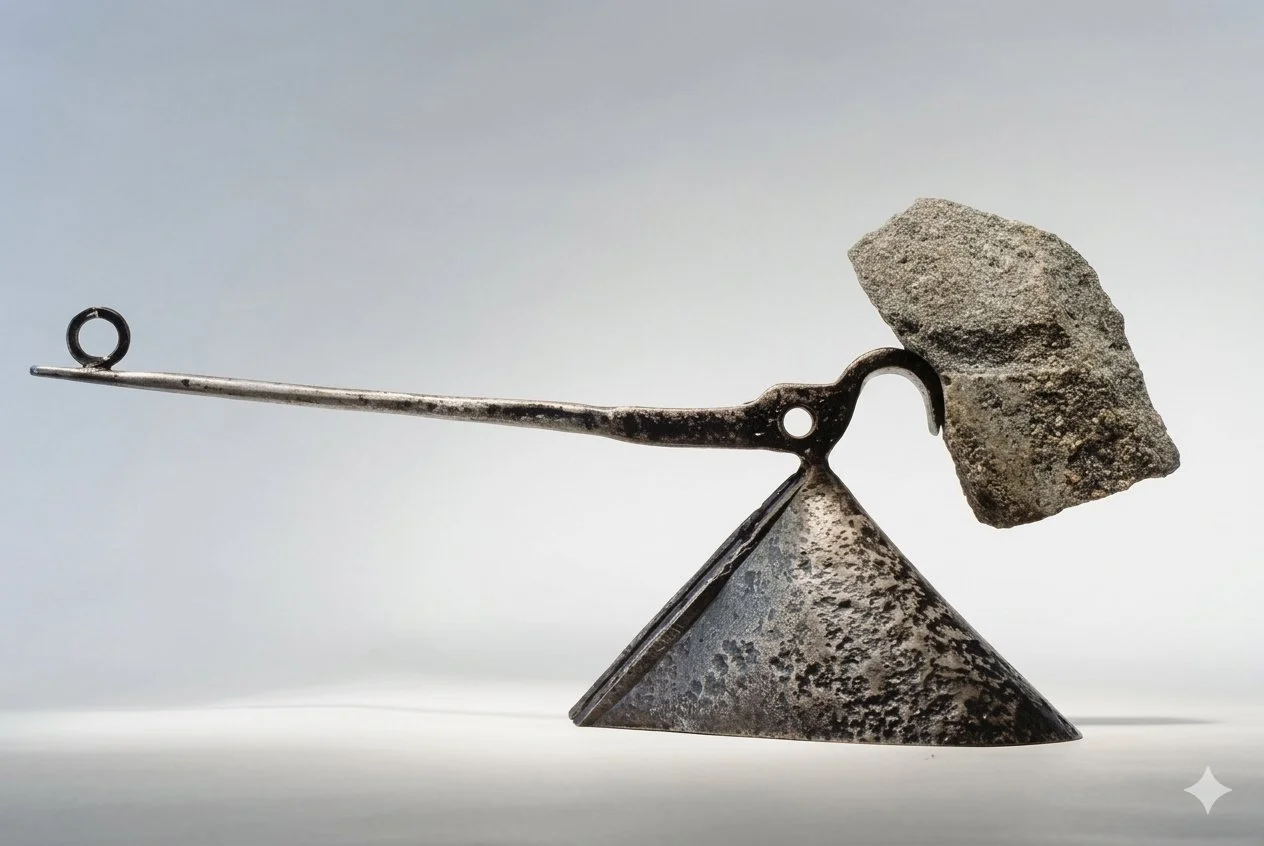
Beam I reflects my interest in tools and implements as extensions of the hand and in what I have described as their “raw, efficient beauty of form dictated by function.” The sculpture incorporates part of an actual tool, retaining and celebrating its physical shape and function while bringing it into a new relationship with granite and fabricated steel. As with the other works in the Beam Series, the title refers to the beam, or balance-beam scale—an appropriate instrument for work concerned with physical balance. Although the sculpture does not actually move, the long forged-steel rod poised across the small granite fulcrum suggests a teetering, precarious balance and a sense of arrested motion. Importantly, the Beam Series also marked the beginnings of ideas I would later develop in my Funambulist Series, where balance itself became an increasingly central metaphor.
January 1992. Granite, steel. Dimensions: 9 × 19 × 5 in (23 × 48 × 13 cm). Private Collection - Aspen, CO
Beam I reflects my interest in tools and implements as extensions of the hand and in what I have described as their “raw, efficient beauty of form dictated by function.” The sculpture incorporates part of an actual tool, retaining and celebrating its physical shape and function while bringing it into a new relationship with granite and fabricated steel. As with the other works in the Beam Series, the title refers to the beam, or balance-beam scale—an appropriate instrument for work concerned with physical balance. Although the sculpture does not actually move, the long forged-steel rod poised across the small granite fulcrum suggests a teetering, precarious balance and a sense of arrested motion. Importantly, the Beam Series also marked the beginnings of ideas I would later develop in my Funambulist Series, where balance itself became an increasingly central metaphor.