The works shown here are available for acquisition. If a piece speaks to you, please don’t hesitate to get in touch — I’d be glad to tell you more about it.
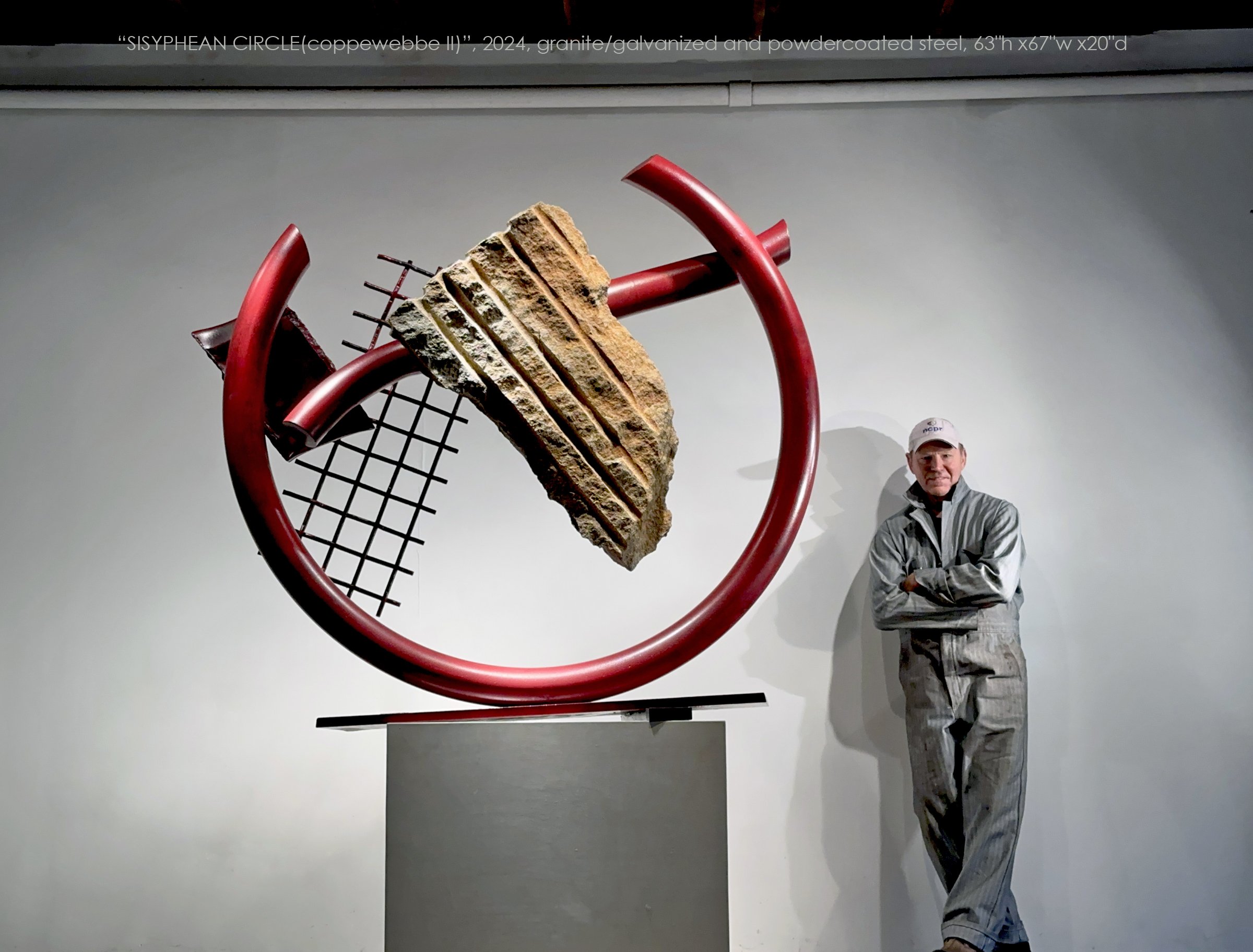
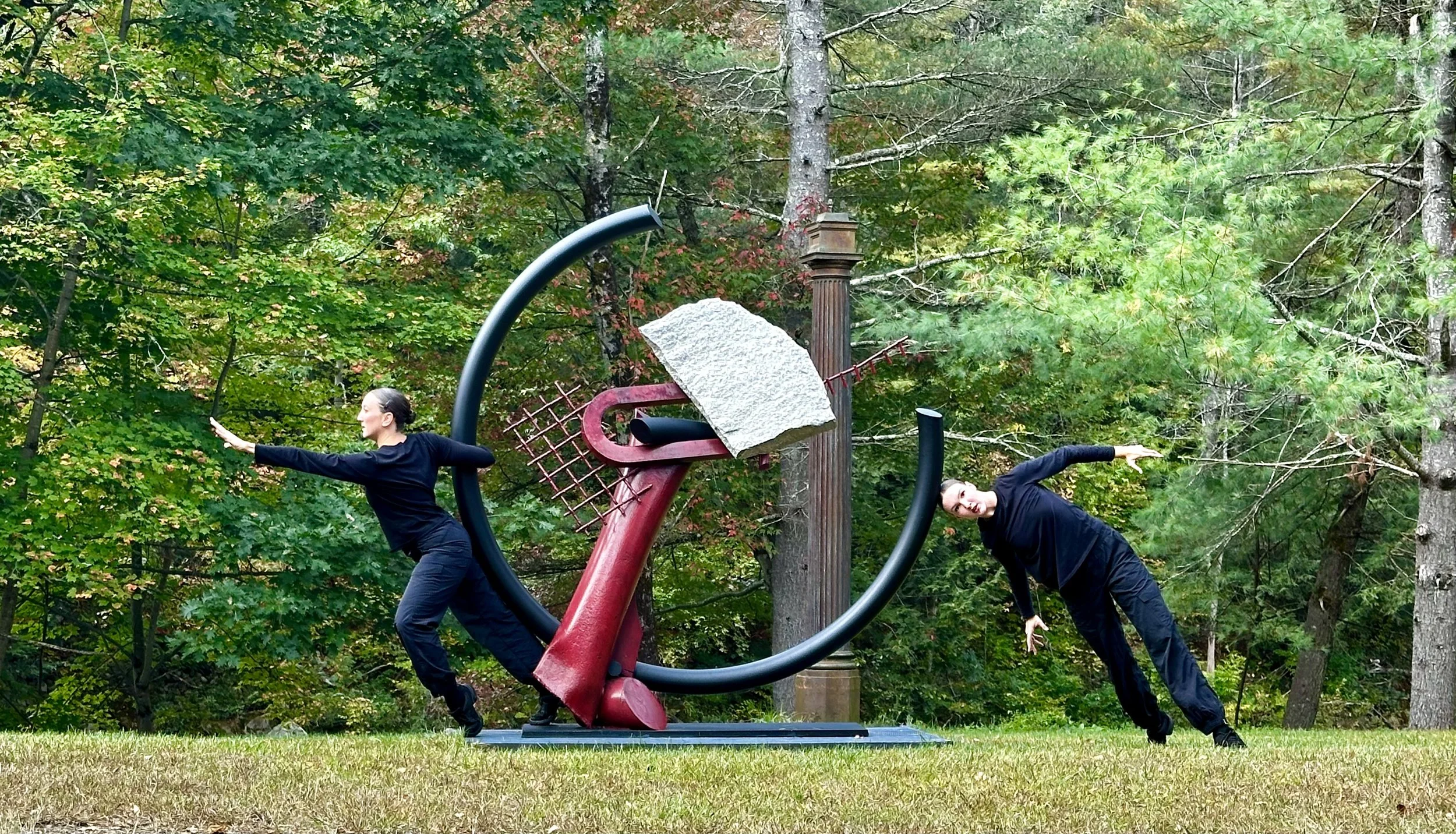
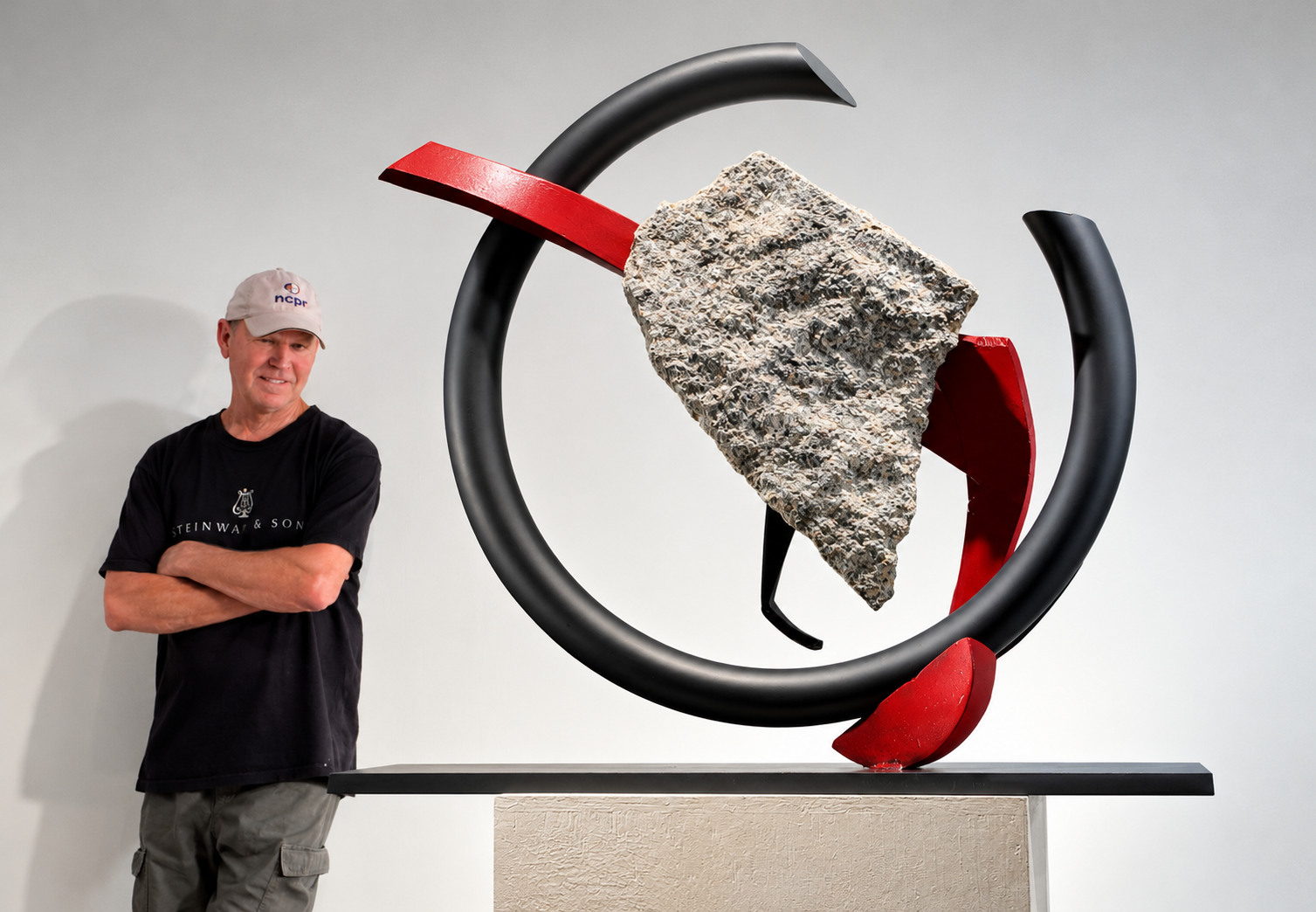
March 2023. Granite, galvanized and powder coated steel. Dimensions: 36 × 40 × 9 in (91 × 102 × 23 cm).
SAGITTA: Latin for arrow
Constellation: A dim but distinctive constellation in the northern sky, representing an arrow and included in the original 48 constellations listed by Ptolemy. It is not to be confused with the larger constellation Sagittarius.
Mythology: The constellation is associated with the arrow of Hercules, the arrow of Apollo, or the arrow of Eros (Cupid).
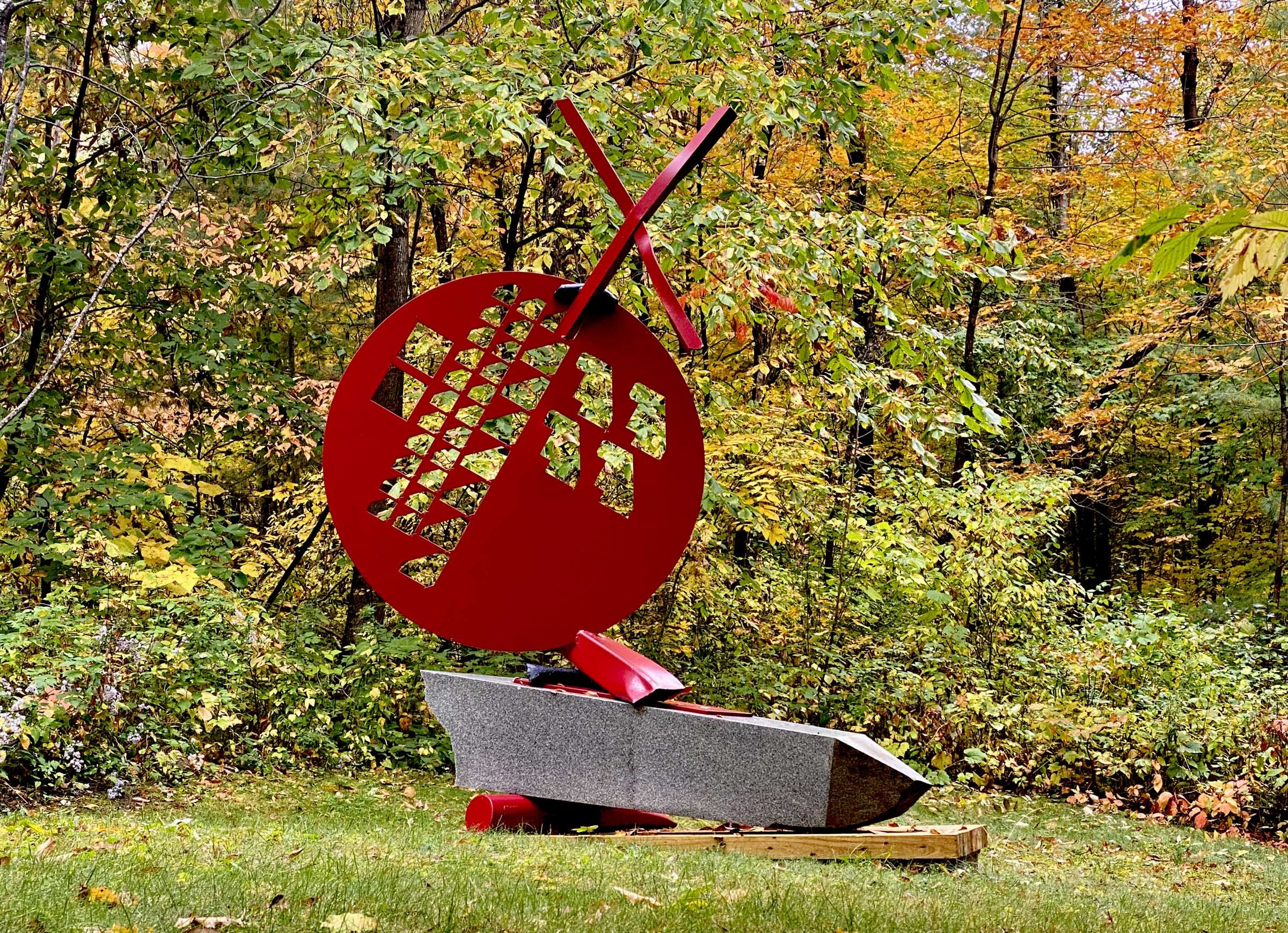
January 2020. Granite, galvanized and powder coated steel. Dimensions: 123 × 102 × 43 in (312 × 259 × 109 cm).
Sisyphean Circle Series
The formal arrangements of stone and steel in the Sisyphean Circle series often suggest a figure frozen in the act of prying or pushing a stone. Yet to view the creative process simply as endless toil is undeniably negative. I prefer to approach the myth and metaphor through the lens of Albert Camus.
As in life, this perspective lies at the core of the creative process, where the act of making ultimately triumphs over the object or final product. The focus shifts from the burden of creation to the meaning found in the effort itself—celebrating the process as the true reward rather than the finished sculpture.
—John Van Alstine
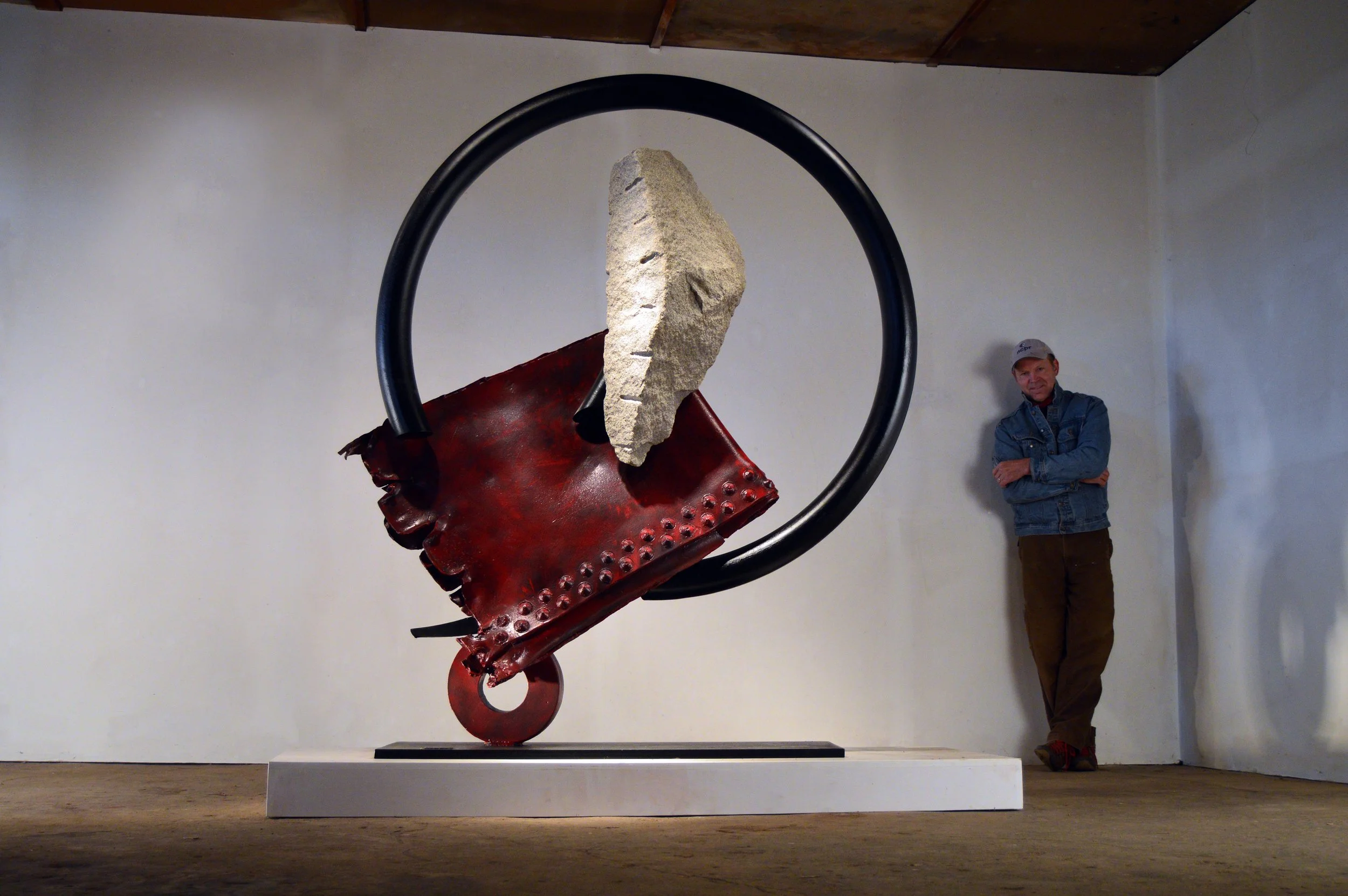
September 2019. Granite, galvanized and powder-coated. Dimensions: 80 × 70 × 16 in (203 × 178 × 41 cm).
SISYPHEAN CIRCLE (Homage to Major Taylor), 2019
Granite, galvanized and powder-coated steel, 80"h x 70"w x 16"d (203 x 178 x 40 cm)
In the Sisyphean Circle series, the interplay of stone and steel suggests a figure frozen in the act of prying or pushing a stone, echoing the myth of Sisyphus and the creative struggle to overcome obstacles.
This work specifically honors Marshall “Major” Taylor (1878–1932), a world champion American cyclist and one of the nation’s first Black sports superstars. The leaning granite and circular forms evoke a cyclist in motion, symbolizing Taylor’s perseverance in the face of racial prejudice both on and off the track.
Taylor’s Sisyphean efforts made him a pioneering role model for future athletes confronting discrimination, celebrated as a hero in the United States, France, and Australia. As he wrote in his autobiography, having no other African Americans to guide him, he “had to blaze [his] own trail.”
—John Van Alstine
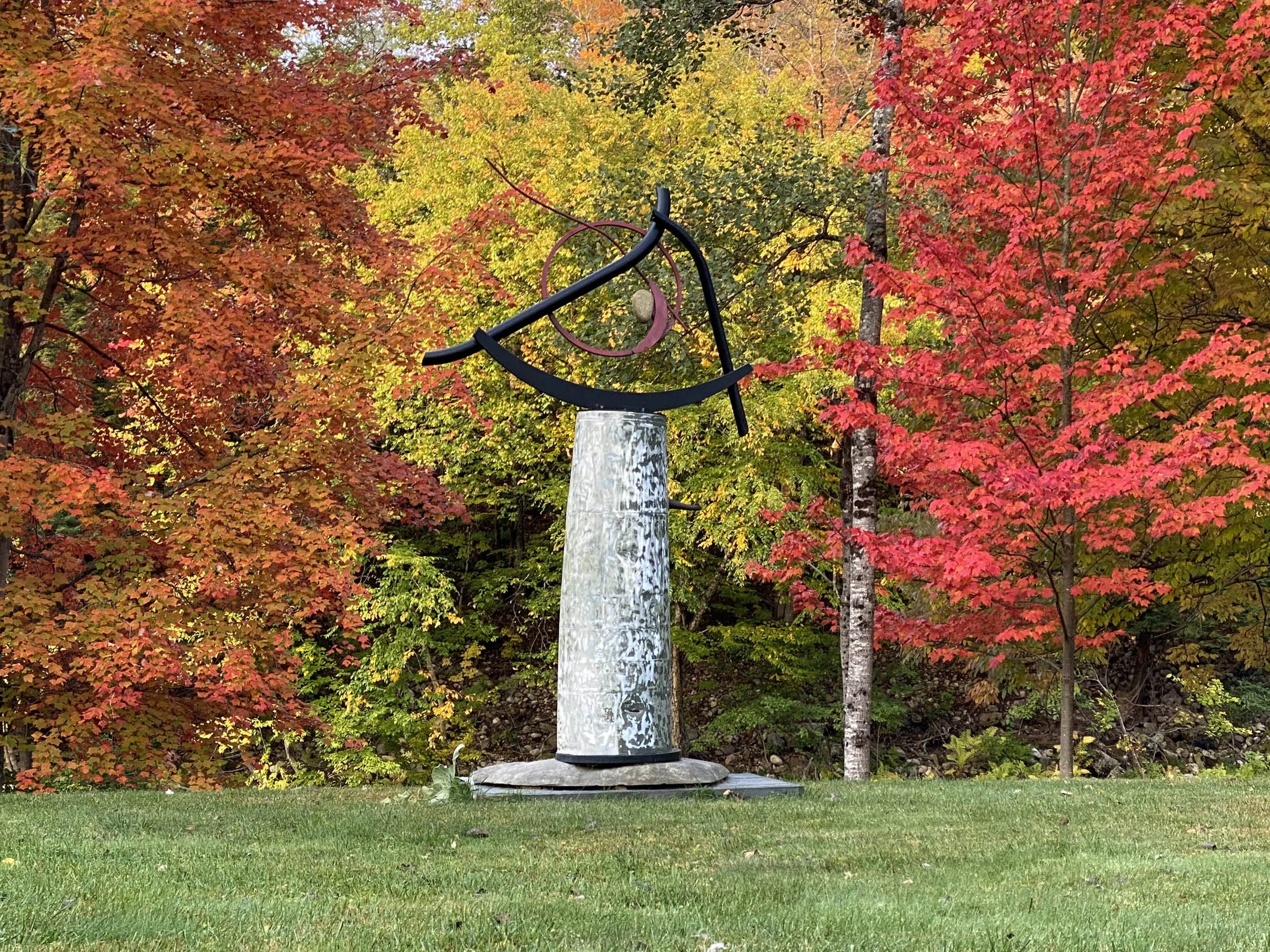
September 2018. River stone, aluminum, galvanized and powder coated steel. Dimensions: 113 × 75 × 30 in (287 × 191 × 76 cm).
Sisyphean Circle Series
The formal arrangements of stone and steel in the Sisyphean Circle series often suggest a figure frozen in the act of prying or pushing a stone. Yet to view the creative process simply as endless toil is undeniably negative. I prefer to approach the myth and metaphor through the lens of Albert Camus.
As in life, this perspective lies at the core of the creative process, where the act of making ultimately triumphs over the object or final product. The focus shifts from the burden of creation to the meaning found in the effort itself—celebrating the process as the true reward rather than the finished sculpture.
—John Van Alstine
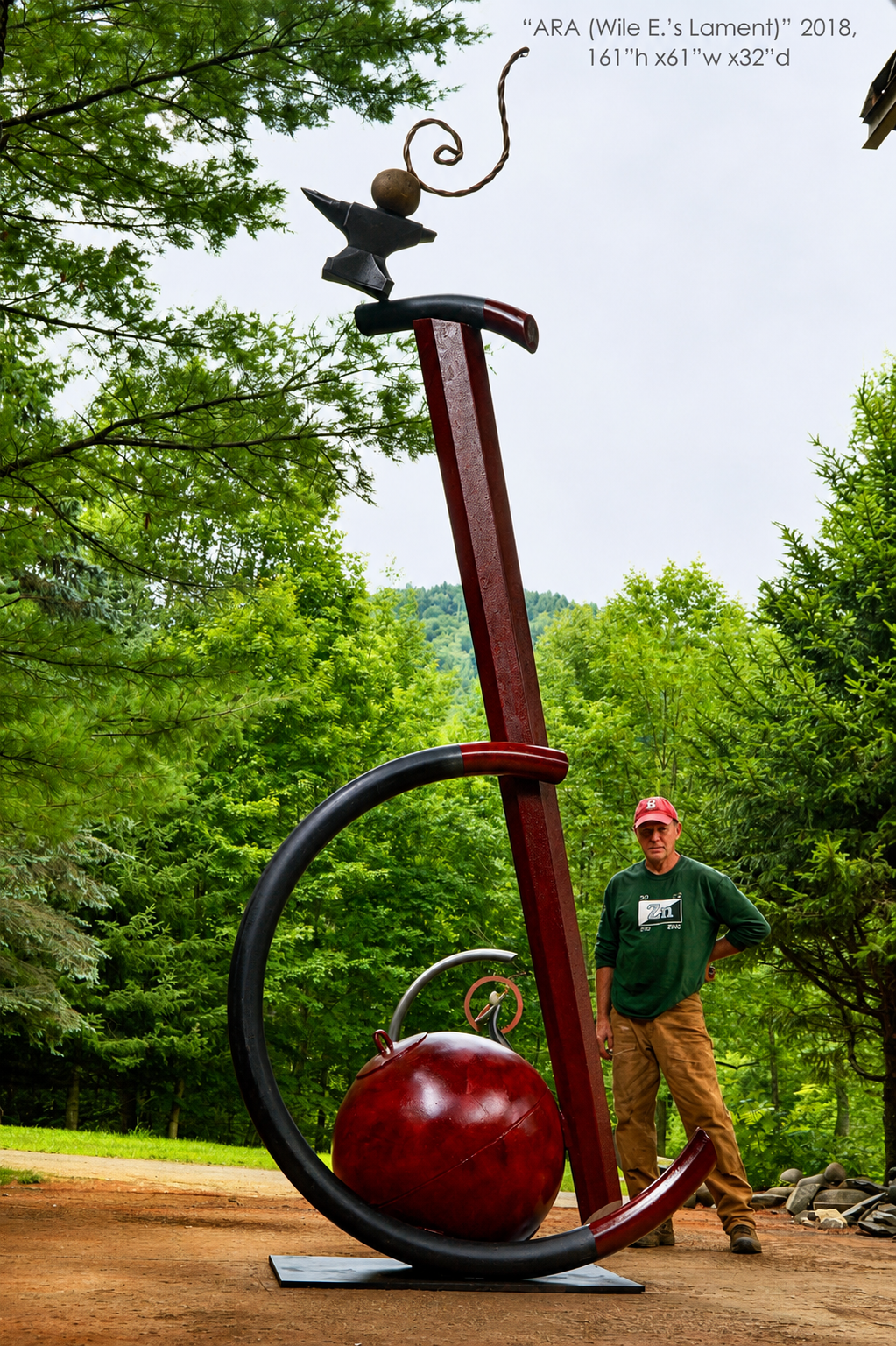
July 2018. River stone, pigmented and sealed steel. Dimensions: 161 × 61 × 32 in (409 × 155 × 81 cm).
The title playfully references Wile E., almost certainly evoking Wile E. Coyote, the Looney Tunes cartoon character known for his ceaseless and often futile pursuits—most famously trying to catch the Road Runner. While there isn’t a formal artist statement widely published online about this specific title, the invoked humor and implied struggle echo themes in Van Alstine’s broader work: energy poised in arrested motion, tension between weight and balance, and a sense of effort caught in mid-action.
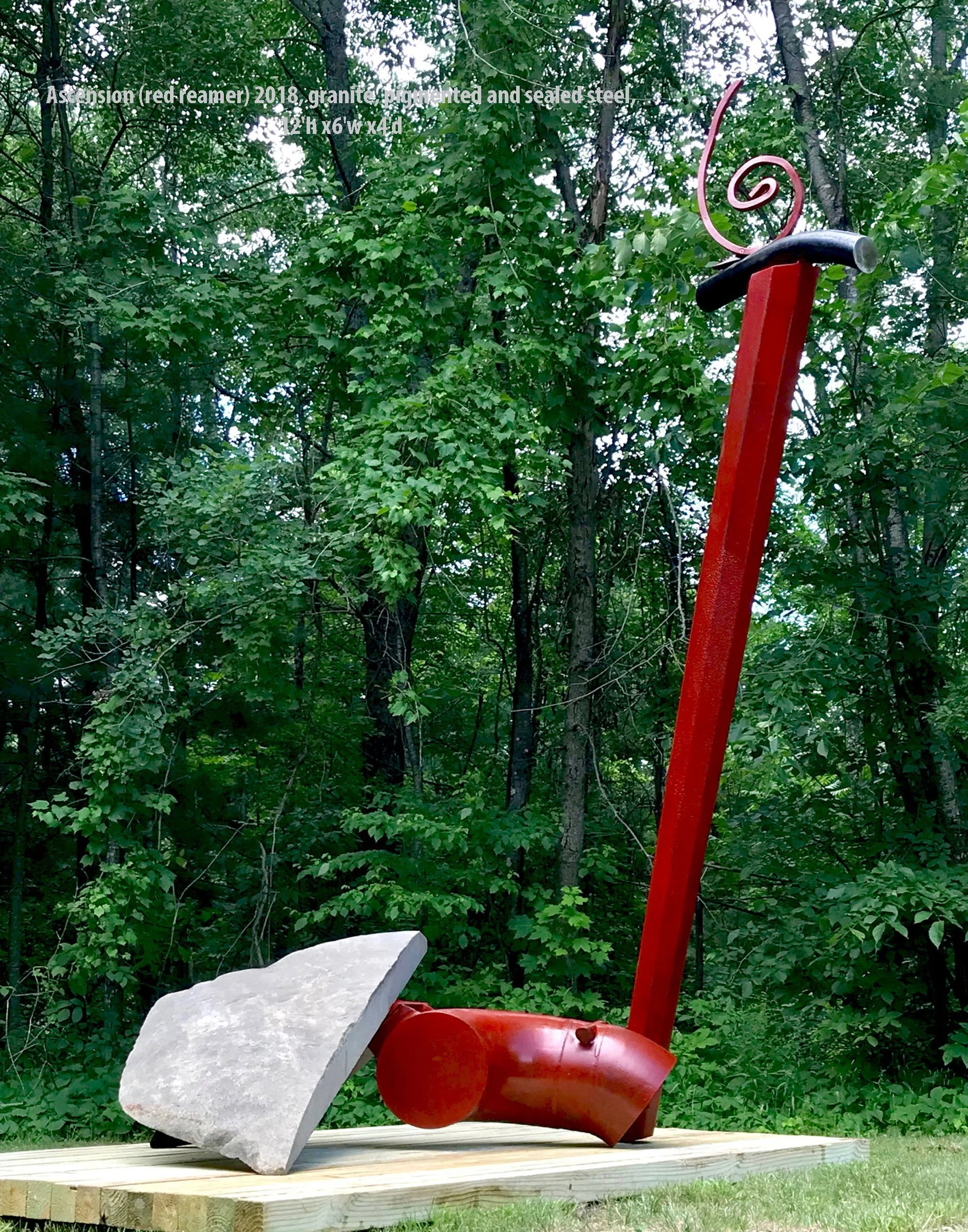
July 2018. Granite, pigmented and sealed steel. Dimensions: 12 × 6 × 4 in (30 × 15 × 10 cm).
A reamer is a type of rotary cutting tool used in metalworking.
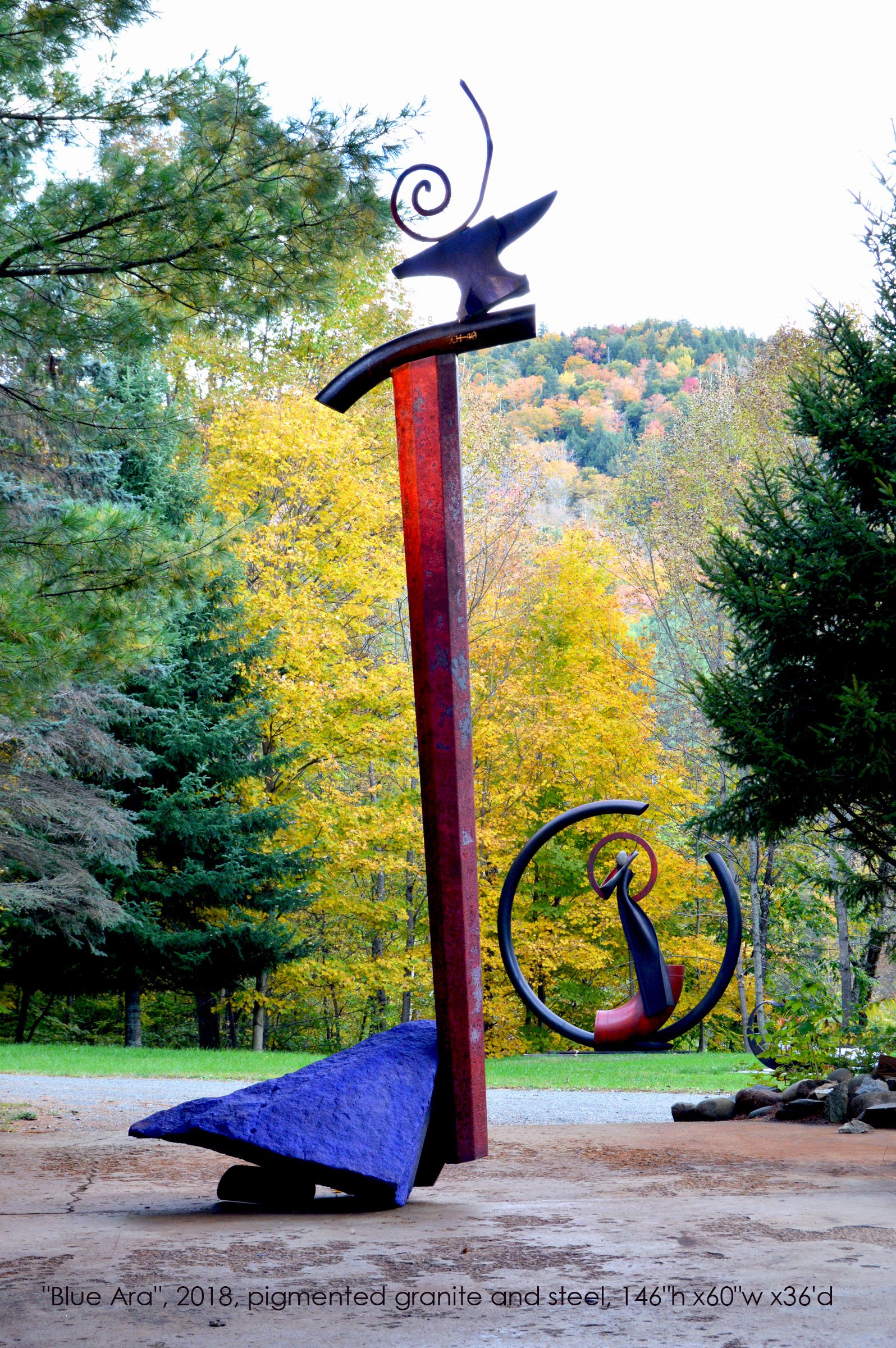
June 2018. Oil enamel on granite, galvanized and powder-coated steel. Dimensions: 146 × 60 × 36 in (371 × 152 × 91 cm).
Many of my works incorporate anvils, either real or cast. The anvil’s form, reminiscent of a boat or vessel, carries an inherent suggestion of journey—an idea that has long fascinated me. As a metalworker and “assembler,” I regard the anvil as both a physical and conceptual forge, the place where things come together and where the act of making transforms into art. For me, it holds an almost sacred presence—an altar of creation. In fact, I’ve titled a number of these works Ara, the Latin word for “altar.”
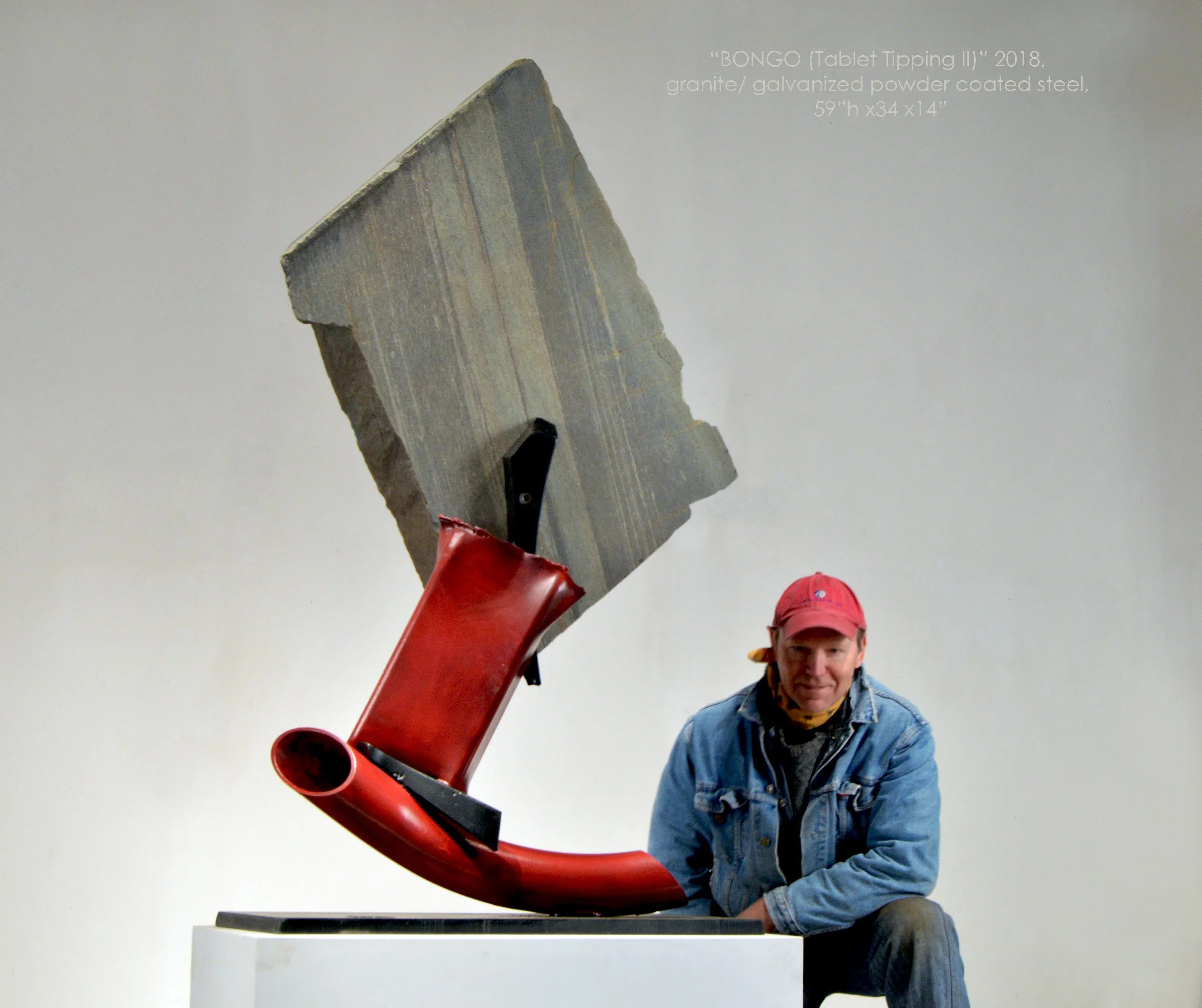
March 2018. Granite, galvanized and powder coated steel. Dimensions: 59 × 34 × 15 in (150 × 86 × 38 cm).
The “Bongo” series references the popular “bongo board” phenomena of the 50’s and 60’s, something I became quite familiar with during my early days training for alpine ski racing.
Inspired by children of the African Gold Coast skillfully balancing on a wood plank and log, WWII pilot Stanley Washburn Jr returned home to make a version for a Christmas gift to his daughter and in 1952 the first Bongo Board was born. The sculpture’s title combined with its dramatic and precarious “swivel” of elements animates the stone and steel, conjuring a figure actively and feverishly keeping balance.
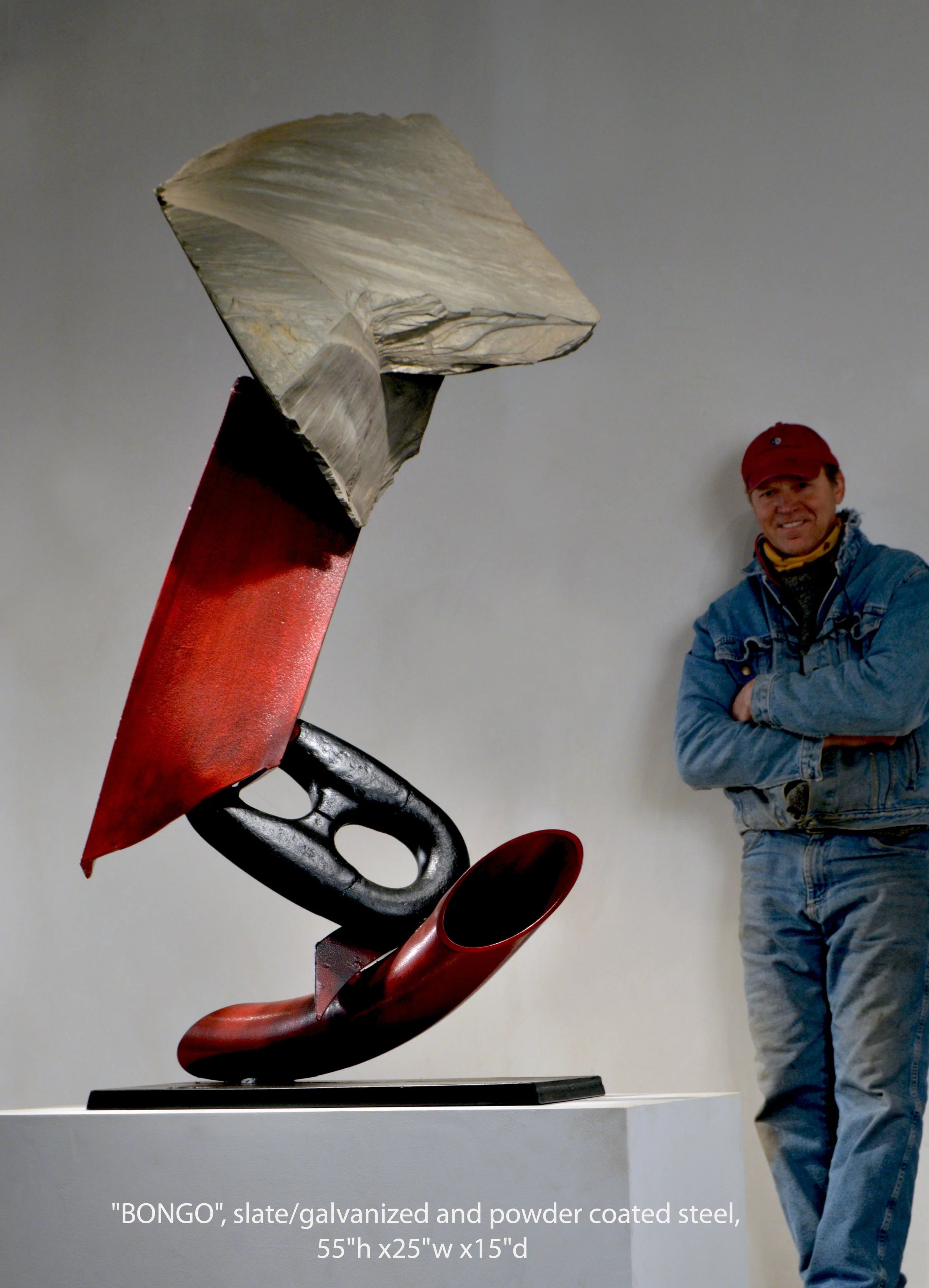
March 2018. Vermont slate, galvanized and powder coated steel. Dimensions: 55 × 25 × 15 in (140 × 64 × 38 cm).
The “Bongo” series references the popular “bongo board” phenomena of the 50’s and 60’s, something I became quite familiar with during my early days training for alpine ski racing.
Inspired by children of the African Gold Coast skillfully balancing on a wood plank and log, WWII pilot Stanley Washburn Jr returned home to make a version for a Christmas gift to his daughter and in 1952 the first Bongo Board was born. The sculpture’s title combined with its dramatic and precarious “swivel” of elements animates the stone and steel, conjuring a figure actively and feverishly keeping balance.
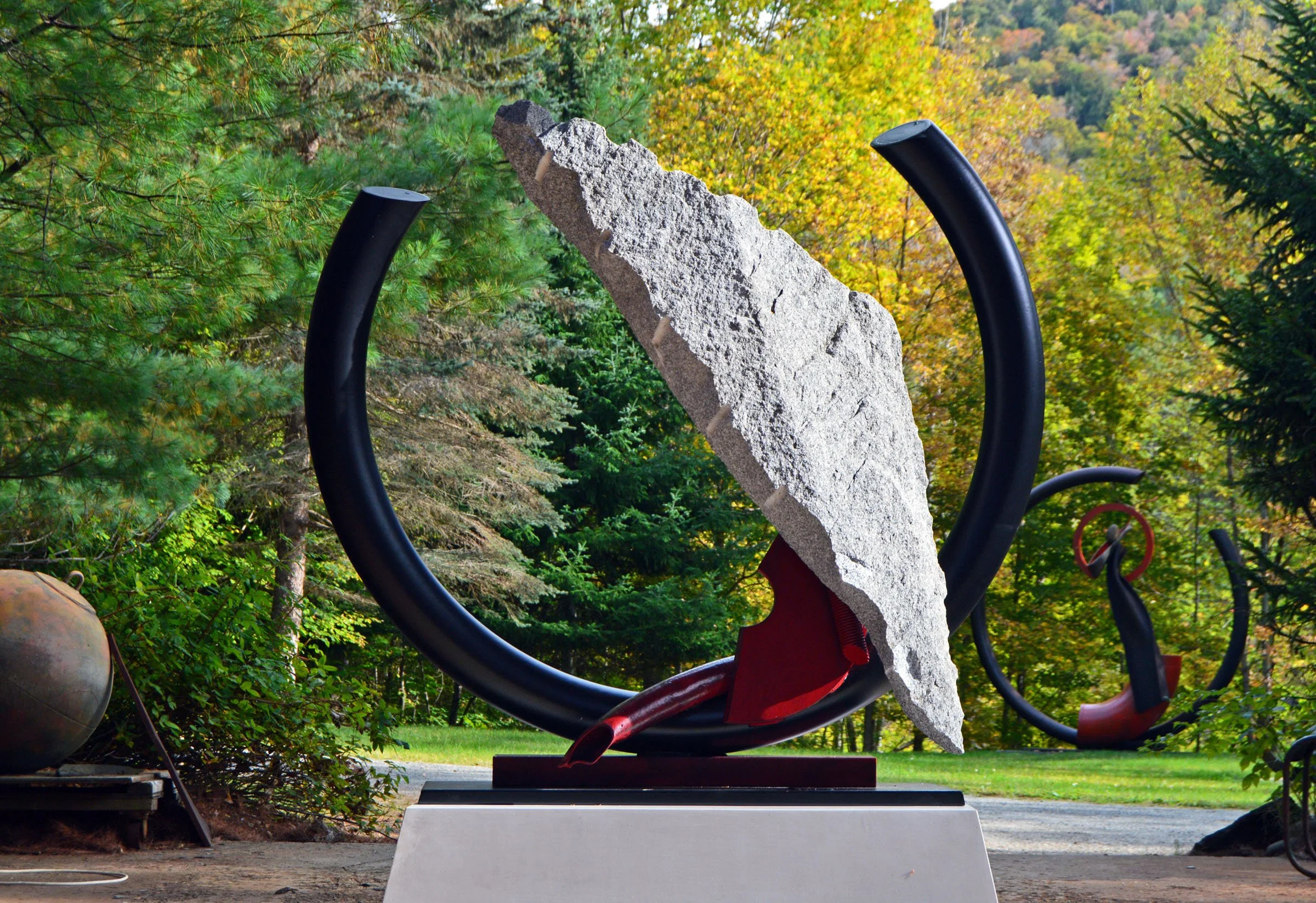
August 2017. Granite, galvanized and powder coated steel. Dimensions: 49 × 53 × 16 in (124 × 135 × 41 cm).
Sisyphean Circle Series
The formal arrangements of stone and steel in the Sisyphean Circle series often suggest a figure frozen in the act of prying or pushing a stone. Yet to view the creative process simply as endless toil is undeniably negative. I prefer to approach the myth and metaphor through the lens of Albert Camus.
As in life, this perspective lies at the core of the creative process, where the act of making ultimately triumphs over the object or final product. The focus shifts from the burden of creation to the meaning found in the effort itself—celebrating the process as the true reward rather than the finished sculpture.
—John Van Alstine
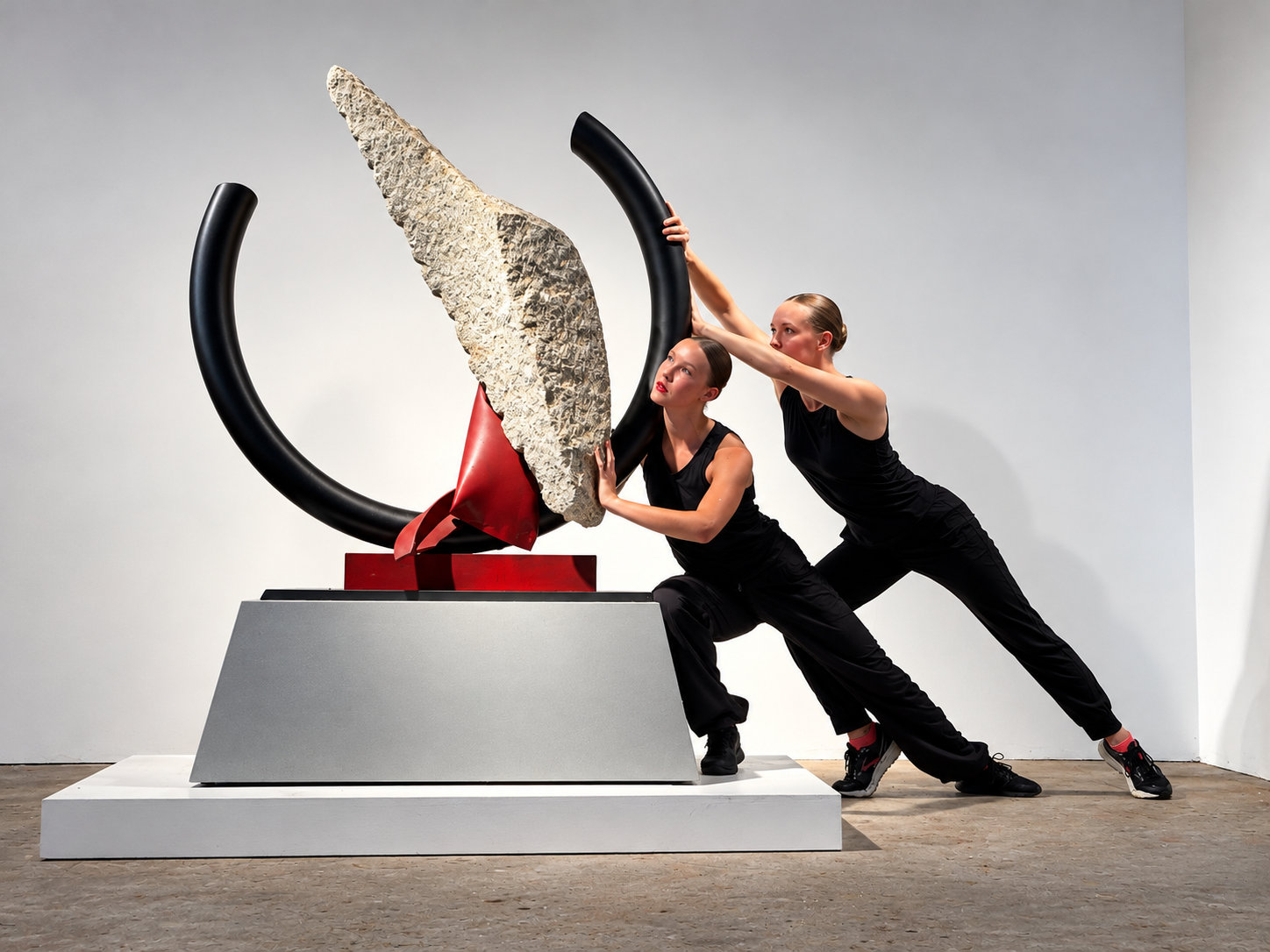
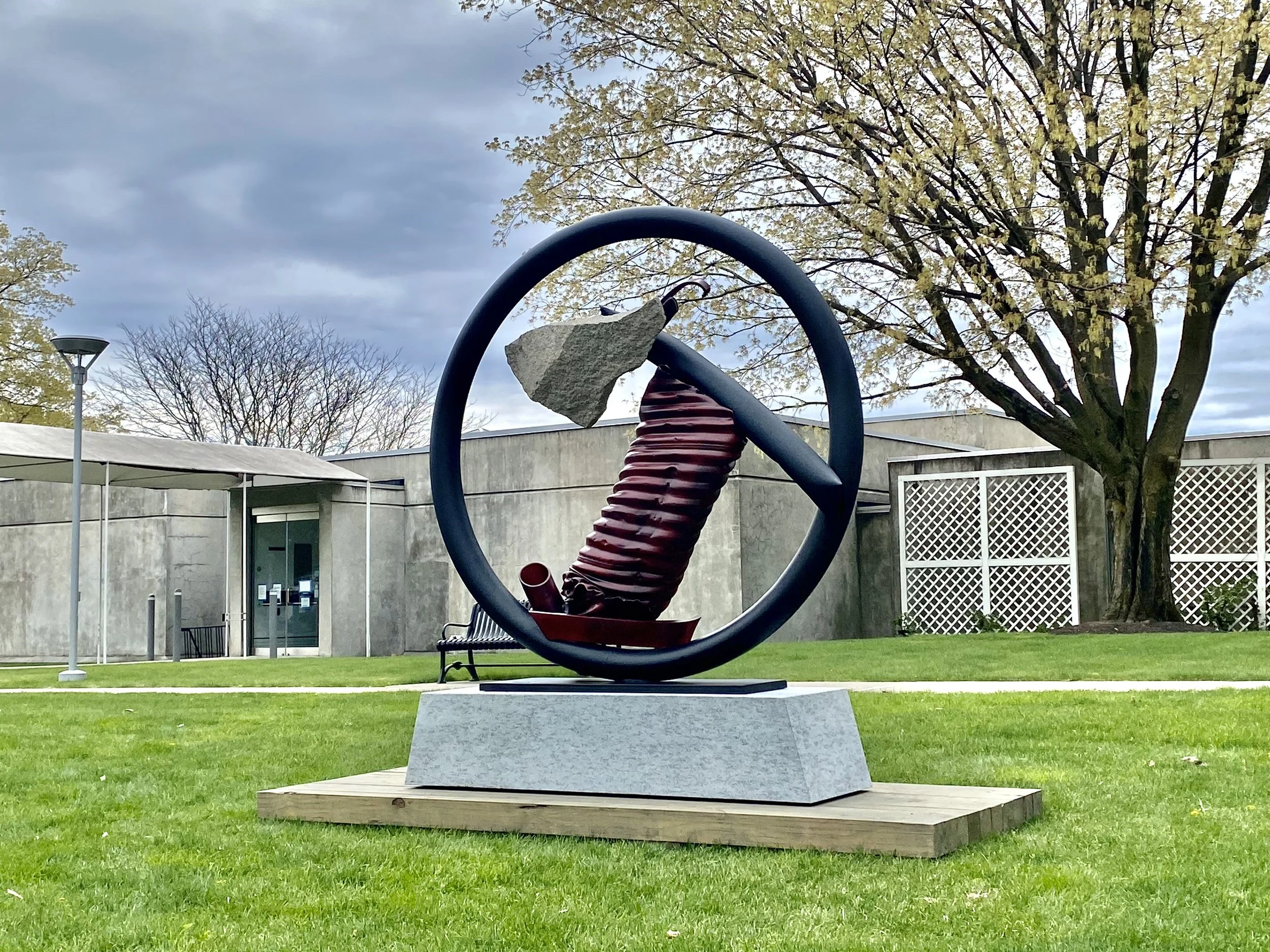
July 2016. Granite, galvanized and powder coated steel. Dimensions: 62 × 64 × 18 in (157 × 163 × 46 cm).
Sisyphean Circle Series
The formal arrangements of stone and steel in the Sisyphean Circle series often suggest a figure frozen in the act of prying or pushing a stone. Yet to view the creative process simply as endless toil is undeniably negative. I prefer to approach the myth and metaphor through the lens of Albert Camus.
As in life, this perspective lies at the core of the creative process, where the act of making ultimately triumphs over the object or final product. The focus shifts from the burden of creation to the meaning found in the effort itself—celebrating the process as the true reward rather than the finished sculpture.
—John Van Alstine
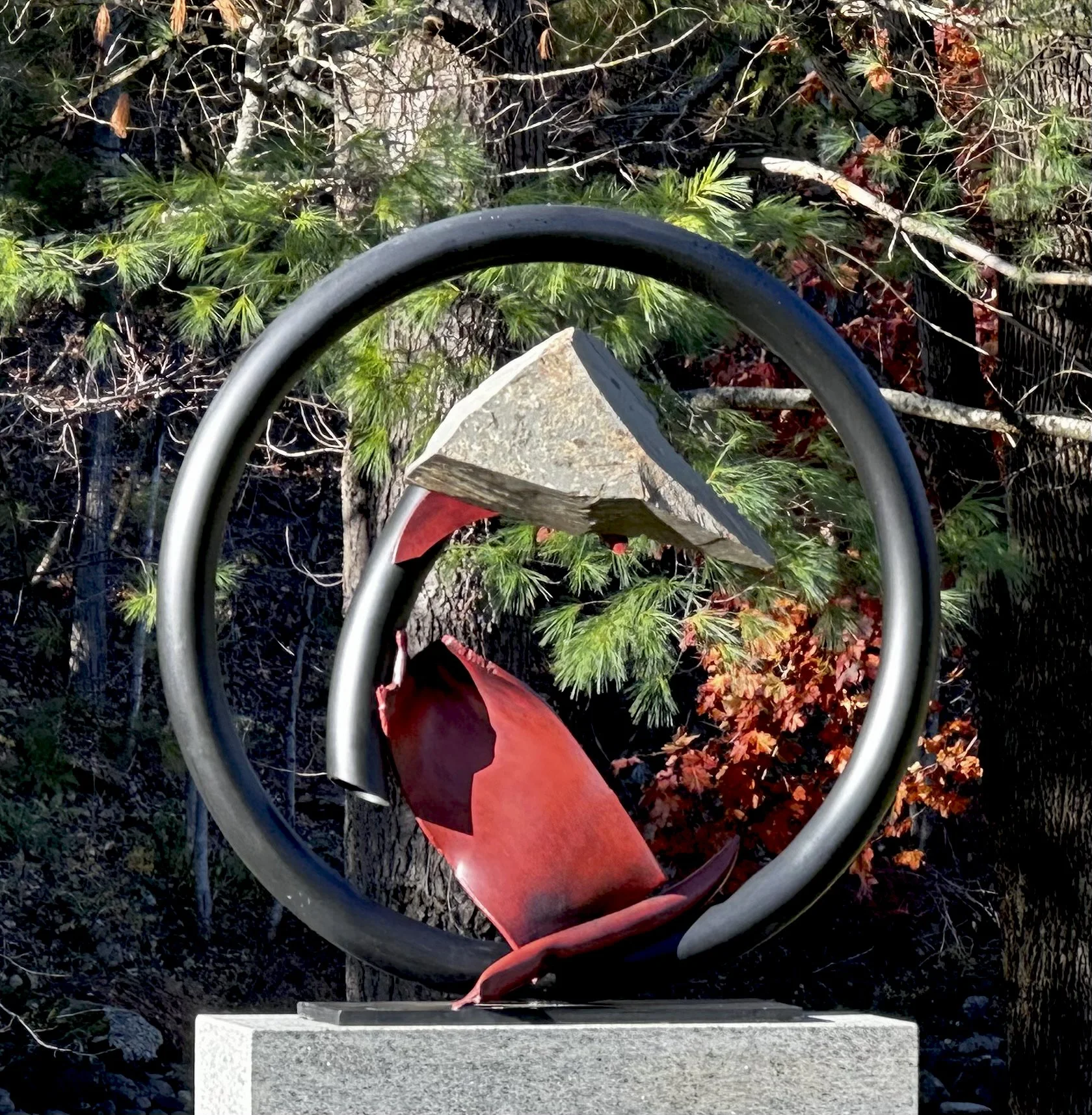
October 2015. Slate, galvanized and powder coated steel. Dimensions: 58 × 75 × 12 in (147 × 191 × 30 cm).
Sisyphean Circle Series
The formal arrangements of stone and steel in the Sisyphean Circle series often suggest a figure frozen in the act of prying or pushing a stone. Yet to view the creative process simply as endless toil is undeniably negative. I prefer to approach the myth and metaphor through the lens of Albert Camus.
As in life, this perspective lies at the core of the creative process, where the act of making ultimately triumphs over the object or final product. The focus shifts from the burden of creation to the meaning found in the effort itself—celebrating the process as the true reward rather than the finished sculpture.
—John Van Alstine
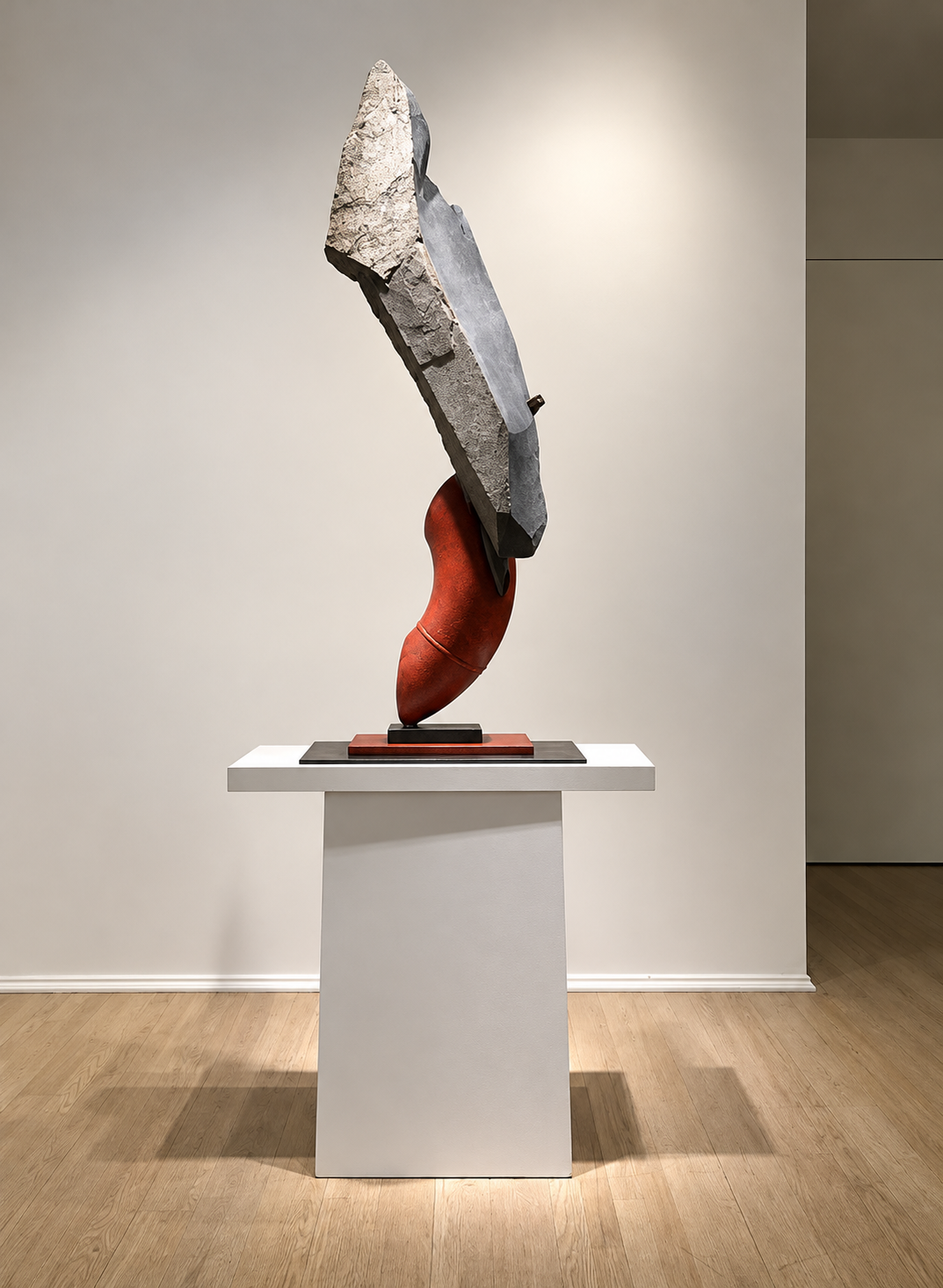
December 2012. Slate, pigmented and sealed steel. Dimensions: 57 × 23 × 14 in (145 × 58 × 36 cm).
A Cambré describes an arched movement of a dancer’s upper body, bending from the waist upwards; the movement can be done forwards, backwards or sideways. I use dance references in many of my works to create a conceptual framework to view and understand the heavy assemblage of earth-bound elements bringing life and meaning to its choreography.
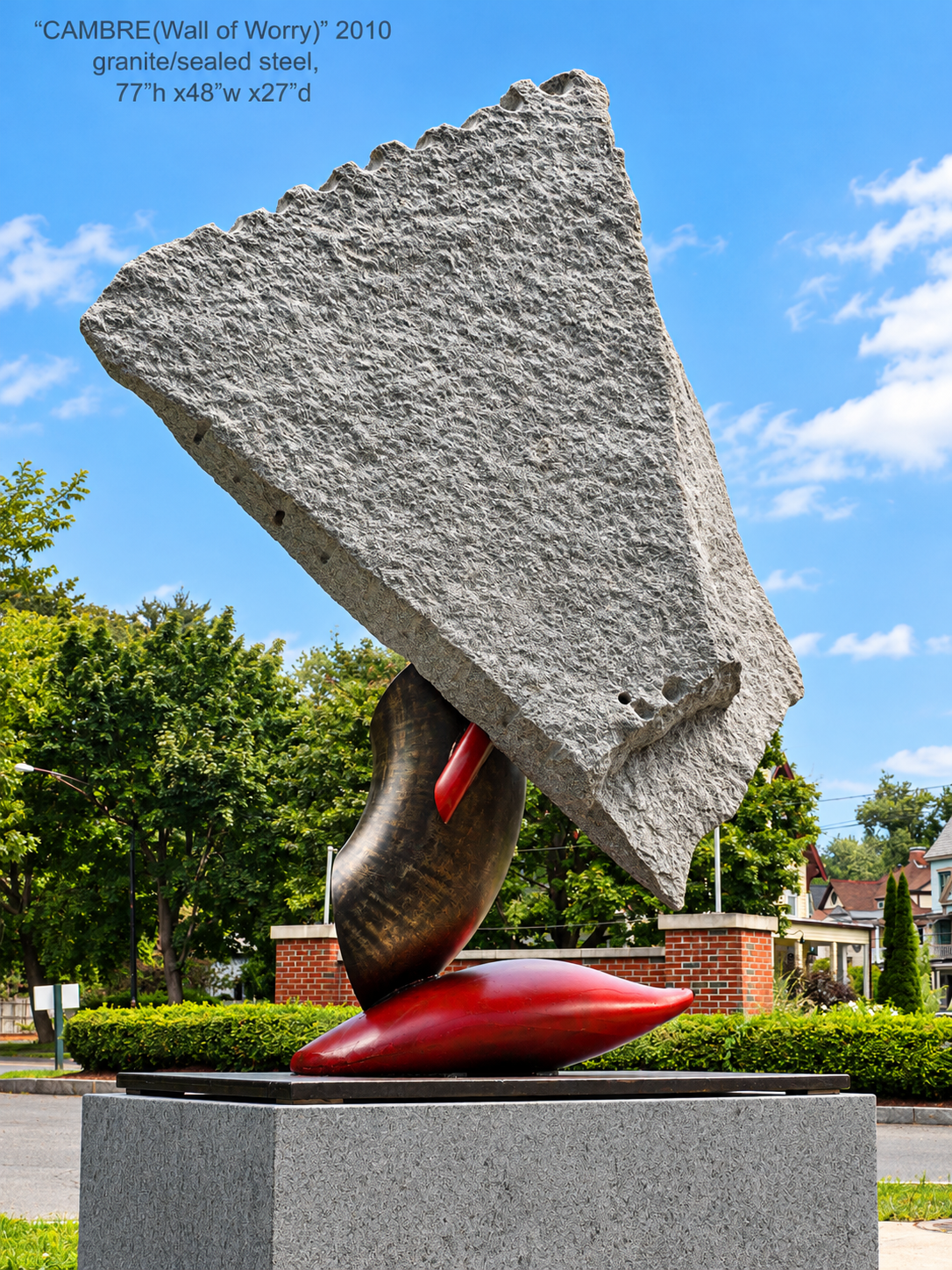
March 2008. Granite, pigmented and sealed steel. Dimensions: 77 × 48 × 27 in (196 × 122 × 69 cm).
A Cambré describes an arched movement of a dancer’s upper body, bending from the waist upwards; the movement can be done forwards, backwards or sideways. I use dance references in many of my works to create a conceptual framework to view and understand the heavy assemblage of earth-bound elements bringing life and meaning to its choreography.
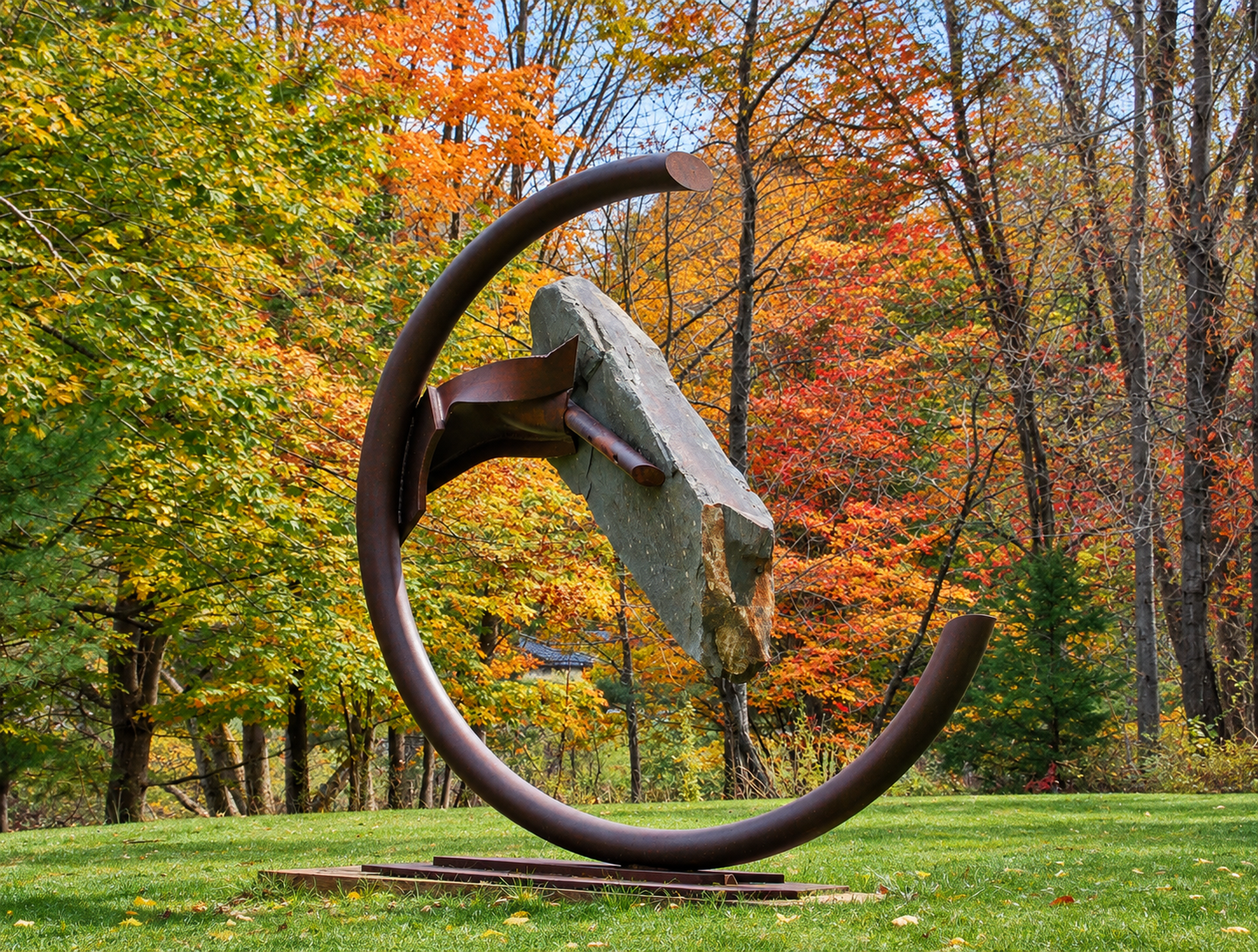
January 2007. Slate, steel. Dimensions: 78 × 82 × 24 in (198 × 208 × 61 cm).
The Sisyphean Series
The Greek myth of Sisyphus, condemned to endlessly push a boulder uphill, has inspired more than 250 of my sculptures. Rather than seeing the myth as a symbol of futility, I share philosopher Albert Camus’s more positive interpretation—that meaning and fulfillment can be found in the struggle itself. In many ways, I see Sisyphus as autobiographical, reflecting my lifelong pursuit as an artist, confronting challenges, taking risks, and finding purpose in the act of creation.
My Sisyphean works bring stone and steel together in precarious yet stable arrangements, often incorporating circular forms suggesting perpetual motion. For me, they are metaphors for the creative process—an ongoing cycle of experimentation, discovery, setbacks, and renewal. Each completed sculpture is both an achievement and a starting point, celebrating the journey rather than simply the destination.
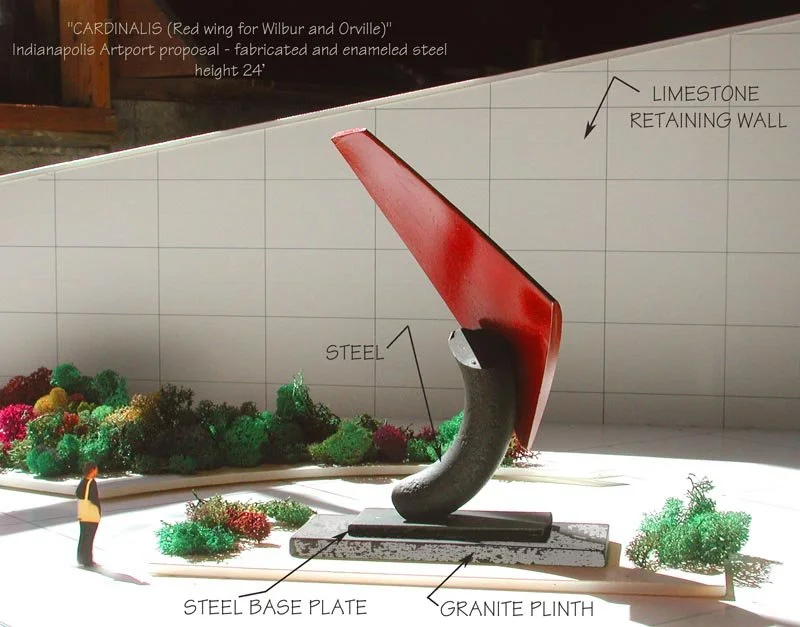
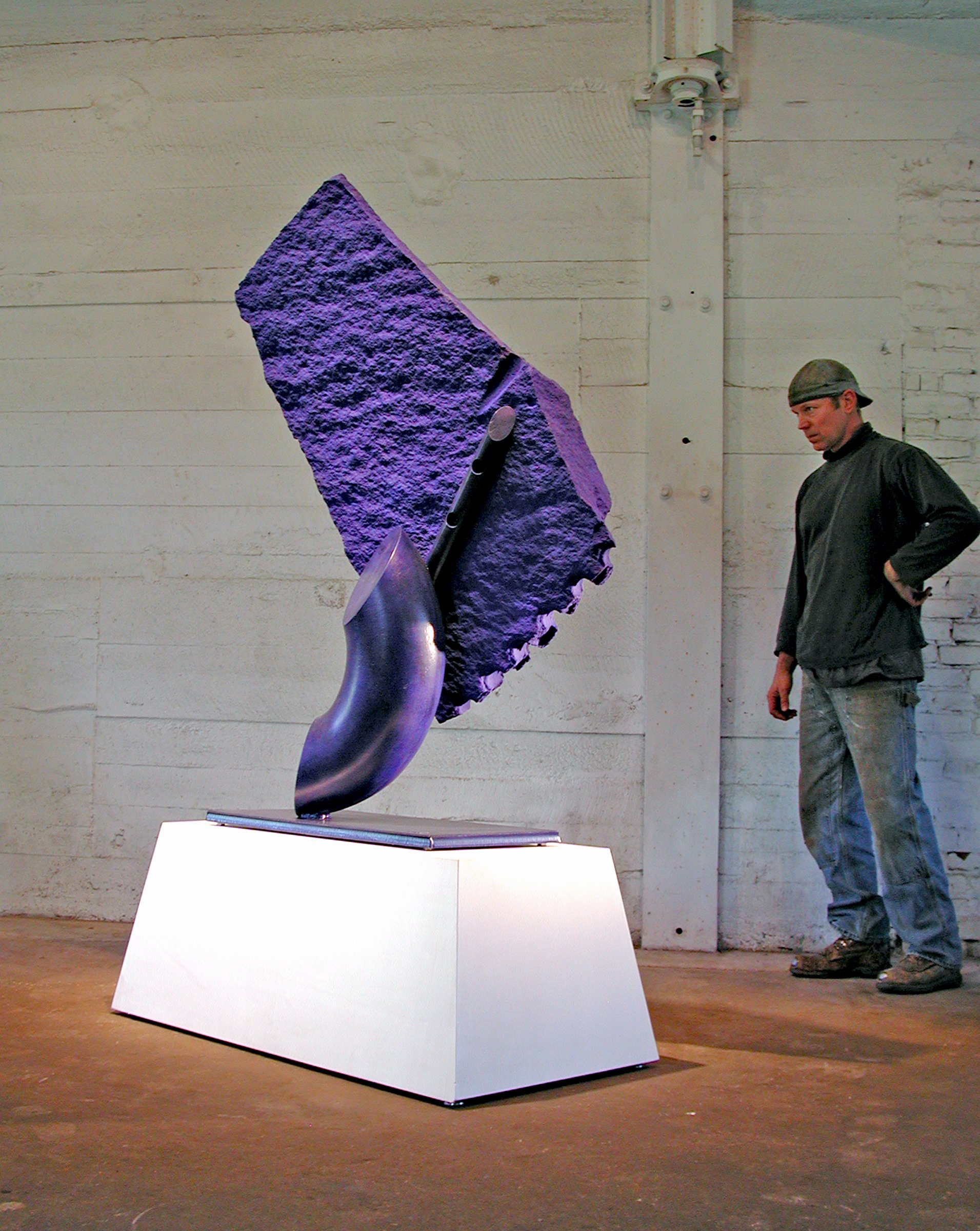
May 2004. Enamel on steel, granite. Dimensions: 60 × 40 × 22 in (152 × 102 × 56 cm).
A Cambré describes an arched movement of a dancer’s upper body, bending from the waist upwards; the movement can be done forwards, backwards or sideways. I use dance references in many of my works to create a conceptual framework to view and understand the heavy assemblage of earth-bound elements bringing life and meaning to its choreography.
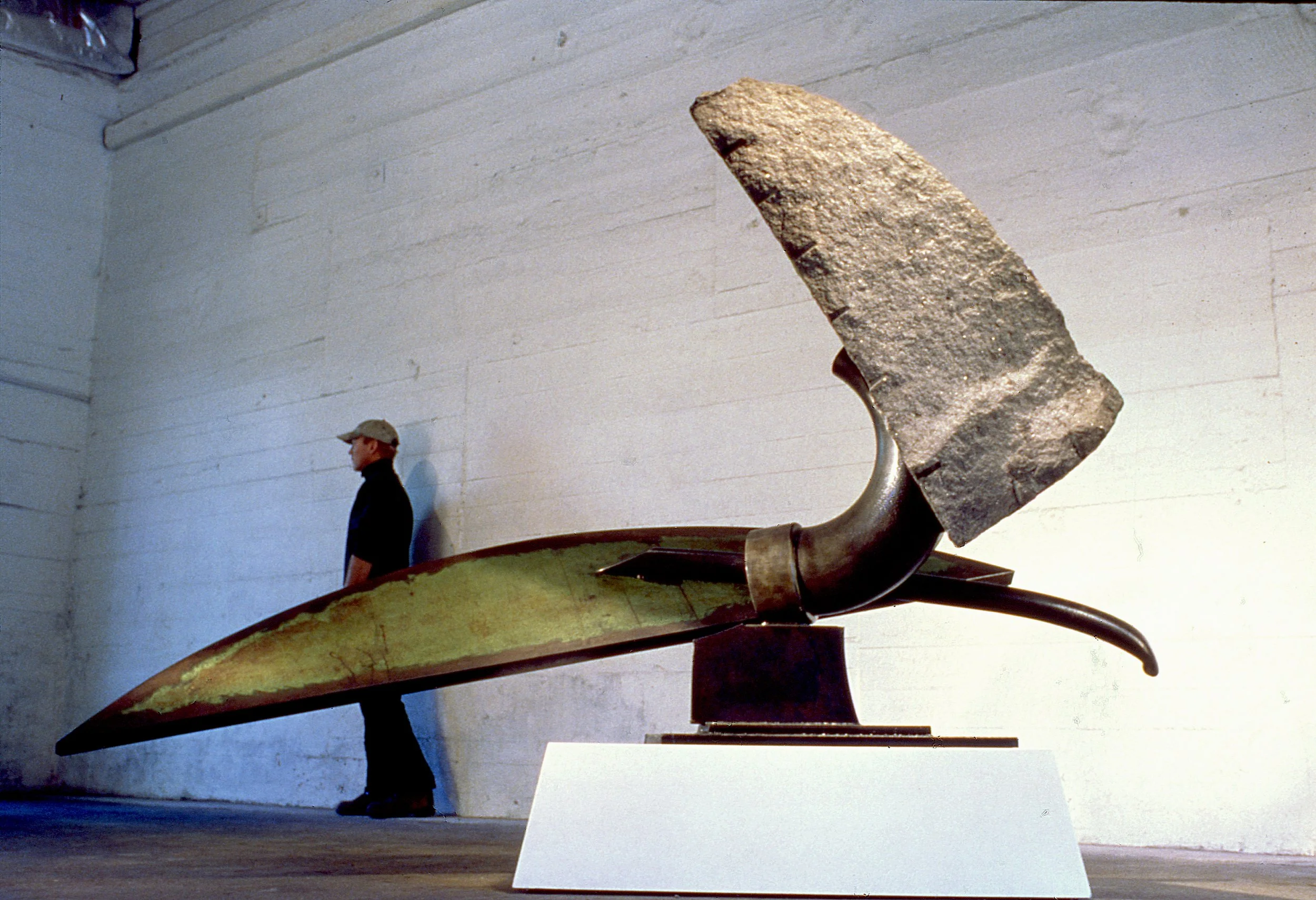
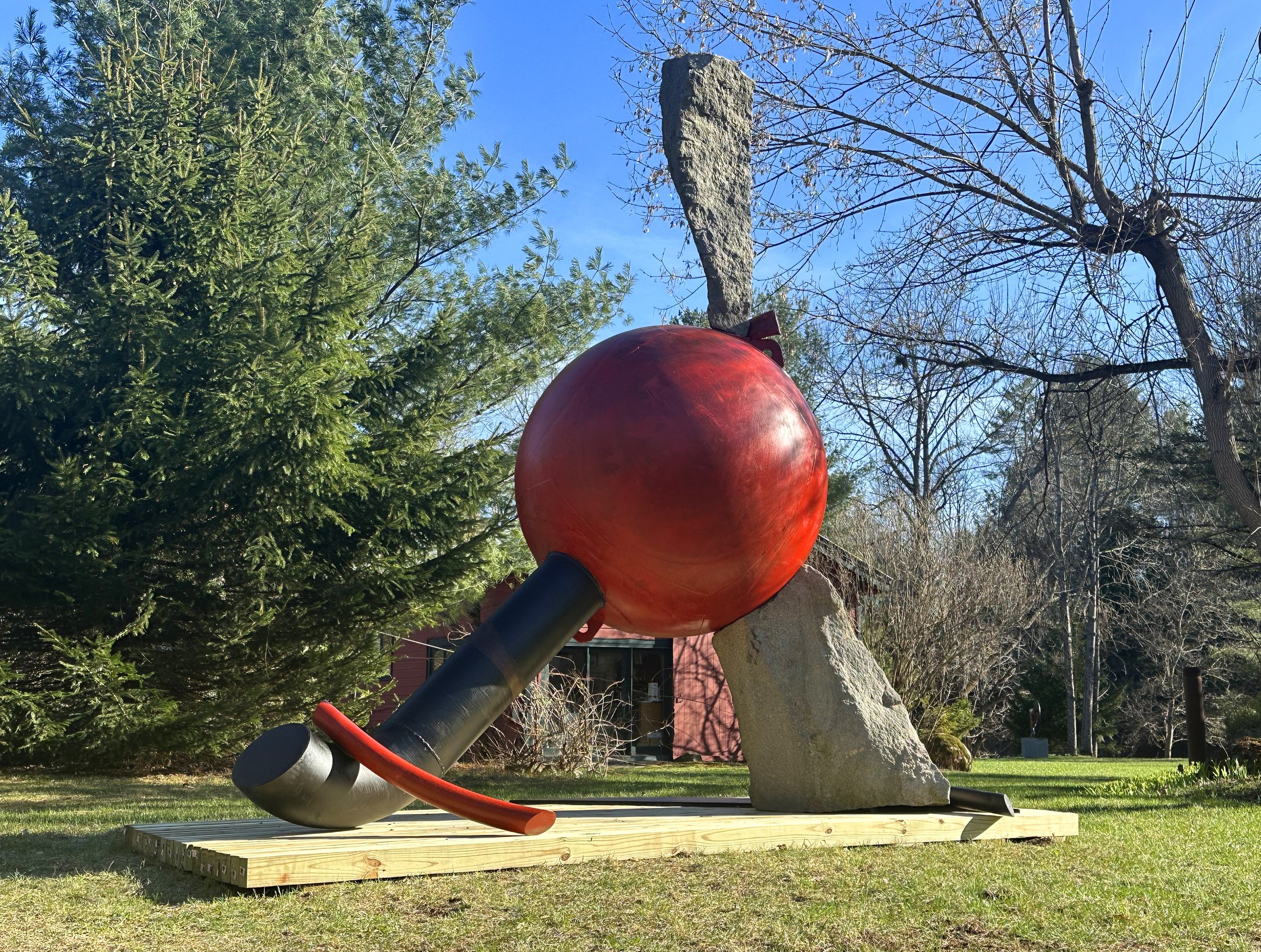
December 2000. Granite, steel painted. Dimensions: 12 × 11 × 7 in (30 × 28 × 18 cm).
Global (Buoy II) was purchased by Florida collector Martin Margulies and installed at Florida International University in Miami. In 2021, during the COVID period, it was shipped to Massachusetts along with several other works and installed at his residence there. When the house was sold in 2024, the sculpture was returned to me. It was restore and as of 2026, it is installed in my sculpture garden in Wells, New York.
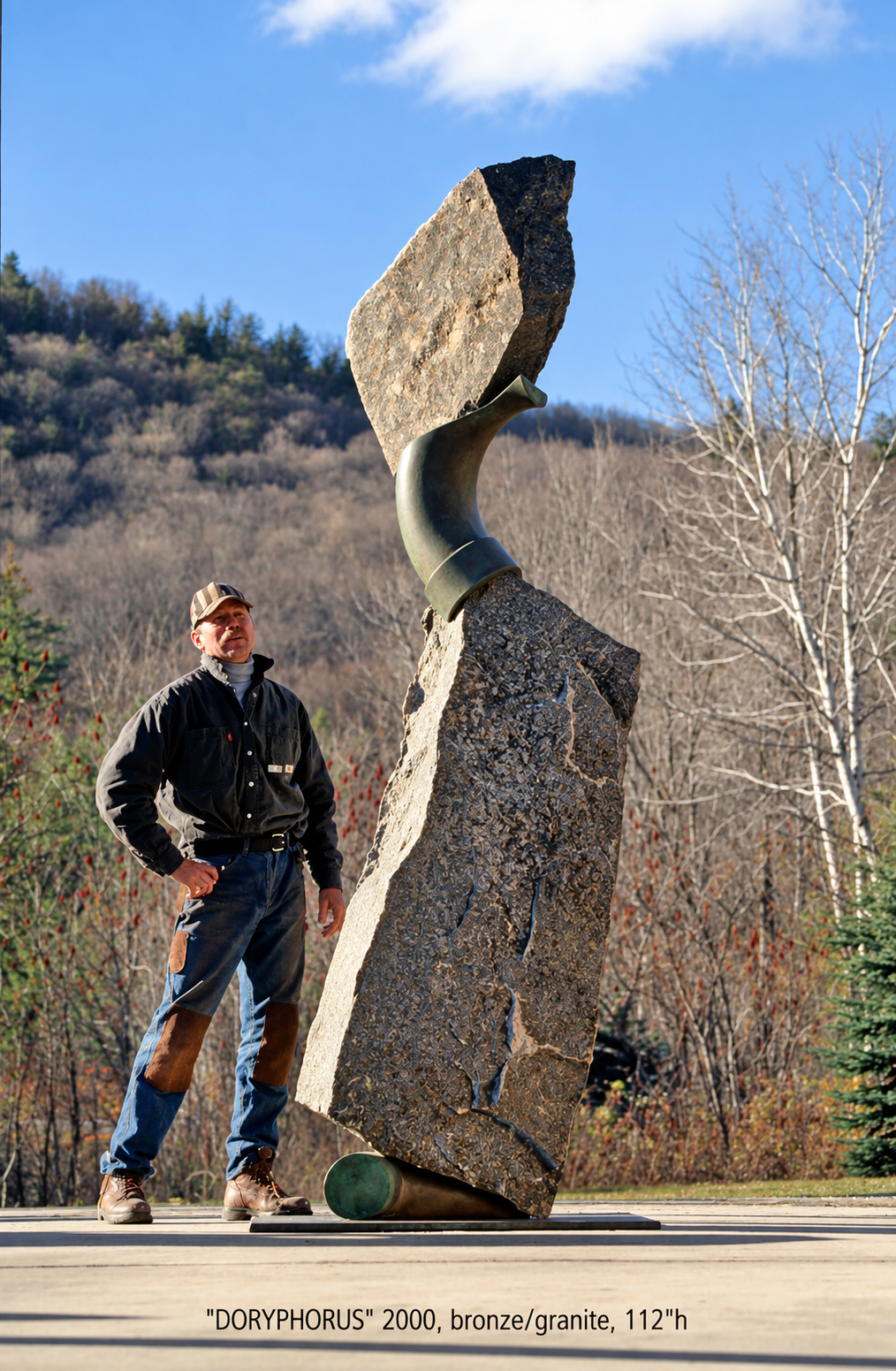
November 2000. Bronze, granite. Dimensions: 112 × 40 × 28 in (284 × 102 × 71 cm).
As its title suggests, this work was inspired and pays homage to the classical greek sculpture by Polyclitus, DORYPHORUS (Spear Bearer) c.450-440 B.C. This Greek work (below) is a quintessential example of contropposto (counterpoise), the Italian word we use to describe the “S-like” vertical line (or, to be exact, a reverse S-curve) that runs through figurative sculpture. It is this development that allowed the Greeks to convincingly convey motion or life in a non moving piece of stone.
Van Alstine's granite and bronze "Doryphorus" convincingly exhibits the reverse "S" curve. His attraction and affection for this period of classical work is precisely because of the way the ancients were able to breath life and movement into inanimate materials, a concept at the very core of his work for over 25 years.
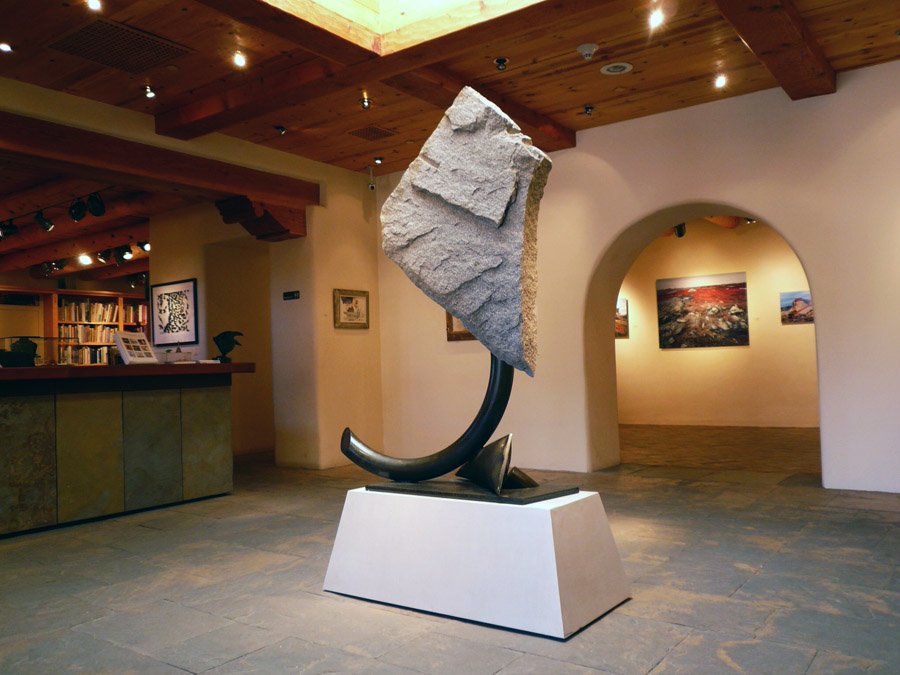
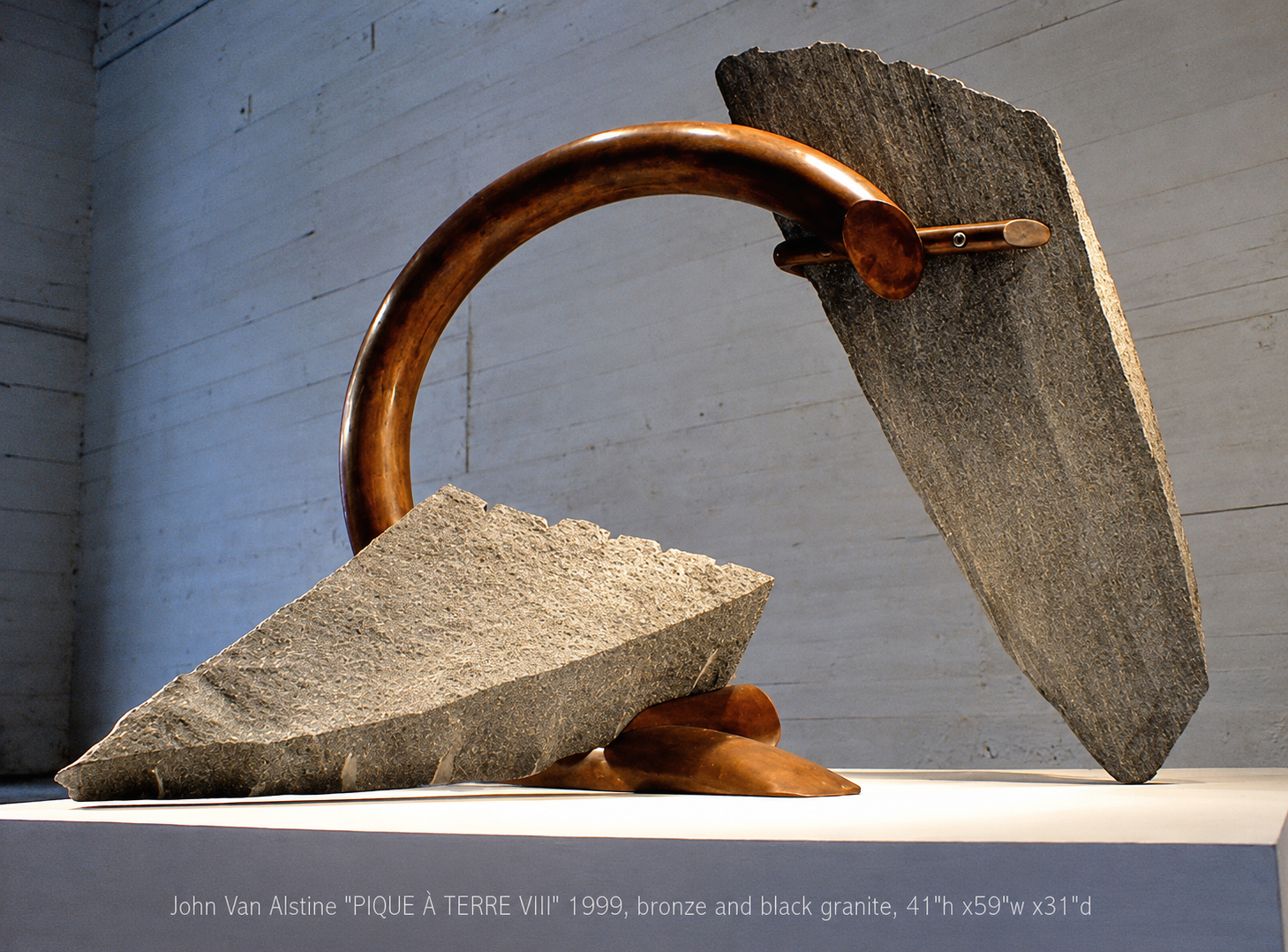
August 1999. Bronze, granite. Dimensions: 41 × 59 × 31 in (104 × 150 × 79 cm).
"Some more recent pieces refer to movement of the figure, particularly the Juggler and Pique à Terre series. Pique à terre is a term from classical French ballet for a pose with one toe touching the ground, the other foot firmly planted, and a sweeping arm gesture. Once you are aware of the title, when you see the piece the connection is clear. I am in a sense choreographing these works, getting a heavy weight off the ground and making it dance—taking what is often seen as a negative, the fact that stone is damn heavy and a big hassle to move around, and turning it into a positive. It is this transition that helps give theses pieces their magic".
from : Bones of the Earth, Spirit of the Land. The Sculpture of John Van Alstine
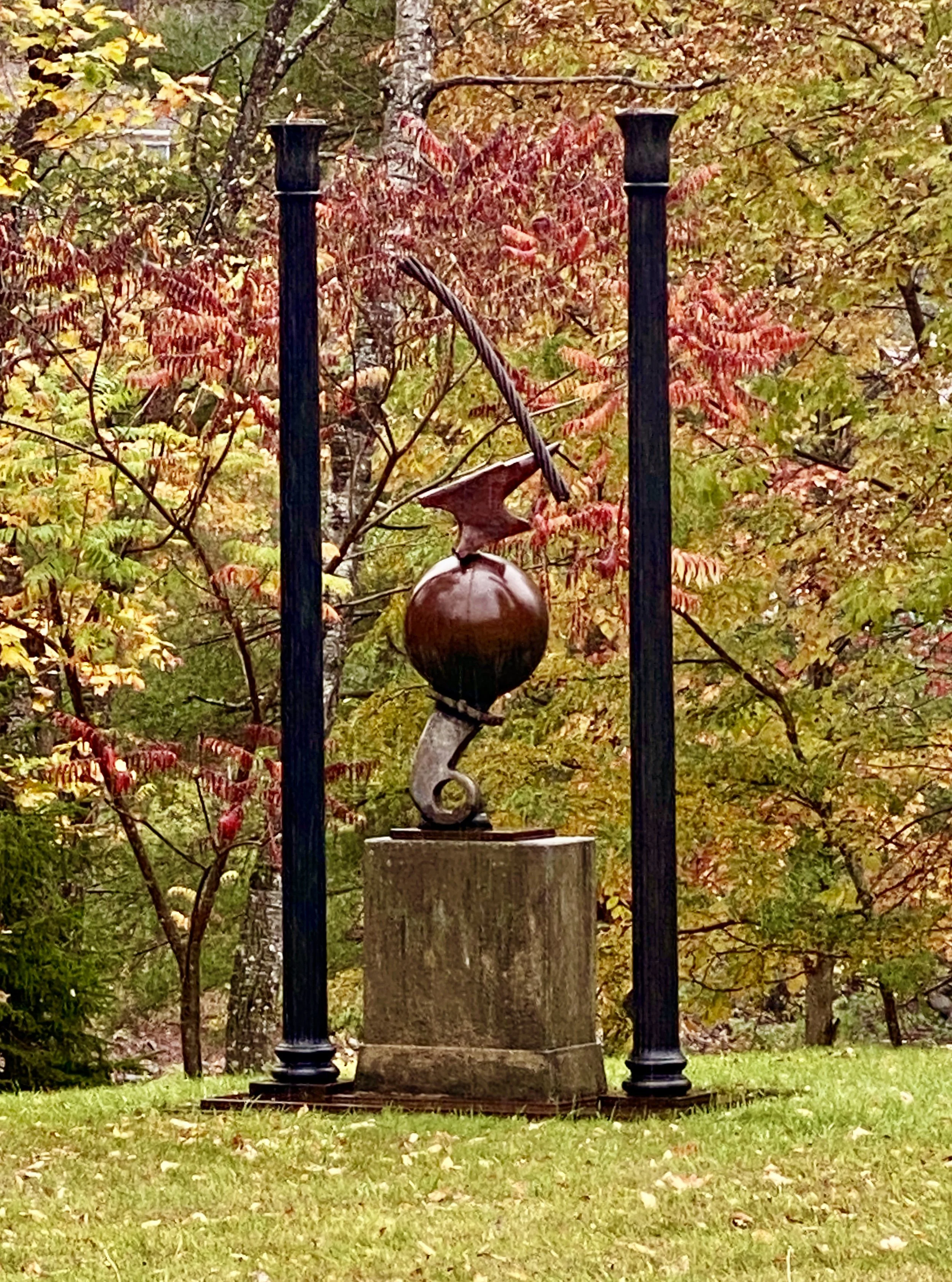
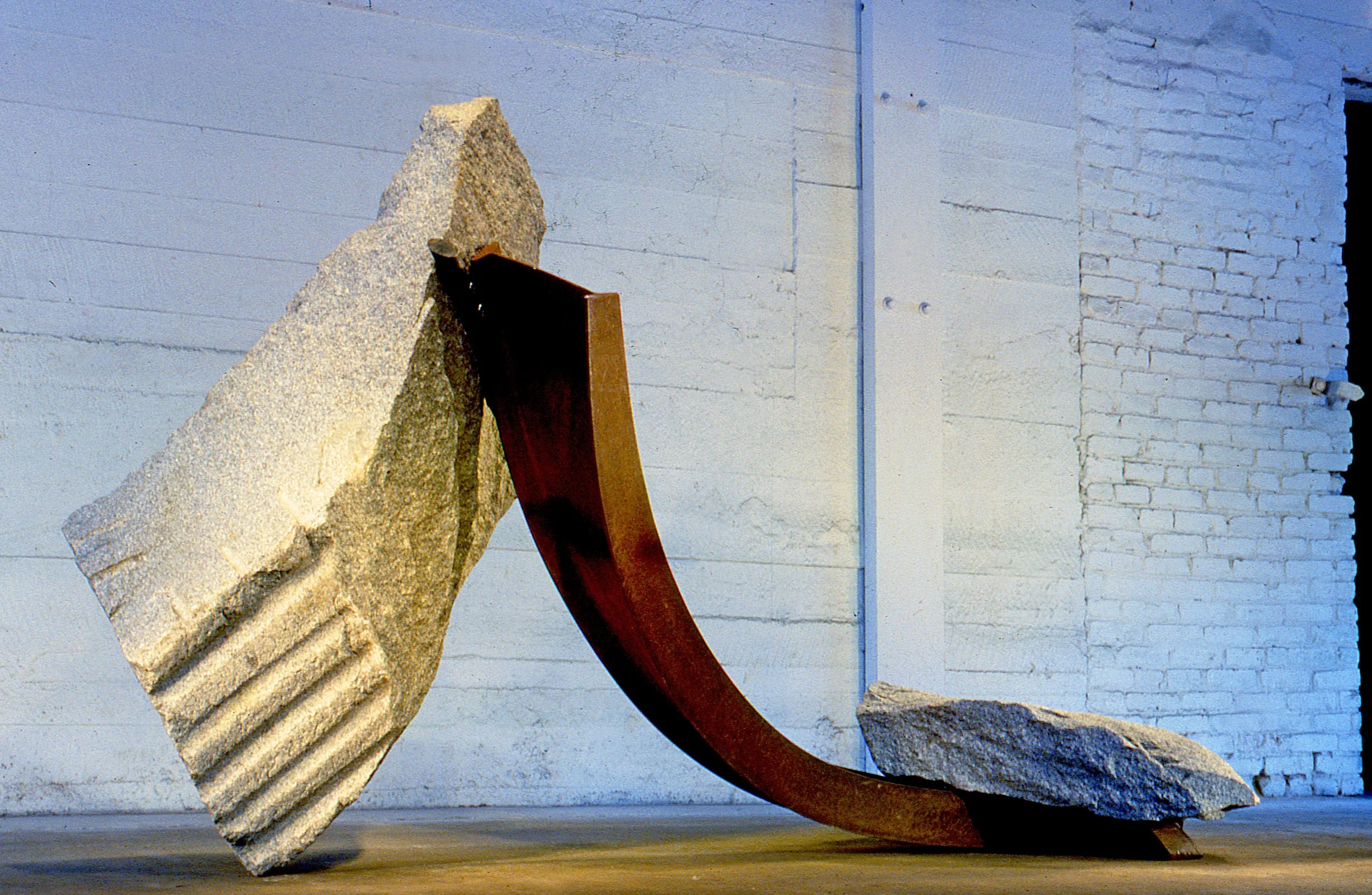
March 1997. Granite, steel. Dimensions: 58 × 106 × 50 in (147 × 269 × 127 cm).
Pique à Terre VI, 1997
Pique à Terre VI, the sixth work in the series, developed as a spin-off from my earlier Rounder and Go-Round Series, continuing their circular vocabulary and my ongoing interest in combining stone and metal. At this larger scale, a massive granite slab is poised on a single point while the sweeping steel arc connects it to the lower stone, transforming weight and gravity into balance, movement, and unexpected levity.
The title references a dance position in which one toe lightly touches the floor, the other foot remains firmly planted, and an arm makes a sweeping gesture. I began thinking of myself as a kind of choreographer—arranging heavy, earthbound materials so that, in a sense, they appear to dance.
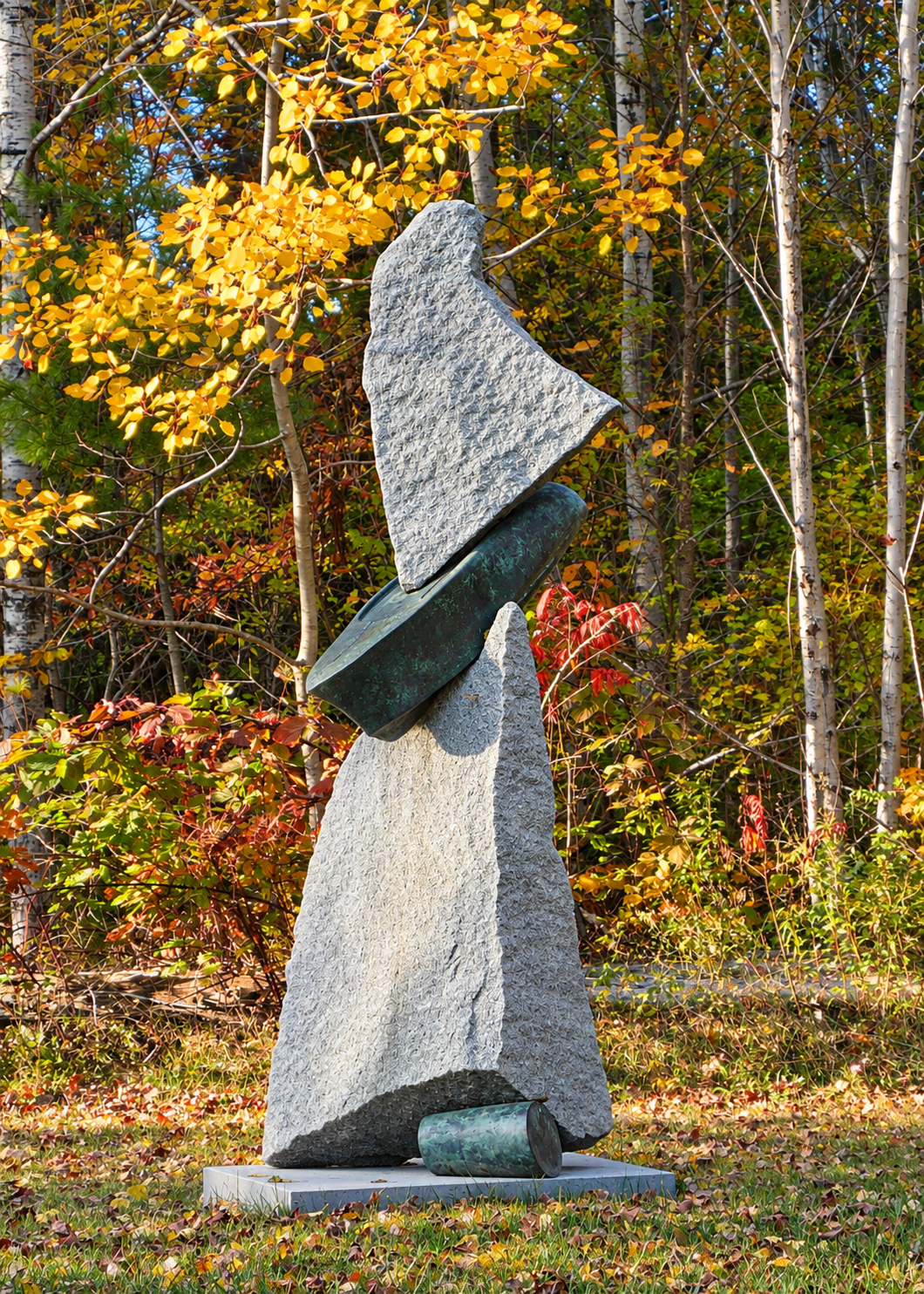
1996. Bronze, granite. Dimensions: 92 × 43 × 30 in (234 × 109 × 76 cm). Private Collection - New Jersey
The Latin title translates as “Stone Sail;” the sculpture features a bronze vessel careening off a sparkling gray granite “waterfall”, together they present an interesting suite of ironies.
Stone that we perceive as durable, ageless and heavy takes on the visual fluidity and capriciousness of water, reminding us that granite, an igneous stone, was once liquid. A sail generally get its billowing shape from something as ephemeral as the wind. Sparkling bits of cystatin mica embedded in the granite bring to mind sun sparkling on freshly fallen snow. All these characteristics and associations are quite the opposite of our traditional understanding of stone.
Art often confronts us with these conceptual reversals allowing, or sometimes forcing, us “to see” our preconceived ideas differently. When successful, it can re-align our instinctive understanding of the “real world” and open us up to new ideas and experiences.
John Van Alstine
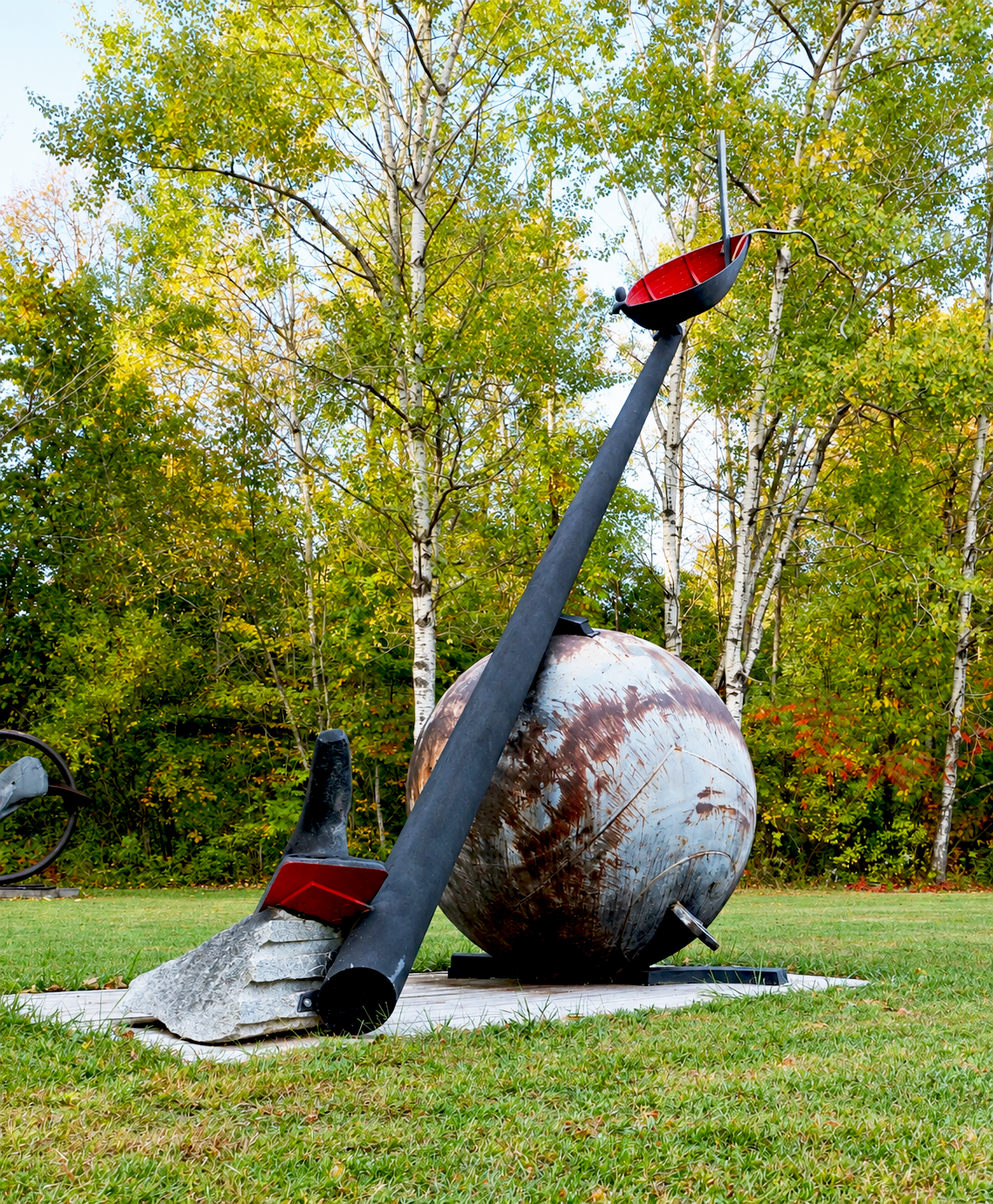
February 1996. Granite, steel, bronze. Dimensions: 17 × 4 × 20 in (43 × 10 × 51 cm).
Charon, the mythical ferryman, is charged with transporting the deceased across the River Styx to the underworld. The vessel - my attempt to simulate an Adirondack like guide boat in steel – with its out-stretched oar, un-inhibited trailing “rope” and attached coin to “pay passage”- is poised atop the long black pole or stick/styx. It is aiming for its destination, the large cleat below (under) the globe like, metal buoy. The piece, contrary to perhaps its first impression is not about death or dying, but rather quite the opposite. The “final” journey is portrayed as a wild almost carnival-like passage, reminding us of the importance of each day and the necessity to live each one fully.
John Van Alstine
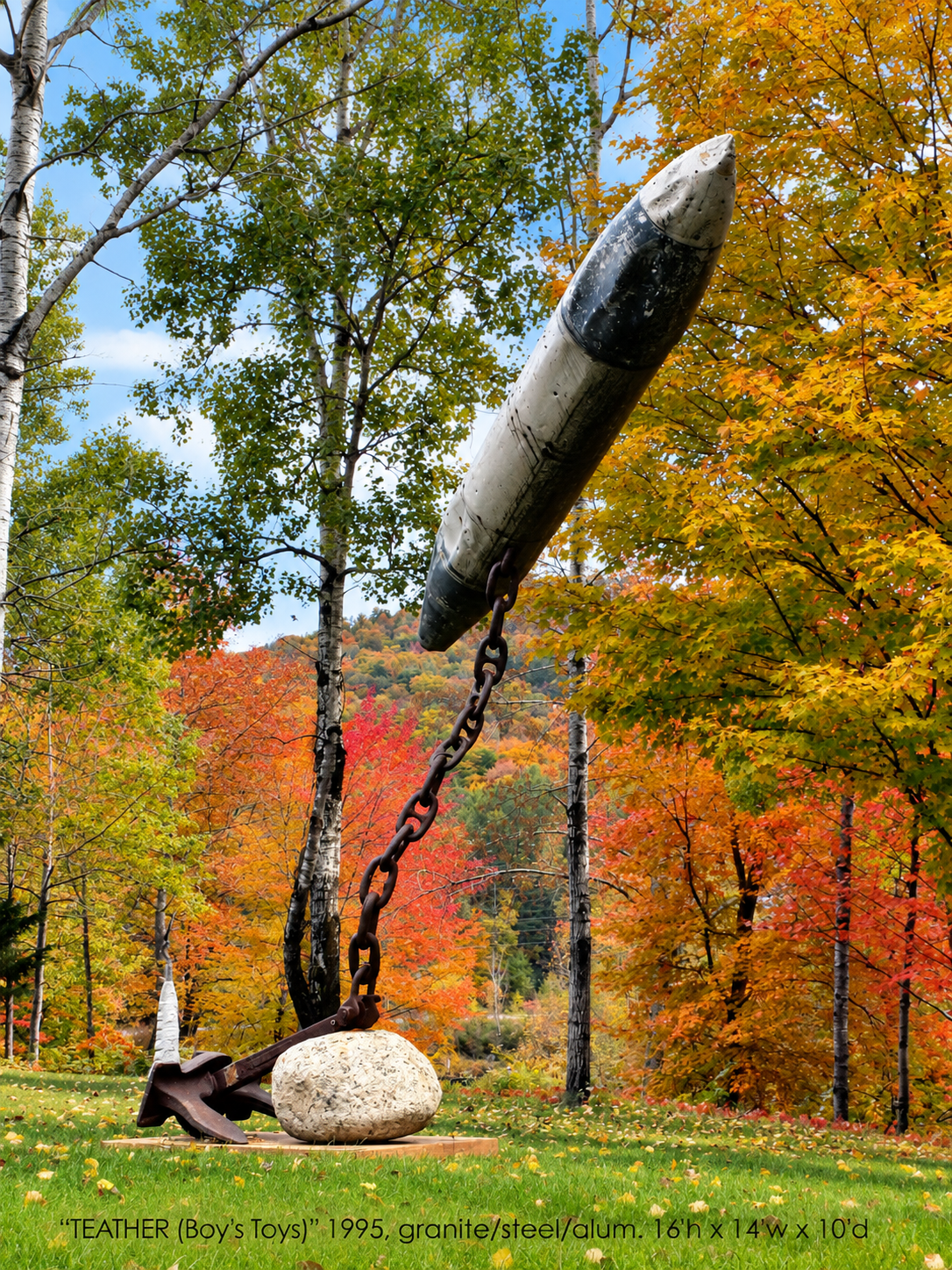
June 1995. Aluminum, granite, steel. Dimensions: 16’h × 14’w × 10’d.
Tether (Boy's Toys) grew from two formative experiences. As a child, I was fascinated by rural mailboxes mounted on lengths of welded chain that seemed to dance in my boyish imagination. Years later, during my first scuba dive, I looked upward to see boats drifting gently overhead, suspended from their anchor chains. That underwater view—where massive vessels appeared to float effortlessly—left a lasting impression.
At the time, my Jersey City studio overlooked the Hudson River and was filled with objects gathered from nearby marine salvage yards: anchors, heavy chain, buoys, pontoons, and cleats. Tether brings these memories together, recreating the sensation of looking upward through water at a vessel held in delicate balance. The subtitle, Boy's Toys, emerged during the sculpture's creation, referring both to its unmistakably phallic form and, with a touch of humor, to the oversized objects that have long captivated—and occasionally gotten the masculine imagination into trouble.
— John Van Alstine
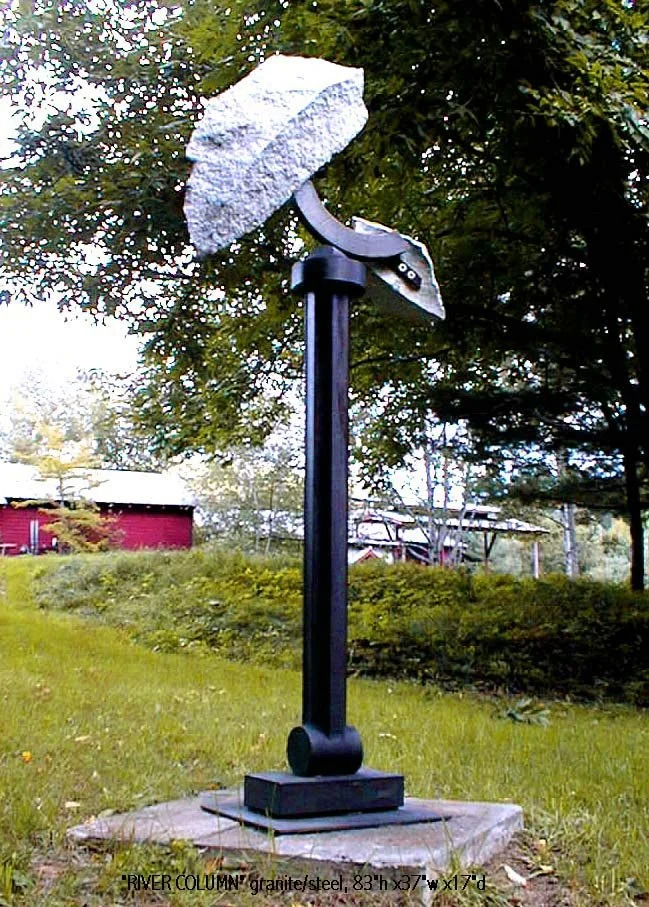
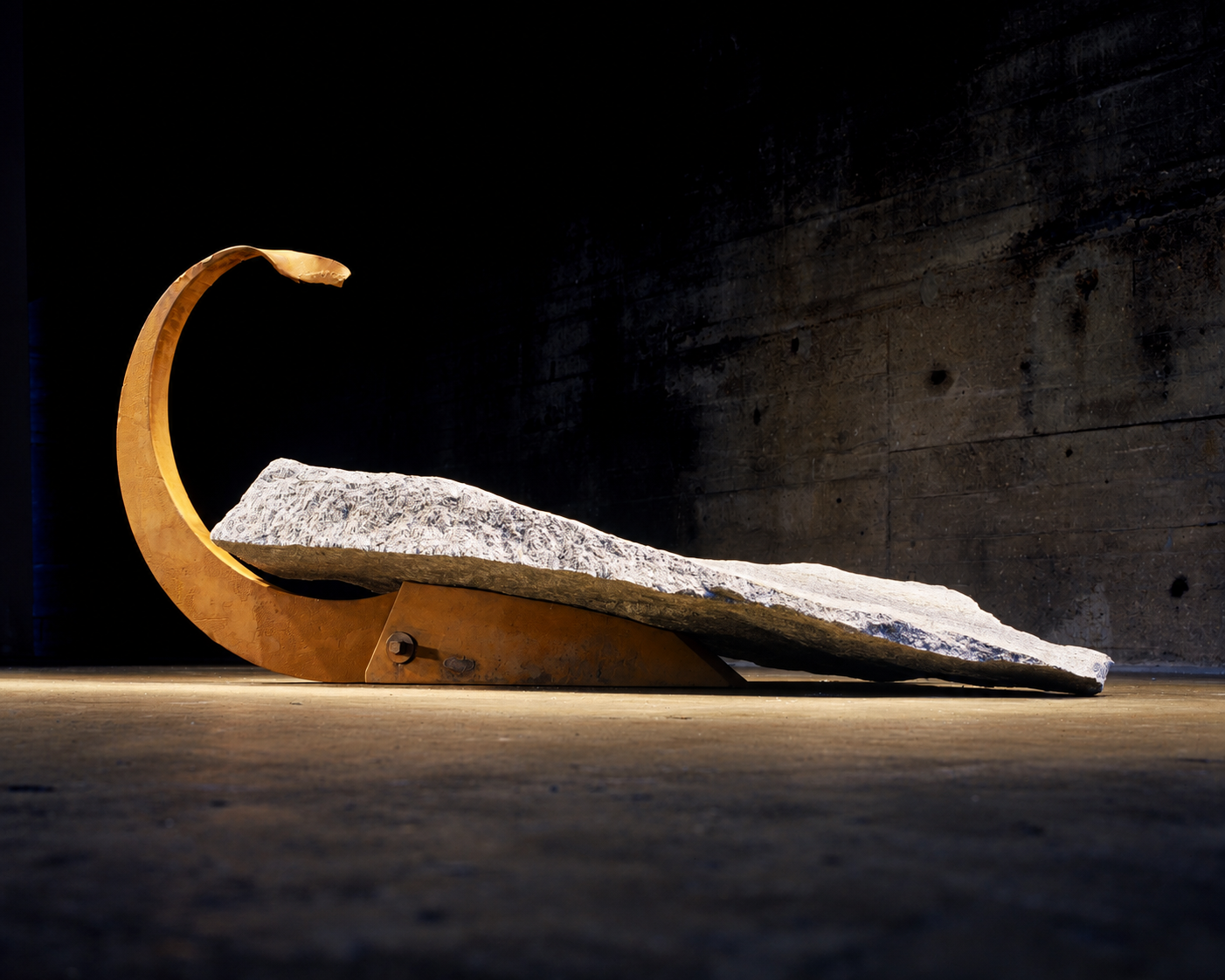
June 1992. Granite, steel. Dimensions: 30 × 64 × 42 in (76 × 163 × 107 cm).
sledge
Function: noun
Etymology: Dutch dialect sleedse; akin to Middle Dutch sledde sled
-a strong heavy sled often used to move stones
What makes this piece especially resonant is the merging of tool and cargo: the granite slab functions as both. This union collapses the distinction between means and end, reinforcing a sense of “oneness” between material, action, and intent. It's a key idea in Van Alstine's work—tools are not separate from the world they act upon, but deeply intertwined with it.
Within the sculptor's broader career, “Sledge” represents a foundational, almost primal form of navigation. Unlike later works that reference compasses or charting devices, this sculpture evokes a more direct, physical way of finding one's path—through effort, contact, and movement across the land. At the same time, its implied motion held in stillness reflects his ongoing ability to animate heavy materials, suggesting both the memory and potential of action.
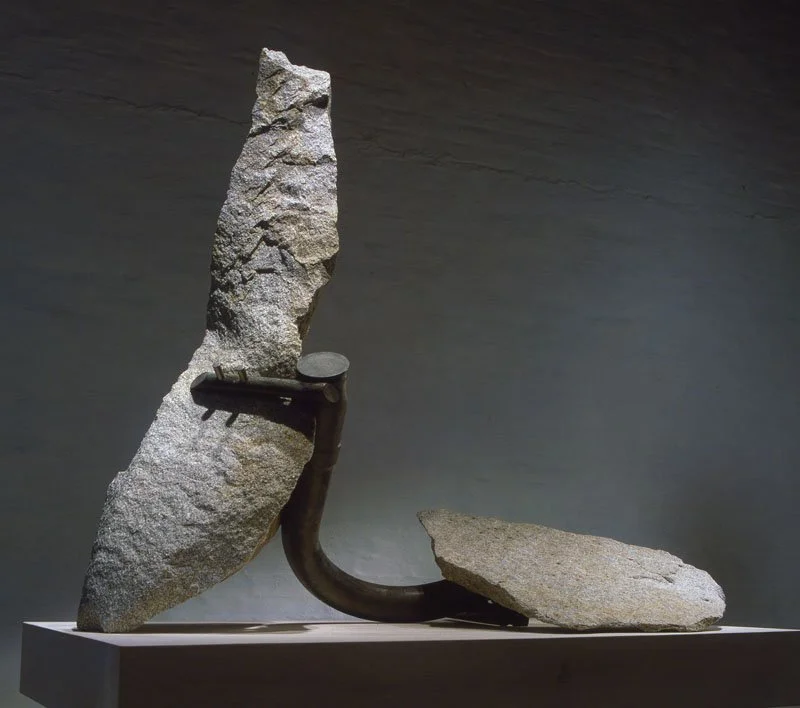
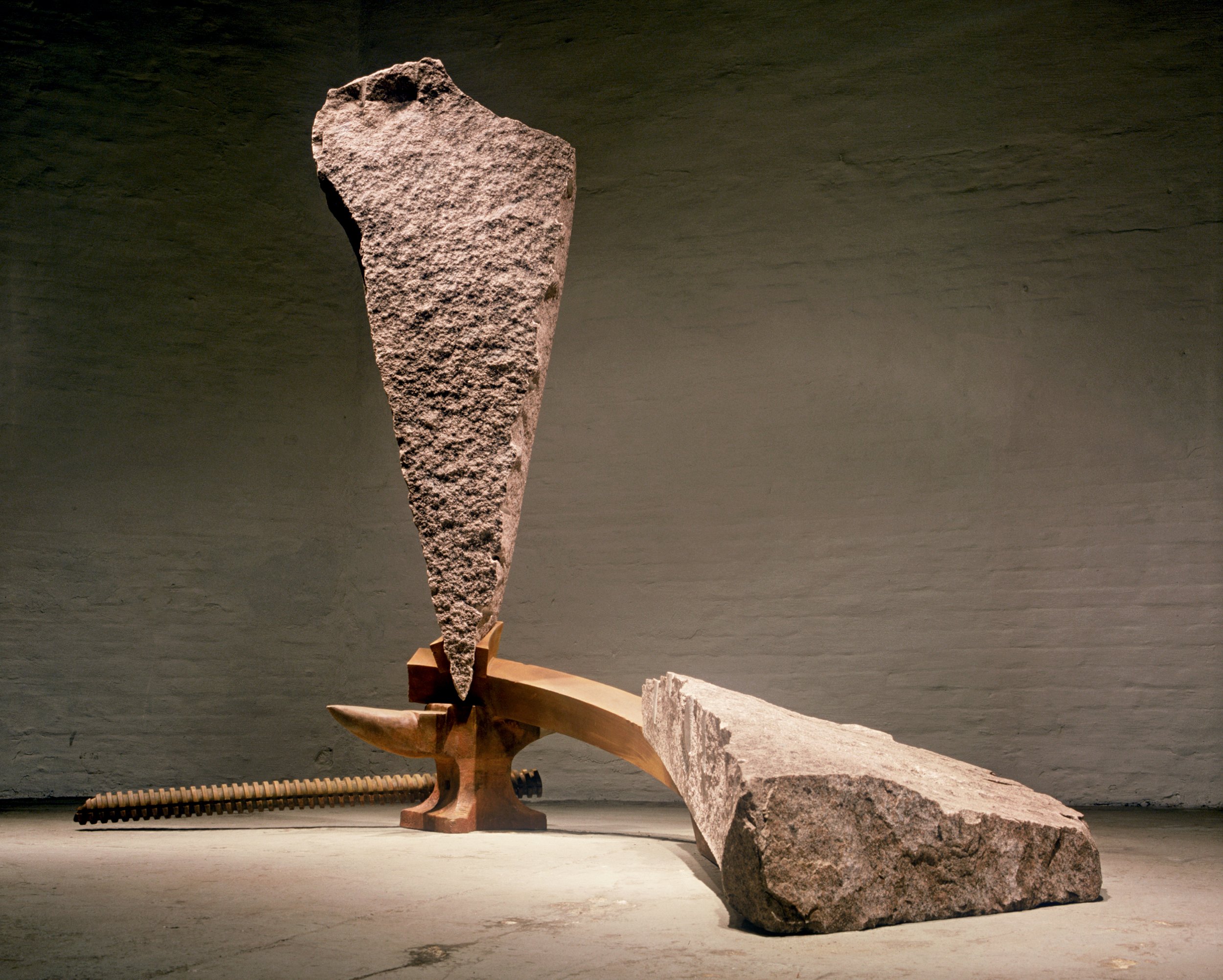
December 1989. Granite, steel. Dimensions: 81 × 98 × 60 in (206 × 249 × 152 cm).
The title Odalisque refers to a long tradition in Western art in which the reclining female figure has served as a vehicle for exploring beauty, proportion, and the expressive possibilities of the human form. From Titian and Ingres to Matisse, Picasso, and Henry Moore, artists have continually reinterpreted this enduring subject, each bringing a new perspective to the relationship between figure and abstraction.
For many years, the landscape was my primary source of inspiration. Gradually I came to see the human figure as another kind of landscape—one shaped by gravity, balance, movement, and gesture. Rather than creating a literal representation, Odalisque I suggests the body through the abstract dialogue of granite and steel. Existing somewhere between recognition and ambiguity, the sculpture invites viewers to complete the image through their own imagination. It marked the beginning of an exploration that continues throughout my work, where the figure emerges not through anatomy, but through balance, rhythm, and the expressive relationship between natural and fabricated materials.
— John Van Alstine
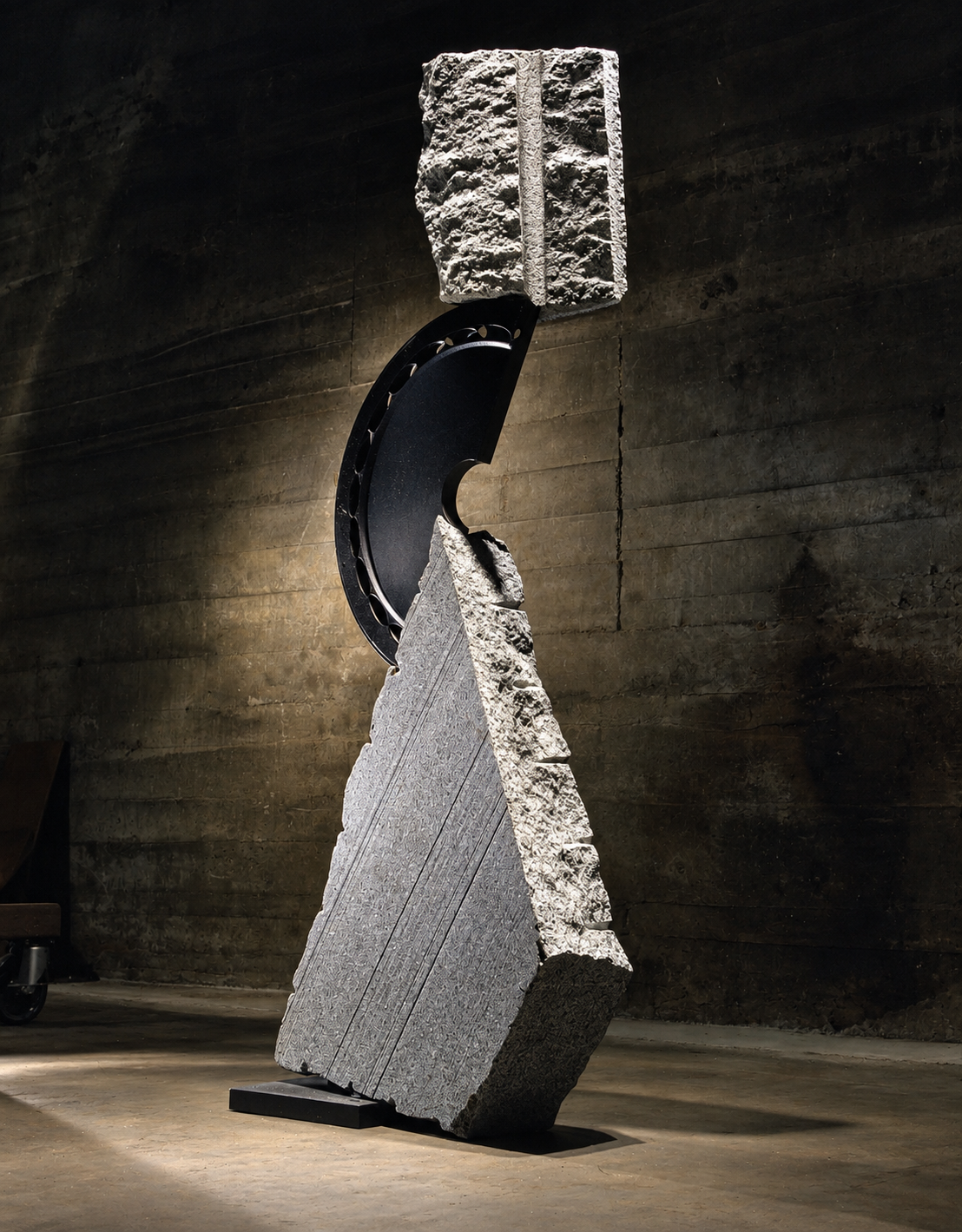
August 1989. Granite, steel. Dimensions: 82 × 32 × 19 in (208 × 81 × 48 cm).
Carina (The Keel), 1989
Carina combines rough granite with a sweeping perforated steel arc whose shape suggests the hull or keel of a ship. The work extends my growing interest in vessels and navigation, both physical and personal, as metaphors for passage and charting one’s course.
The title refers to Carina, the constellation whose Latin name means “the keel,” originally part of Argo Navis, the ship of Jason and the Argonauts. The celestial reference joins the sculpture’s keel-like form with my continuing interest in navigation and looking to the sky for imagery.
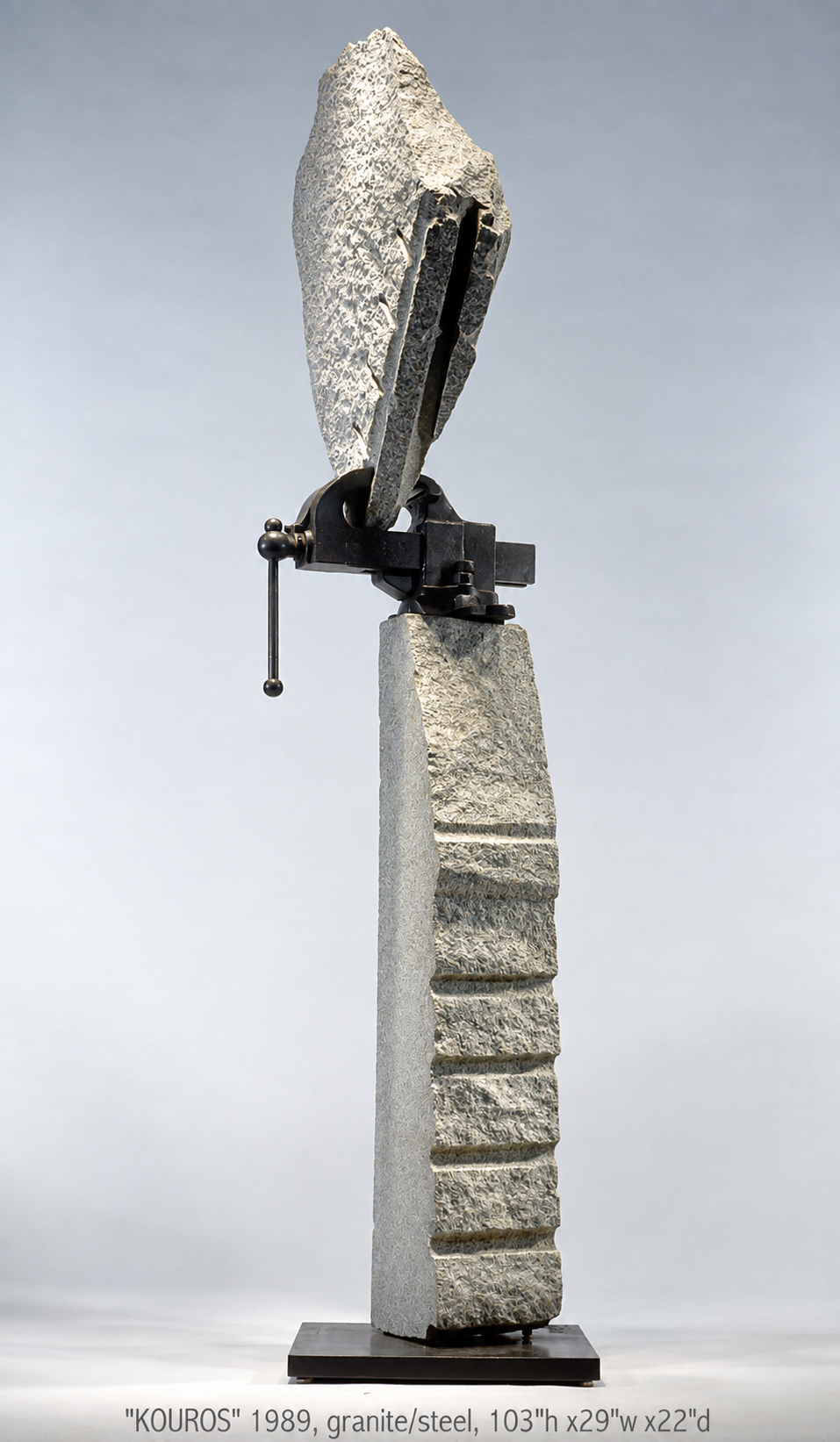
April 1989. Granite, steel, found object. Dimensions: 103 × 29 × 22 in (262 × 74 × 56 cm).
Kouros, 1989
Kouros expands my growing interest in the human figure through an abstract language of granite and steel. The sculpture’s tall, rigid stance recalls the frontal positioning of the kouros, the standing male figures of Archaic Greek sculpture, while allowing the natural character of the stone to suggest the body without literally depicting it.
A real, functioning vise grips and holds the upper stone upright, continuing my interest in tools as extensions of the hand and as expressive sculptural forms. Its hanging handle subtly suggests the male member, reinforcing the sculpture’s reference to the nude male body and the prominence accorded to the male figure in ancient Greek art and culture.
Kouros statues are iconic Archaic Greek sculptures (c. 615–460 BC) representing nude male youths, serving as votive offerings to gods or grave markers for elite individuals. Influenced by Egyptian art, they feature a rigid, frontal pose with one foot forward and stylized hair. These figures symbolize idealized youth, strength, and aristocratic honor rather than realistic portraits.
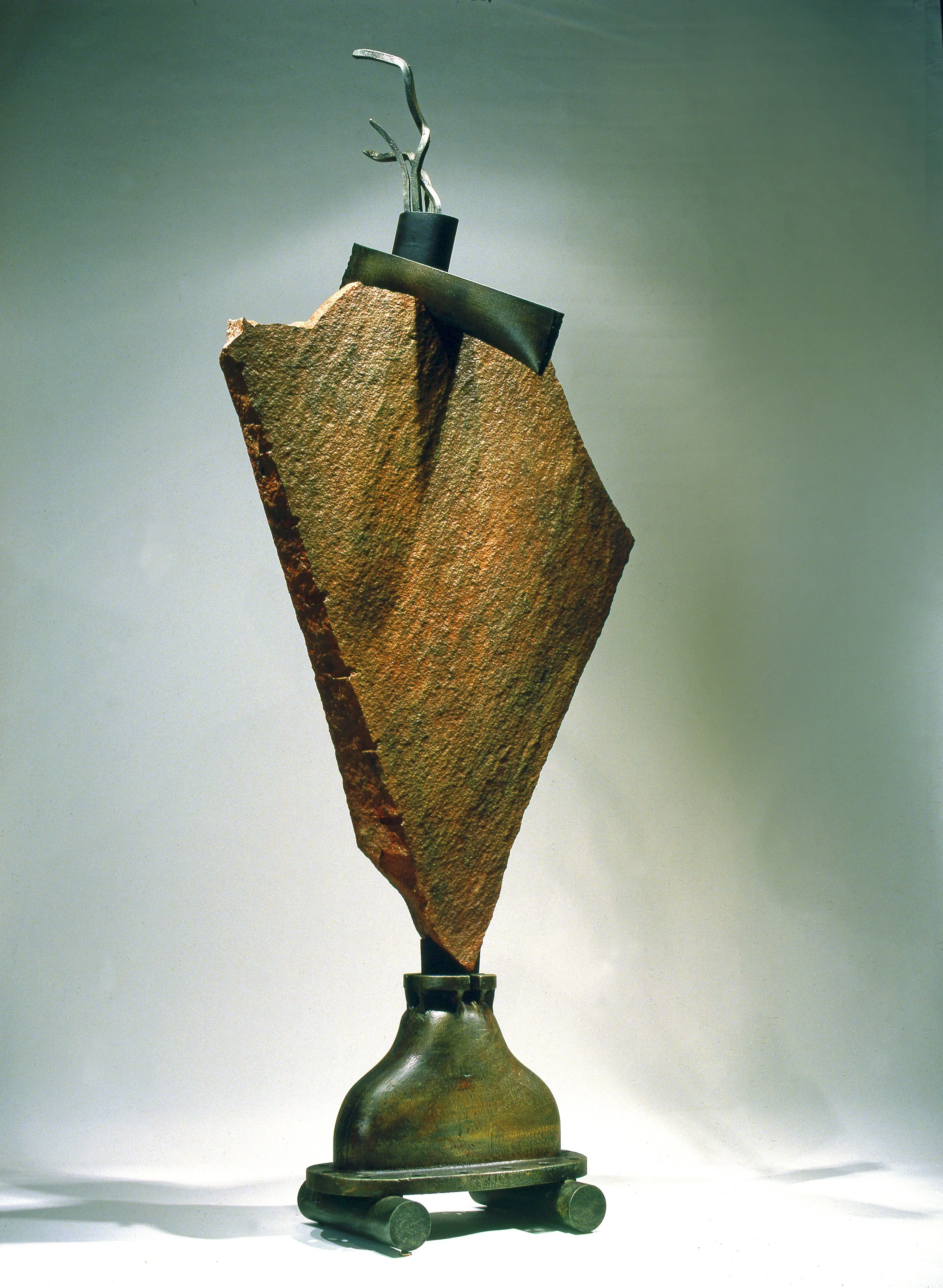
February 1988. painted granite, painted steel. Dimensions: 98 × 41 × 30 in (249 × 104 × 76 cm).
On the Edge I (Artist Passage) marks an early development of the vessel and passage imagery that would become increasingly important in my work. A large, rough-edged stone rises vertically from a steel base set on rollers, while a fabricated steel vessel at its top appears to lunge forward with animated, almost gestural energy. The juxtaposition of the massive, earthbound stone, the suggestion of mobility below, and the vessel poised precariously above creates a sense of movement, instability, and transition—a journey caught in progress.
The title turns the idea of passage toward the artist’s own journey—the continual movement through ideas, materials, discoveries, and uncertainties that accompanies a creative life. My use of the vessel grew partly from my early experience as a potter and from its longstanding role as a metaphor for the self and for passage from one state or place to another. Here, the vessel becomes both cargo and traveler, suggesting the artist carrying the accumulated weight of experience while moving forward into unknown territory—on the edge between what has been established and what is yet to be discovered. These ideas would later expand into the Portals and Passages works and other sculptures centered on journey, transition, and transformation.
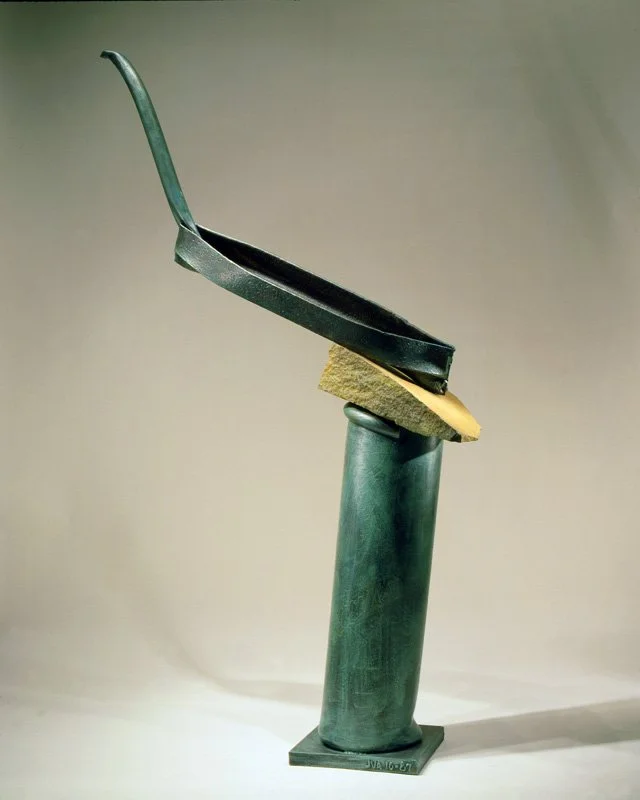
October 1987. Painted granite, painted steel. Dimensions: 87 × 32 × 34 in (221 × 81 × 86 cm).
Symplegades Passage
1987
polychromed granite and steel
Symplegades Passage draws its inspiration from the ancient Greek myth of the Symplegades, or "Clashing Rocks," two immense stone cliffs that relentlessly crashed together, destroying any vessel attempting to pass between them. According to legend, the hero Jason and the Argonauts successfully navigated the perilous passage with courage, skill, and a measure of divine assistance. In this sculpture, two granite forms are poised above a pedestal while a slender steel vessel slips between them, capturing the fleeting moment between danger and safe passage.
Rather than illustrating the myth literally, Symplegades Passage transforms it into a metaphor for life's pivotal moments of uncertainty and transition. The opposing stones suggest the forces that confront us throughout our lives, while the fragile vessel embodies determination, resilience, and hope. As in much of John Van Alstine's work, the ancient narrative becomes a contemporary reflection on the universal human journey—the courage to move forward despite the obstacles that stand in our way.
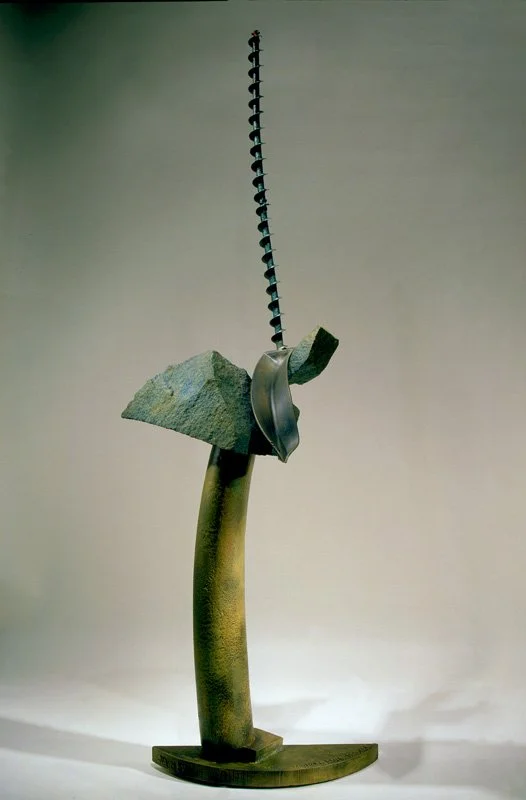
October 1987. Painted granite, painted steel. Dimensions: 85 × 57 × 22 in (216 × 145 × 56 cm).
Pyxis Awry, 1987
Pyxis Awry takes its title from Pyxis, the small southern constellation whose Latin name refers to a mariner’s compass, and awry—askew or off course. Created in 1987, it was the first work in what became my Pyxis series to feature the vessel form, historically understood in art and literature as a metaphor for the self, a group, or humankind. Here the vessel and the idea of a faulty compass come together: when our bearings are awry, we risk becoming adrift, untethered, and off course. It was created as a stealthy warning to the newly emerging awareness of what was then called “global warming”.
The sculpture established a metaphor that would reappear throughout my work, particularly in the Portals and Passages, Passage, and later Sisyphean Holiday series, where the vessel becomes a carrier through physical and metaphorical journeys. In Pyxis Awry, navigation becomes a way of questioning the choices and courses we set for ourselves, individually and collectively, and the consequences that follow. Those consequences may be personal, political, or environmental, allowing the sculpture to speak broadly about direction, responsibility, and the uncertainty of finding one’s way.