 Image 1 of 3
 Image 2 of 3
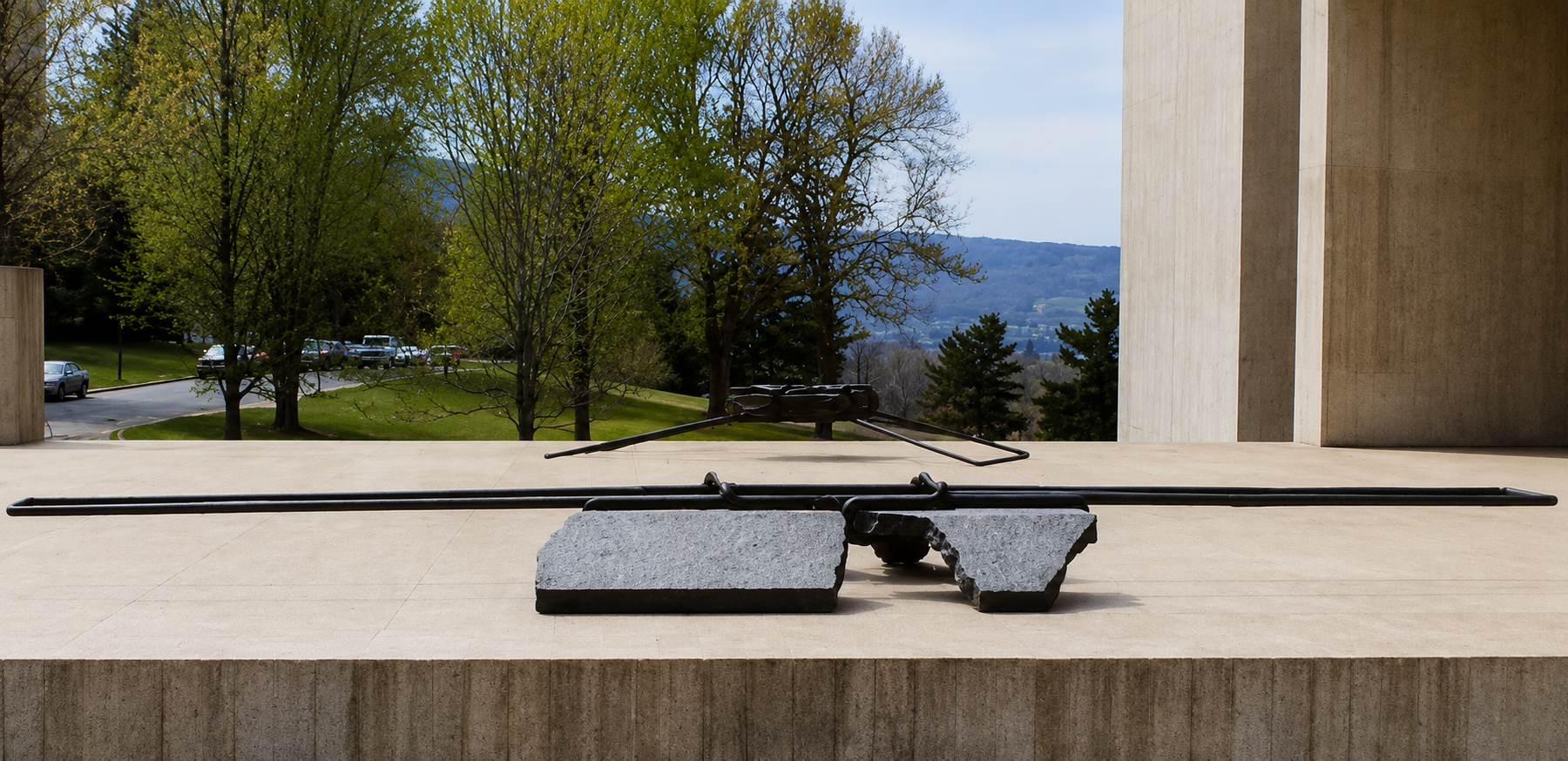 Image 3 of 3
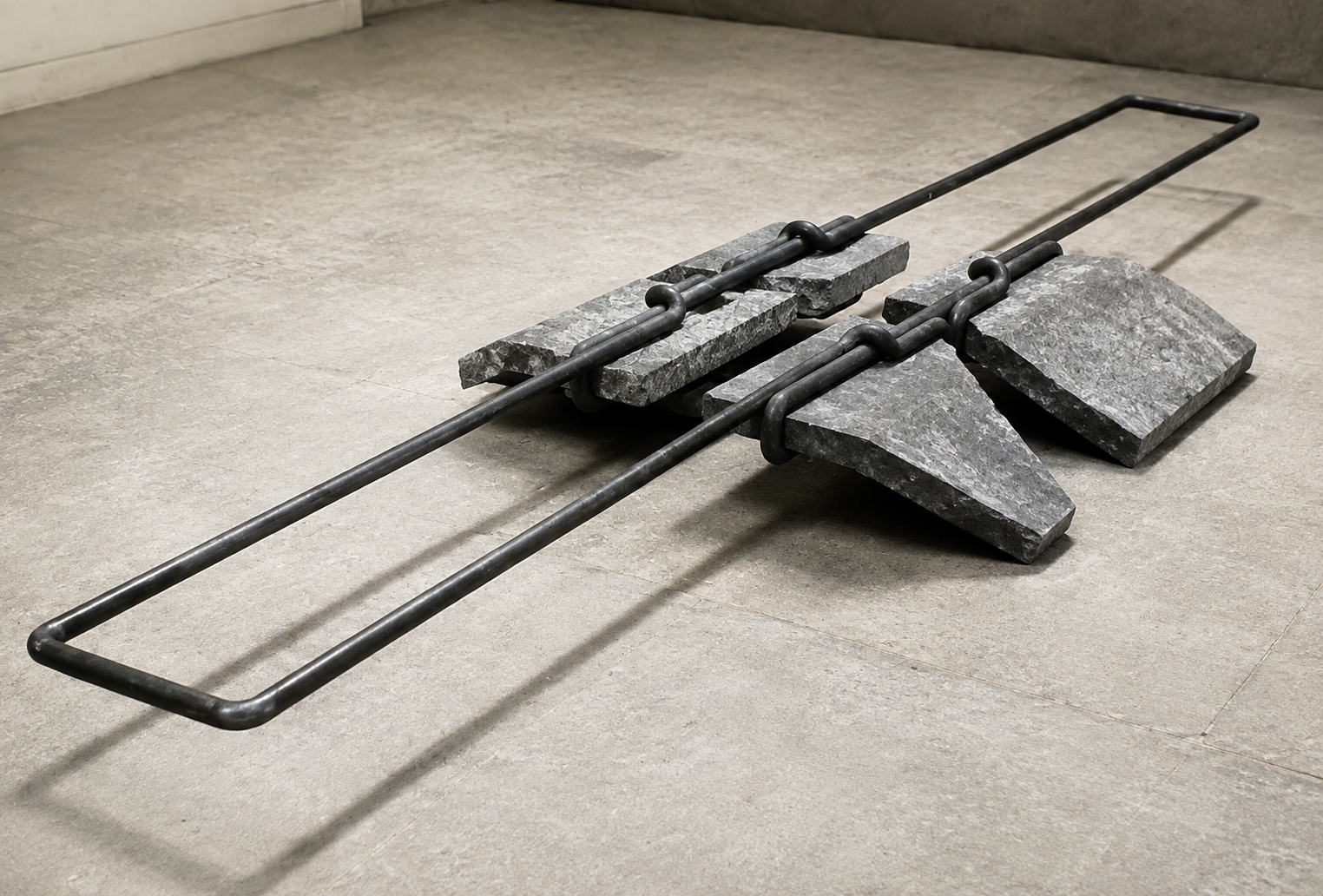
February 1976. Black granite, steel. Dimensions: 12 × 49 × 156 in (30 × 124 × 396 cm).
Boundary was the second work in my tensegrity, or Brute Series. The title operates in two ways: the found granite stones are literally bound in place by forged-steel bars, while the long horizontal extension of the steel traces a line through space, suggesting a border or boundary. Rather than carving the granite, I use its inherent mass and weight as an active structural element.
Gravity and the downward pressure of the stones provide the energy—or “glue”—that holds the sculpture together without welding. As the stones settle, their weight activates the interlocking steel bars, creating tension, compression, and equilibrium. The result is a static energy event—a sculpture held in arrested motion, in which the forces that might cause the structure to collapse are instead redirected to hold it together.
February 1976. Black granite, steel. Dimensions: 12 × 49 × 156 in (30 × 124 × 396 cm).
Boundary was the second work in my tensegrity, or Brute Series. The title operates in two ways: the found granite stones are literally bound in place by forged-steel bars, while the long horizontal extension of the steel traces a line through space, suggesting a border or boundary. Rather than carving the granite, I use its inherent mass and weight as an active structural element.
Gravity and the downward pressure of the stones provide the energy—or “glue”—that holds the sculpture together without welding. As the stones settle, their weight activates the interlocking steel bars, creating tension, compression, and equilibrium. The result is a static energy event—a sculpture held in arrested motion, in which the forces that might cause the structure to collapse are instead redirected to hold it together.