 Image 1 of 2
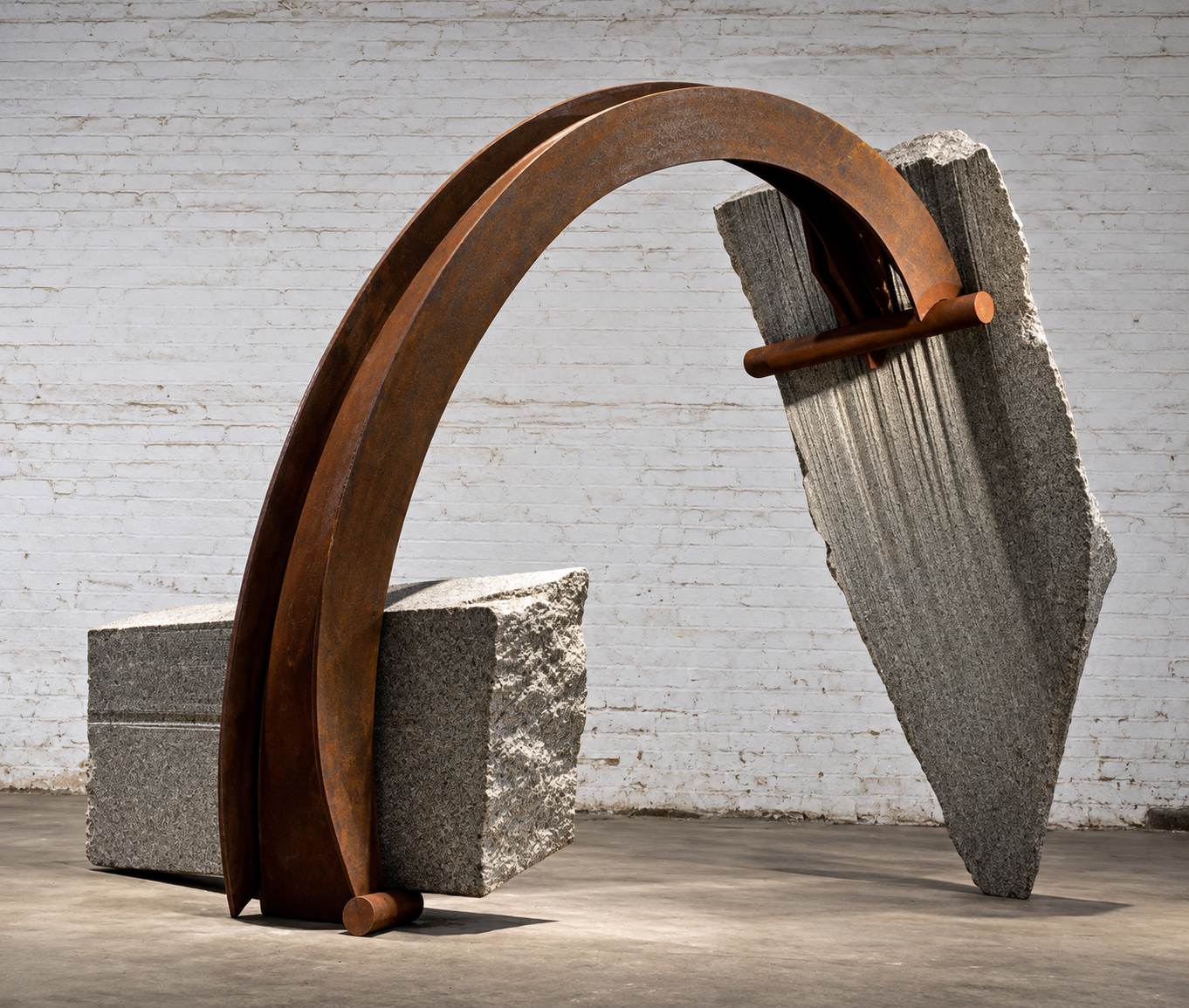 Image 2 of 2
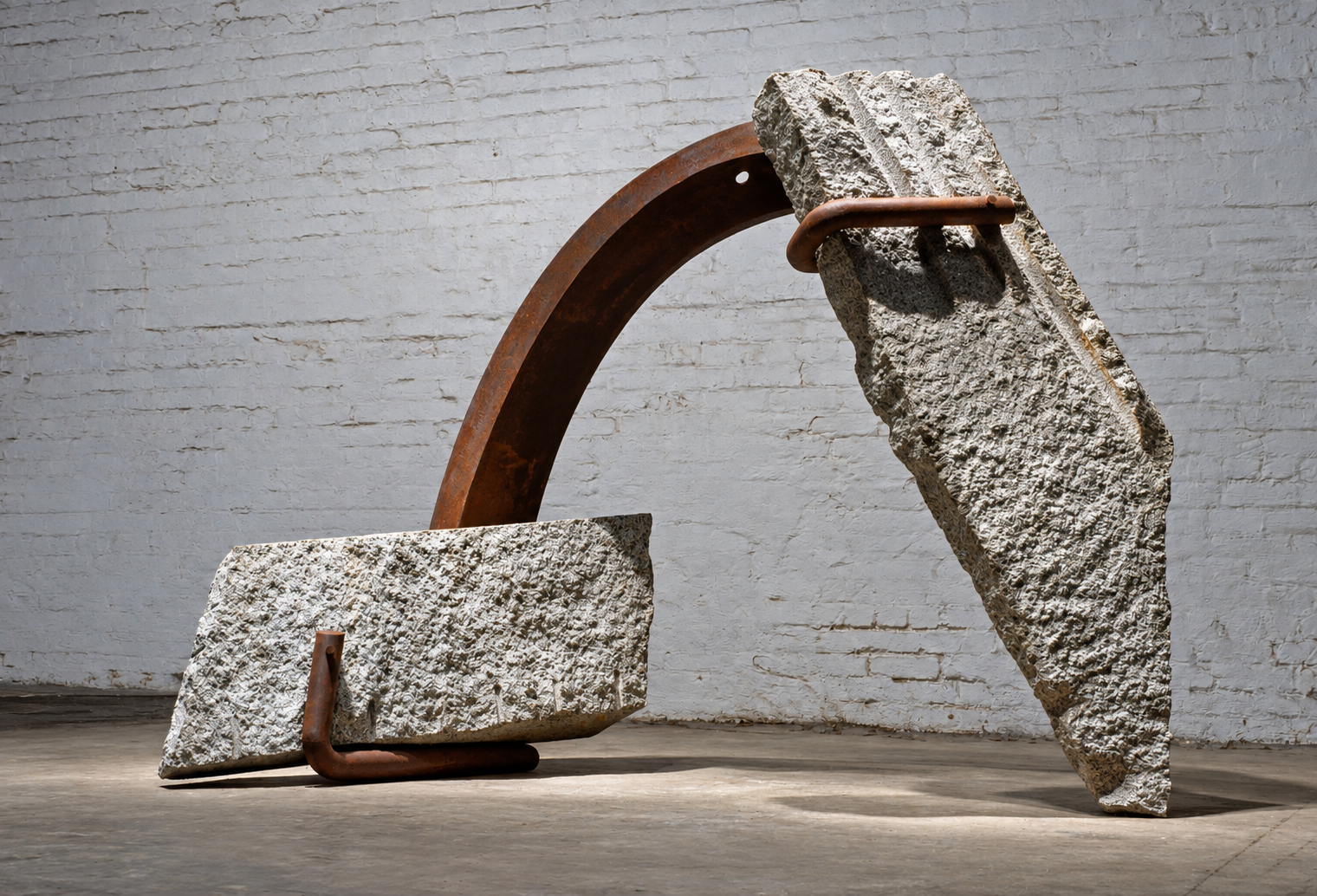
March 1985. Granite, steel. Dimensions: 5 × 7 × 4 in (13 × 18 × 10 cm). Collection: Baltimore Museum of Art.
Carnegie Rounder extends the ideas begun with Rounder I. Two granite elements are joined by a sweeping curved I-beam, creating an open circular movement while engaging weight, balance, and suspension. The title Rounder refers both to this circular structure and to the word’s slightly disreputable association with a drifter or someone from “the other side of the tracks.”
The Carnegie reference comes simply from the steel itself. I salvaged the curved I-beam from a Chicago demolition site where a fire and building collapse had bent the heavy beams into smooth arcs. The beam carried a “Carnegie” stamp identifying its maker, so I used the name simply as an identifier, without symbolic meaning. Other works, including Los Arcos later that year, used beams salvaged from the same site.
The work sold to Robert and Ryda Levy and was exhibited in their highly respected sculpture garden in Lutherville, MD. It was later gifted to the Baltimore Museum of Art and is part of their permanent collection.
March 1985. Granite, steel. Dimensions: 5 × 7 × 4 in (13 × 18 × 10 cm). Collection: Baltimore Museum of Art.
Carnegie Rounder extends the ideas begun with Rounder I. Two granite elements are joined by a sweeping curved I-beam, creating an open circular movement while engaging weight, balance, and suspension. The title Rounder refers both to this circular structure and to the word’s slightly disreputable association with a drifter or someone from “the other side of the tracks.”
The Carnegie reference comes simply from the steel itself. I salvaged the curved I-beam from a Chicago demolition site where a fire and building collapse had bent the heavy beams into smooth arcs. The beam carried a “Carnegie” stamp identifying its maker, so I used the name simply as an identifier, without symbolic meaning. Other works, including Los Arcos later that year, used beams salvaged from the same site.
The work sold to Robert and Ryda Levy and was exhibited in their highly respected sculpture garden in Lutherville, MD. It was later gifted to the Baltimore Museum of Art and is part of their permanent collection.