 Image 1 of 3
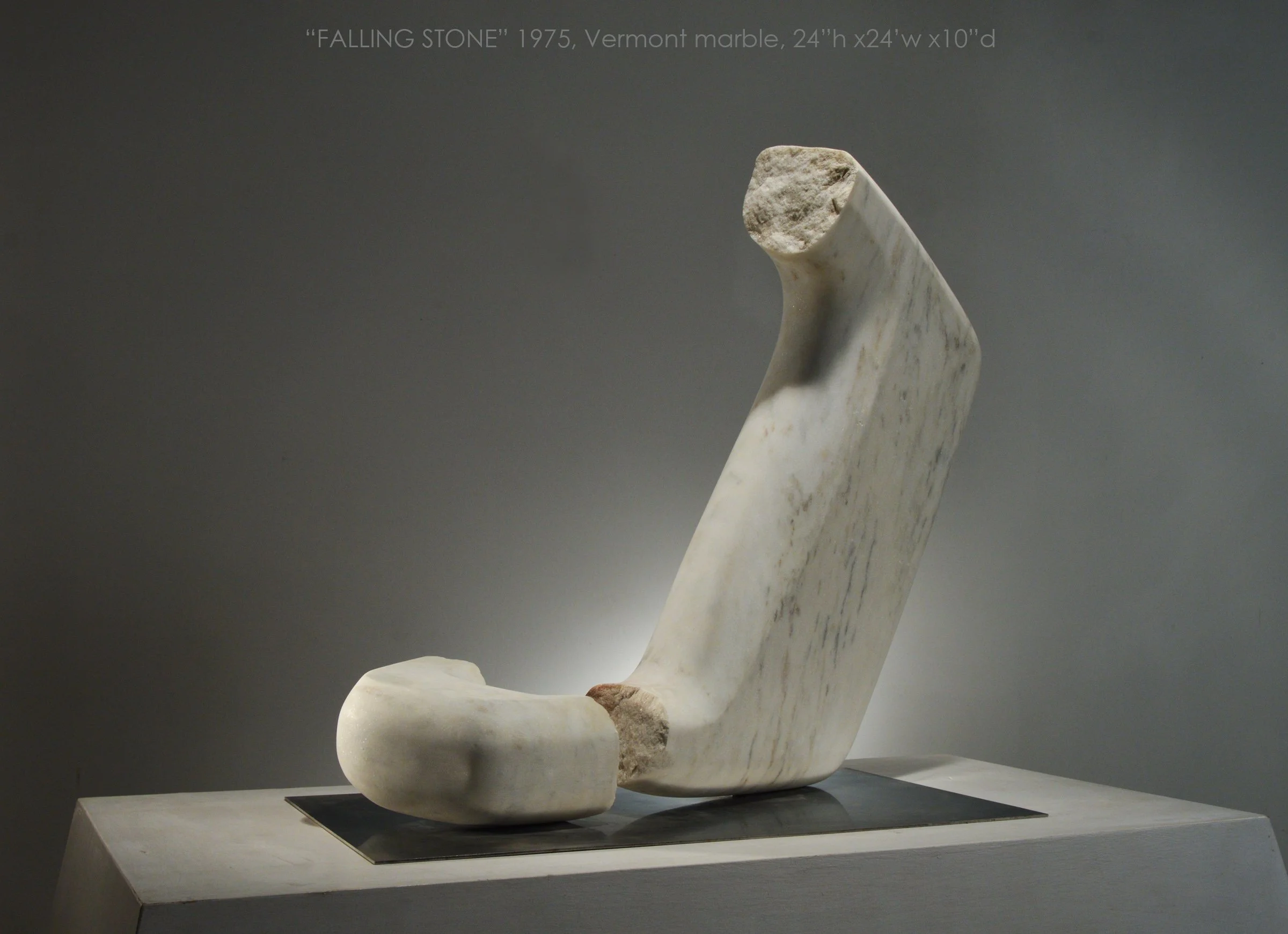 Image 2 of 3
 Image 3 of 3
April 1975. Vermont marble, stainless steel. Dimensions: 24 × 24 × 18 in (61 × 61 × 46 cm).
In 1975, a nearly completed carved marble sculpture, similar to Wedge I, fell off my Cornell studio carving table and broke into pieces. After a period of consternation and disbelief, I finally regained enough composure to pick the shards off the floor. The crystals of the freshly broken surfaces, gleaming in the sunlight, caught my eye. Intrigued by the relationships I saw among the shapes, volumes, and contrasting surfaces—and trying to make the best of a bad situation—I began experimenting with the shards.
Falling Stones, initially conceived as an attempt to recapture the act of falling, consists of two “broken” elements lifted from the floor and pinned precariously to a steel plate. It was my first sculpture with dynamically positioned stone elements and the first to feature rough, natural “found” surfaces.
I didn’t fully realize it at the time, but this sculpture—and, more significantly, the “new” approach to making it—marked one of the most important hinge moments in my career. It set me on a new and dynamic course, freeing and choreographing this traditionally “earthbound” material.
The transformation came as a result of a disruptive event and an honest re-evaluation of the material and how I could best communicate with it.
JVA, 1999
April 1975. Vermont marble, stainless steel. Dimensions: 24 × 24 × 18 in (61 × 61 × 46 cm).
In 1975, a nearly completed carved marble sculpture, similar to Wedge I, fell off my Cornell studio carving table and broke into pieces. After a period of consternation and disbelief, I finally regained enough composure to pick the shards off the floor. The crystals of the freshly broken surfaces, gleaming in the sunlight, caught my eye. Intrigued by the relationships I saw among the shapes, volumes, and contrasting surfaces—and trying to make the best of a bad situation—I began experimenting with the shards.
Falling Stones, initially conceived as an attempt to recapture the act of falling, consists of two “broken” elements lifted from the floor and pinned precariously to a steel plate. It was my first sculpture with dynamically positioned stone elements and the first to feature rough, natural “found” surfaces.
I didn’t fully realize it at the time, but this sculpture—and, more significantly, the “new” approach to making it—marked one of the most important hinge moments in my career. It set me on a new and dynamic course, freeing and choreographing this traditionally “earthbound” material.
The transformation came as a result of a disruptive event and an honest re-evaluation of the material and how I could best communicate with it.
JVA, 1999