Image 1 of 1
January 1973. Marble. Dimensions: 30 × 12 × 12 in (76 × 30 × 30 cm).
Gaea, 1973
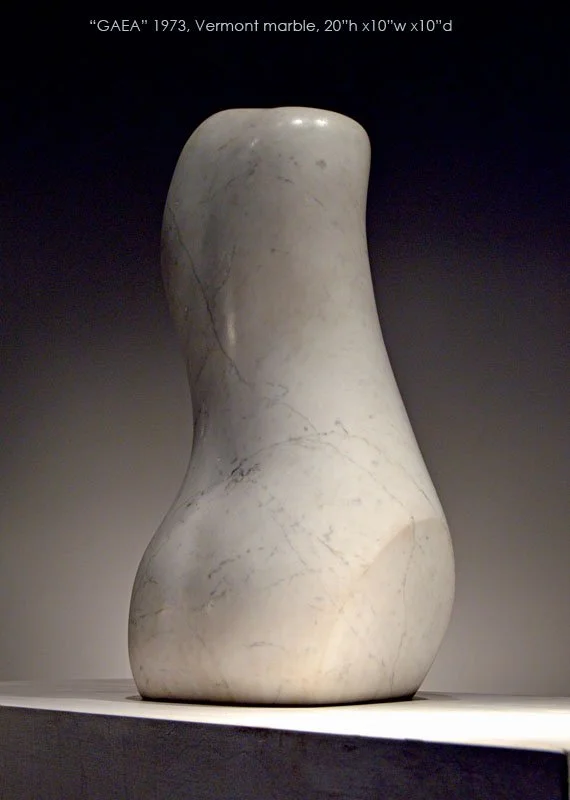
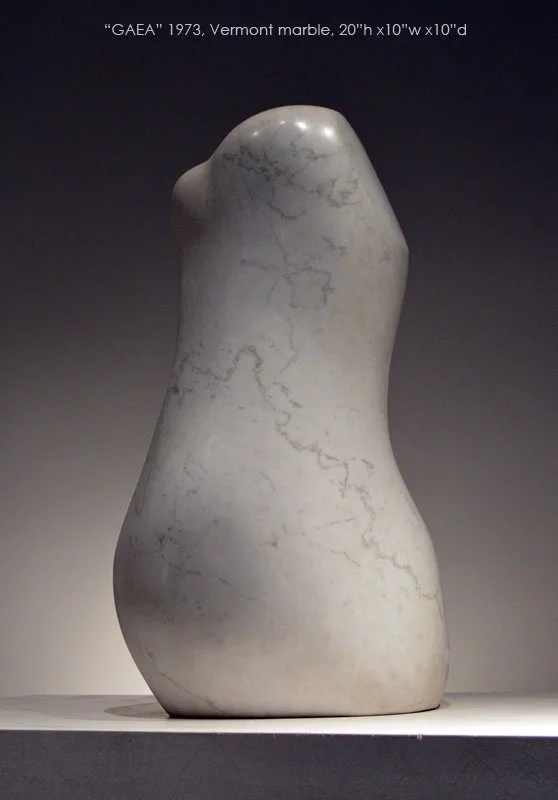
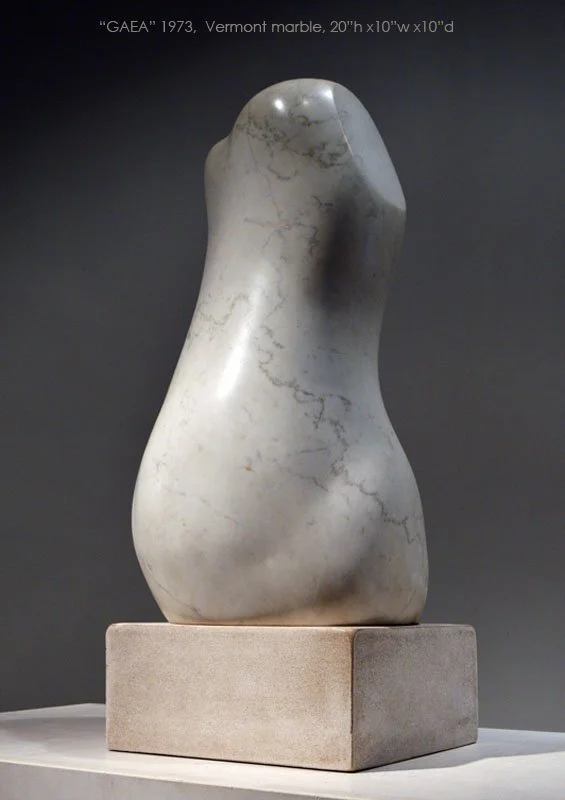
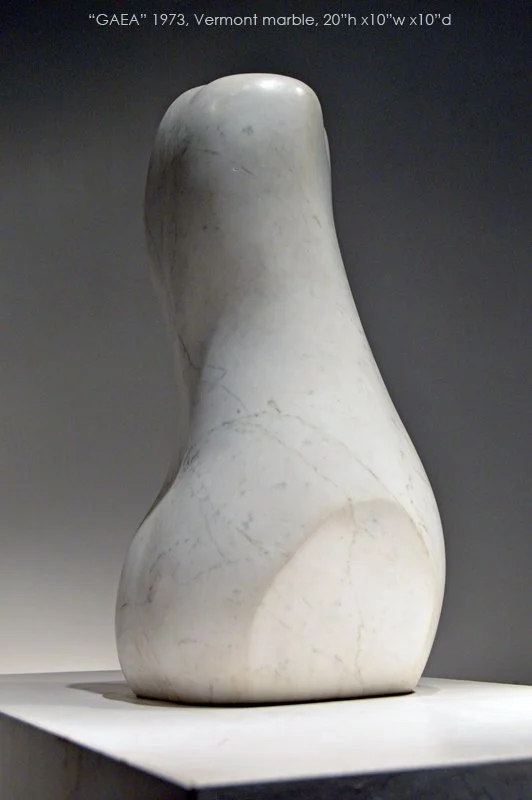
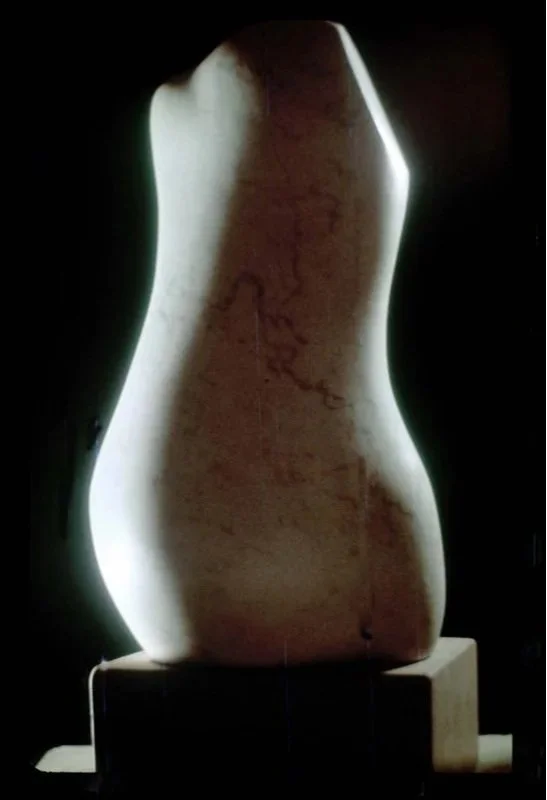
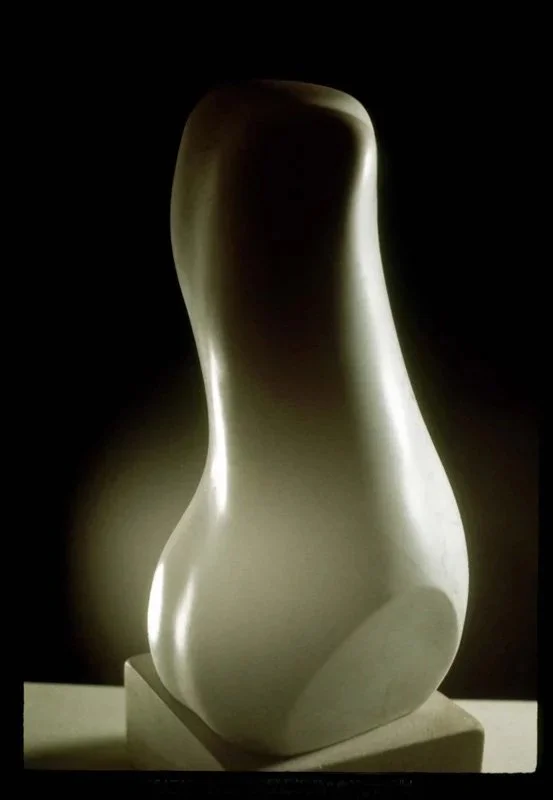
Gaea was my first carved marble sculpture, created in 1973 while I was an undergraduate at Kent State University. The title refers to Gaea, or Gaia, the ancient Greek personification of the Earth and primordial mother, who gave birth to Uranus and, with him, the Titans. Carved from Vermont marble, the sculpture reflects my early interest in the human figure, here reduced to a simplified, abstract female form whose swelling volume suggests pregnancy, fertility, and motherhood. The natural veining and weight of the marble reinforce this connection between the female body and the earth itself.
The work also marks an early use of mythology as a conceptual framework for sculpture—a way of connecting a personal idea or image to something larger and more universal. Rather than illustrating the myth literally, I used Gaea as a kind of scaffolding on which to build ideas about the body, birth, nature, and the generative power of the earth. Looking back, Gaea anticipates my continuing interest in mythology not as narrative, but as a means of giving contemporary and personal concerns a broader human resonance—an approach that would reappear many years later in works drawing upon figures such as Sisyphus and Amalthea.
January 1973. Marble. Dimensions: 30 × 12 × 12 in (76 × 30 × 30 cm).
Gaea, 1973
Gaea was my first carved marble sculpture, created in 1973 while I was an undergraduate at Kent State University. The title refers to Gaea, or Gaia, the ancient Greek personification of the Earth and primordial mother, who gave birth to Uranus and, with him, the Titans. Carved from Vermont marble, the sculpture reflects my early interest in the human figure, here reduced to a simplified, abstract female form whose swelling volume suggests pregnancy, fertility, and motherhood. The natural veining and weight of the marble reinforce this connection between the female body and the earth itself.
The work also marks an early use of mythology as a conceptual framework for sculpture—a way of connecting a personal idea or image to something larger and more universal. Rather than illustrating the myth literally, I used Gaea as a kind of scaffolding on which to build ideas about the body, birth, nature, and the generative power of the earth. Looking back, Gaea anticipates my continuing interest in mythology not as narrative, but as a means of giving contemporary and personal concerns a broader human resonance—an approach that would reappear many years later in works drawing upon figures such as Sisyphus and Amalthea.