 Image 1 of 2
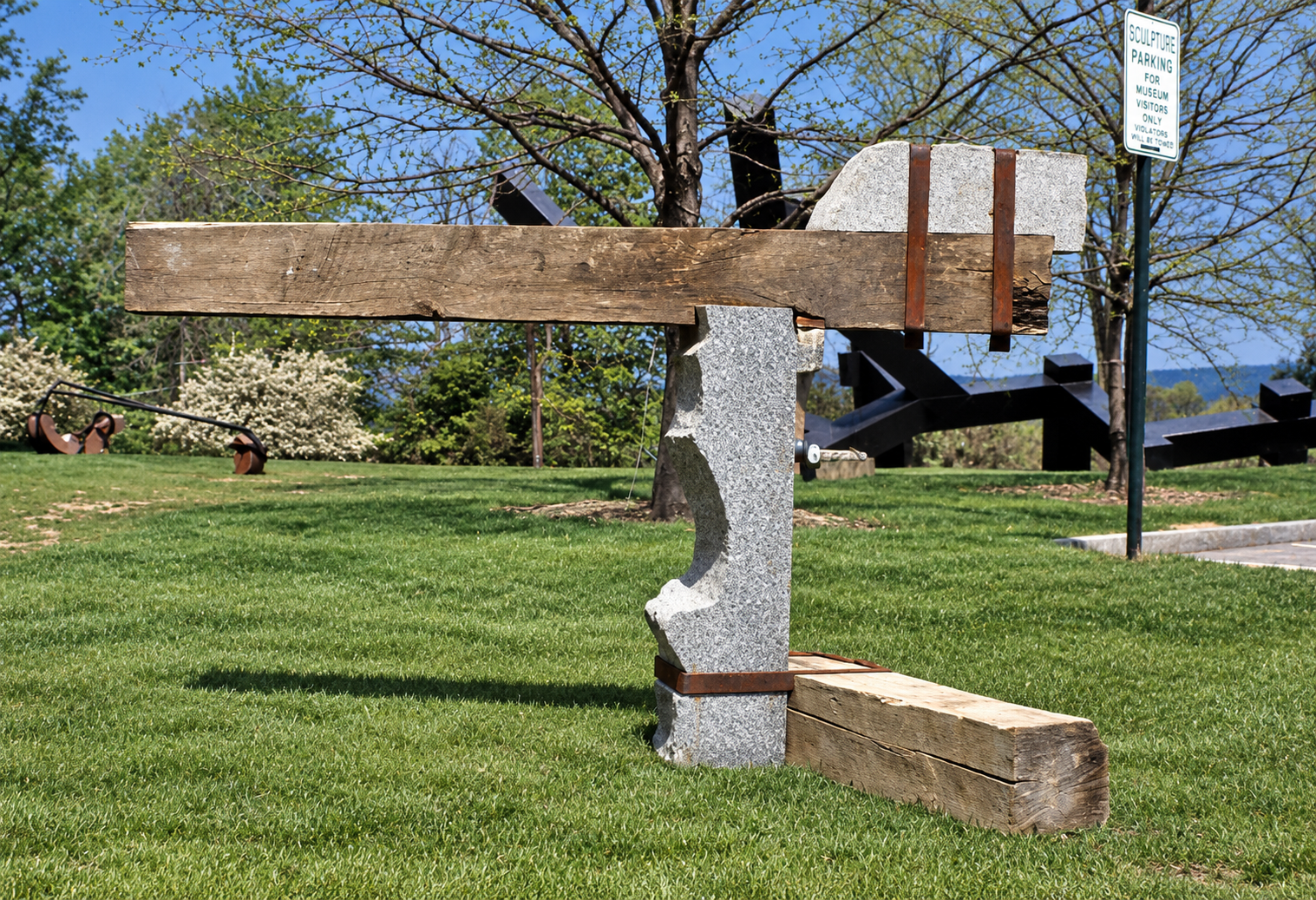 Image 2 of 2
January 1975. Wood, granite, steel. Dimensions: 46 × 56 × 110 in (117 × 142 × 279 cm).
Gate continues the transition begun with Stone Assemblage I, II, and Untitled (Bent Pins), as I moved away from carving toward assemblage and a more architectural approach to sculpture. Inspired by an actual farm gate I had observed, the work combines found granite with heavy timbers and forged steel, allowing each material to retain its own character and history. The long horizontal beam, balanced across the upright stone, gives the sculpture an extended architectural presence and suggests the post-and-lintel construction of a gate or entrance. The forged-steel straps and fasteners are deliberately visible, continuing my growing interest in making the means of connection and assembly part of the visual language of the sculpture.
Looking back, Gate occupies an important position between these early wood-and-stone assemblages and the tensegrity or Brute Series that followed in 1976. I was beginning to recognize that if a sculpture was fundamentally about assemblage and the intrinsic nature of materials, its structure should not merely connect the elements but become an active part of the work. I would soon eliminate the wood and rely more fully on forged steel and the weight of the stone itself. In Gate, that transition is still unfolding: stone, wood, and steel each perform a distinct role, while balance, gravity, connection, and the physical act of assembly increasingly become the sculpture’s subject.
January 1975. Wood, granite, steel. Dimensions: 46 × 56 × 110 in (117 × 142 × 279 cm).
Gate continues the transition begun with Stone Assemblage I, II, and Untitled (Bent Pins), as I moved away from carving toward assemblage and a more architectural approach to sculpture. Inspired by an actual farm gate I had observed, the work combines found granite with heavy timbers and forged steel, allowing each material to retain its own character and history. The long horizontal beam, balanced across the upright stone, gives the sculpture an extended architectural presence and suggests the post-and-lintel construction of a gate or entrance. The forged-steel straps and fasteners are deliberately visible, continuing my growing interest in making the means of connection and assembly part of the visual language of the sculpture.
Looking back, Gate occupies an important position between these early wood-and-stone assemblages and the tensegrity or Brute Series that followed in 1976. I was beginning to recognize that if a sculpture was fundamentally about assemblage and the intrinsic nature of materials, its structure should not merely connect the elements but become an active part of the work. I would soon eliminate the wood and rely more fully on forged steel and the weight of the stone itself. In Gate, that transition is still unfolding: stone, wood, and steel each perform a distinct role, while balance, gravity, connection, and the physical act of assembly increasingly become the sculpture’s subject.