 Image 1 of 1
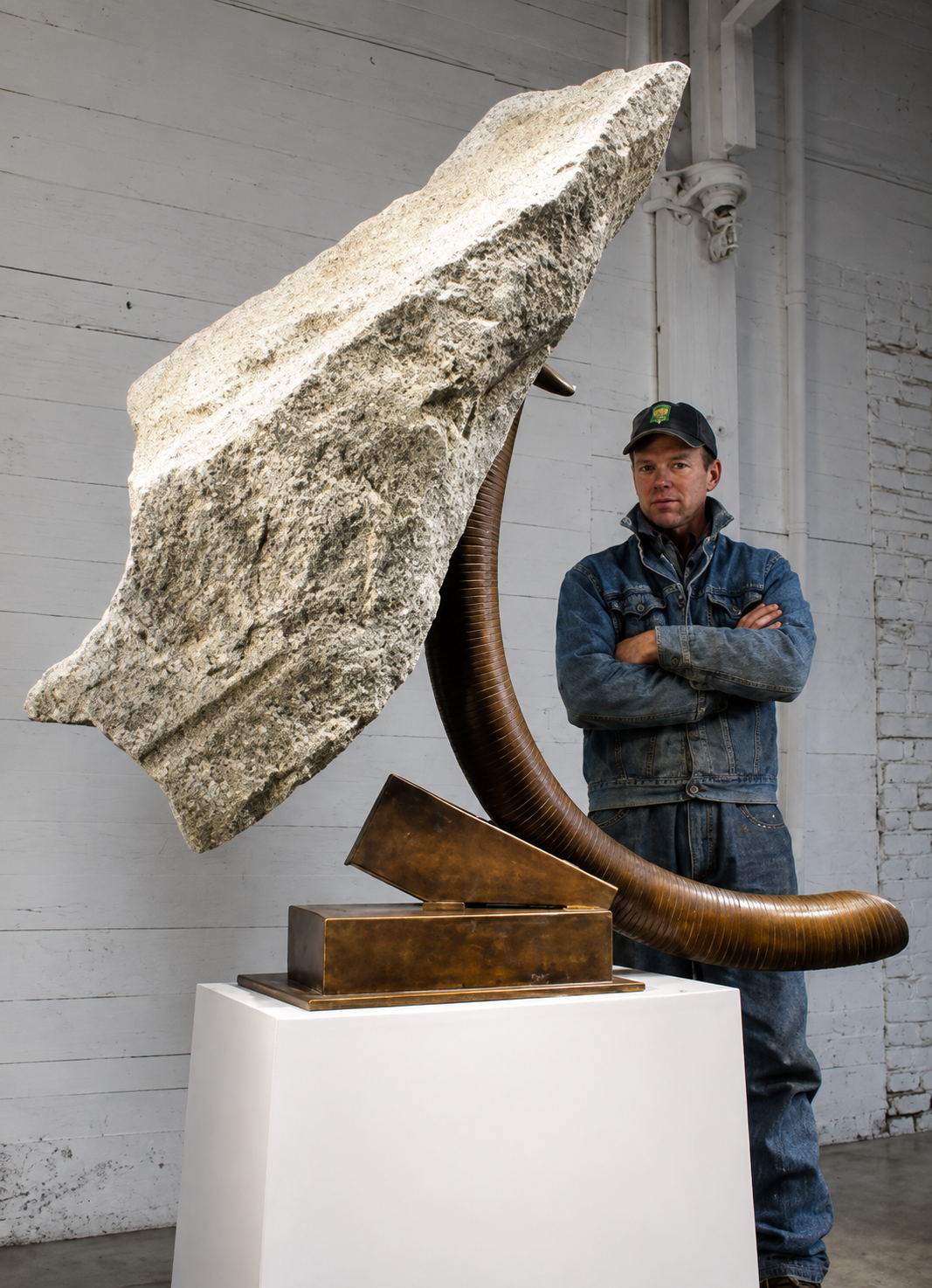
Van Alstine Wells studio 1998
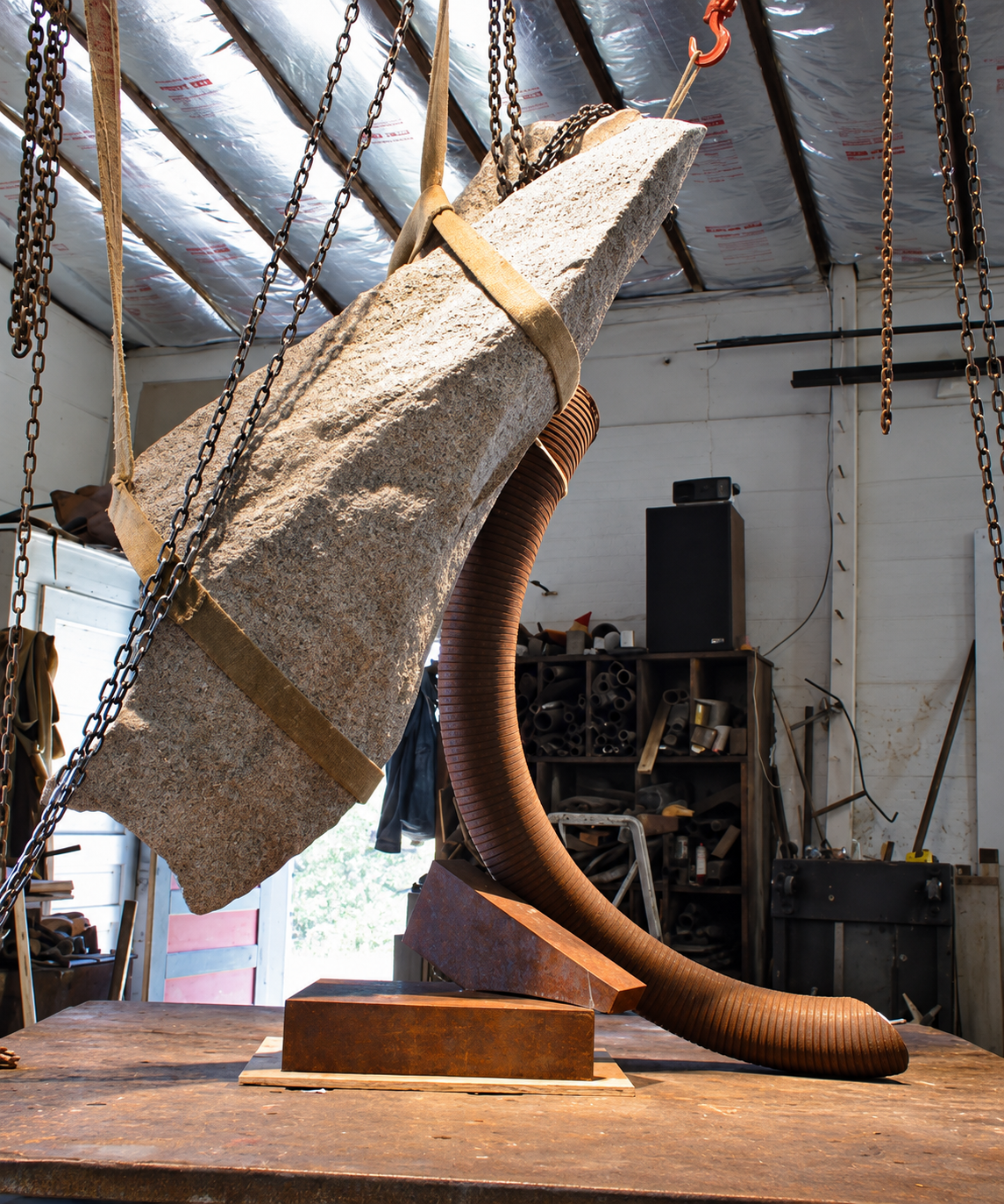
during construction - metal steel before casting to bronze
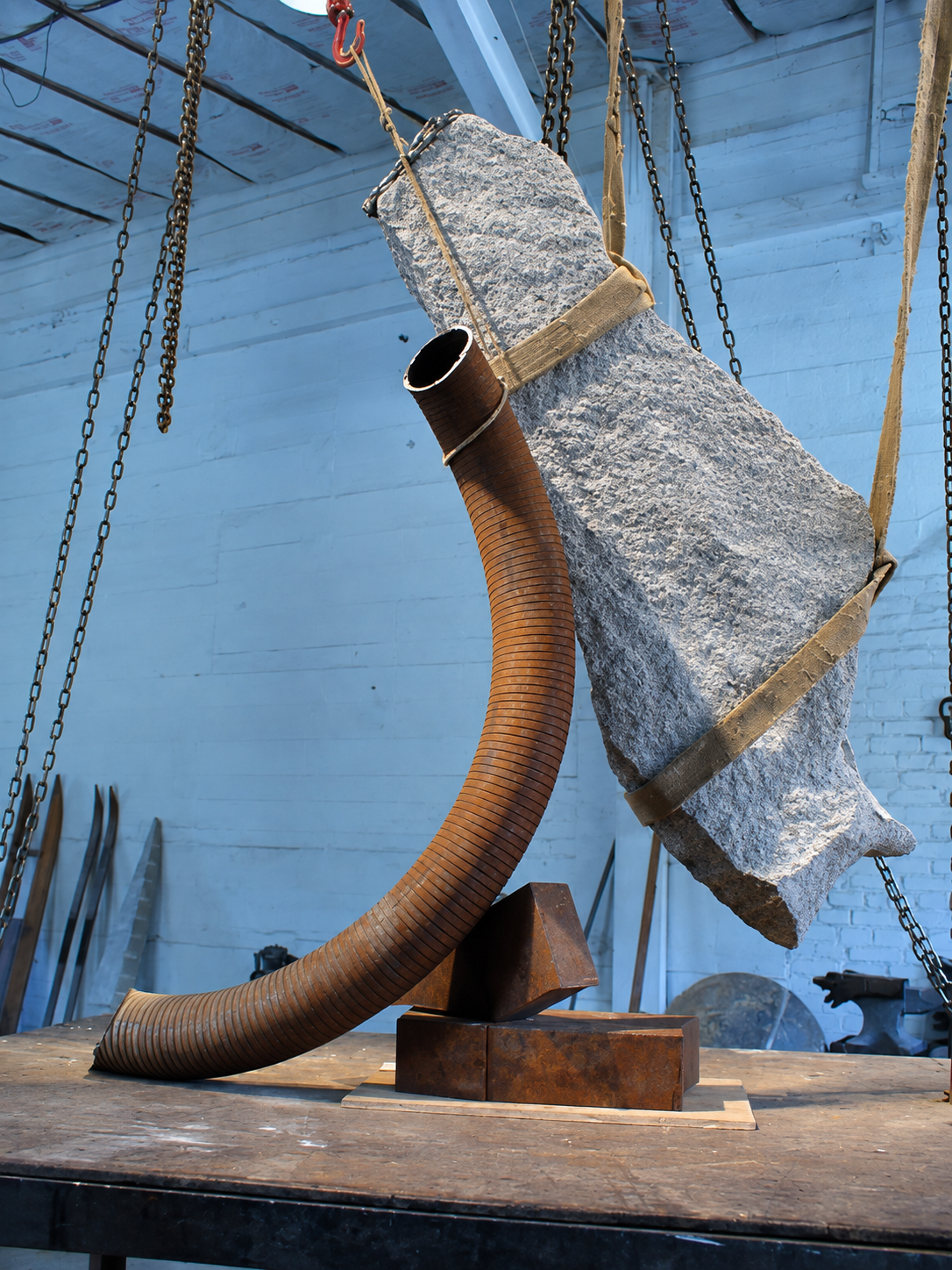
during construction - metal steel before casting to bronze
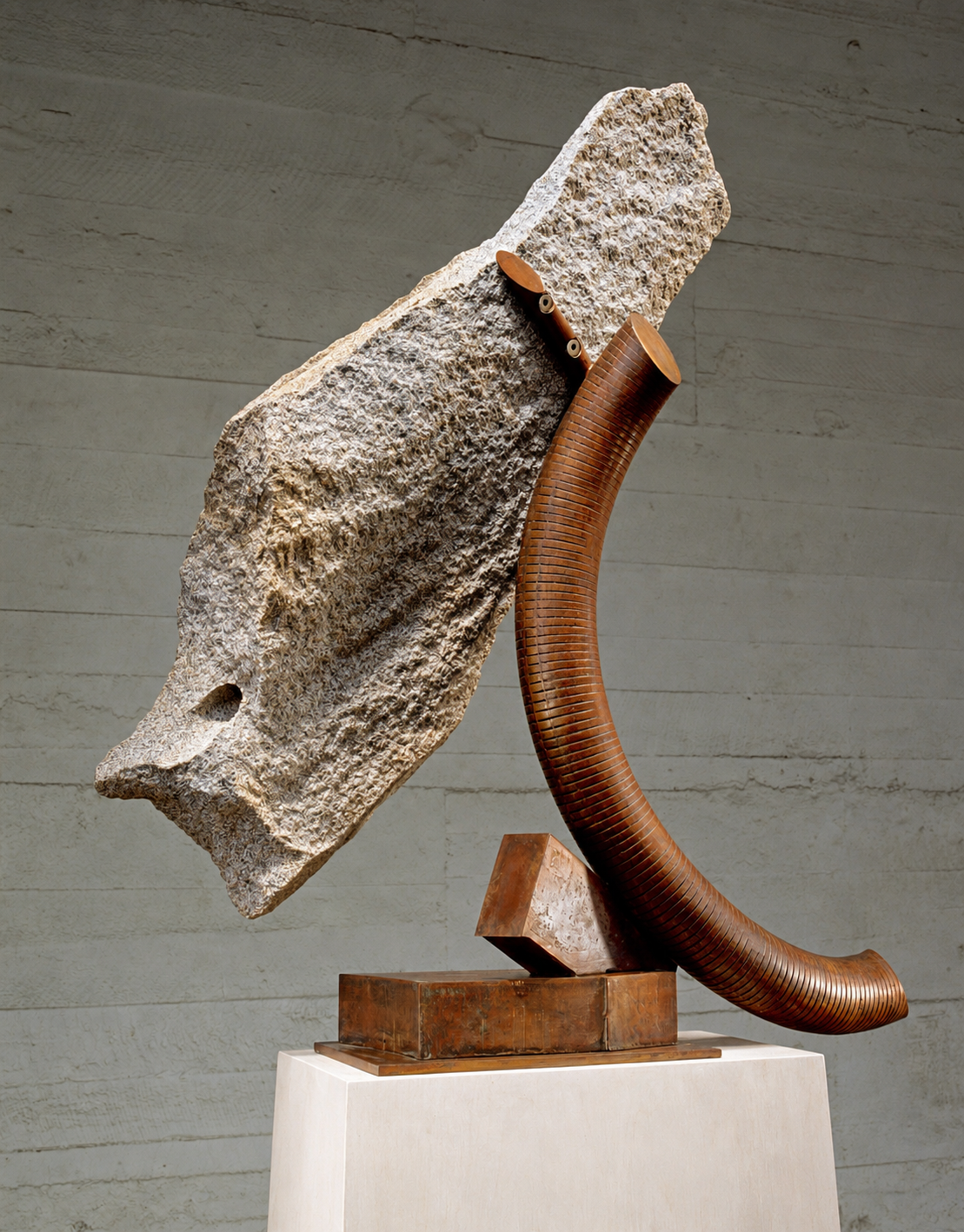
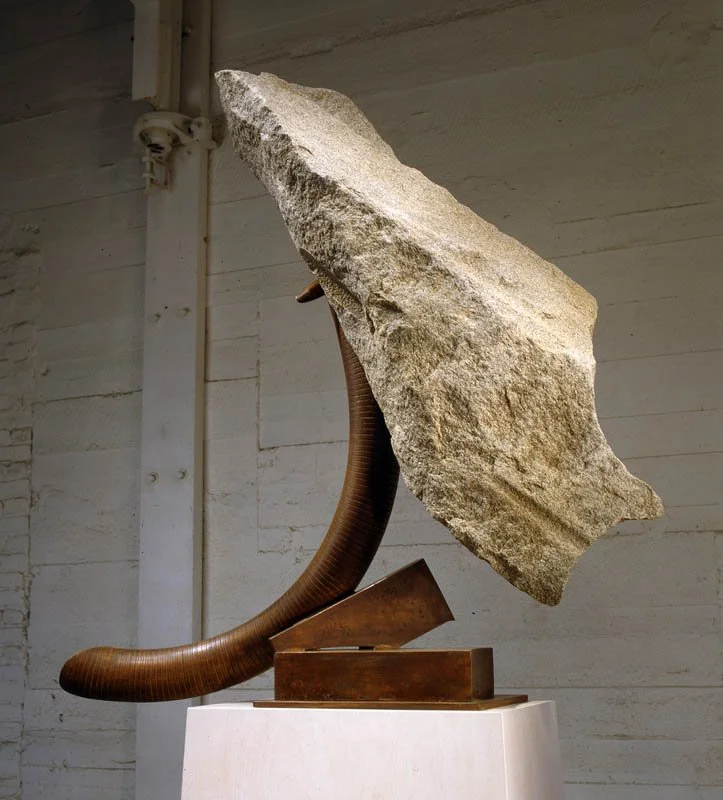
December 1998. Bronze, granite. Dimensions: (52"h x49"w x14"d).
Private collection -Santa Fe NM, USA
As a sculptor, I have always been fascinated by tools, implements, and instruments. I see them as extensions of the hand—essential allies in the act of making—and am drawn to their raw, efficient beauty, shaped over time by function and necessity. They also embody human ingenuity, labor, and our impulse to shape and engage the world around us.
Throughout my work, agricultural implements—rakes, plow blades, sledges, and tillers—as well as anvils, scales, compasses, and other instruments become both sculptural forms and vehicles for metaphor, suggesting ideas of balance, navigation, transformation, and our relationship to the natural world.
Proboscis refers to the projecting anatomical form of an animal’s trunk and reflects Van Alstine’s interest in the geometry and expressive curves found in nature. The elongated bronze form suggests a trunk, horn, or tusk while simultaneously functioning like a lever or tool. Its apparent flexibility and strength animate the massive granite, creating a hybrid form that moves between animal anatomy, natural geometry, and the human-made implement.
December 1998. Bronze, granite. Dimensions: (52"h x49"w x14"d).
Private collection -Santa Fe NM, USA
As a sculptor, I have always been fascinated by tools, implements, and instruments. I see them as extensions of the hand—essential allies in the act of making—and am drawn to their raw, efficient beauty, shaped over time by function and necessity. They also embody human ingenuity, labor, and our impulse to shape and engage the world around us.
Throughout my work, agricultural implements—rakes, plow blades, sledges, and tillers—as well as anvils, scales, compasses, and other instruments become both sculptural forms and vehicles for metaphor, suggesting ideas of balance, navigation, transformation, and our relationship to the natural world.
Proboscis refers to the projecting anatomical form of an animal’s trunk and reflects Van Alstine’s interest in the geometry and expressive curves found in nature. The elongated bronze form suggests a trunk, horn, or tusk while simultaneously functioning like a lever or tool. Its apparent flexibility and strength animate the massive granite, creating a hybrid form that moves between animal anatomy, natural geometry, and the human-made implement.
Van Alstine Wells studio 1998
during construction - metal steel before casting to bronze
during construction - metal steel before casting to bronze