 Image 1 of 3
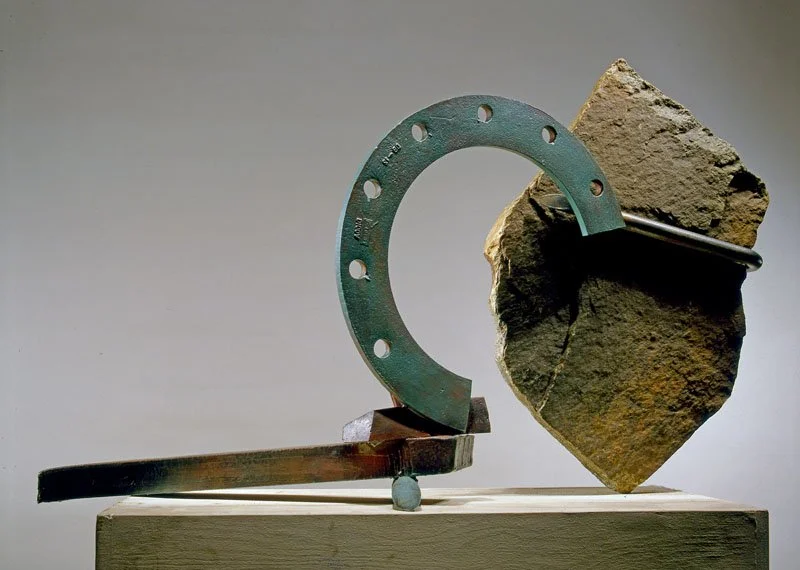 Image 2 of 3
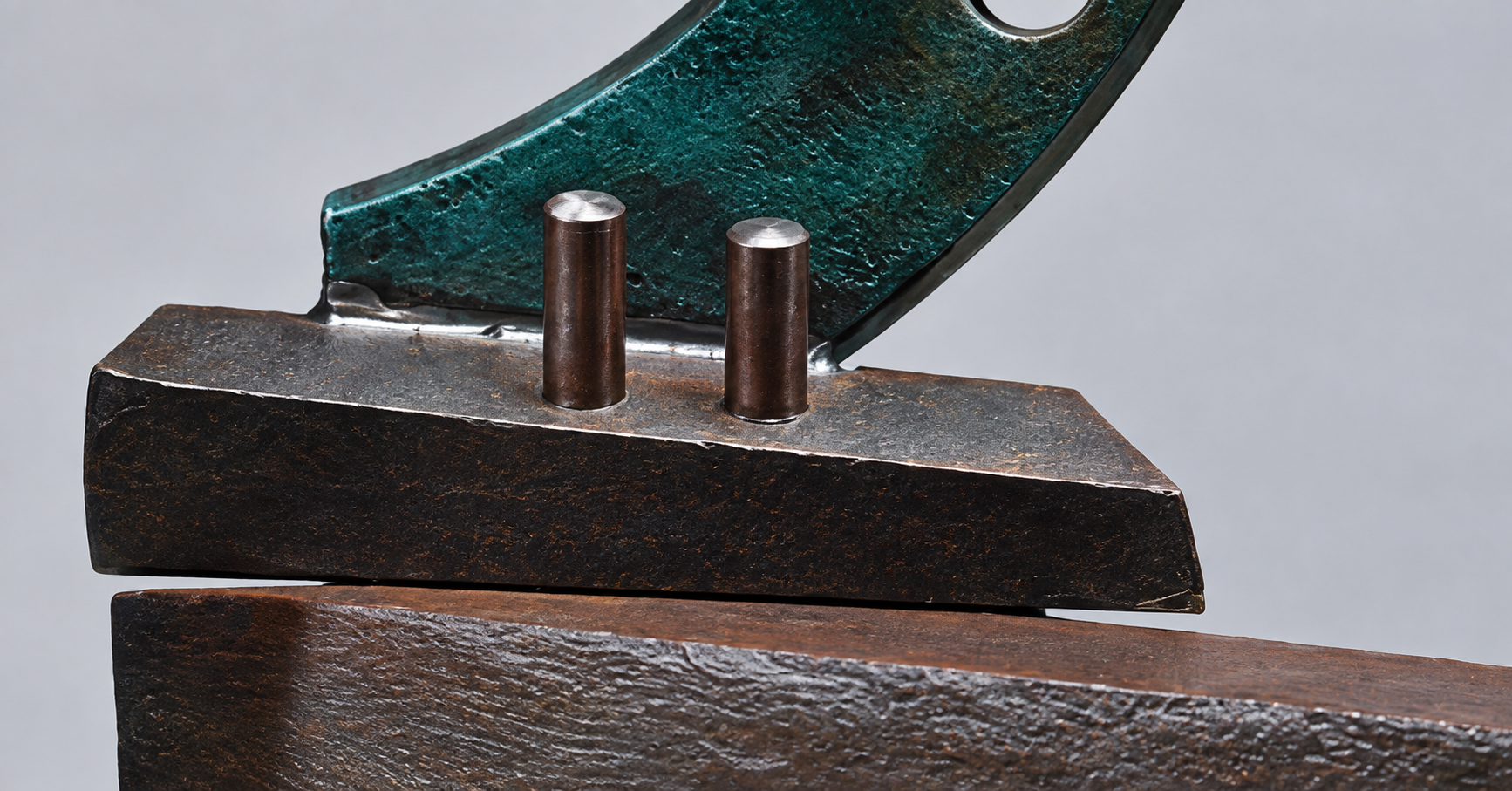 Image 3 of 3
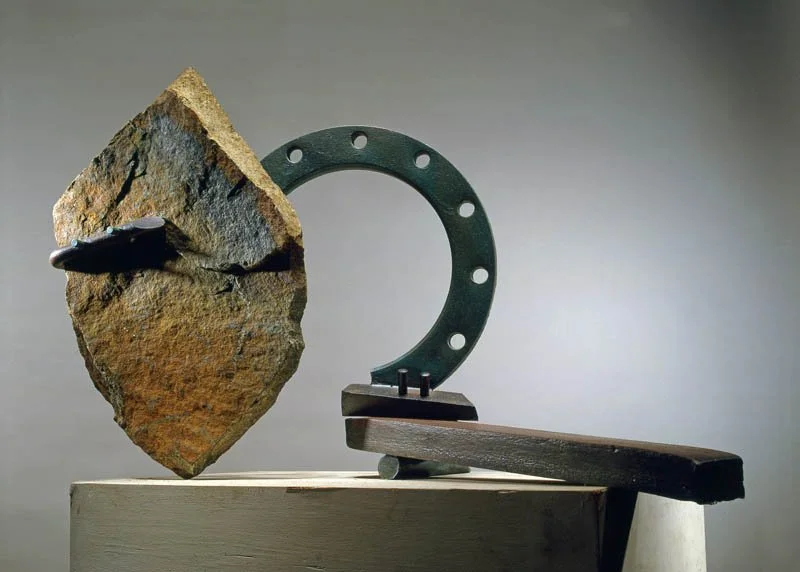
October 1987. Local granite, painted steel. Dimensions: 24 × 43 × 18 in (61 × 109 × 46 cm).
Private collection.
Indian Lake Rounder brings a naturally colored found stone into the circular language of my Rounder Series. Its unusual rust, ochre, and gray coloration interested me as much as its shape, particularly because the colors were surprisingly close to those I had been applying to some of my painted stones. The discovery was another step that helped move my work away from the subdued, neutral gray granite I had relied on for years. The painted-steel arc and visible stainless-steel taper pins reinforce this shift, with the pins functioning both structurally and as deliberate visual and conceptual elements celebrating the sculpture’s assembly.
The title refers directly to where I found the stone—along the side of the highway near Indian Lake, New York, not far from where I live. As with many of my titles, it records something of the material’s history and origin, allowing the chance discovery of a local stone to become part of the identity of the sculpture.
October 1987. Local granite, painted steel. Dimensions: 24 × 43 × 18 in (61 × 109 × 46 cm).
Private collection.
Indian Lake Rounder brings a naturally colored found stone into the circular language of my Rounder Series. Its unusual rust, ochre, and gray coloration interested me as much as its shape, particularly because the colors were surprisingly close to those I had been applying to some of my painted stones. The discovery was another step that helped move my work away from the subdued, neutral gray granite I had relied on for years. The painted-steel arc and visible stainless-steel taper pins reinforce this shift, with the pins functioning both structurally and as deliberate visual and conceptual elements celebrating the sculpture’s assembly.
The title refers directly to where I found the stone—along the side of the highway near Indian Lake, New York, not far from where I live. As with many of my titles, it records something of the material’s history and origin, allowing the chance discovery of a local stone to become part of the identity of the sculpture.