 Image 1 of 1
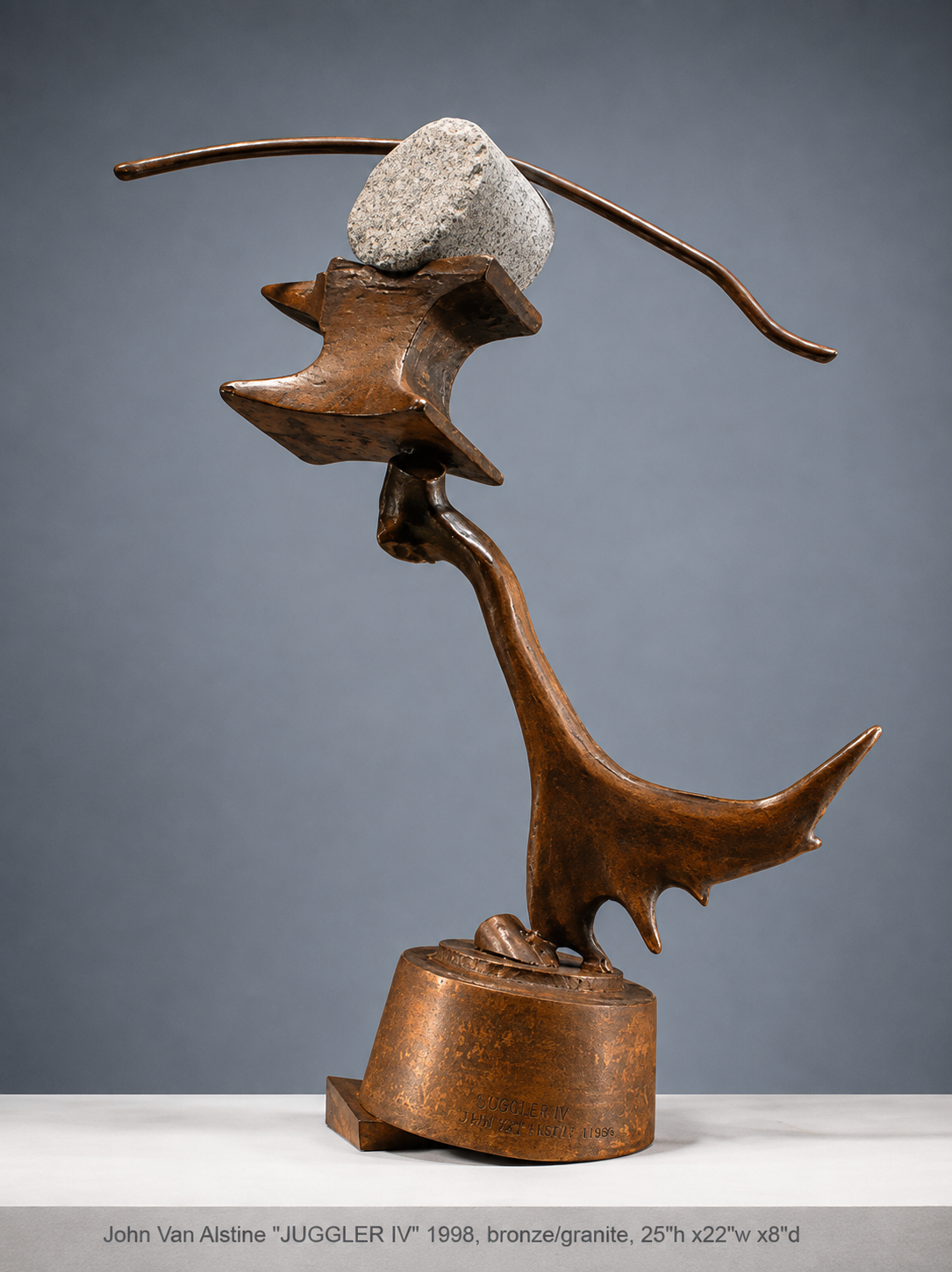
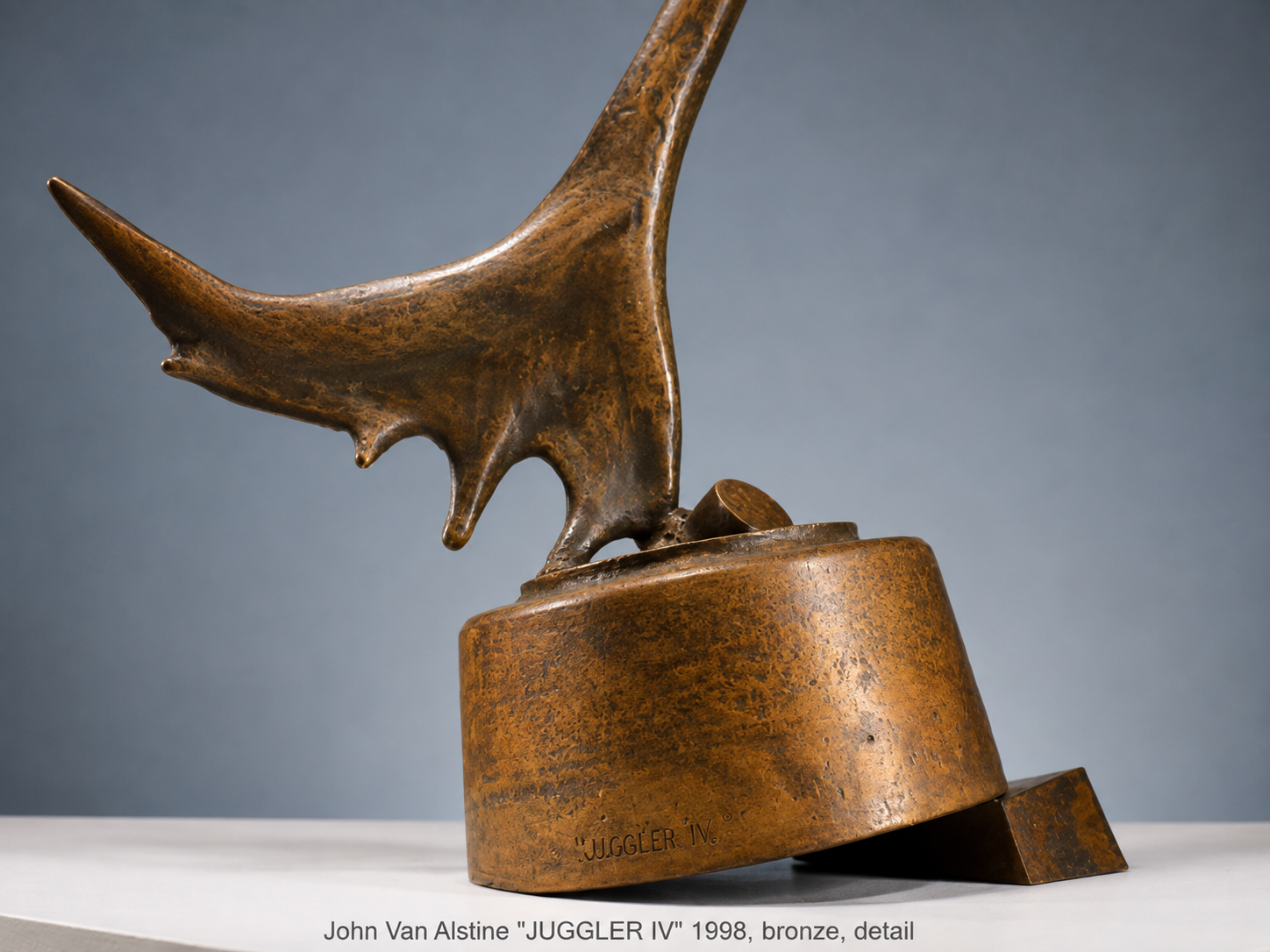
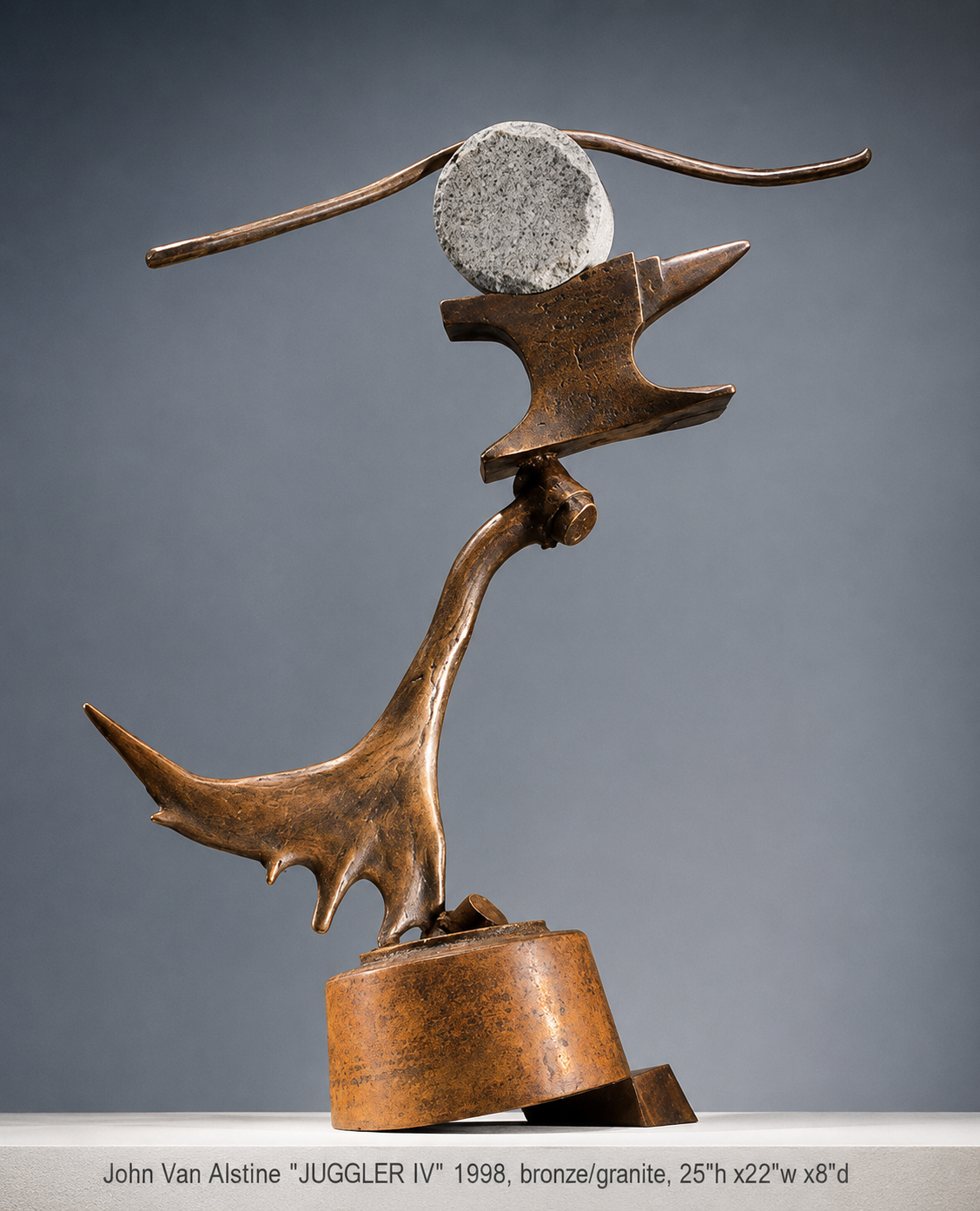
February 1998. Bronze, granite. Dimensions: 25 × 22 × 8 in (64 × 56 × 20 cm). Private collection - Washington, DC
Many of Van Alstine’s works take inspiration from the movement of the human body. This work can be seen as a kind of self-portrait, suggesting his studio process—literally juggling and repositioning the individual elements of a sculpture until they achieve a moment of perfect balance, then freezing that moment in space through welding. More universally, juggling becomes a metaphor for the way we all balance the competing demands of family, work, play, and responsibility.
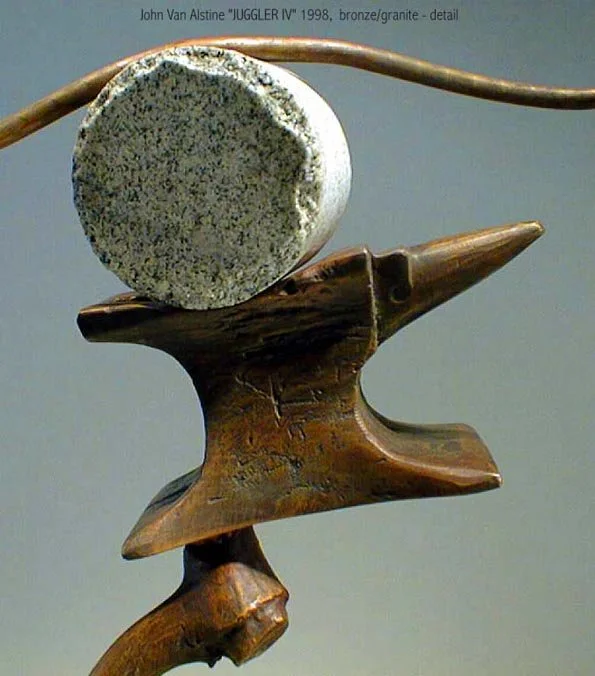
The anvil, which appears in a number of the artist’s works, represents both the ultimate heavy object to “juggle” and the act of assembly itself—the forging together of object, material, and ideas that is central to Van Alstine’s work.
February 1998. Bronze, granite. Dimensions: 25 × 22 × 8 in (64 × 56 × 20 cm). Private collection - Washington, DC
Many of Van Alstine’s works take inspiration from the movement of the human body. This work can be seen as a kind of self-portrait, suggesting his studio process—literally juggling and repositioning the individual elements of a sculpture until they achieve a moment of perfect balance, then freezing that moment in space through welding. More universally, juggling becomes a metaphor for the way we all balance the competing demands of family, work, play, and responsibility.
The anvil, which appears in a number of the artist’s works, represents both the ultimate heavy object to “juggle” and the act of assembly itself—the forging together of object, material, and ideas that is central to Van Alstine’s work.