 Image 1 of 1
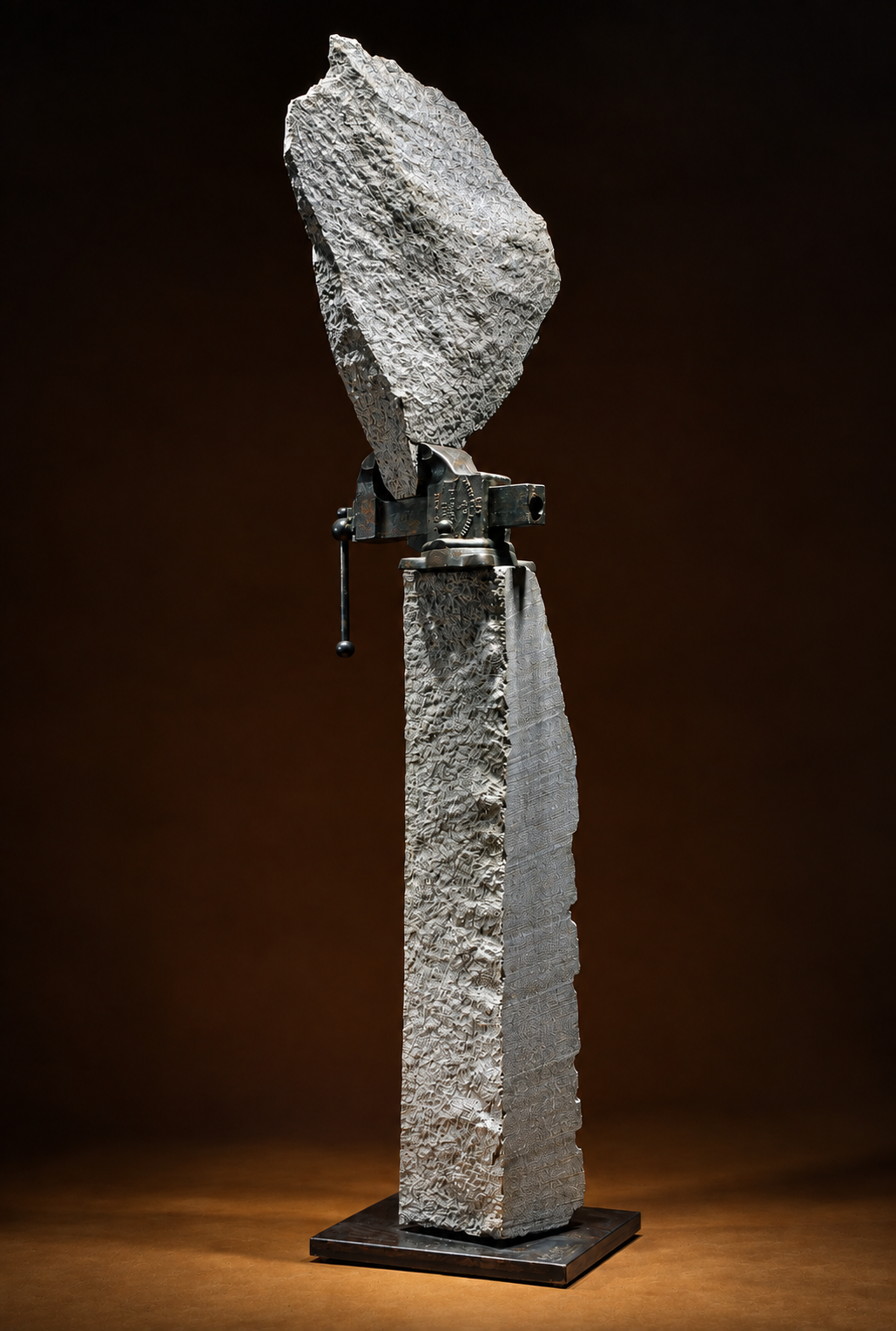
April 1989. Granite, steel, found object. Dimensions: 103 × 29 × 22 in (262 × 74 × 56 cm).
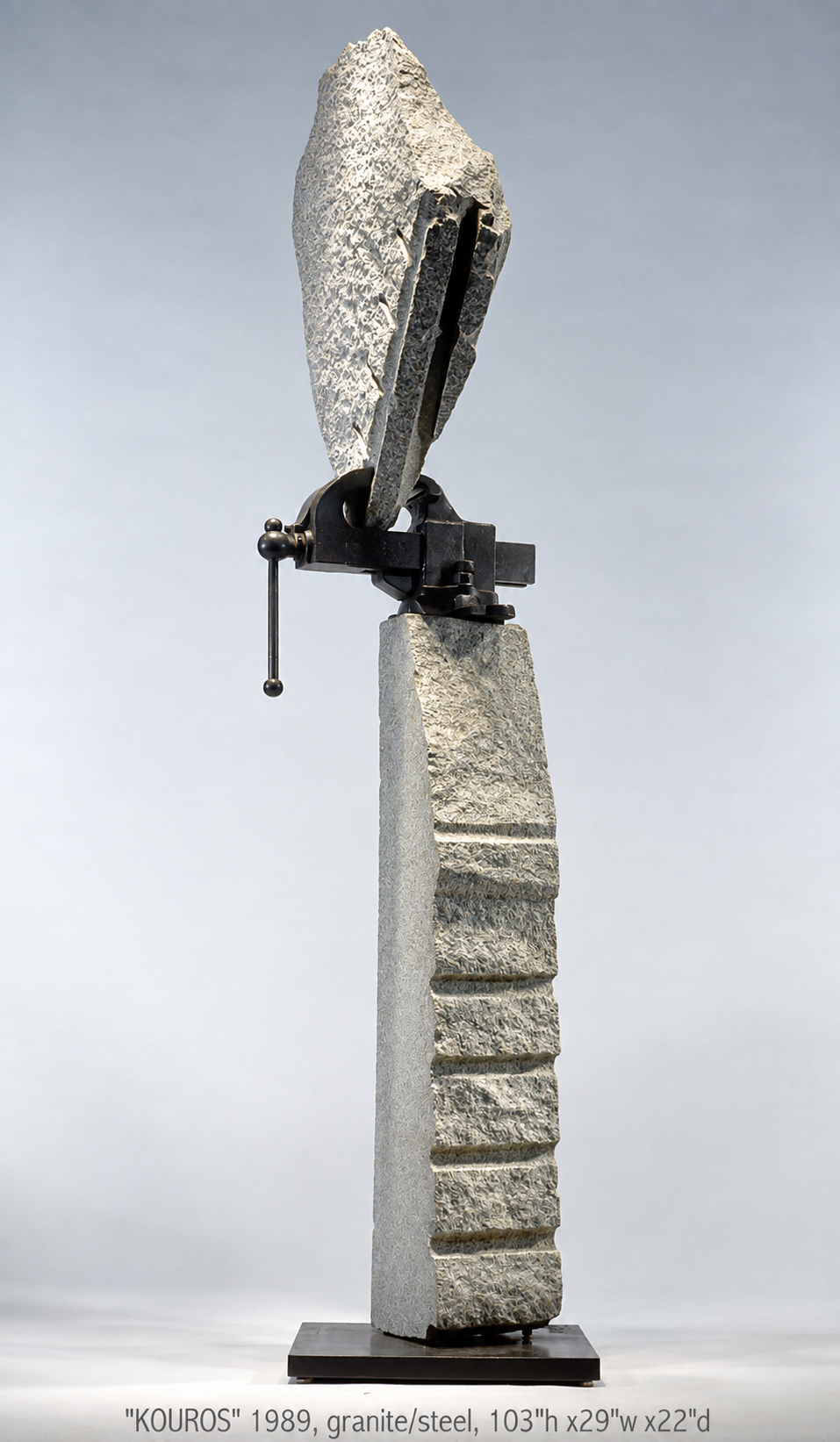
Kouros expands my growing interest in the human figure through an abstract language of granite and steel. The sculpture’s tall, rigid stance recalls the frontal positioning of the kouros, the standing male figures of Archaic Greek sculpture, while allowing the natural character of the stone to suggest the body without literally depicting it.
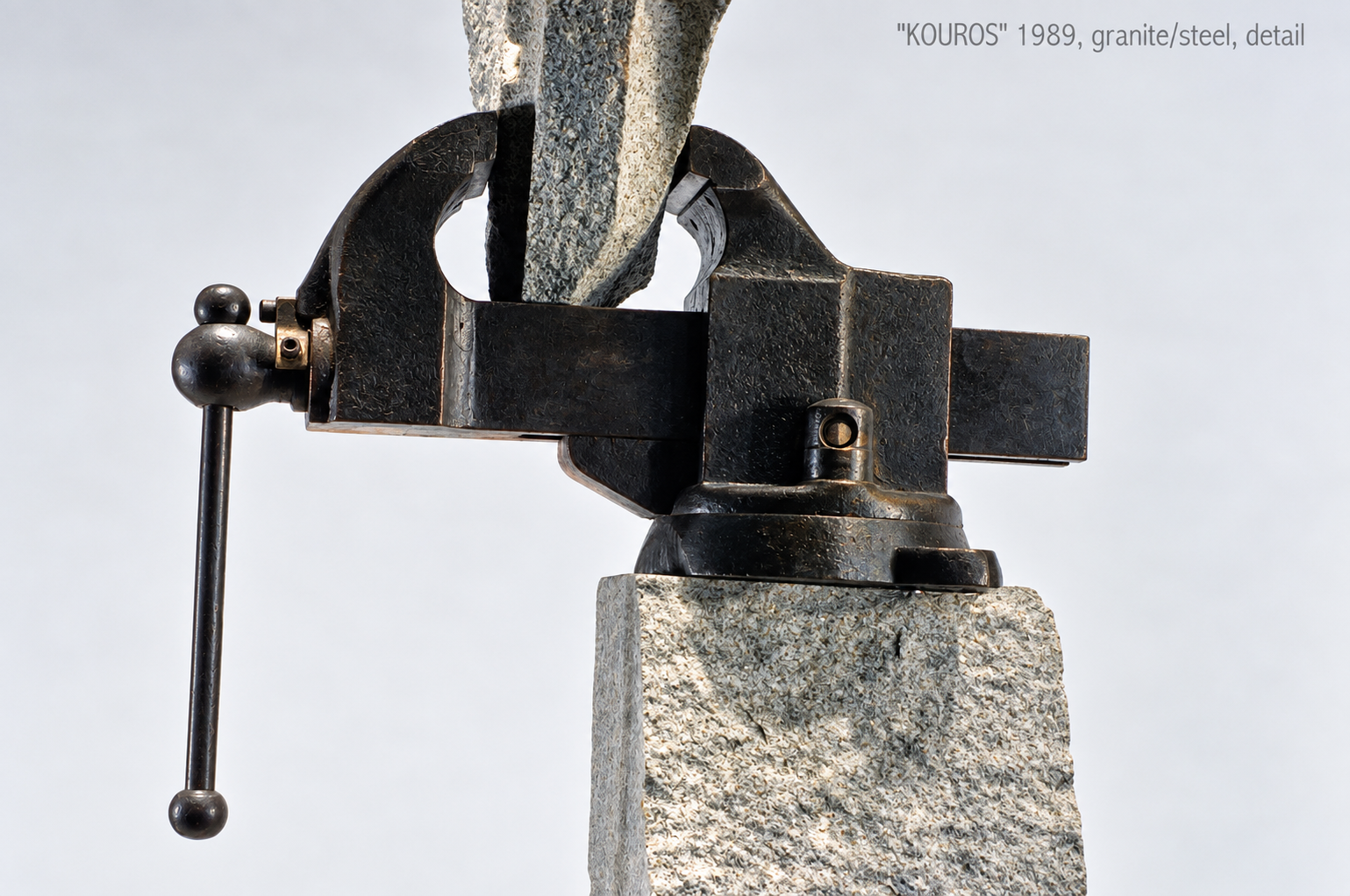
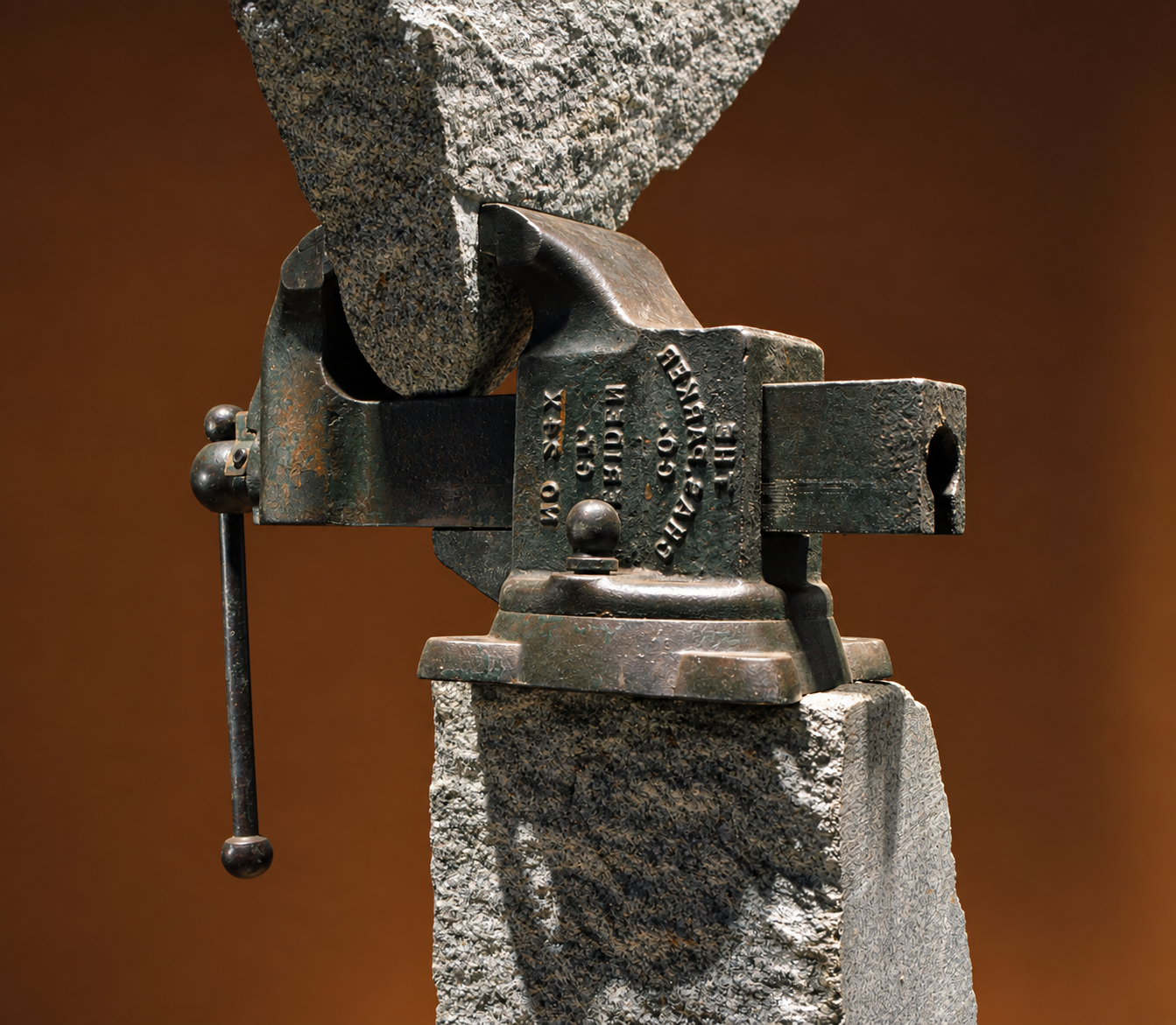
A real, functioning vise grips and holds the upper stone upright, continuing my interest in tools as extensions of the hand and as expressive sculptural forms. Its hanging handle subtly suggests the male member, reinforcing the sculpture’s reference to the nude male body and the prominence accorded to the male figure in ancient Greek art and culture.
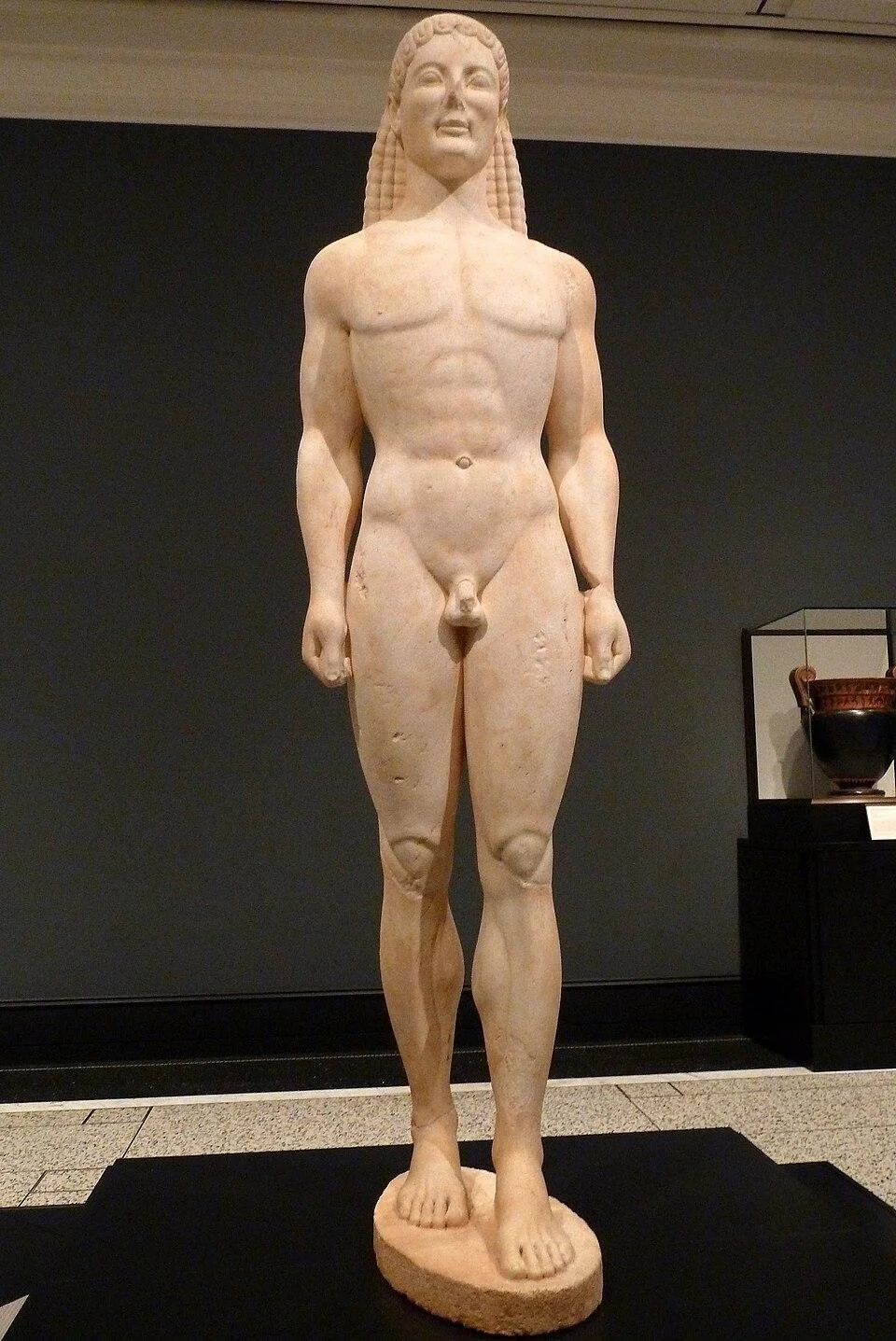
Kouros statues are iconic Archaic Greek sculptures (c. 615–460 BC) representing nude male youths, serving as votive offerings to gods or grave markers for elite individuals. Influenced by Egyptian art, they feature a rigid, frontal pose with one foot forward and stylized hair. These figures symbolize idealized youth, strength, and aristocratic honor rather than realistic portraits.
April 1989. Granite, steel, found object. Dimensions: 103 × 29 × 22 in (262 × 74 × 56 cm).
Kouros expands my growing interest in the human figure through an abstract language of granite and steel. The sculpture’s tall, rigid stance recalls the frontal positioning of the kouros, the standing male figures of Archaic Greek sculpture, while allowing the natural character of the stone to suggest the body without literally depicting it.
A real, functioning vise grips and holds the upper stone upright, continuing my interest in tools as extensions of the hand and as expressive sculptural forms. Its hanging handle subtly suggests the male member, reinforcing the sculpture’s reference to the nude male body and the prominence accorded to the male figure in ancient Greek art and culture.
Kouros statues are iconic Archaic Greek sculptures (c. 615–460 BC) representing nude male youths, serving as votive offerings to gods or grave markers for elite individuals. Influenced by Egyptian art, they feature a rigid, frontal pose with one foot forward and stylized hair. These figures symbolize idealized youth, strength, and aristocratic honor rather than realistic portraits.