 Image 1 of 1
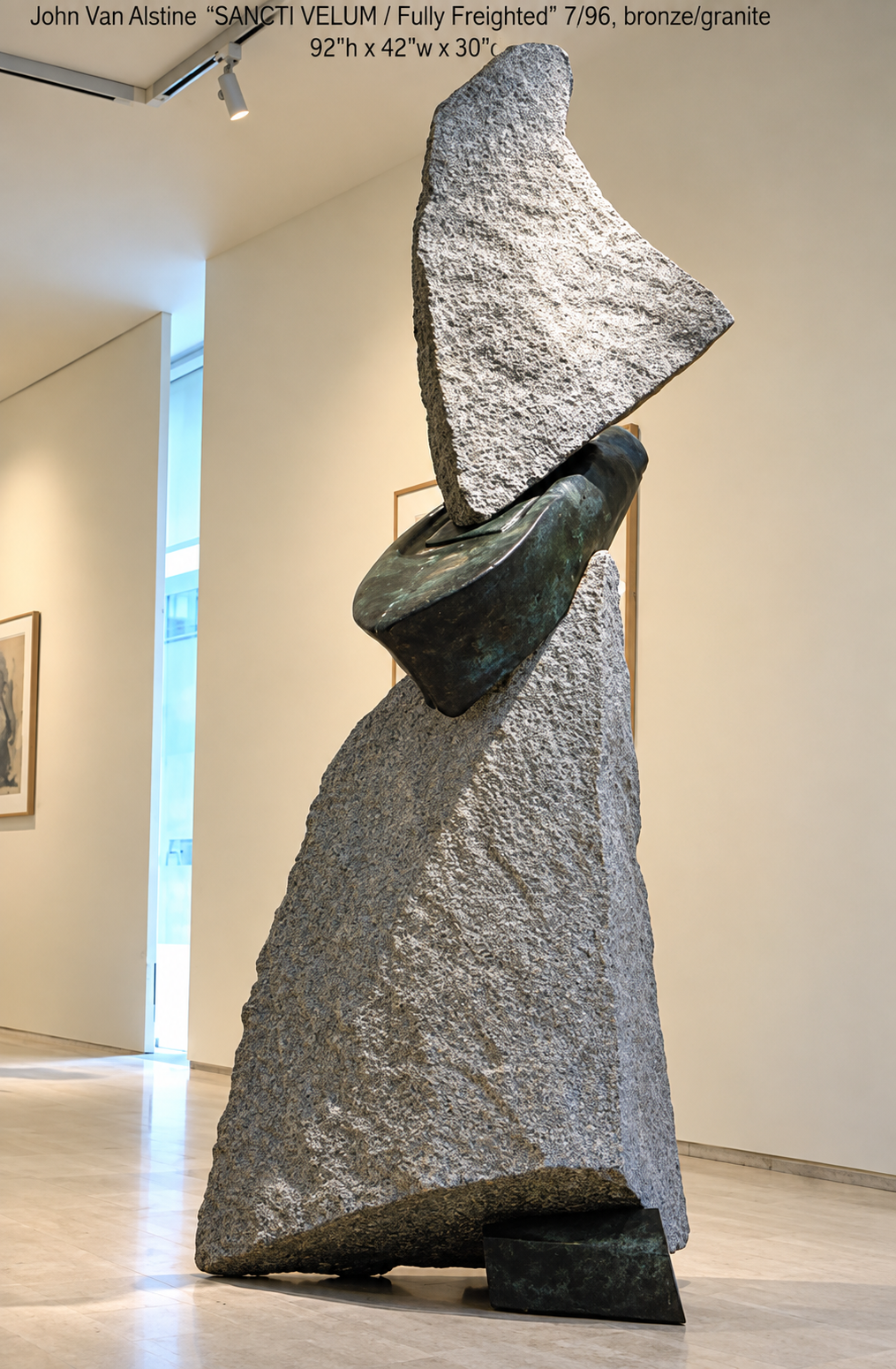
Saxum Velum (S-96-11)
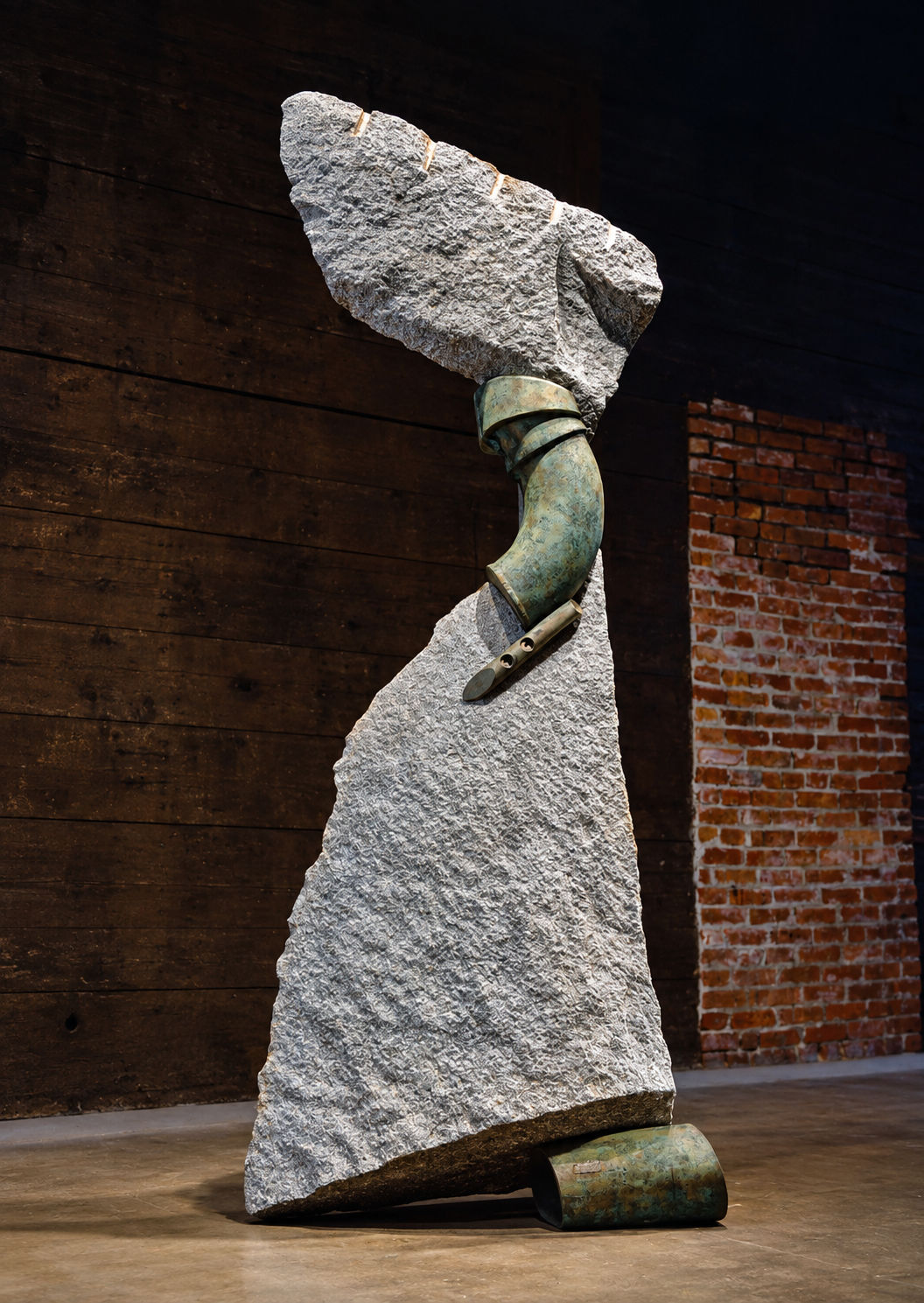
October 1991. Granite, bronze. Dimensions: 89 × 41 × 21 in (226 × 104 × 53 cm). Cannibalized to create Saxum Velum (S-96-11).
Mercury’s Caduceus continues my interest in exploring the figure and mythology as frameworks for sculptural expression. The title refers to Mercury—Hermes in Greek mythology—and his caduceus, the winged staff associated with the messenger god. Rather than illustrating the figure literally, the sculpture abstracts qualities of movement, balance, and flight. The sweeping bronze elements animate the granite, transforming its considerable weight into a figure that appears to pivot and ascend.
The work continues my interest in bringing opposing forces—weight and lift, mass and movement—into expressive balance, creating a massive figure that seems momentarily freed from gravity.
The work was on display in a public park in Baltimore where it was push over by vandals. The upper stone was broken. The remaining parts were used to create Saxum Velum (see below).
October 1991. Granite, bronze. Dimensions: 89 × 41 × 21 in (226 × 104 × 53 cm). Cannibalized to create Saxum Velum (S-96-11).
Mercury’s Caduceus continues my interest in exploring the figure and mythology as frameworks for sculptural expression. The title refers to Mercury—Hermes in Greek mythology—and his caduceus, the winged staff associated with the messenger god. Rather than illustrating the figure literally, the sculpture abstracts qualities of movement, balance, and flight. The sweeping bronze elements animate the granite, transforming its considerable weight into a figure that appears to pivot and ascend.
The work continues my interest in bringing opposing forces—weight and lift, mass and movement—into expressive balance, creating a massive figure that seems momentarily freed from gravity.
The work was on display in a public park in Baltimore where it was push over by vandals. The upper stone was broken. The remaining parts were used to create Saxum Velum (see below).
Saxum Velum (S-96-11)