 Image 1 of 2
 Image 2 of 2
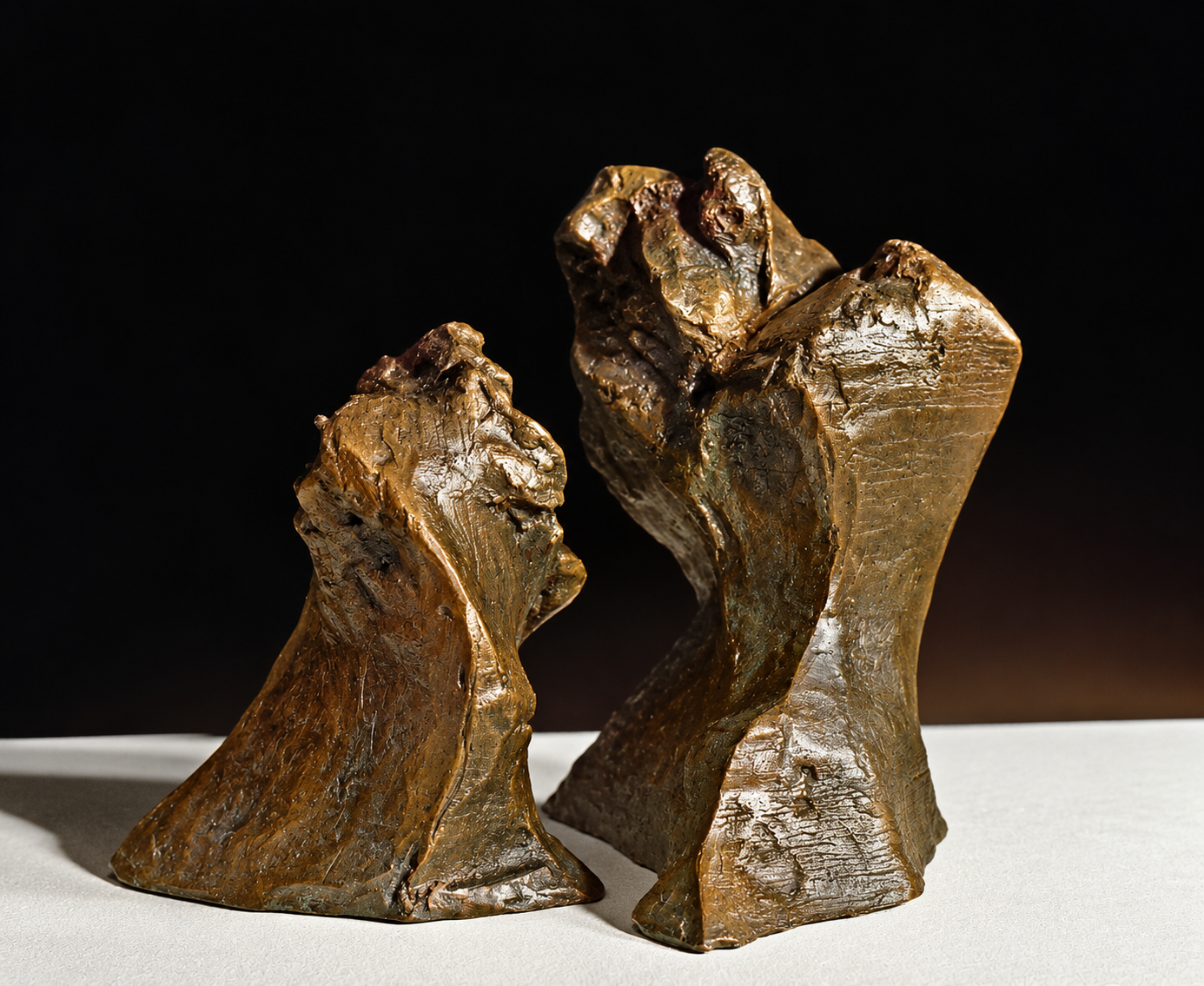
January 1973. Cast bronze. Dimensions: 20 × 18 × 16 in (51 × 46 × 41 cm). Collection of the artist.
Oppression was my first bronze sculpture, created in 1973 while I was an undergraduate at Kent State University, and introduced me to the multi-step process of lost-wax casting. It was also one of my first works composed of two separate elements positioned so that the negative space between them becomes an active part of the sculpture. I would continue exploring this relationship between separate forms and the space they define in several marble sculptures from the same period.
The title grew from the relationship between the two abstract forms: the larger element seems to loom over and bear down upon the smaller, creating a sense of pressure, dominance, and psychological tension. Although completely abstract, their scale, positioning, and posture suggest a distinctly human relationship. Looking back, Oppression represents an early recognition of the communicative and expressive power of abstraction—that relationships between mass, space, scale, and gesture could convey an emotional idea without relying on literal representation.
January 1973. Cast bronze. Dimensions: 20 × 18 × 16 in (51 × 46 × 41 cm). Collection of the artist.
Oppression was my first bronze sculpture, created in 1973 while I was an undergraduate at Kent State University, and introduced me to the multi-step process of lost-wax casting. It was also one of my first works composed of two separate elements positioned so that the negative space between them becomes an active part of the sculpture. I would continue exploring this relationship between separate forms and the space they define in several marble sculptures from the same period.
The title grew from the relationship between the two abstract forms: the larger element seems to loom over and bear down upon the smaller, creating a sense of pressure, dominance, and psychological tension. Although completely abstract, their scale, positioning, and posture suggest a distinctly human relationship. Looking back, Oppression represents an early recognition of the communicative and expressive power of abstraction—that relationships between mass, space, scale, and gesture could convey an emotional idea without relying on literal representation.