 Image 1 of 1
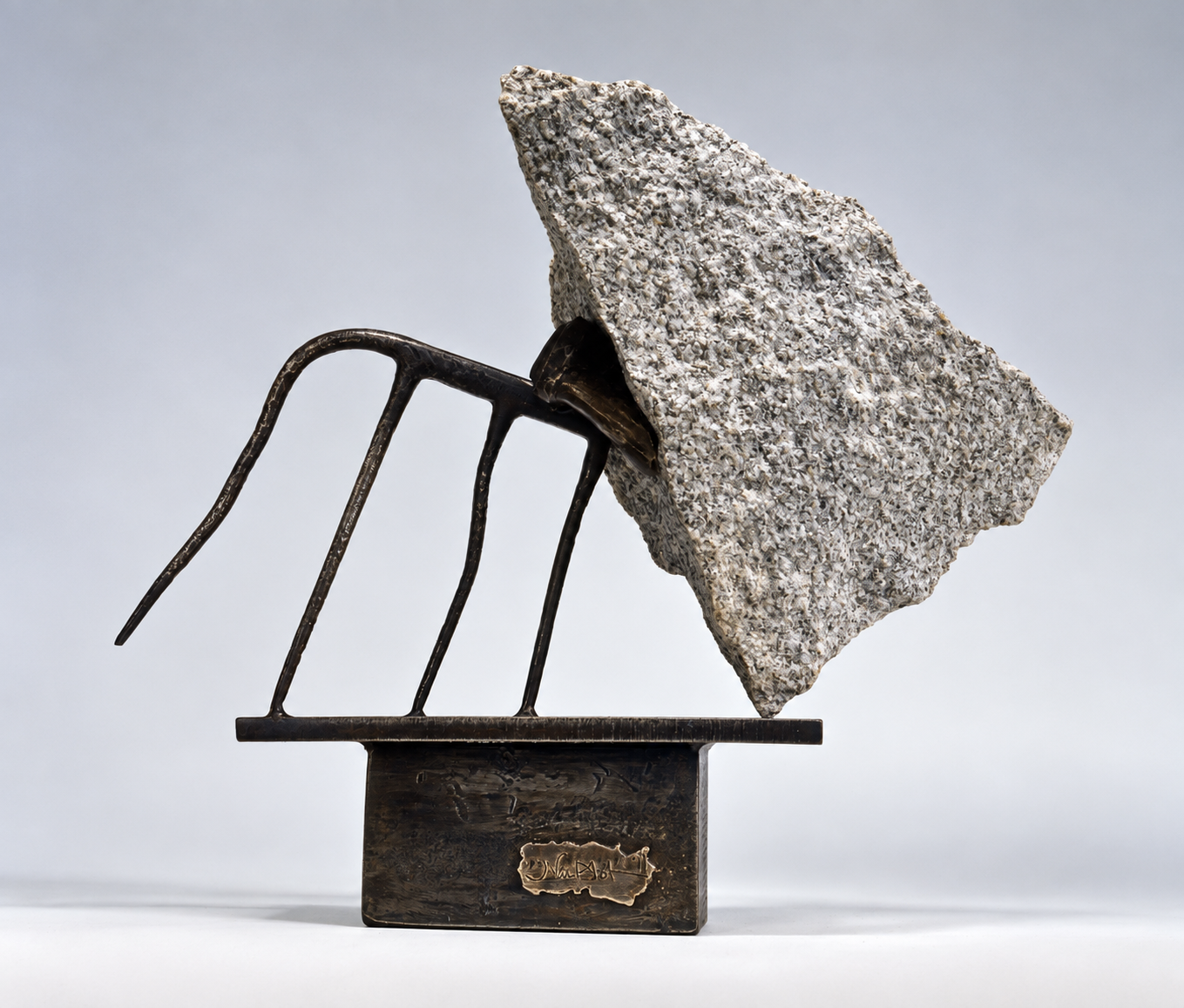
July 1994. Granite, steel. Dimensions: 13 × 15 × 4 in (33 × 38 × 10 cm).
Private collection - Washington, DC
Phalanx II, the second work in the Phalanx Series, continues my interest in incorporating actual tools and agricultural implements into sculpture. Here a real pitchfork is manipulated and combined with a roughly fractured piece of granite. The familiar tool is transformed from a functional object into an active sculptural element—supporting, penetrating, and engaging the weight of the stone.
The title Phalanx refers to the bones that form the fingers, reinforcing the pitchfork’s tines as an extension of the human hand. This connection reflects my broader interest in tools as extensions of the hand—forms shaped by function that also symbolize human labor, ingenuity, and the physical act of making.
July 1994. Granite, steel. Dimensions: 13 × 15 × 4 in (33 × 38 × 10 cm).
Private collection - Washington, DC
Phalanx II, the second work in the Phalanx Series, continues my interest in incorporating actual tools and agricultural implements into sculpture. Here a real pitchfork is manipulated and combined with a roughly fractured piece of granite. The familiar tool is transformed from a functional object into an active sculptural element—supporting, penetrating, and engaging the weight of the stone.
The title Phalanx refers to the bones that form the fingers, reinforcing the pitchfork’s tines as an extension of the human hand. This connection reflects my broader interest in tools as extensions of the hand—forms shaped by function that also symbolize human labor, ingenuity, and the physical act of making.