 Image 1 of 2
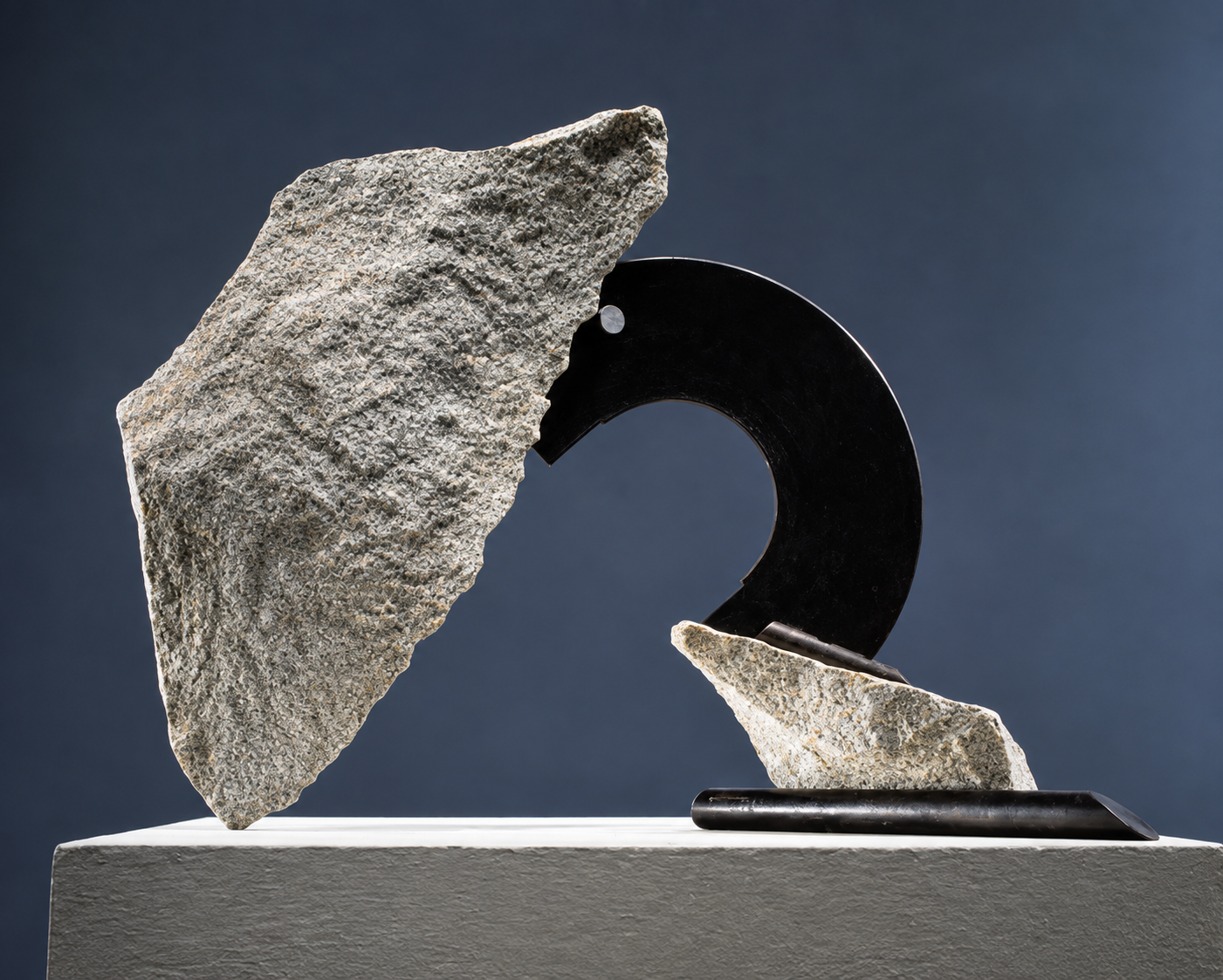 Image 2 of 2
September 1991. Granite, steel. Dimensions: 30 × 38 × 24 in (76 × 97 × 61 cm).
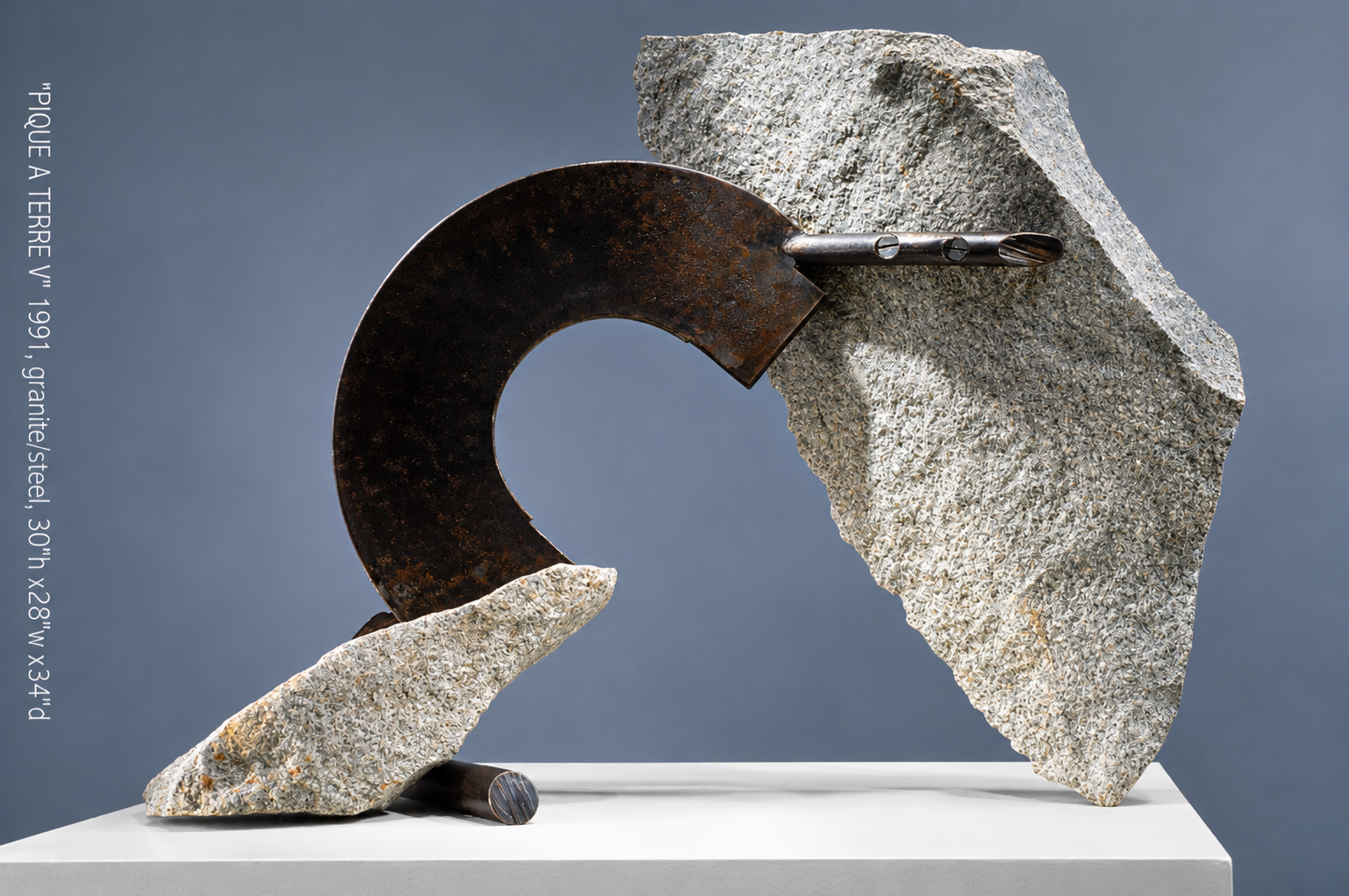
Pique à Terre V, the fifth work in the series, developed as a spin-off from my earlier Rounder and Go-Round Series, carrying forward their circular vocabulary and my ongoing interest in combining stone and metal. Here, the sweeping steel arc links two very different granite forms, lifting the larger stone onto a single point and creating a strong sense of balance, suspension, and arrested movement. The steel becomes both structural and gestural—a means of freeing the stone from its normally earthbound condition. This idea of using metal to “choreograph” and seemingly float stone has remained central to my sculpture.
The title comes from classical French ballet and refers to a pose in which one toe lightly touches the ground, the other foot remains firmly planted, and an arm makes a sweeping gesture. In the Pique à Terre Series, I began thinking of myself as a kind of choreographer, arranging dense, heavy materials so that they appear almost to dance. In Pique à Terre V, the precariously poised granite and circular sweep of steel turn weight and gravity into gesture, movement, and a surprising sense of levity.
September 1991. Granite, steel. Dimensions: 30 × 38 × 24 in (76 × 97 × 61 cm).
Pique à Terre V, the fifth work in the series, developed as a spin-off from my earlier Rounder and Go-Round Series, carrying forward their circular vocabulary and my ongoing interest in combining stone and metal. Here, the sweeping steel arc links two very different granite forms, lifting the larger stone onto a single point and creating a strong sense of balance, suspension, and arrested movement. The steel becomes both structural and gestural—a means of freeing the stone from its normally earthbound condition. This idea of using metal to “choreograph” and seemingly float stone has remained central to my sculpture.
The title comes from classical French ballet and refers to a pose in which one toe lightly touches the ground, the other foot remains firmly planted, and an arm makes a sweeping gesture. In the Pique à Terre Series, I began thinking of myself as a kind of choreographer, arranging dense, heavy materials so that they appear almost to dance. In Pique à Terre V, the precariously poised granite and circular sweep of steel turn weight and gravity into gesture, movement, and a surprising sense of levity.