 Image 1 of 1
March 2018
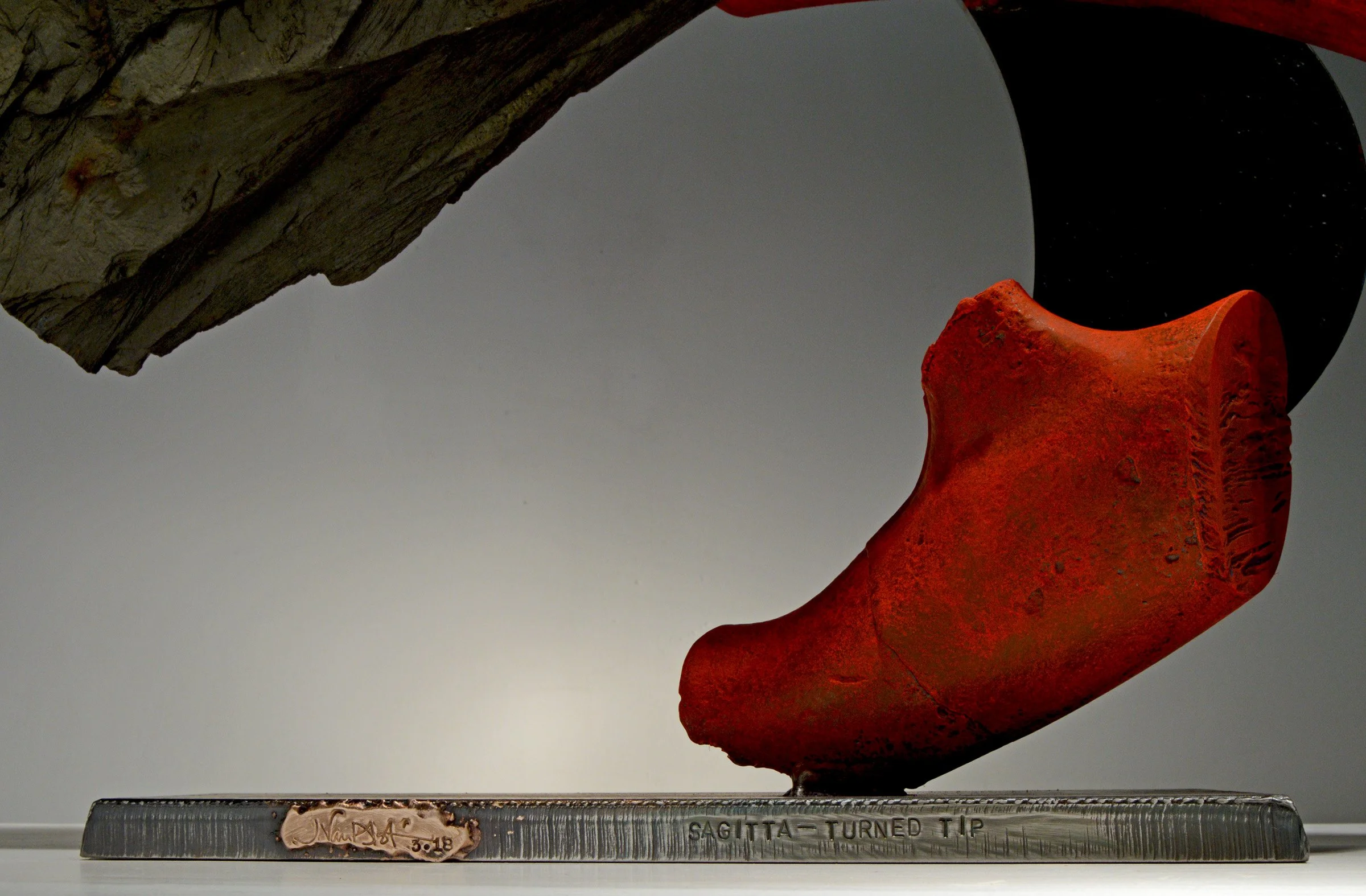
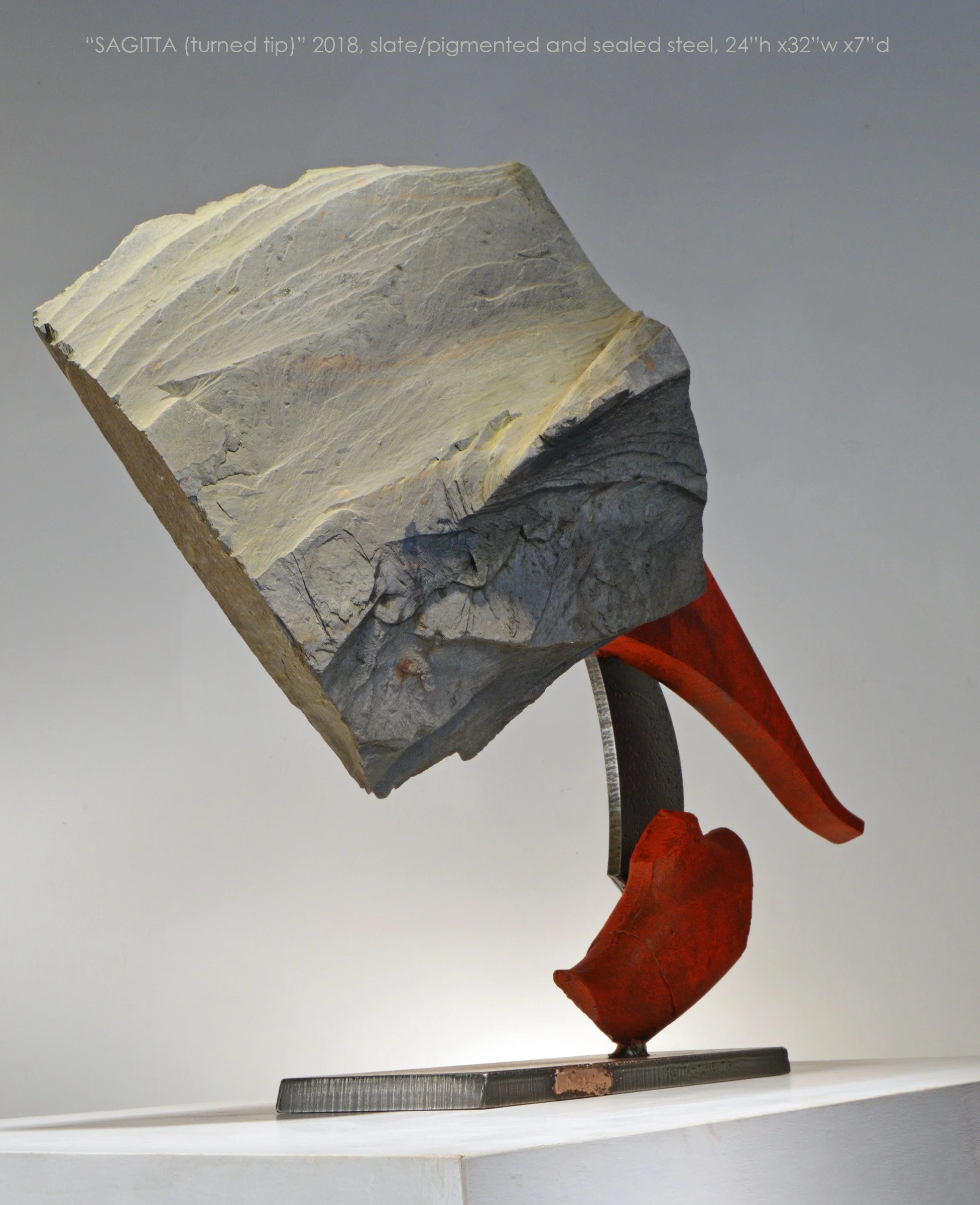
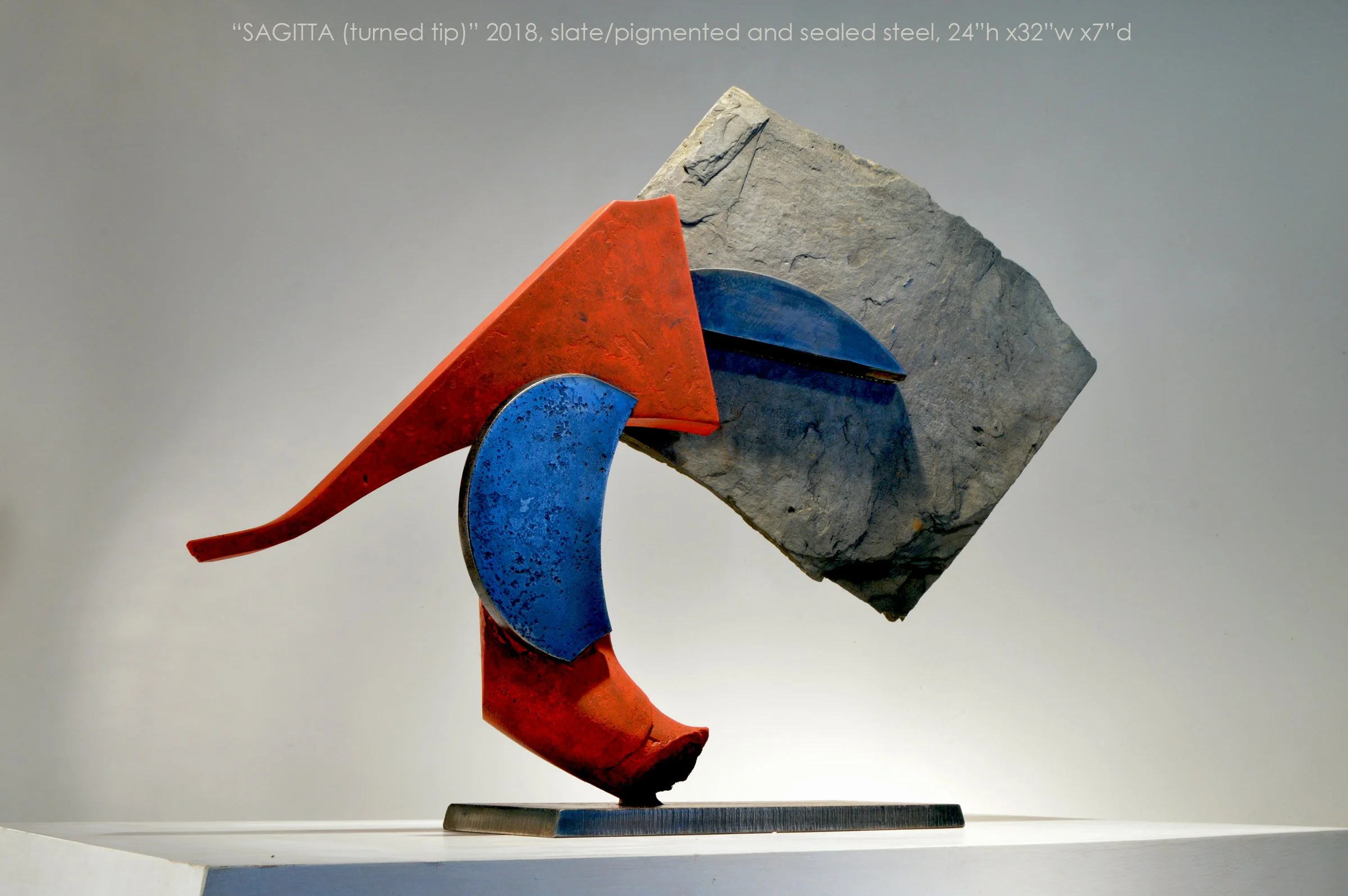
Slate, pigmented and sealed steel
24 × 32 × 7 in. (61 × 81 × 18 cm)
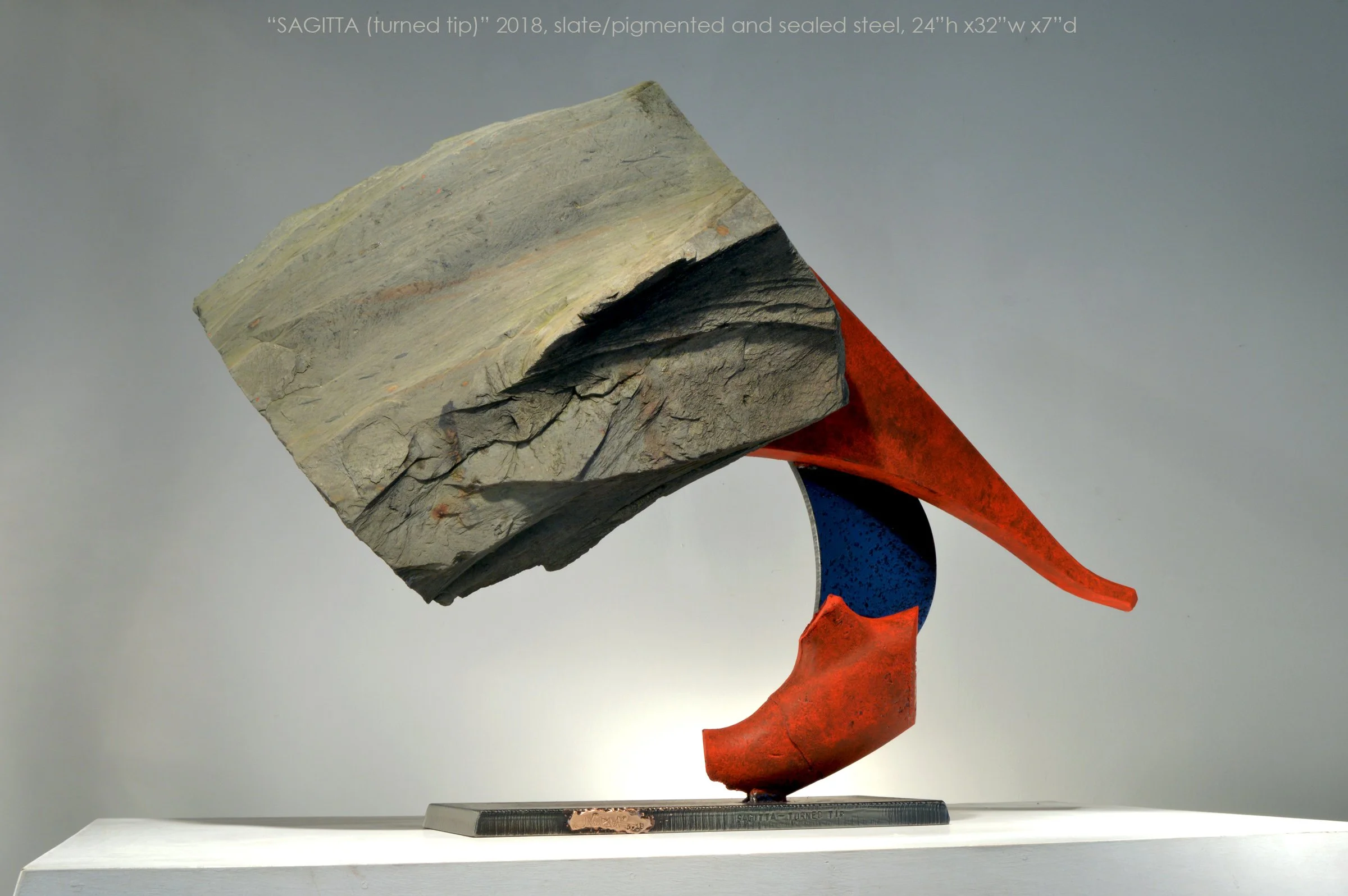
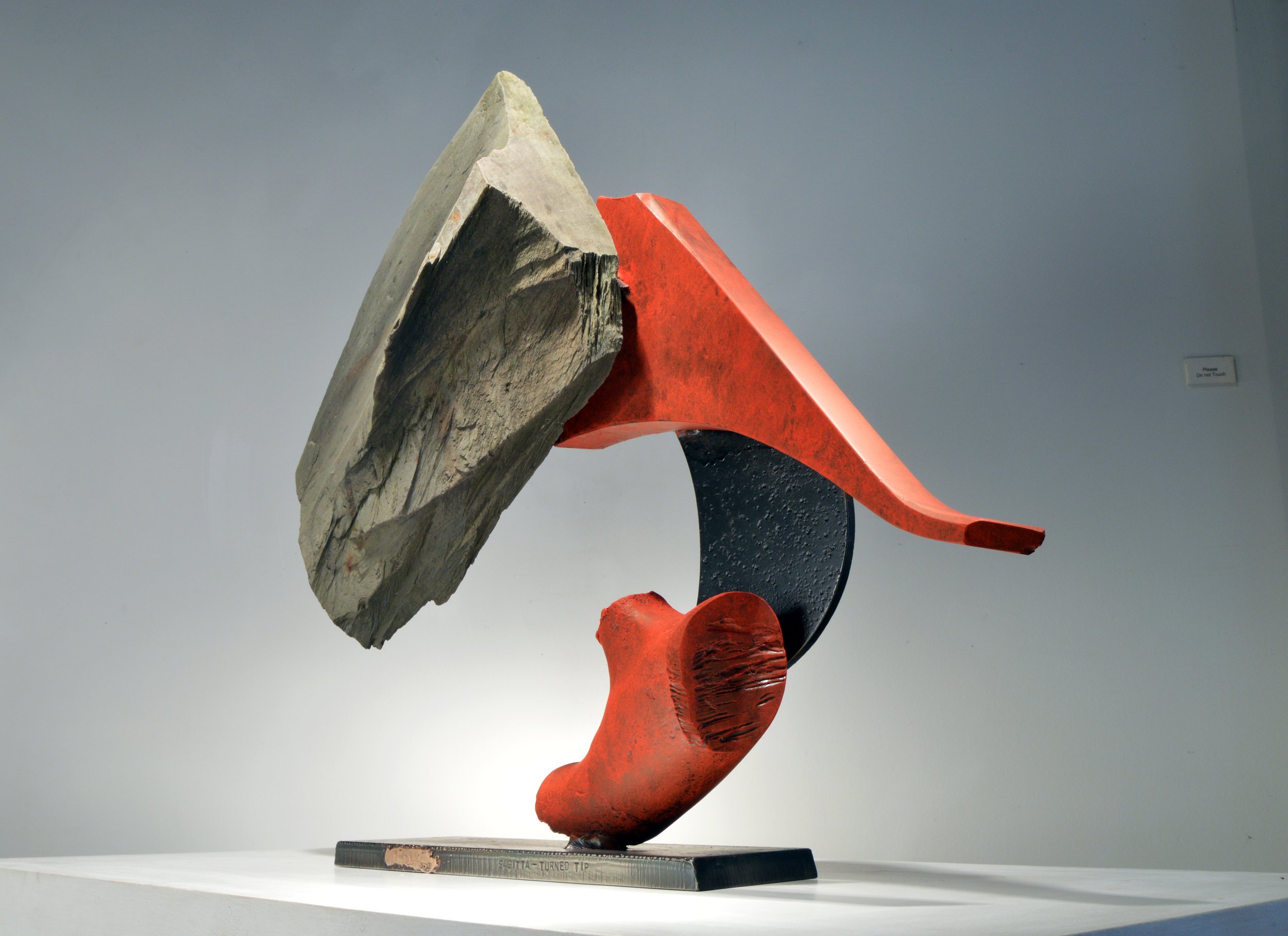
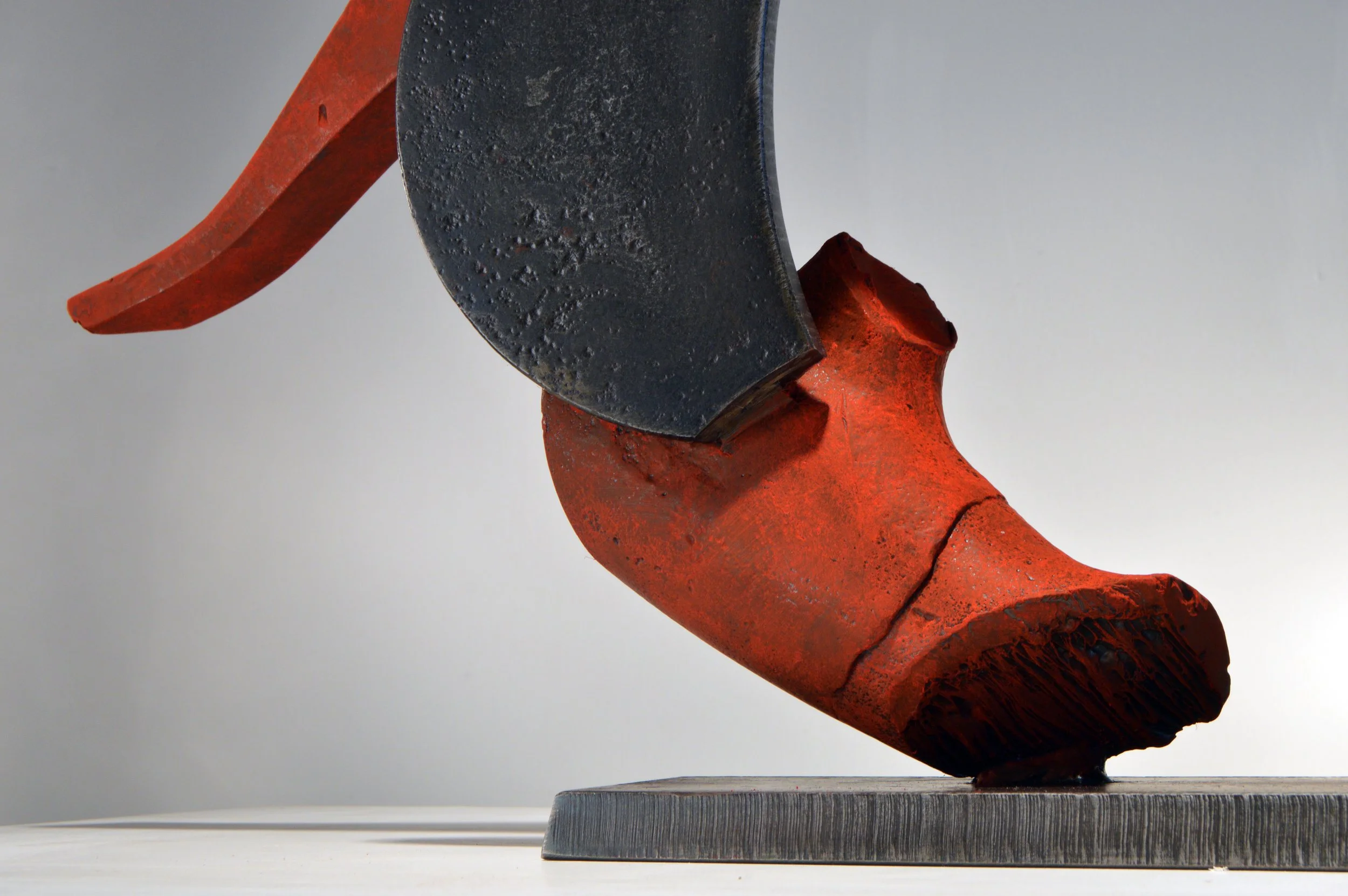
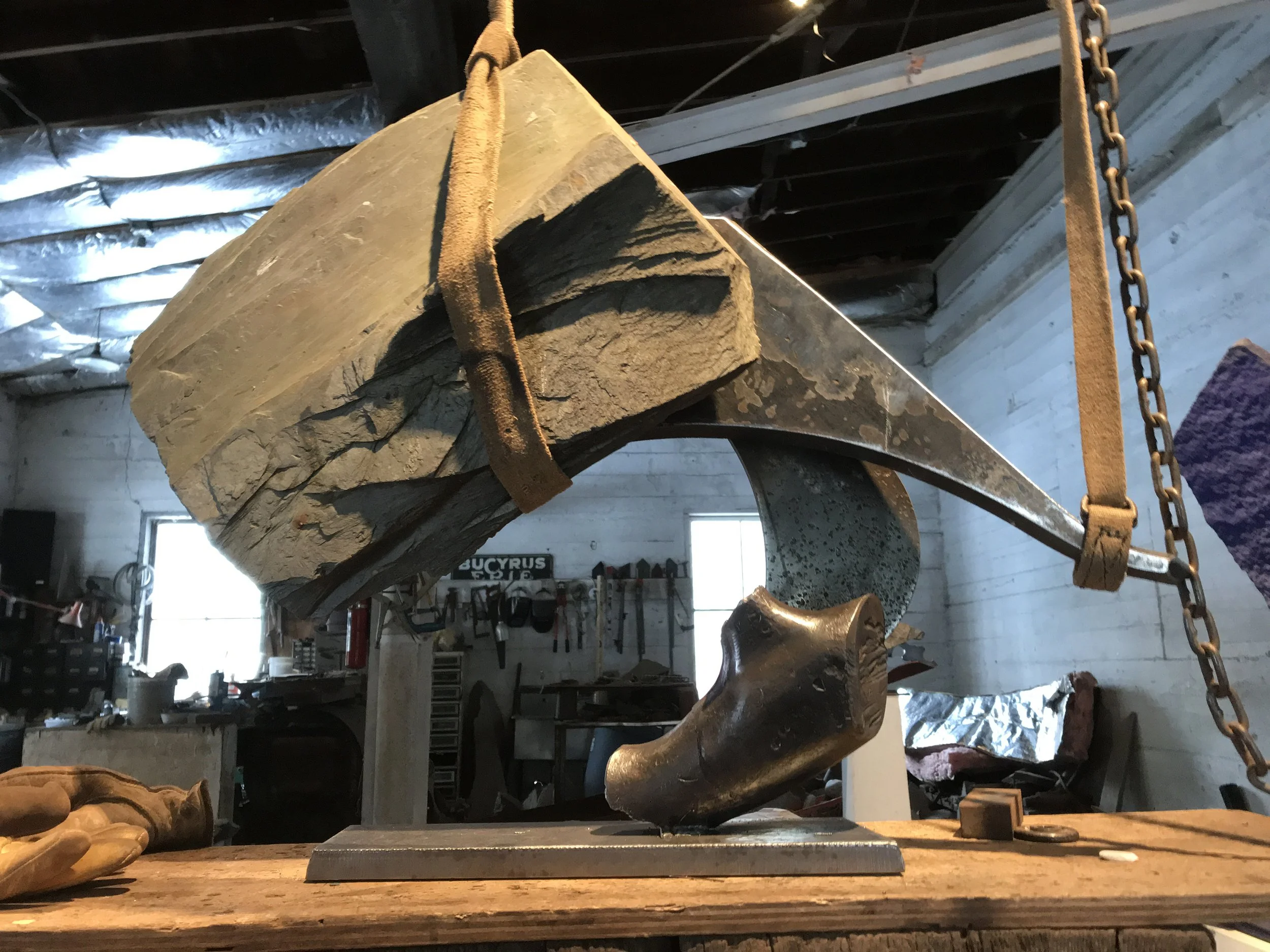
The title Sagitta, Latin for arrow, refers both to the ancient constellation and to one of humanity's oldest and most enduring tools. First recorded by the astronomer Ptolemy, the constellation has long been associated with the arrows of Hercules, Apollo, and Eros—symbols of strength, purpose, and transformation. In Sagitta (Turned Tip), the arrow is reimagined as an abstract dialogue between stone and steel.
The turned tip introduces a subtle tension, suggesting that even the most direct path may be altered by circumstance or intention. Rather than depicting a weapon, the sculpture evokes the arrow as a symbol of direction, aspiration, and the continual search for meaning. As in much of John Van Alstine's work, the interplay of weight and movement transforms a familiar form into a meditation on balance, journey, and possibility.
March 2018
Slate, pigmented and sealed steel
24 × 32 × 7 in. (61 × 81 × 18 cm)
The title Sagitta, Latin for arrow, refers both to the ancient constellation and to one of humanity's oldest and most enduring tools. First recorded by the astronomer Ptolemy, the constellation has long been associated with the arrows of Hercules, Apollo, and Eros—symbols of strength, purpose, and transformation. In Sagitta (Turned Tip), the arrow is reimagined as an abstract dialogue between stone and steel.
The turned tip introduces a subtle tension, suggesting that even the most direct path may be altered by circumstance or intention. Rather than depicting a weapon, the sculpture evokes the arrow as a symbol of direction, aspiration, and the continual search for meaning. As in much of John Van Alstine's work, the interplay of weight and movement transforms a familiar form into a meditation on balance, journey, and possibility.