 Image 1 of 1
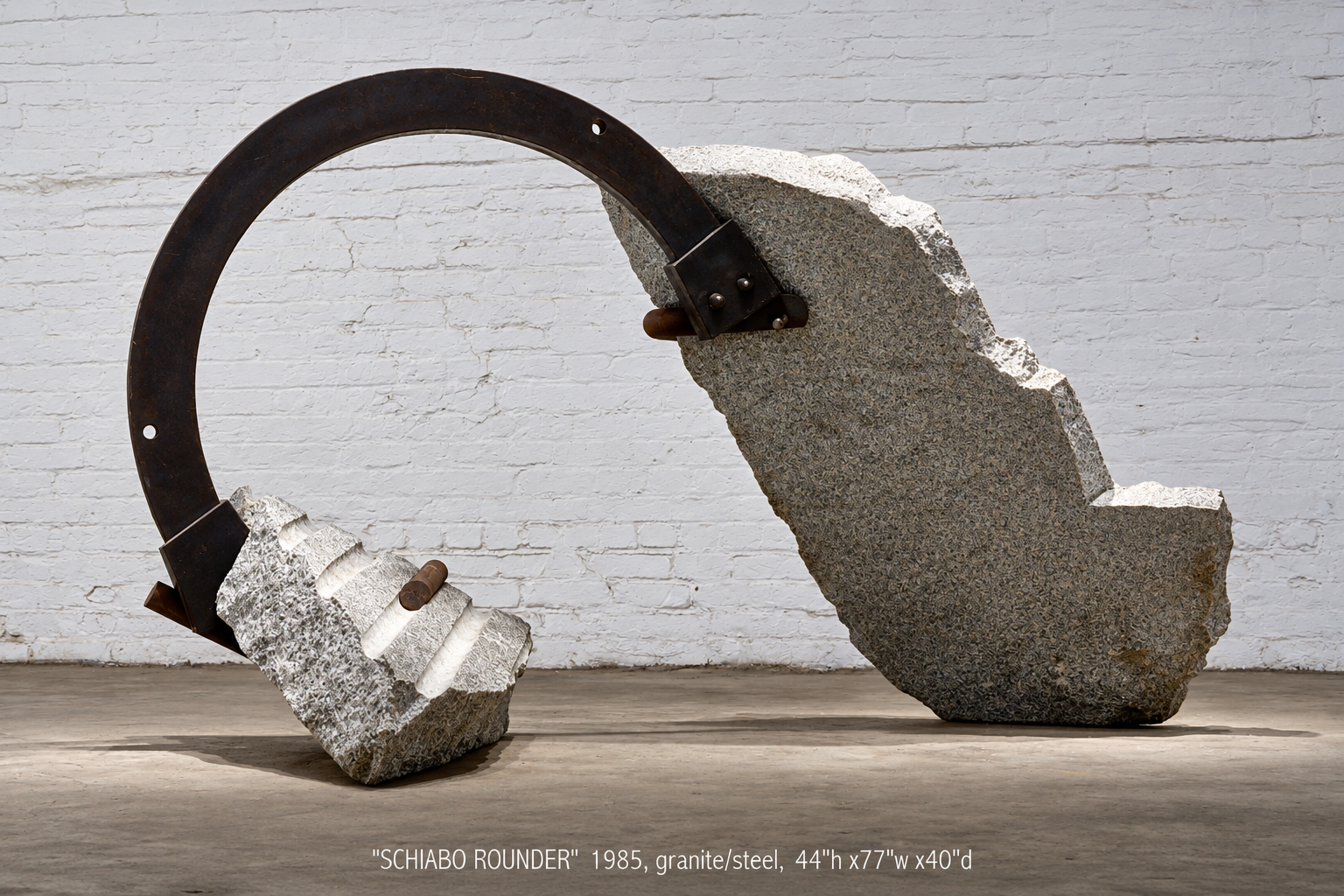
June 1985. Granite, steel. Dimensions: 44 × 77 × 40 in (112 × 196 × 102 cm).
Collection: Grounds for Sculpture, Hamilton, NJ
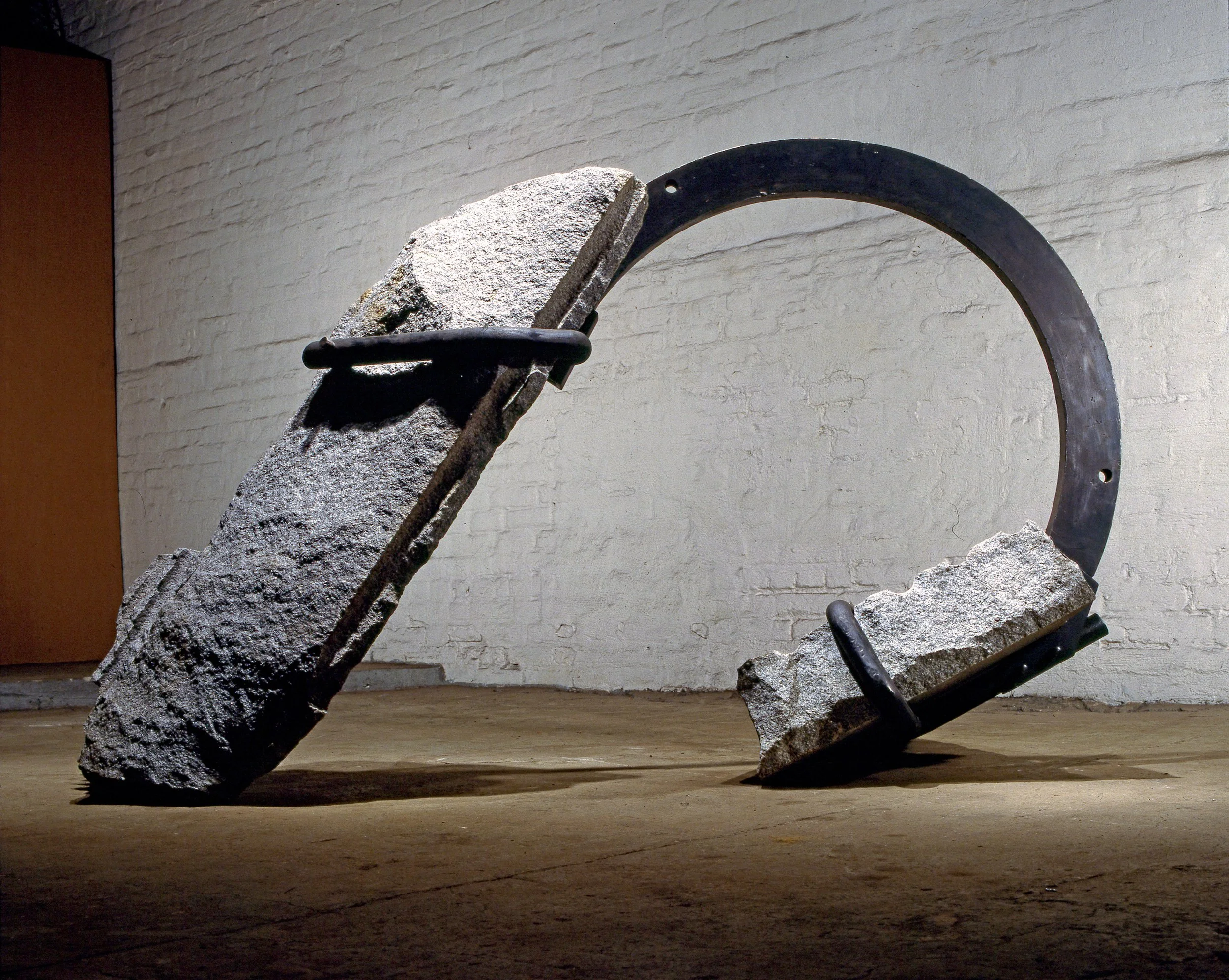
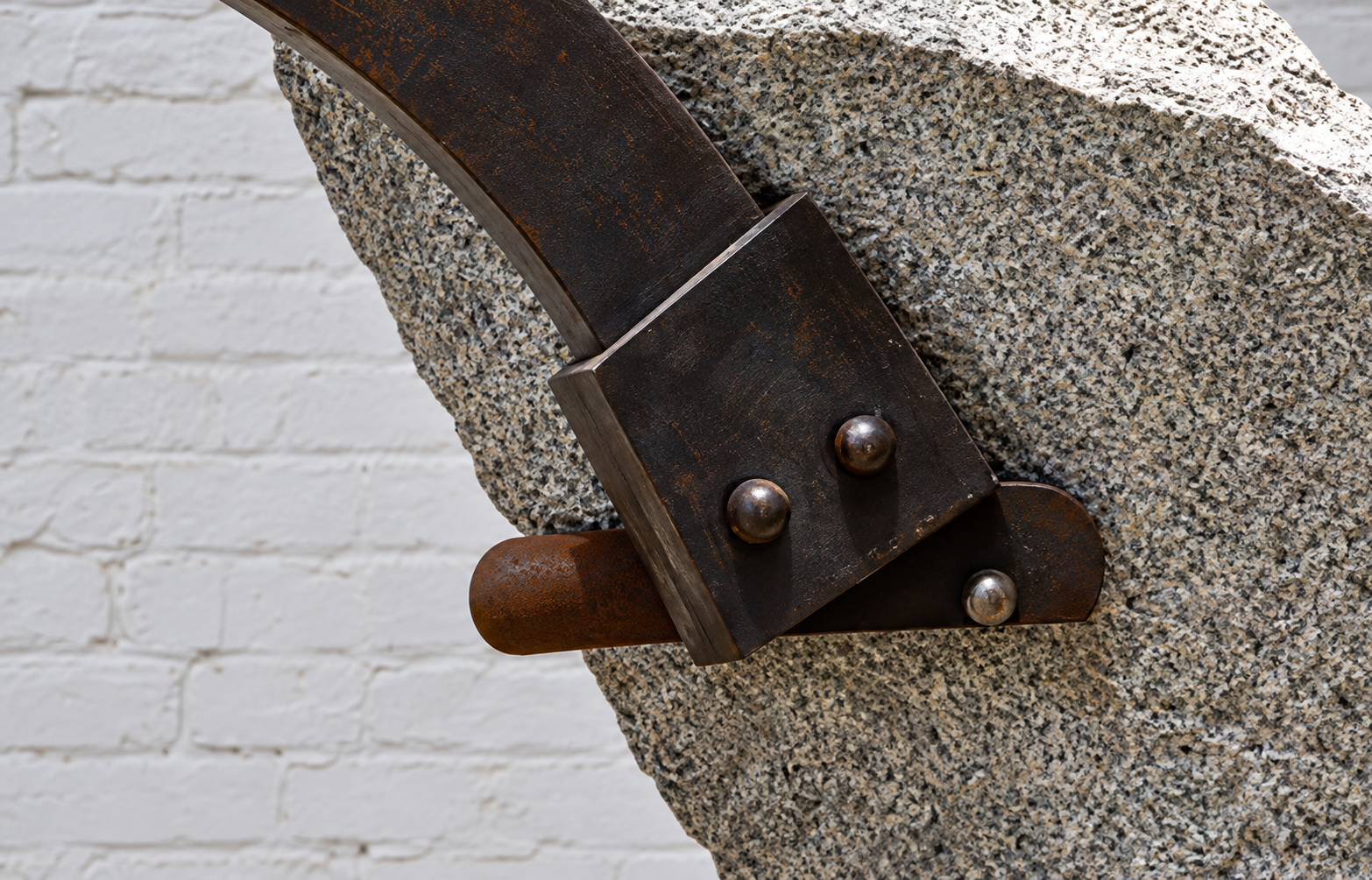
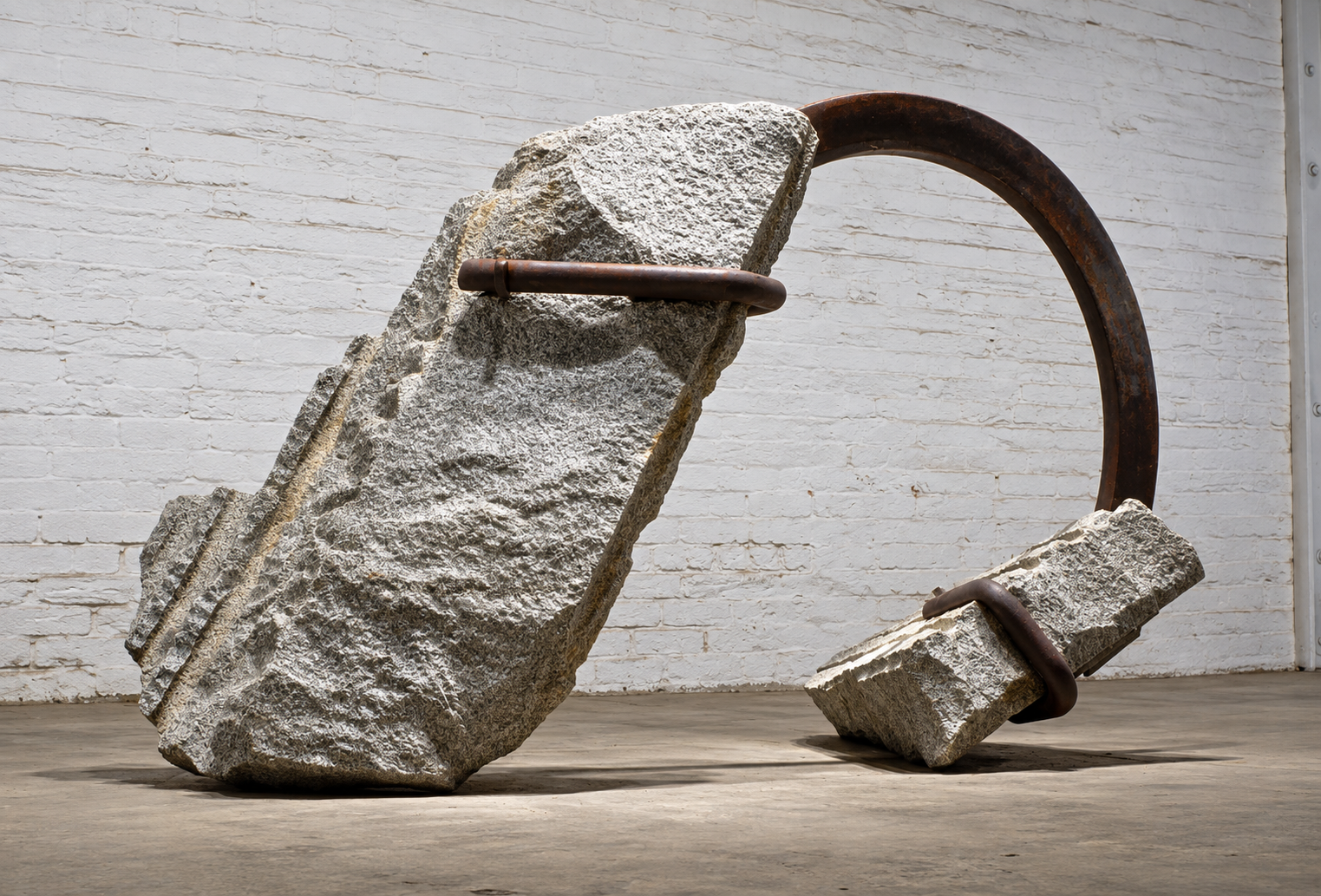
Schiabo Rounder continues the formal and structural ideas of the Rounder Series. Two contrasting granite elements are connected by a broad steel arc, creating circular movement while engaging weight, balance, and suspension. Visible brackets, pins, and forged-steel elements emphasize the means of assembly, carrying forward concerns from my earlier tensegrity, or Brute Series. As with Rounder I, the title also plays on the slightly disreputable meaning of “rounder”—a drifter or someone from “the other side of the tracks.”
Schiabo simply identifies the source of the steel, which I salvaged from the Schiabo scrap recycling yard at the Port of Albany, New York; the name has no further symbolic meaning. The sculpture was originally purchased by Washington, DC collector Murray Bring and later acquired by his law partner Jim Dobkin when Bring moved to New York City. Following Dobkin’s death, the work was donated from his estate to the collection of Grounds For Sculpture in Hamilton, New Jersey.
June 1985. Granite, steel. Dimensions: 44 × 77 × 40 in (112 × 196 × 102 cm).
Collection: Grounds for Sculpture, Hamilton, NJ
Schiabo Rounder continues the formal and structural ideas of the Rounder Series. Two contrasting granite elements are connected by a broad steel arc, creating circular movement while engaging weight, balance, and suspension. Visible brackets, pins, and forged-steel elements emphasize the means of assembly, carrying forward concerns from my earlier tensegrity, or Brute Series. As with Rounder I, the title also plays on the slightly disreputable meaning of “rounder”—a drifter or someone from “the other side of the tracks.”
Schiabo simply identifies the source of the steel, which I salvaged from the Schiabo scrap recycling yard at the Port of Albany, New York; the name has no further symbolic meaning. The sculpture was originally purchased by Washington, DC collector Murray Bring and later acquired by his law partner Jim Dobkin when Bring moved to New York City. Following Dobkin’s death, the work was donated from his estate to the collection of Grounds For Sculpture in Hamilton, New Jersey.