 Image 1 of 1
SOLD
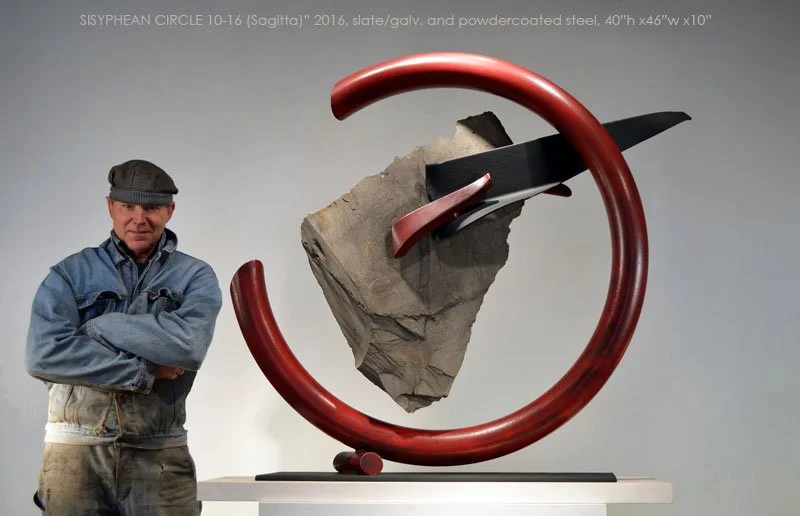
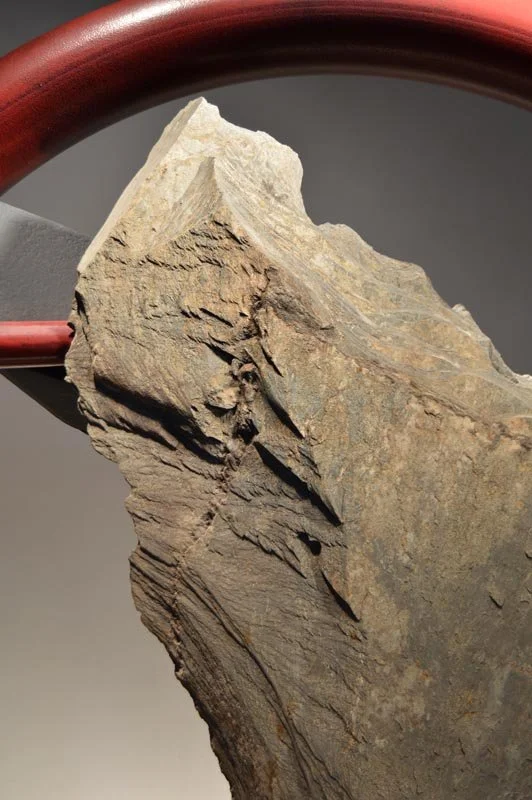
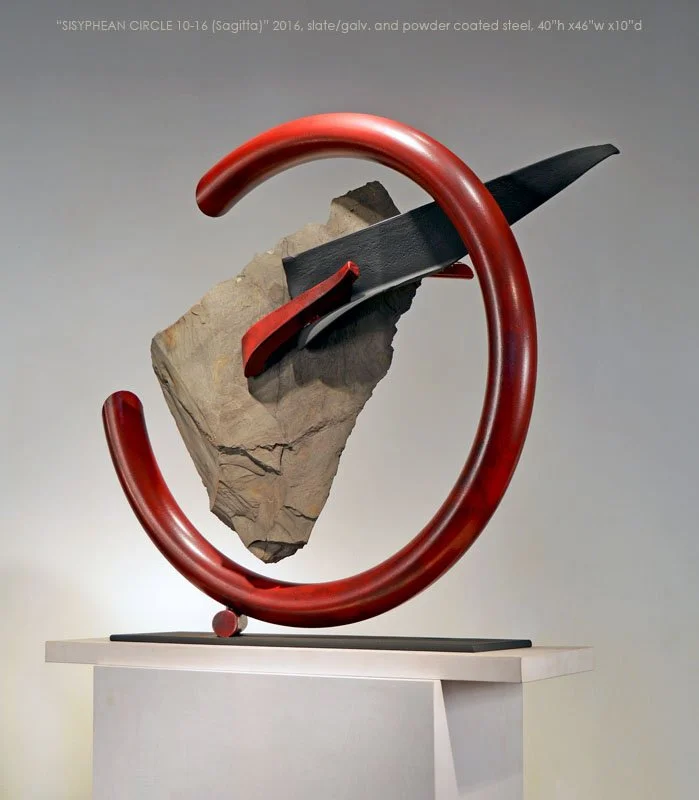
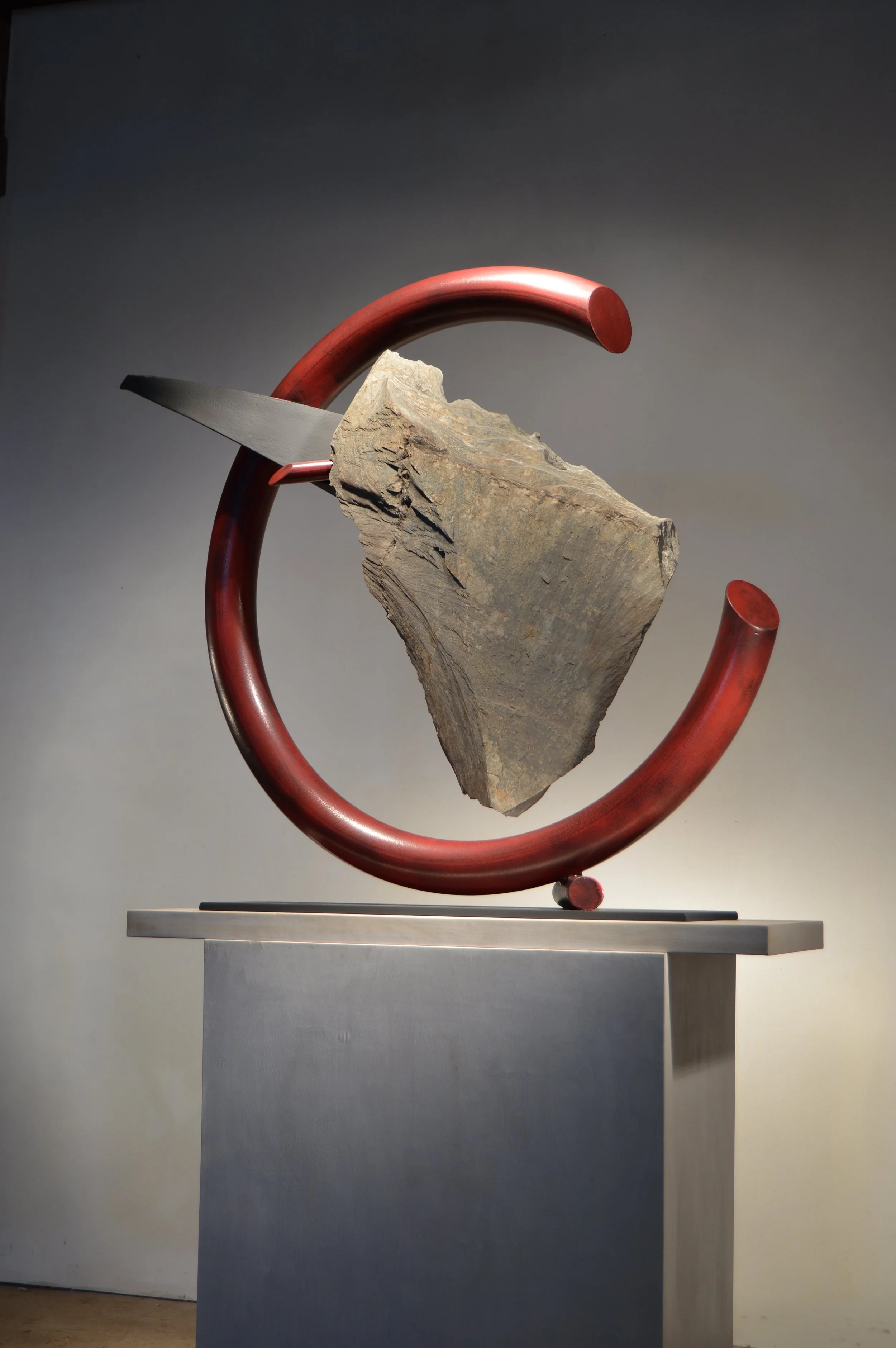
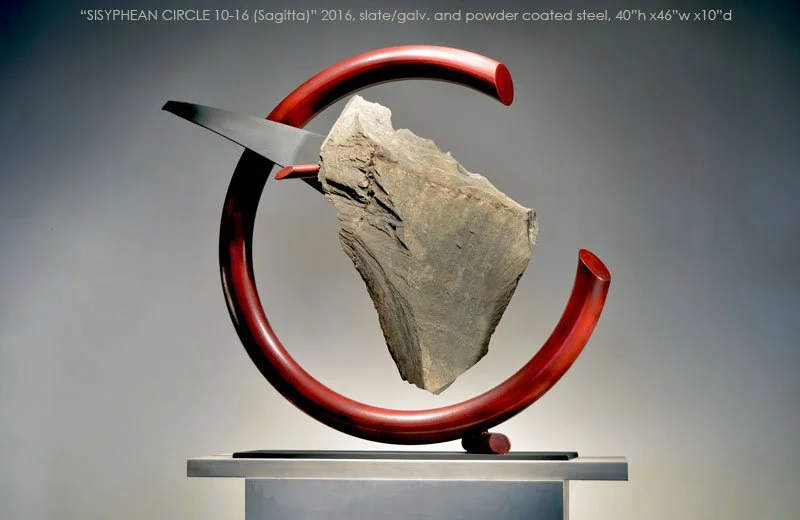
October 2016. Slate, galvanized and powder coated steel. Dimensions: 40 × 46 × 10 in (102 × 117 × 25 cm). Private Collection.
SAGITTA: Latin for arrow
Constellation: A dim but distinctive constellation in the northern sky, representing an arrow and included in the original 48 constellations listed by Ptolemy. It is not to be confused with the larger constellation Sagittarius.
Mythology: The constellation is associated with the arrow of Hercules, the arrow of Apollo, or the arrow of Eros (Cupid).
Sisyphean Circle Series
The formal arrangements of stone and steel in the Sisyphean Circle series often suggest a figure frozen in the act of prying or pushing a stone. Yet to view the creative process simply as endless toil is undeniably negative. I prefer to approach the myth and metaphor through the lens of Albert Camus.
As in life, this perspective lies at the core of the creative process, where the act of making ultimately triumphs over the object or final product. The focus shifts from the burden of creation to the meaning found in the effort itself—celebrating the process as the true reward rather than the finished sculpture.
—John Van Alstine
SOLD
October 2016. Slate, galvanized and powder coated steel. Dimensions: 40 × 46 × 10 in (102 × 117 × 25 cm). Private Collection.
SAGITTA: Latin for arrow
Constellation: A dim but distinctive constellation in the northern sky, representing an arrow and included in the original 48 constellations listed by Ptolemy. It is not to be confused with the larger constellation Sagittarius.
Mythology: The constellation is associated with the arrow of Hercules, the arrow of Apollo, or the arrow of Eros (Cupid).
Sisyphean Circle Series
The formal arrangements of stone and steel in the Sisyphean Circle series often suggest a figure frozen in the act of prying or pushing a stone. Yet to view the creative process simply as endless toil is undeniably negative. I prefer to approach the myth and metaphor through the lens of Albert Camus.
As in life, this perspective lies at the core of the creative process, where the act of making ultimately triumphs over the object or final product. The focus shifts from the burden of creation to the meaning found in the effort itself—celebrating the process as the true reward rather than the finished sculpture.
—John Van Alstine