 Image 1 of 1
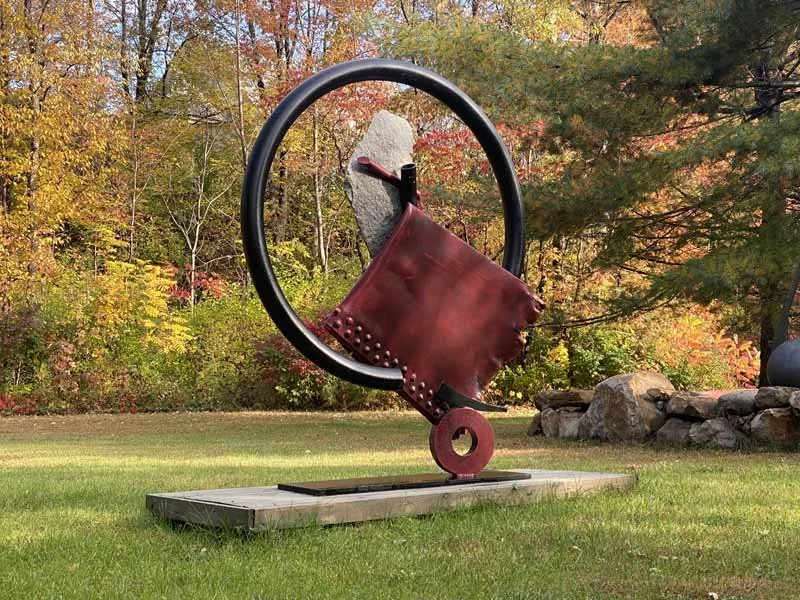
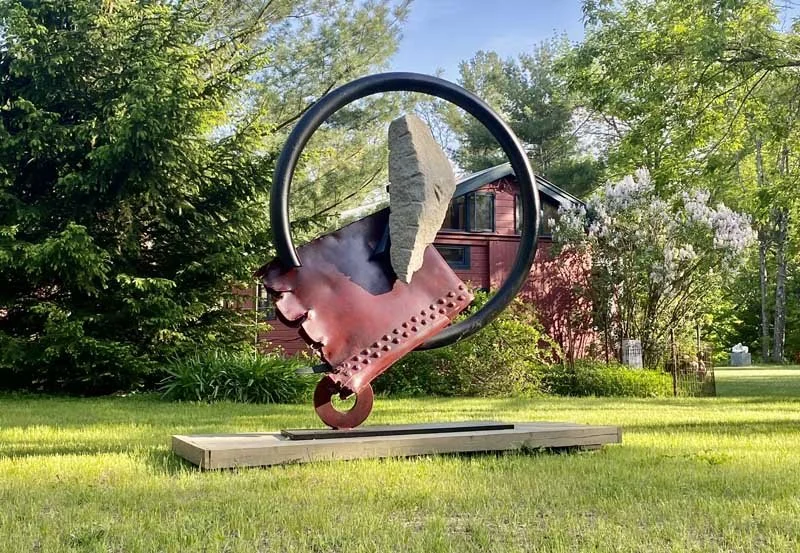
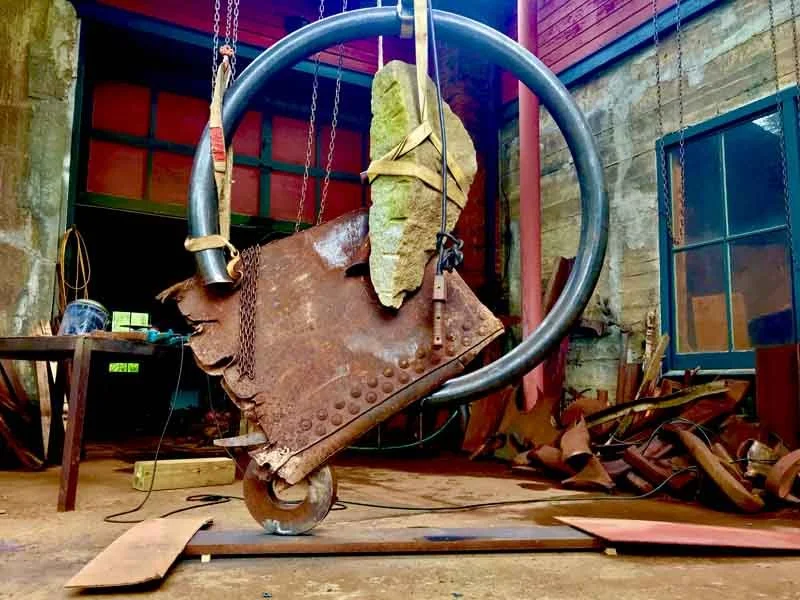
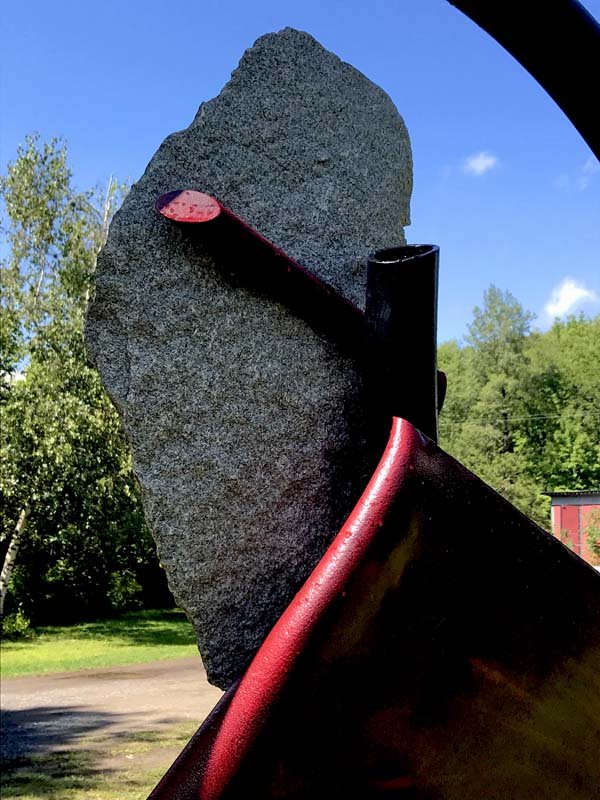
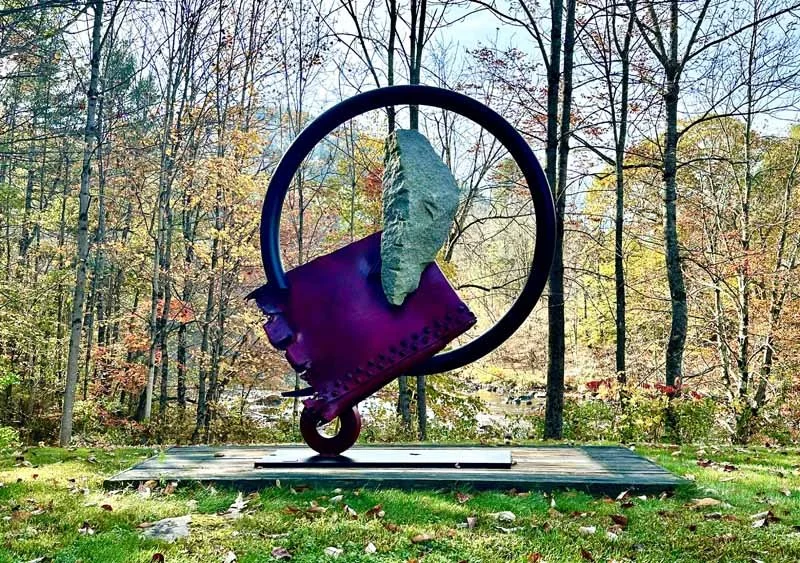
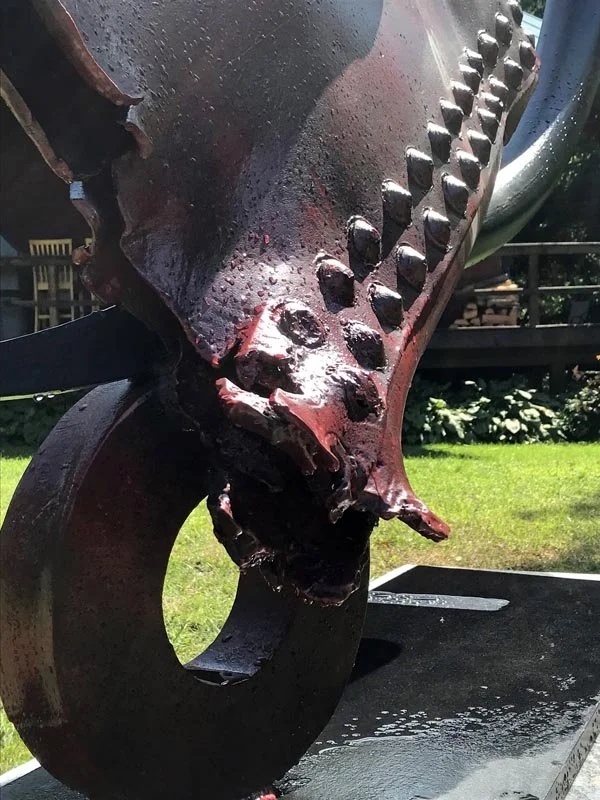
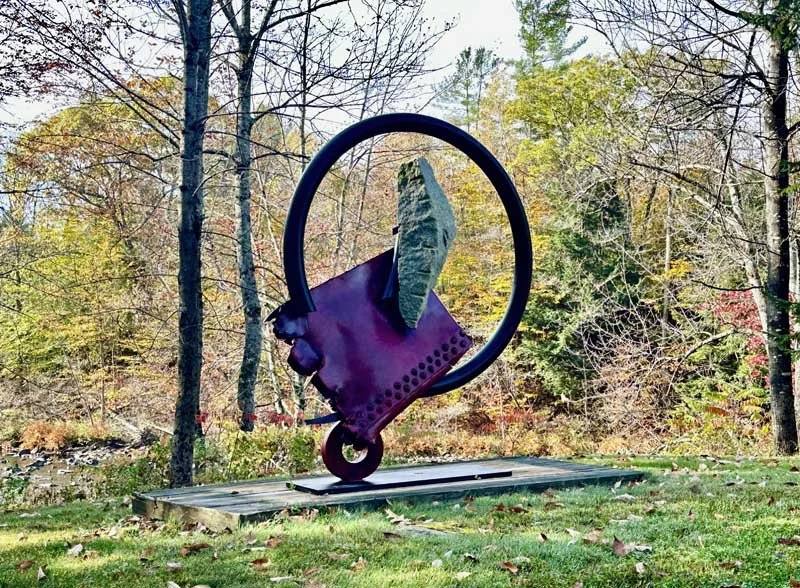
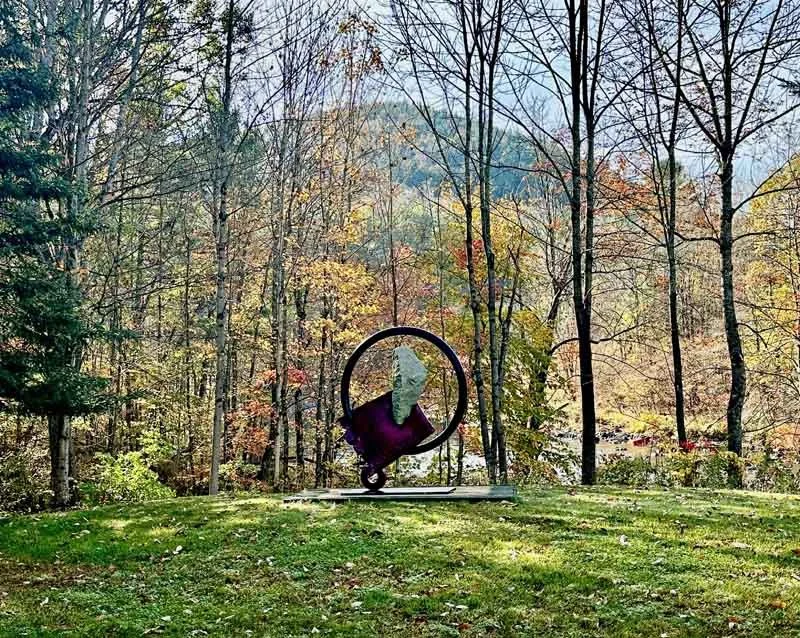
September 2019. Granite, galvanized and powder-coated. Dimensions: 80 × 70 × 16 in (203 × 178 × 41 cm).
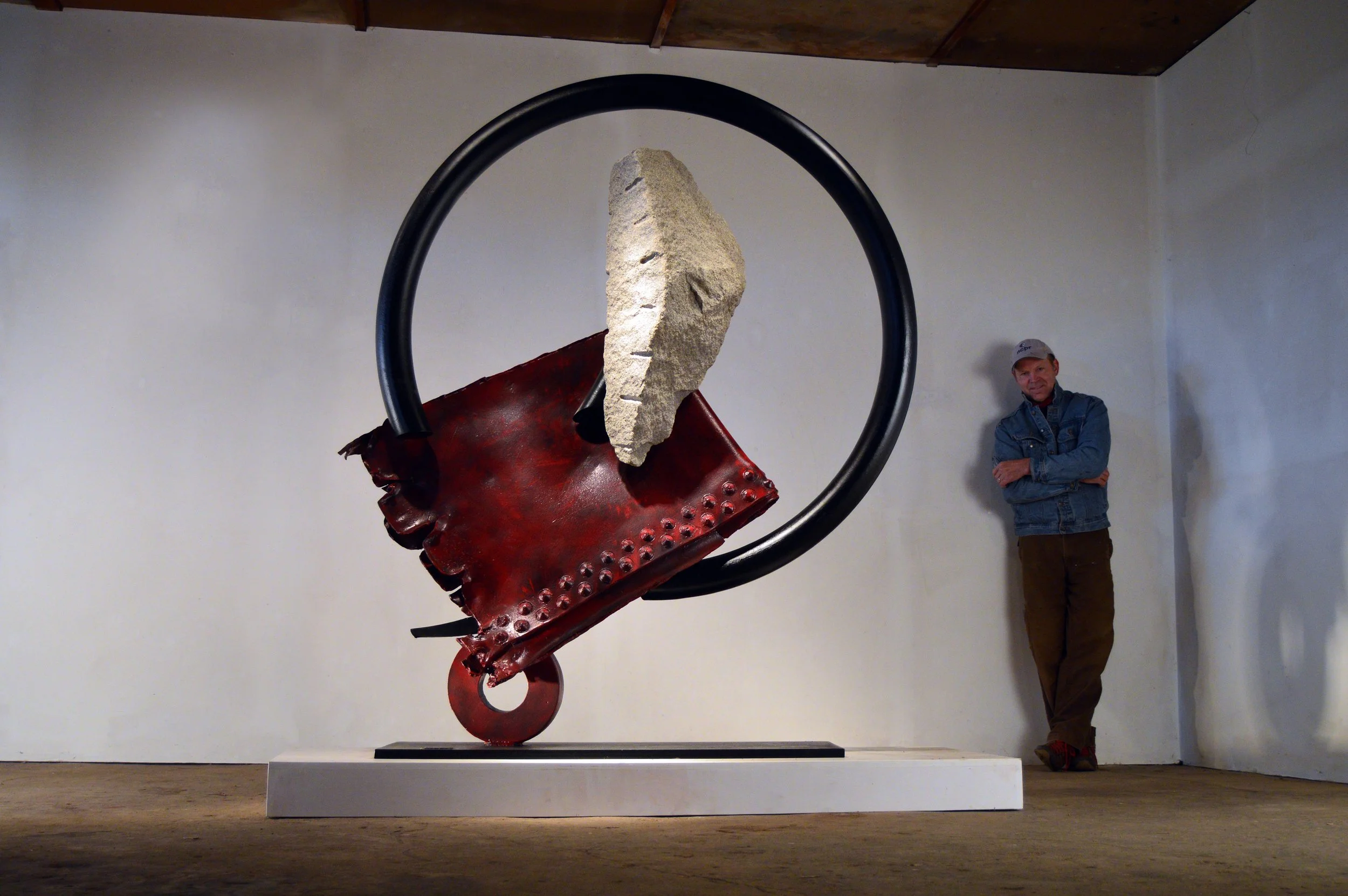
SISYPHEAN CIRCLE (Homage to Major Taylor), 2019
Granite, galvanized and powder-coated steel, 80"h x 70"w x 16"d (203 x 178 x 40 cm)
In the Sisyphean Circle series, the interplay of stone and steel suggests a figure frozen in the act of prying or pushing a stone, echoing the myth of Sisyphus and the creative struggle to overcome obstacles.
This work specifically honors Marshall “Major” Taylor (1878–1932), a world champion American cyclist and one of the nation’s first Black sports superstars. The leaning granite and circular forms evoke a cyclist in motion, symbolizing Taylor’s perseverance in the face of racial prejudice both on and off the track.
Taylor’s Sisyphean efforts made him a pioneering role model for future athletes confronting discrimination, celebrated as a hero in the United States, France, and Australia. As he wrote in his autobiography, having no other African Americans to guide him, he “had to blaze [his] own trail.”
—John Van Alstine
September 2019. Granite, galvanized and powder-coated. Dimensions: 80 × 70 × 16 in (203 × 178 × 41 cm).
SISYPHEAN CIRCLE (Homage to Major Taylor), 2019
Granite, galvanized and powder-coated steel, 80"h x 70"w x 16"d (203 x 178 x 40 cm)
In the Sisyphean Circle series, the interplay of stone and steel suggests a figure frozen in the act of prying or pushing a stone, echoing the myth of Sisyphus and the creative struggle to overcome obstacles.
This work specifically honors Marshall “Major” Taylor (1878–1932), a world champion American cyclist and one of the nation’s first Black sports superstars. The leaning granite and circular forms evoke a cyclist in motion, symbolizing Taylor’s perseverance in the face of racial prejudice both on and off the track.
Taylor’s Sisyphean efforts made him a pioneering role model for future athletes confronting discrimination, celebrated as a hero in the United States, France, and Australia. As he wrote in his autobiography, having no other African Americans to guide him, he “had to blaze [his] own trail.”
—John Van Alstine