January 1986. Granite, stainless steel. Dimensions: 22 × 40 × 20 in (56 × 102 × 51 cm).
Solstice Calendar (1985–86) was John Van Alstine's third major public commission and the first in a series of monumental sculptures exploring the relationship between the earth, the sun, and the passage of time. Commissioned for Austin College in Sherman, Texas, the work consists of two monumental granite pylons joined by a horizontal stone element. At solar noon each day, a steel bar suspended between the pylons casts a shadow that marks the changing seasons, recording the winter and summer solstices and the spring and autumn equinoxes. Conceived as both sculpture and scientific instrument, the work bridges art, astronomy, and landscape.
Inspired by Van Alstine's travels among the prehistoric stone monuments of Britain and the ceremonial architecture of Mesoamerica, Solstice Calendarreflects his enduring interest in humankind's oldest methods of understanding the cosmos. Positioned between Austin College's arts and sciences buildings, the sculpture symbolizes the union of those disciplines while inviting viewers to experience the rhythms of the natural world. The success of the project established the foundation for Van Alstine's continuing Celestial Works series, including SCR Sunwork, Artery Sunwork, 2nd Street Sunwork, and Via Solaris.
MORE INFO: Solstice Calendar chapter in AMERICAN MONUMENTS
January 1986. Granite, stainless steel. Dimensions: 22 × 40 × 20 in (56 × 102 × 51 cm).
Solstice Calendar (1985–86) was John Van Alstine's third major public commission and the first in a series of monumental sculptures exploring the relationship between the earth, the sun, and the passage of time. Commissioned for Austin College in Sherman, Texas, the work consists of two monumental granite pylons joined by a horizontal stone element. At solar noon each day, a steel bar suspended between the pylons casts a shadow that marks the changing seasons, recording the winter and summer solstices and the spring and autumn equinoxes. Conceived as both sculpture and scientific instrument, the work bridges art, astronomy, and landscape.
Inspired by Van Alstine's travels among the prehistoric stone monuments of Britain and the ceremonial architecture of Mesoamerica, Solstice Calendarreflects his enduring interest in humankind's oldest methods of understanding the cosmos. Positioned between Austin College's arts and sciences buildings, the sculpture symbolizes the union of those disciplines while inviting viewers to experience the rhythms of the natural world. The success of the project established the foundation for Van Alstine's continuing Celestial Works series, including SCR Sunwork, Artery Sunwork, 2nd Street Sunwork, and Via Solaris.
MORE INFO: Solstice Calendar chapter in AMERICAN MONUMENTS
 Image 1 of 10
 Image 2 of 10
 Image 3 of 10
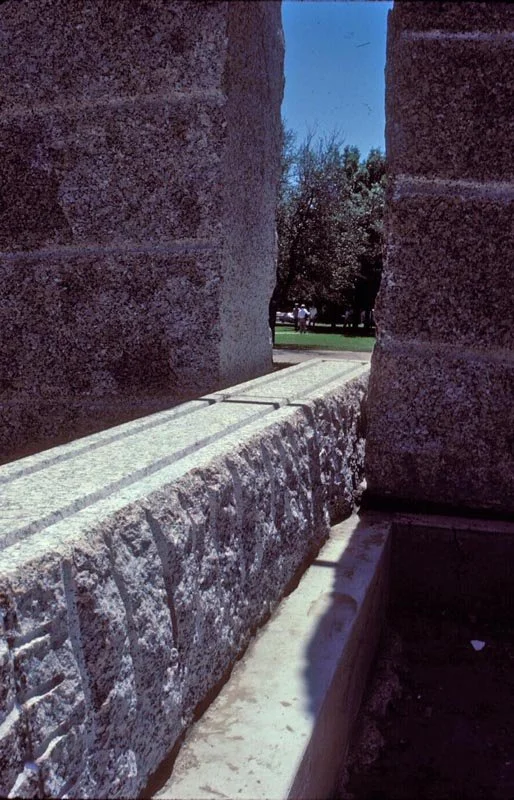 Image 4 of 10
 Image 5 of 10
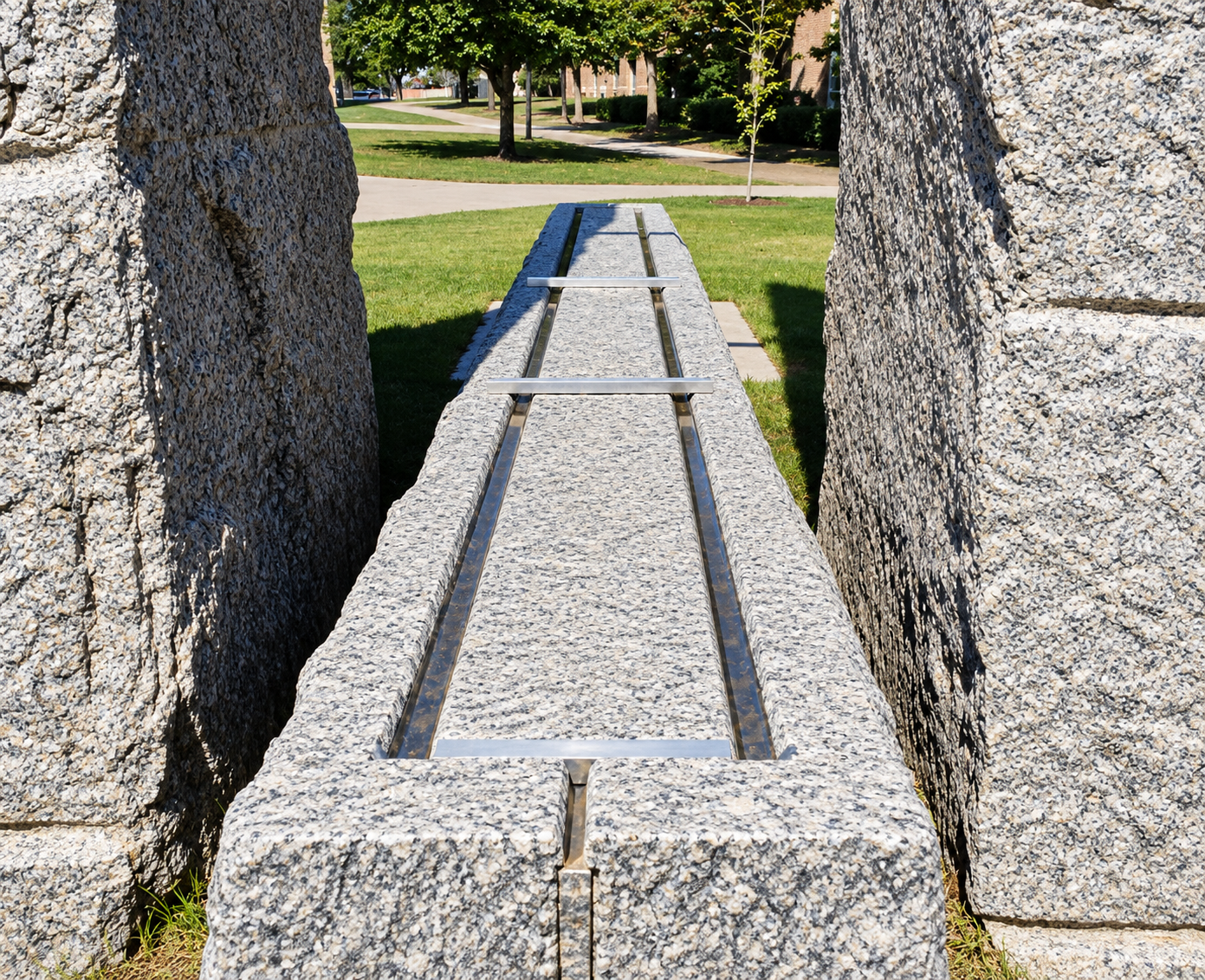 Image 6 of 10
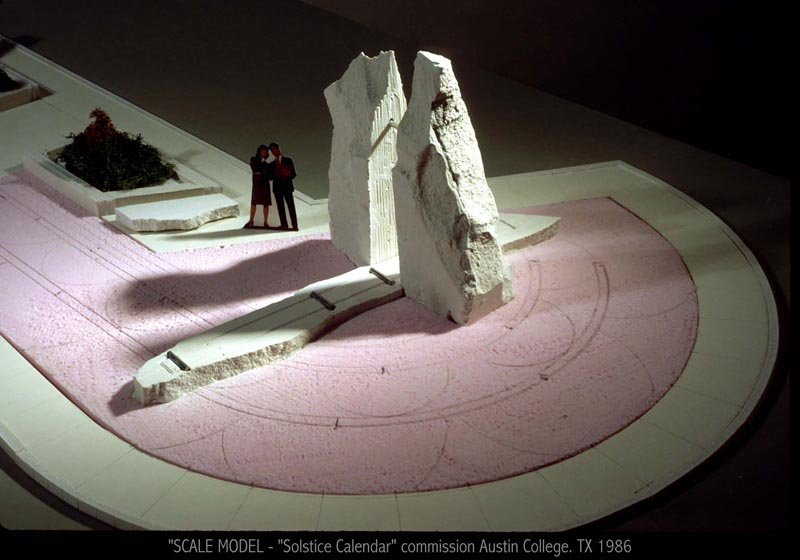 Image 7 of 10
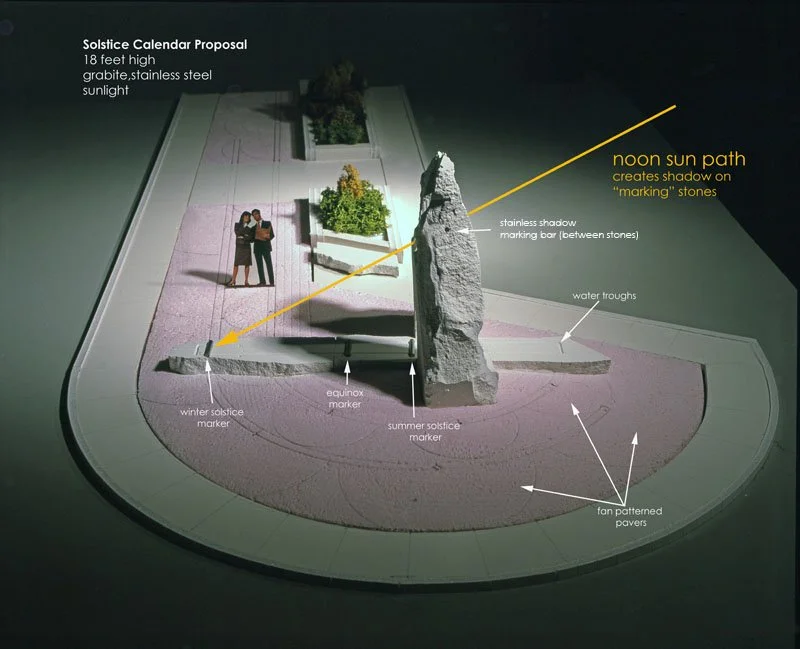 Image 8 of 10
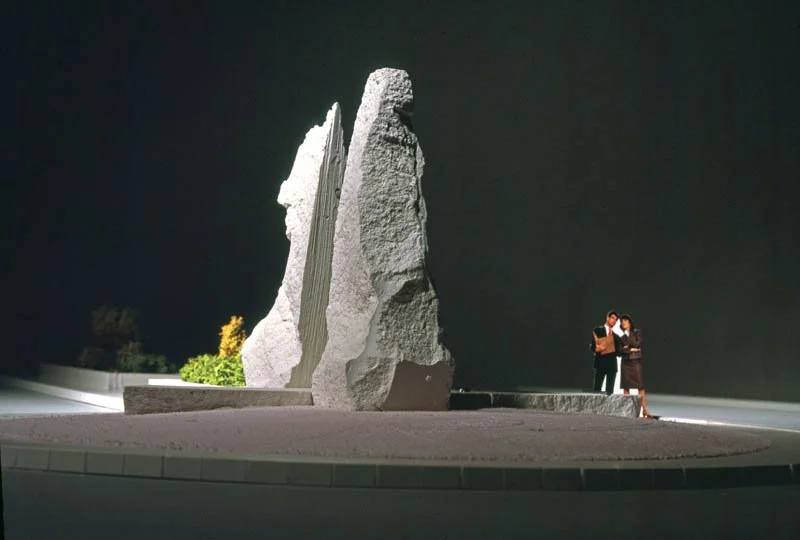 Image 9 of 10
 Image 10 of 10