 Image 1 of 2
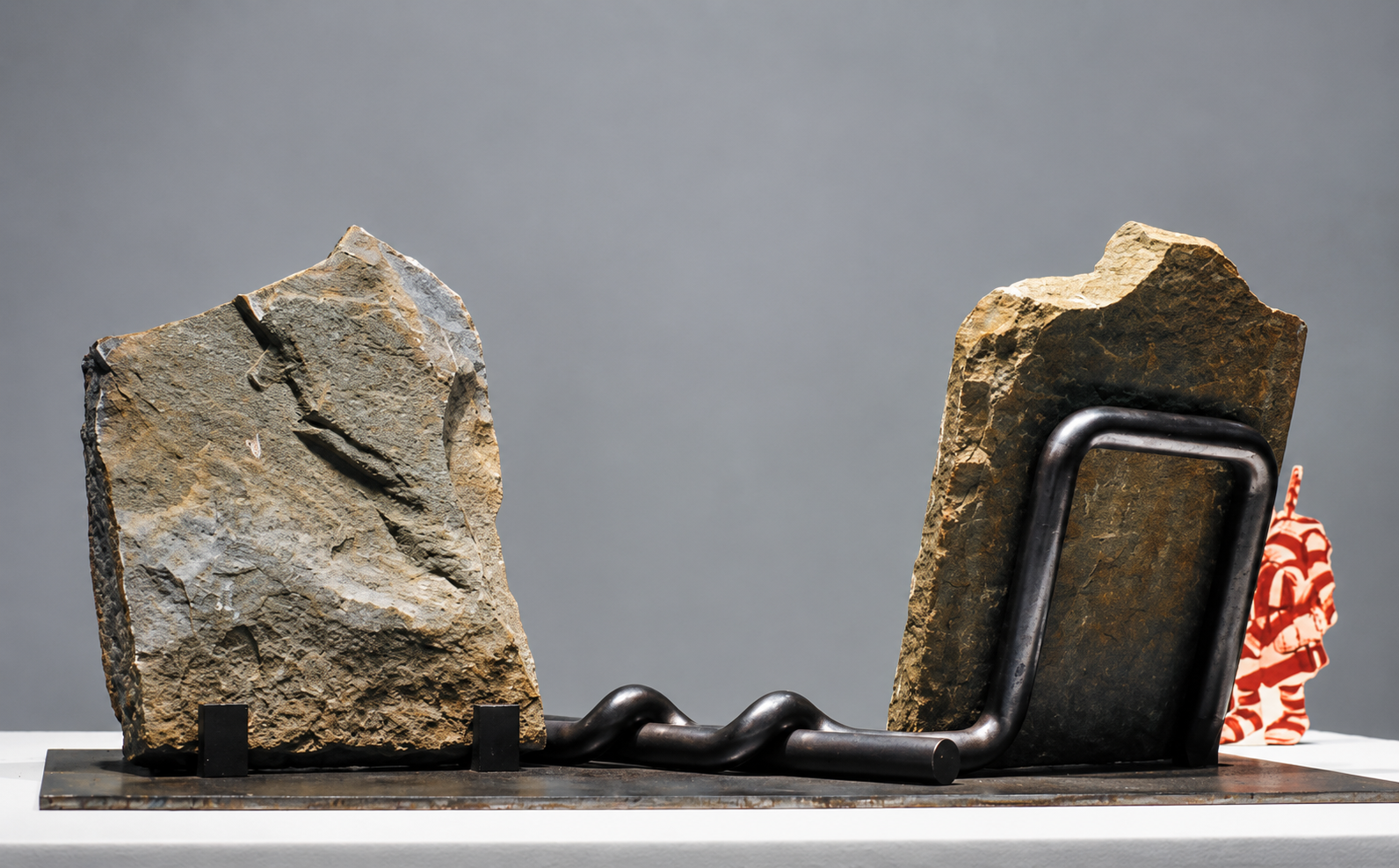 Image 2 of 2
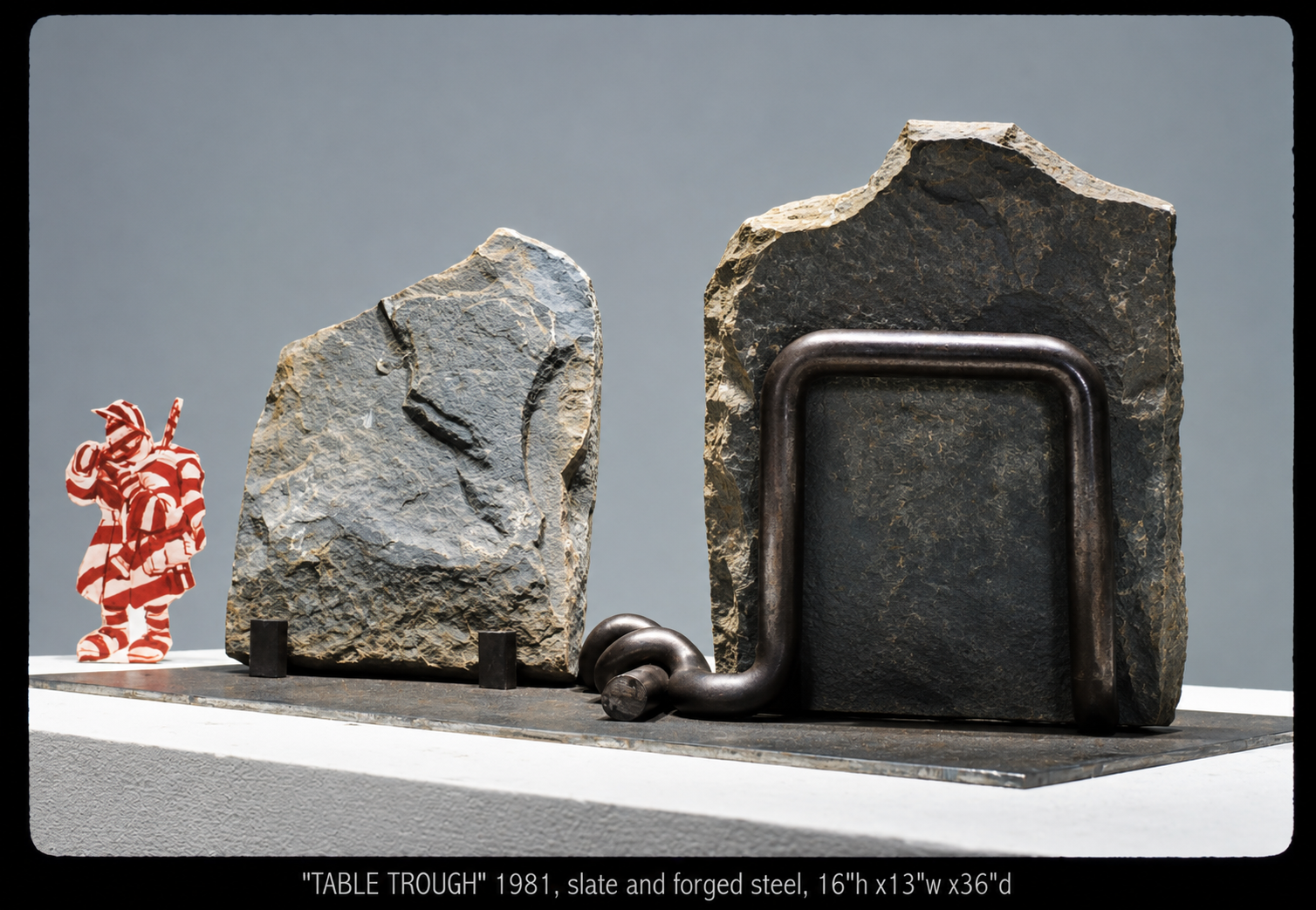
1980. Blue stone, steel. Dimensions: 16 × 15 × 38 in (41 × 38 × 97 cm).
Table Trough was created as a scale model for Trough, the large-scale public sculpture commissioned for Billings, Montana, and completed in 1982. Using bluestone and forged steel, the model explores the relationship between two massive stone forms connected by a flowing steel element. The weight and solidity of the stone contrast with the curved, linear movement of the steel, extending the structural concerns of my tensegrity, or Brute Series.
The model helped establish the basic vocabulary for the Billings commission: opposing stone masses, open space, and steel that bends around and connects the elements. Enlarged to an architectural scale in Trough, these relationships became a site-responsive public sculpture that viewers could physically move around and through.
1980. Blue stone, steel. Dimensions: 16 × 15 × 38 in (41 × 38 × 97 cm).
Table Trough was created as a scale model for Trough, the large-scale public sculpture commissioned for Billings, Montana, and completed in 1982. Using bluestone and forged steel, the model explores the relationship between two massive stone forms connected by a flowing steel element. The weight and solidity of the stone contrast with the curved, linear movement of the steel, extending the structural concerns of my tensegrity, or Brute Series.
The model helped establish the basic vocabulary for the Billings commission: opposing stone masses, open space, and steel that bends around and connects the elements. Enlarged to an architectural scale in Trough, these relationships became a site-responsive public sculpture that viewers could physically move around and through.