 Image 1 of 2
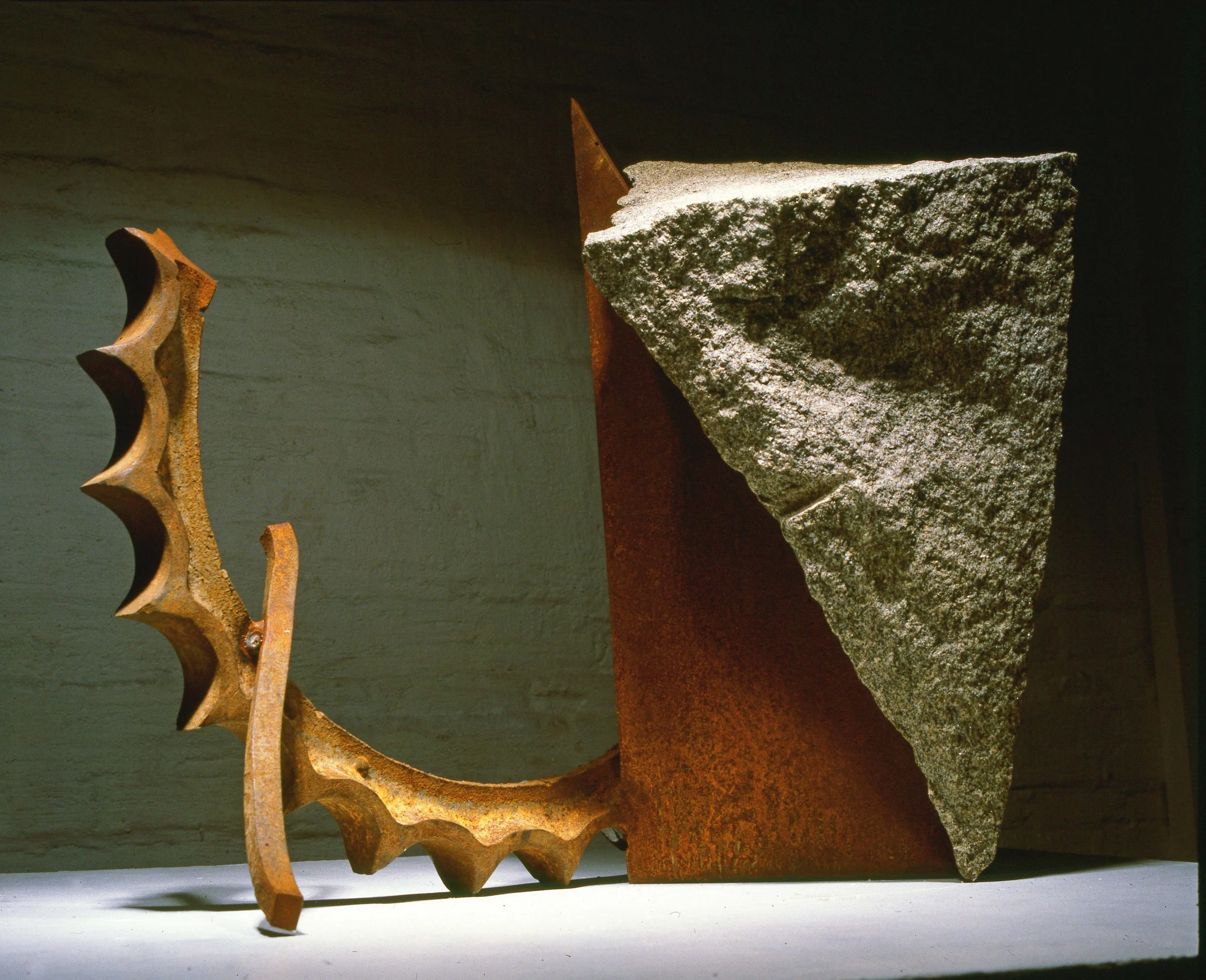 Image 2 of 2
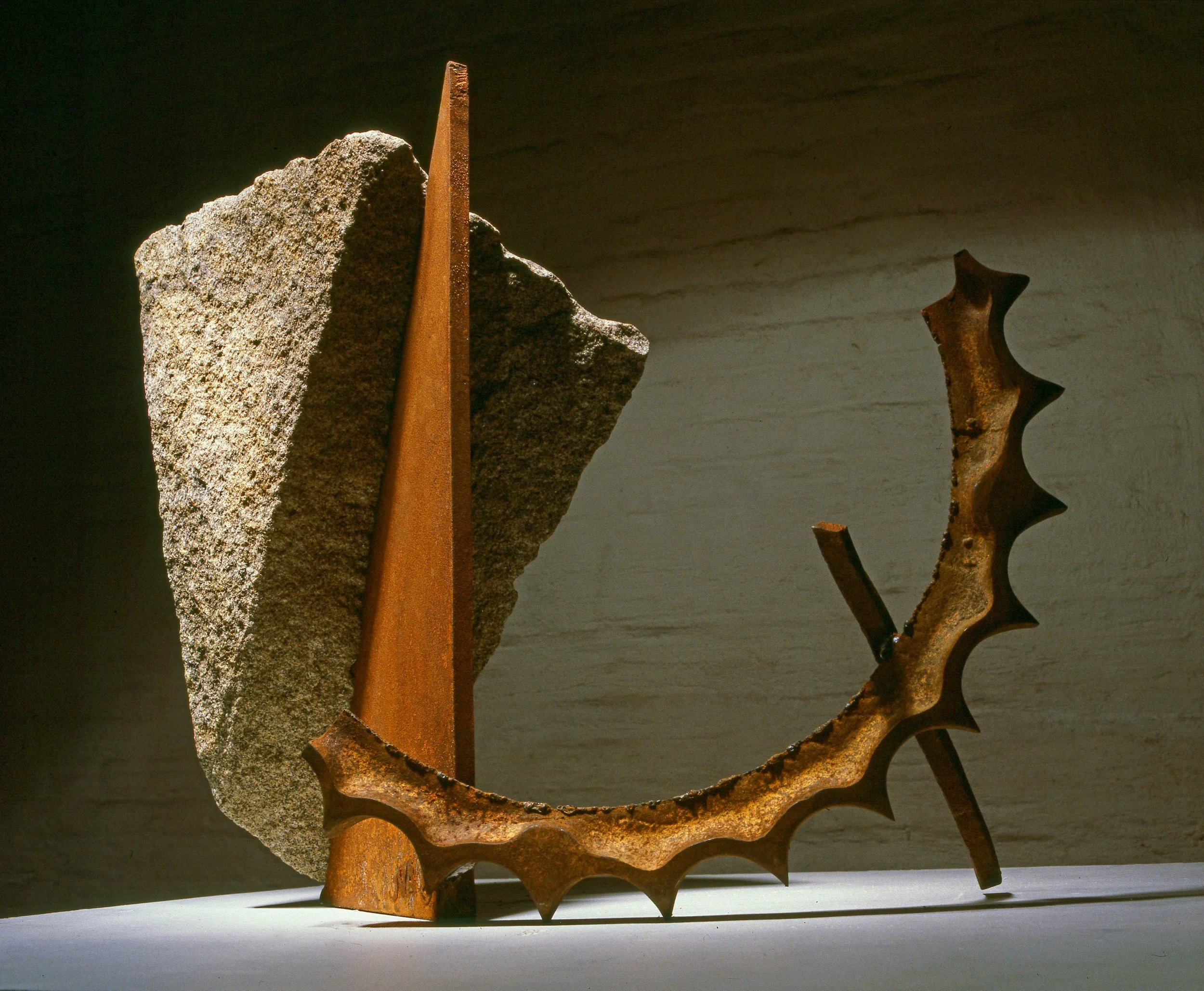
October 1984. Granite, steel. Dimensions: 24 × 30 × 16 in (61 × 76 × 41 cm).
Private collection - Baltimore
Uppercut continues my interest in combining raw stone and industrial steel—the natural and human-made—as contrasting but interdependent sculptural elements. The granite retains its mass and natural character, while the sweeping, serrated steel introduces a more animated, expressive gesture. Gravity, balance, and assembly remain important, but the steel moves beyond a purely structural role.
Like several works from this period, Uppercut also introduces a figurative association. The title refers to the upward swing of a boxer’s fist, echoed in the forceful arc of the steel. Rather than depicting the body literally, the sculpture uses human movement and gesture to animate otherwise static materials—an expressive direction that became increasingly important in my work.
October 1984. Granite, steel. Dimensions: 24 × 30 × 16 in (61 × 76 × 41 cm).
Private collection - Baltimore
Uppercut continues my interest in combining raw stone and industrial steel—the natural and human-made—as contrasting but interdependent sculptural elements. The granite retains its mass and natural character, while the sweeping, serrated steel introduces a more animated, expressive gesture. Gravity, balance, and assembly remain important, but the steel moves beyond a purely structural role.
Like several works from this period, Uppercut also introduces a figurative association. The title refers to the upward swing of a boxer’s fist, echoed in the forceful arc of the steel. Rather than depicting the body literally, the sculpture uses human movement and gesture to animate otherwise static materials—an expressive direction that became increasingly important in my work.