 Image 1 of 2
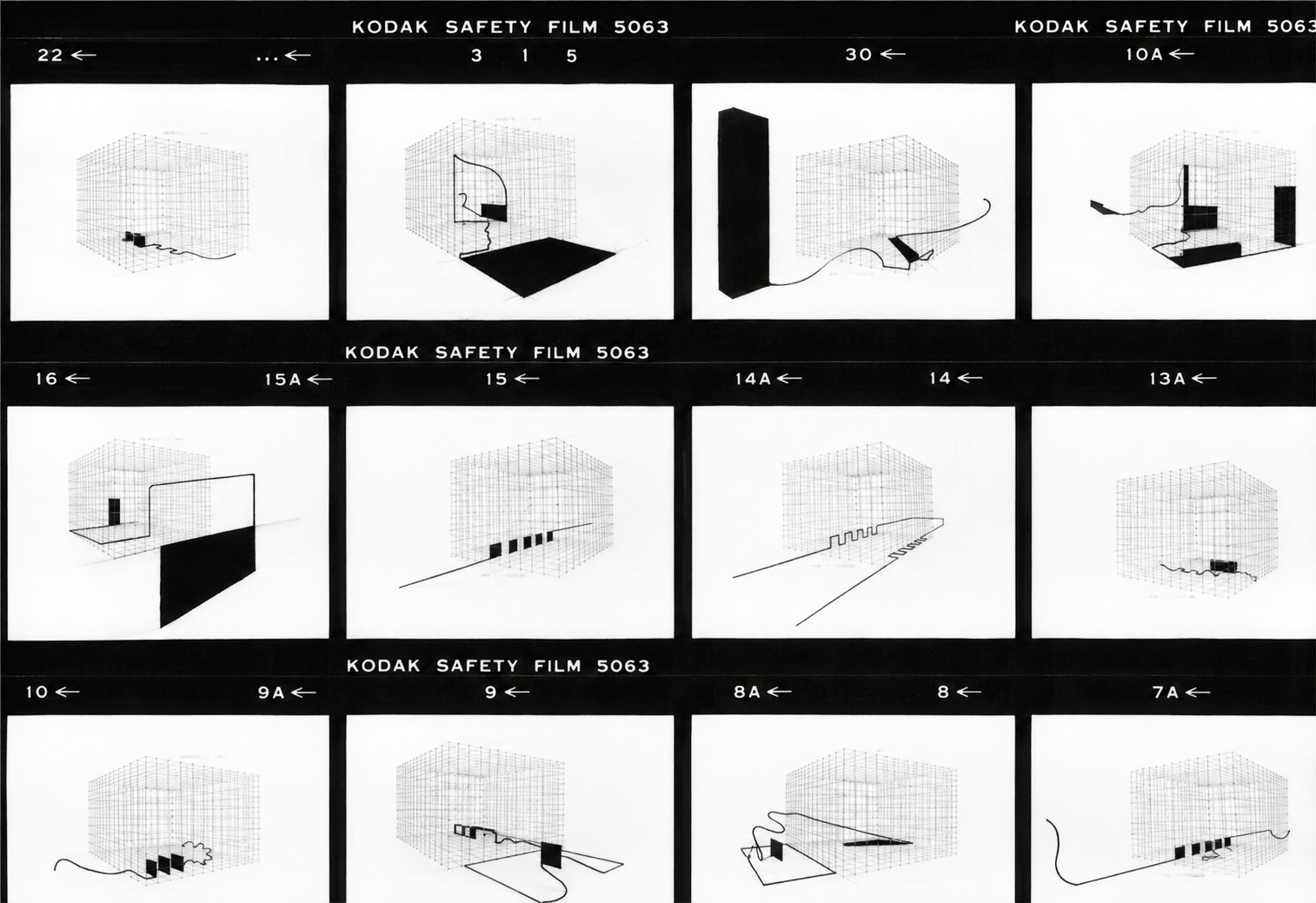 Image 2 of 2
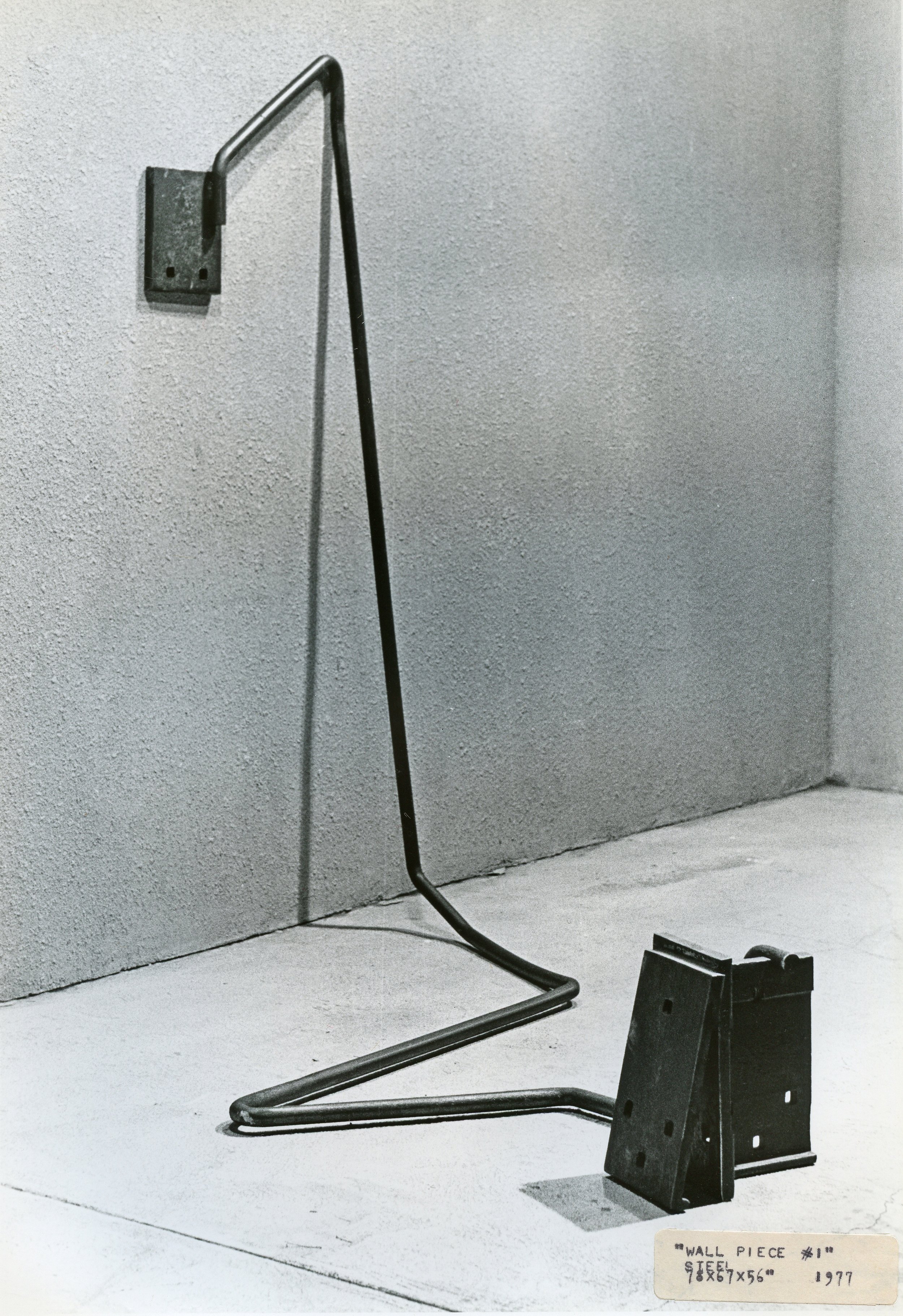
January 1977. Steel. Dimensions: 78 × 67 × 56 in (198 × 170 × 142 cm). Destroyed.
Wall Piece #1 is part of the Gallery Drawing Series and grew out of my earlier tensegrity, or Brute Series, but marked a shift from the concentrated physical interaction of stone and steel toward a more open, linear exploration of space. Long forged-steel rods extend across the floor and into the gallery as lines drawn in space, activating the surrounding architecture and making the gallery itself an integral part of the work.
The series also questions the gallery as a framing and sanctioning device for art. Much as a frame separates an artwork from the world around it, the gallery performs a similar function on an architectural scale. By extending sculpture directly into that space, the Gallery Drawings blur distinctions between object, drawing, architecture, and environment, raising the question of where the artwork actually begins and ends.
January 1977. Steel. Dimensions: 78 × 67 × 56 in (198 × 170 × 142 cm). Destroyed.
Wall Piece #1 is part of the Gallery Drawing Series and grew out of my earlier tensegrity, or Brute Series, but marked a shift from the concentrated physical interaction of stone and steel toward a more open, linear exploration of space. Long forged-steel rods extend across the floor and into the gallery as lines drawn in space, activating the surrounding architecture and making the gallery itself an integral part of the work.
The series also questions the gallery as a framing and sanctioning device for art. Much as a frame separates an artwork from the world around it, the gallery performs a similar function on an architectural scale. By extending sculpture directly into that space, the Gallery Drawings blur distinctions between object, drawing, architecture, and environment, raising the question of where the artwork actually begins and ends.