 Image 1 of 3
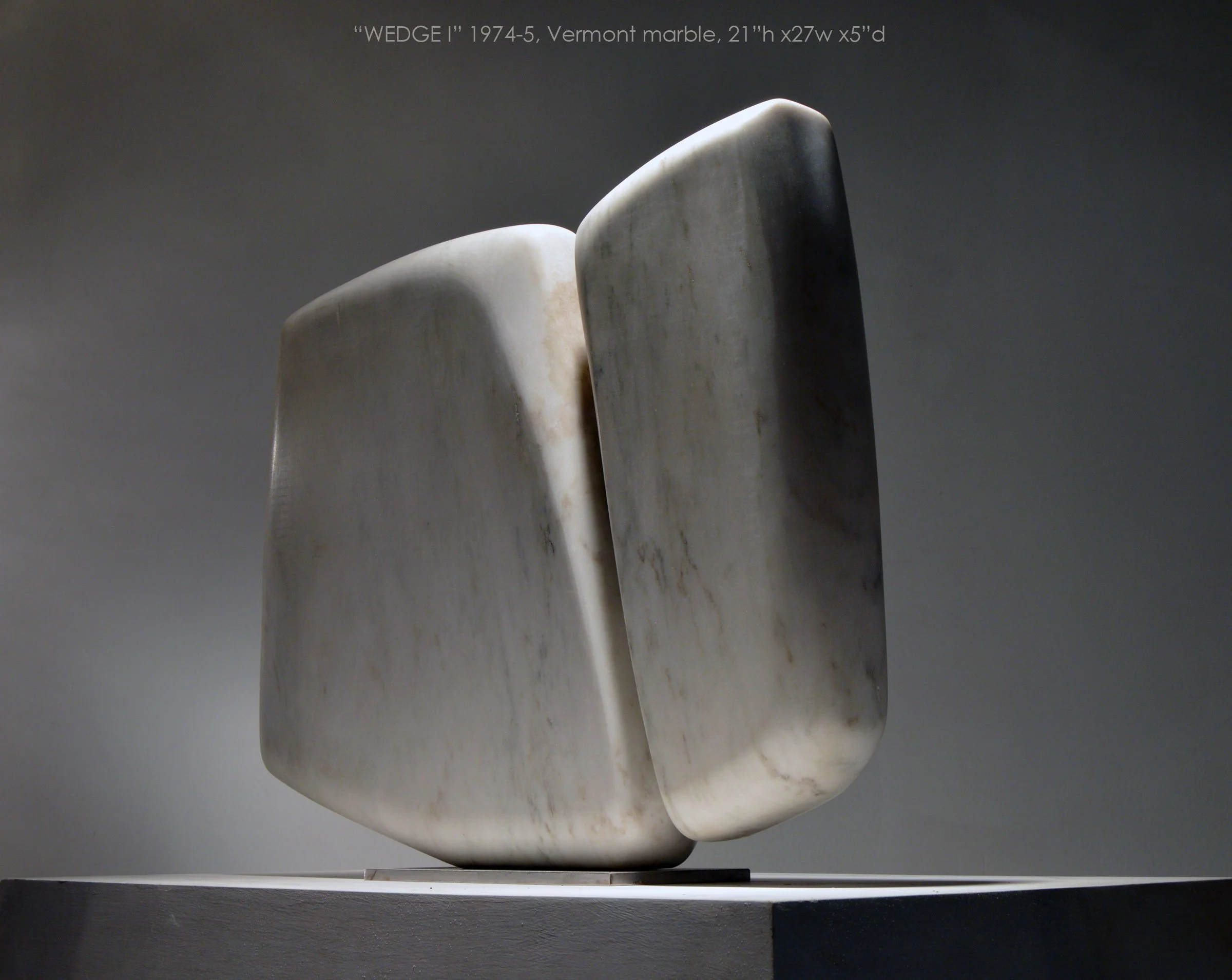 Image 2 of 3
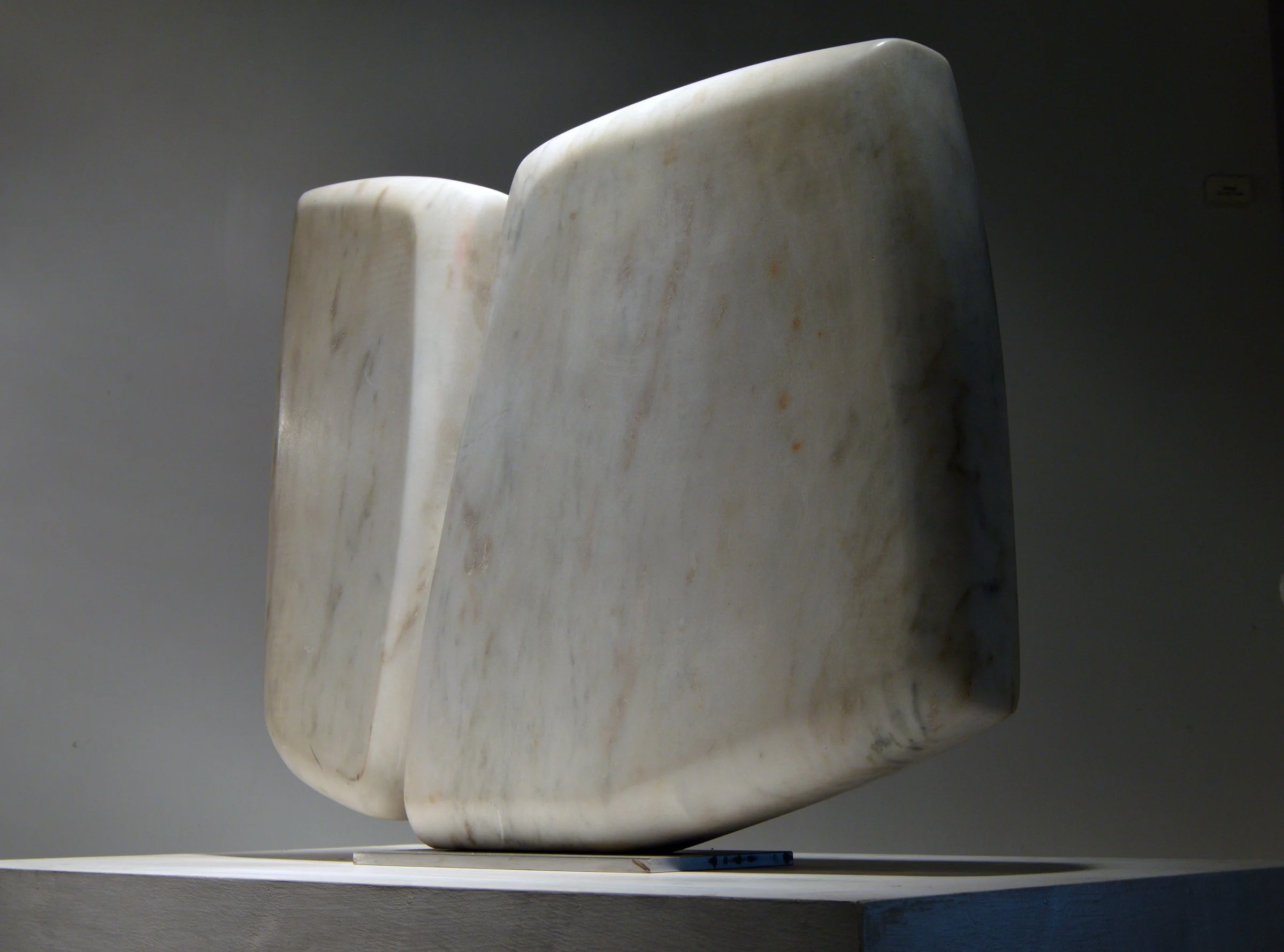 Image 3 of 3
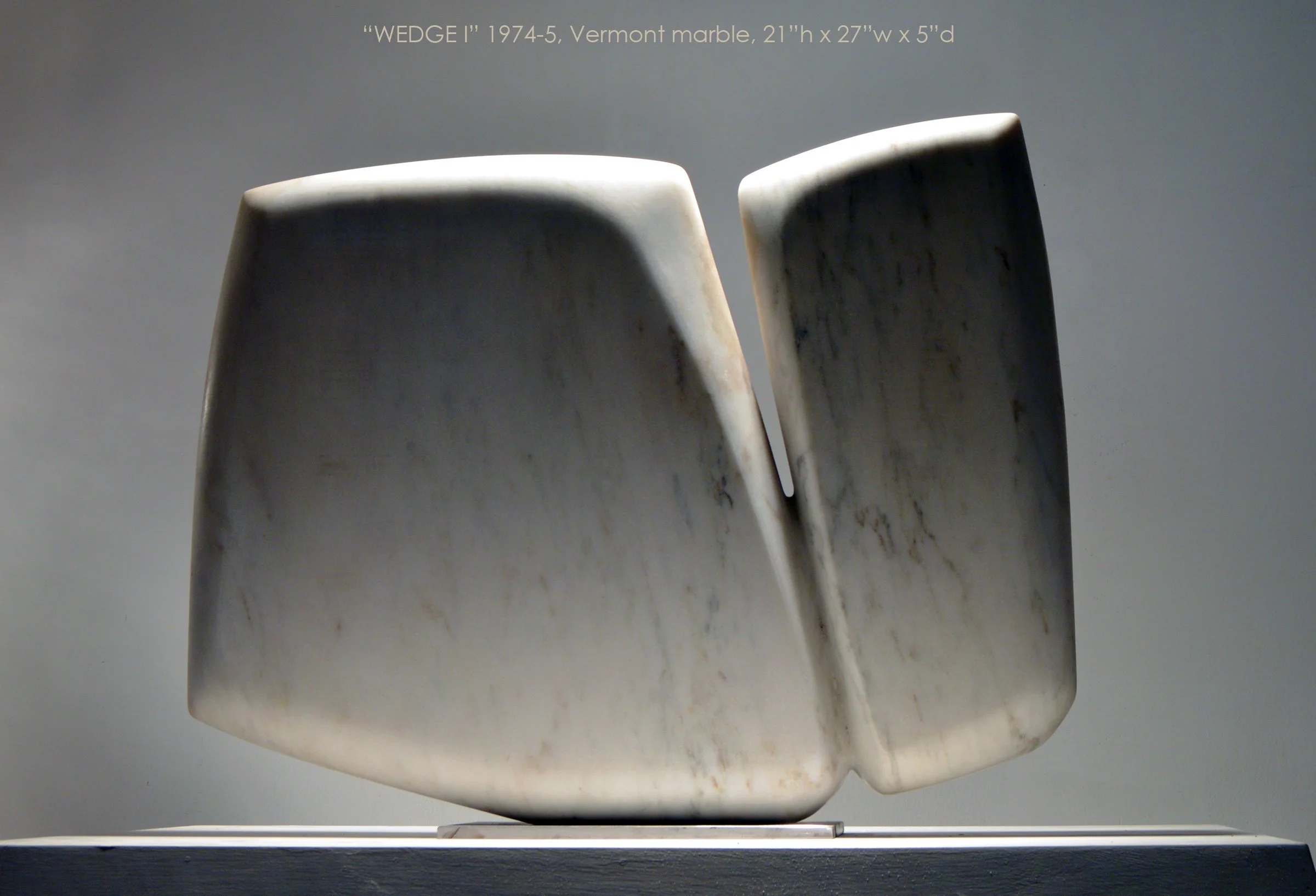
Wedge I (More Than the Sum of Its Parts), 1975, Vermont marble and stainless steel, 21"h x27"w x5"d. Private Collection.
Wedge I was the first sculpture I created after beginning my MFA studies at Cornell and continued the minimally carved aesthetic I had begun at Kent State. The title grew from my original plan to place a carved walnut wedge between the two marble forms, creating the illusion that it was forcing them apart. The idea referenced an early stone-splitting technique in which wooden wedges were soaked with water, causing them to expand and exert pressure on the stone.
After several attempts, I abandoned the walnut wedge, encouraged by my dear friend and older, more seasoned sculptor Clara Seley, who compared the space between the marble forms to the cleavage between a woman’s breasts—beautiful and sensuous in itself—and felt that filling it with wood diminished its power.
Although I would soon go on to successfully combine different materials, I sought to do so in ways that allowed each material and its physical properties to speak more truthfully. This became an important step toward the material honesty and real physical forces that would soon become central to my tensegrity, or Brute Sculpture. The subtitle, More Than the Sum of Its Parts, came later and playfully acknowledges the expressive power created by bringing separate elements into relationship.
Wedge I (More Than the Sum of Its Parts), 1975, Vermont marble and stainless steel, 21"h x27"w x5"d. Private Collection.
Wedge I was the first sculpture I created after beginning my MFA studies at Cornell and continued the minimally carved aesthetic I had begun at Kent State. The title grew from my original plan to place a carved walnut wedge between the two marble forms, creating the illusion that it was forcing them apart. The idea referenced an early stone-splitting technique in which wooden wedges were soaked with water, causing them to expand and exert pressure on the stone.
After several attempts, I abandoned the walnut wedge, encouraged by my dear friend and older, more seasoned sculptor Clara Seley, who compared the space between the marble forms to the cleavage between a woman’s breasts—beautiful and sensuous in itself—and felt that filling it with wood diminished its power.
Although I would soon go on to successfully combine different materials, I sought to do so in ways that allowed each material and its physical properties to speak more truthfully. This became an important step toward the material honesty and real physical forces that would soon become central to my tensegrity, or Brute Sculpture. The subtitle, More Than the Sum of Its Parts, came later and playfully acknowledges the expressive power created by bringing separate elements into relationship.