Image 1 of 1
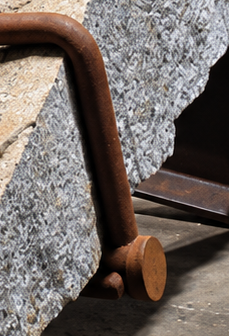
visible "pin" connection
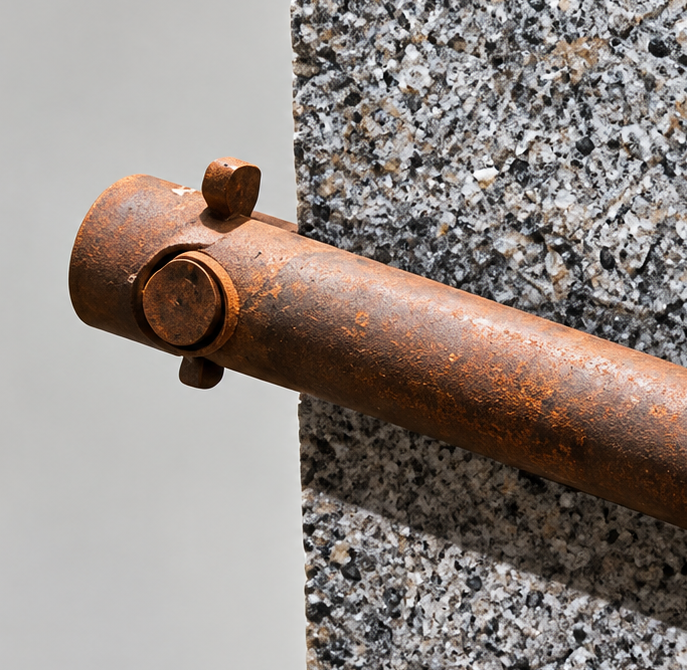
upper pin connection
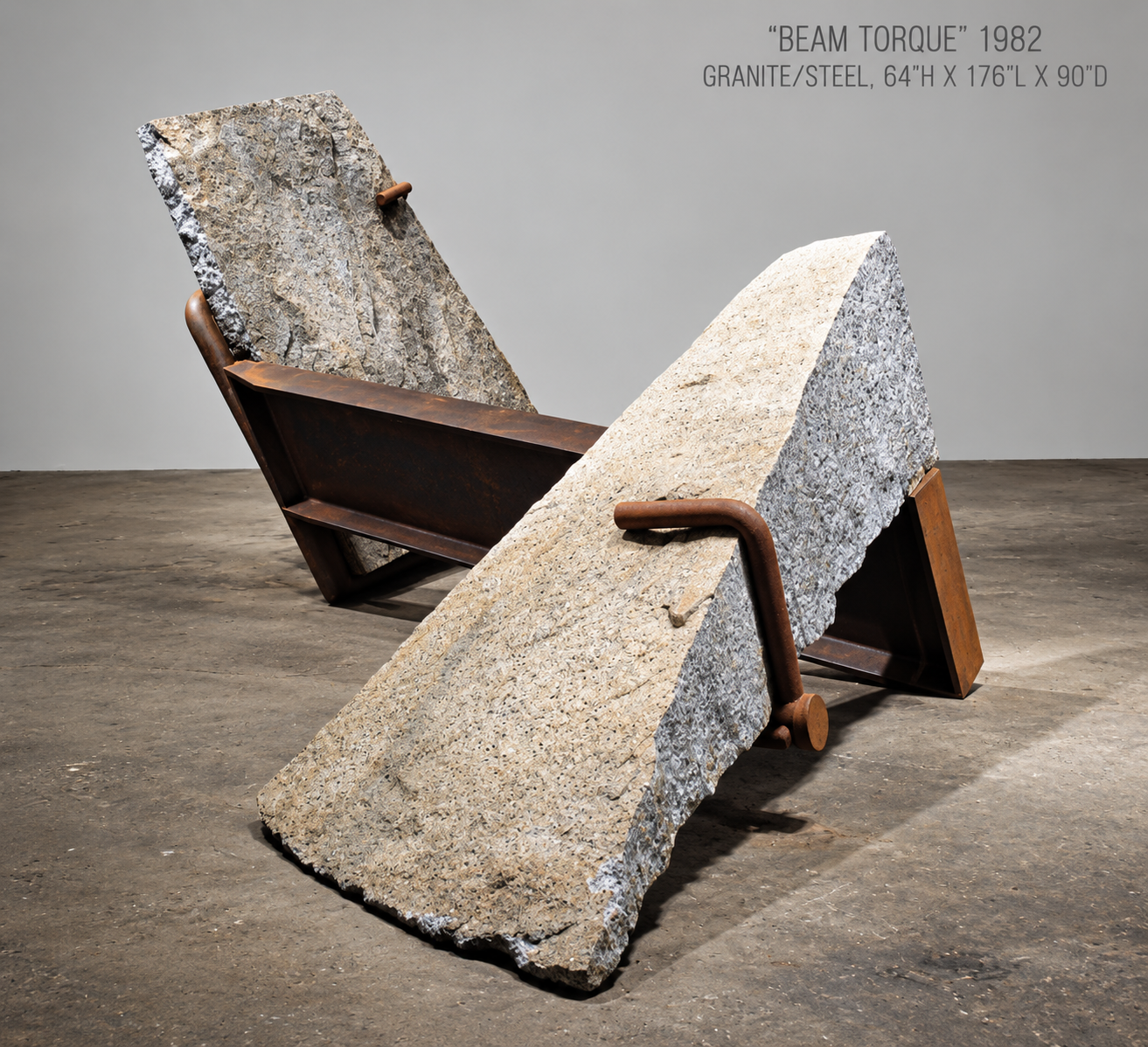
November 1982. Granite, steel. Dimensions: 64 × 176 × 90 in (163 × 447 × 229 cm).
Private collection - Washington, DC
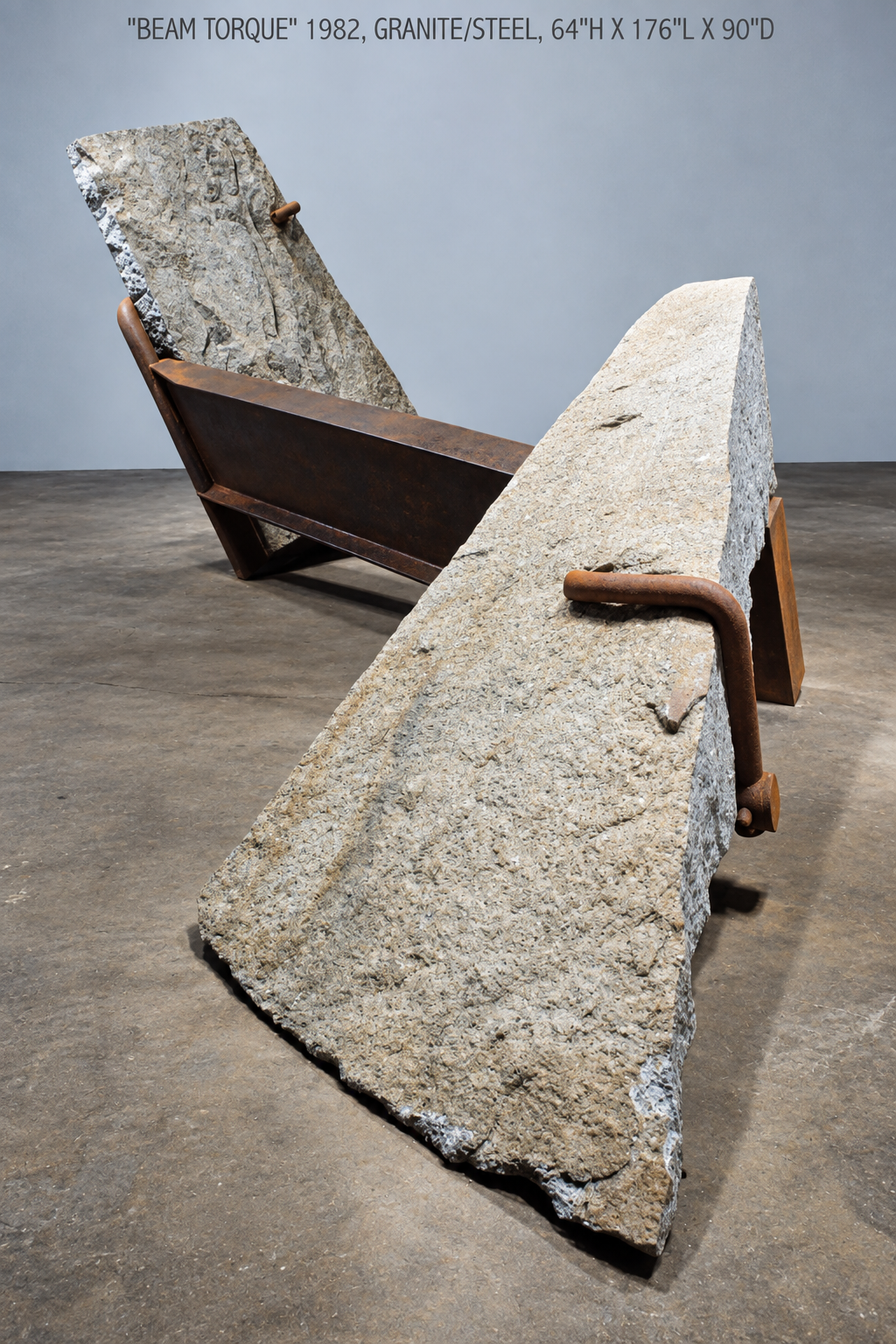
Beam Torque marks an important transition in my work, as I began moving away from the tightly formulated tensegrity, or Brute Series, that had occupied me since the mid-1970s. I had come to feel that I had largely exhausted the possibilities of this “sculpture about sculpture” approach and was looking for a way forward. At the same time, I gained access to a cache of large I-beams, bent pipe, and other industrial steel, opening new formal possibilities. In Beam Torque, the opposing granite slabs still generate a strong sense of torque, weight, and arrested motion, but the steel no longer simply traces and channels gravitational forces as it had in the earlier work.
Although the pinned connections between stone and steel remain important and deliberately visible, their role is less dominant. Instead, the massive I-beam becomes a bold visual form in its own right, shifting the emphasis from how the sculpture holds itself together toward the overall image it creates. Beam Torque therefore straddles two directions: it retains the physical energy and precarious equilibrium of the Brute Series while moving beyond its self-referential focus. Works such as In the Clear, 4th Beast of Daniel, and Cronus would soon follow, opening my sculpture to a more expressive and associative vocabulary, with titles and imagery introducing ideas beyond the mechanics of sculpture itself.
November 1982. Granite, steel. Dimensions: 64 × 176 × 90 in (163 × 447 × 229 cm).
Private collection - Washington, DC
Beam Torque marks an important transition in my work, as I began moving away from the tightly formulated tensegrity, or Brute Series, that had occupied me since the mid-1970s. I had come to feel that I had largely exhausted the possibilities of this “sculpture about sculpture” approach and was looking for a way forward. At the same time, I gained access to a cache of large I-beams, bent pipe, and other industrial steel, opening new formal possibilities. In Beam Torque, the opposing granite slabs still generate a strong sense of torque, weight, and arrested motion, but the steel no longer simply traces and channels gravitational forces as it had in the earlier work.
Although the pinned connections between stone and steel remain important and deliberately visible, their role is less dominant. Instead, the massive I-beam becomes a bold visual form in its own right, shifting the emphasis from how the sculpture holds itself together toward the overall image it creates. Beam Torque therefore straddles two directions: it retains the physical energy and precarious equilibrium of the Brute Series while moving beyond its self-referential focus. Works such as In the Clear, 4th Beast of Daniel, and Cronus would soon follow, opening my sculpture to a more expressive and associative vocabulary, with titles and imagery introducing ideas beyond the mechanics of sculpture itself.
visible "pin" connection
upper pin connection