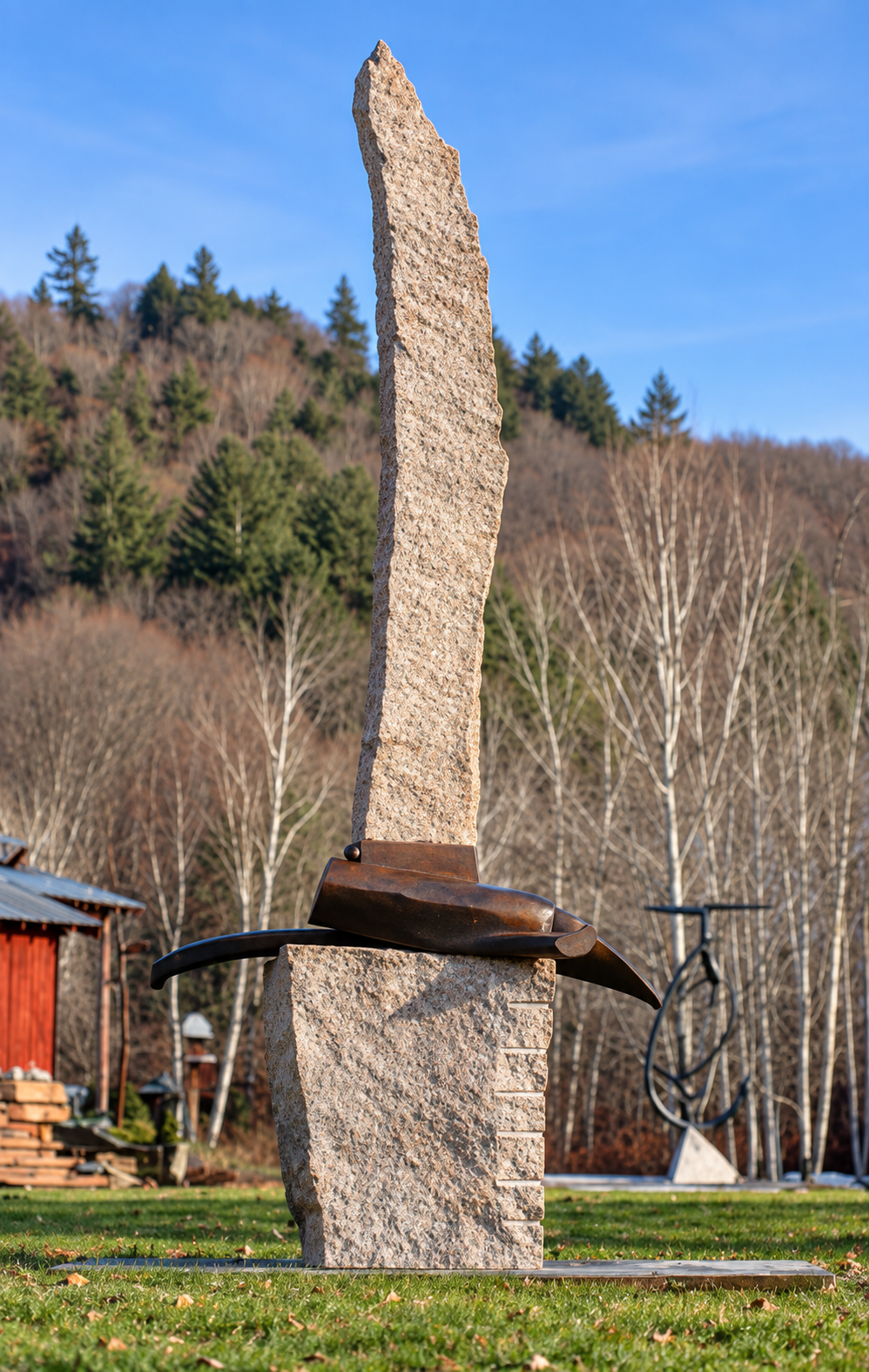
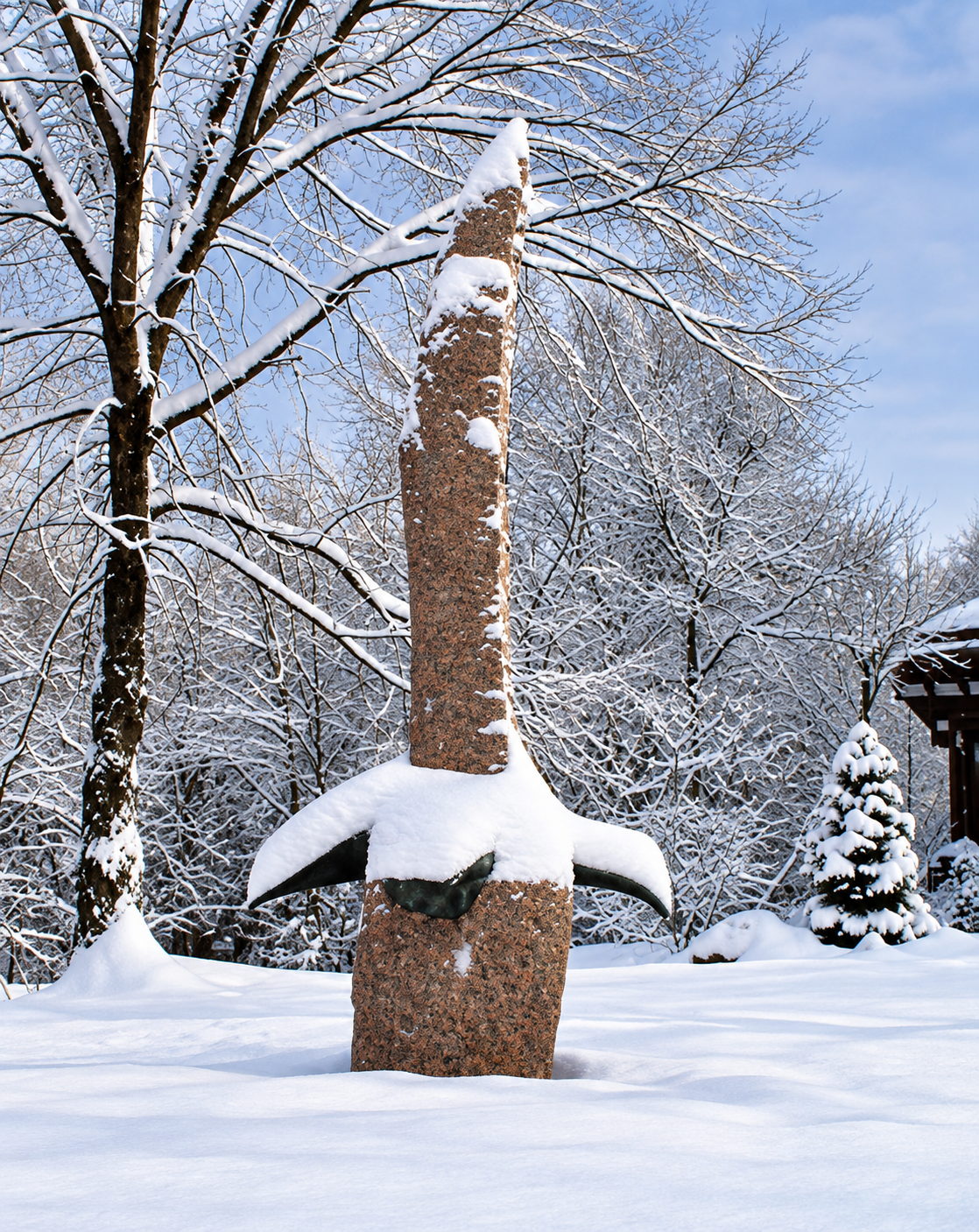
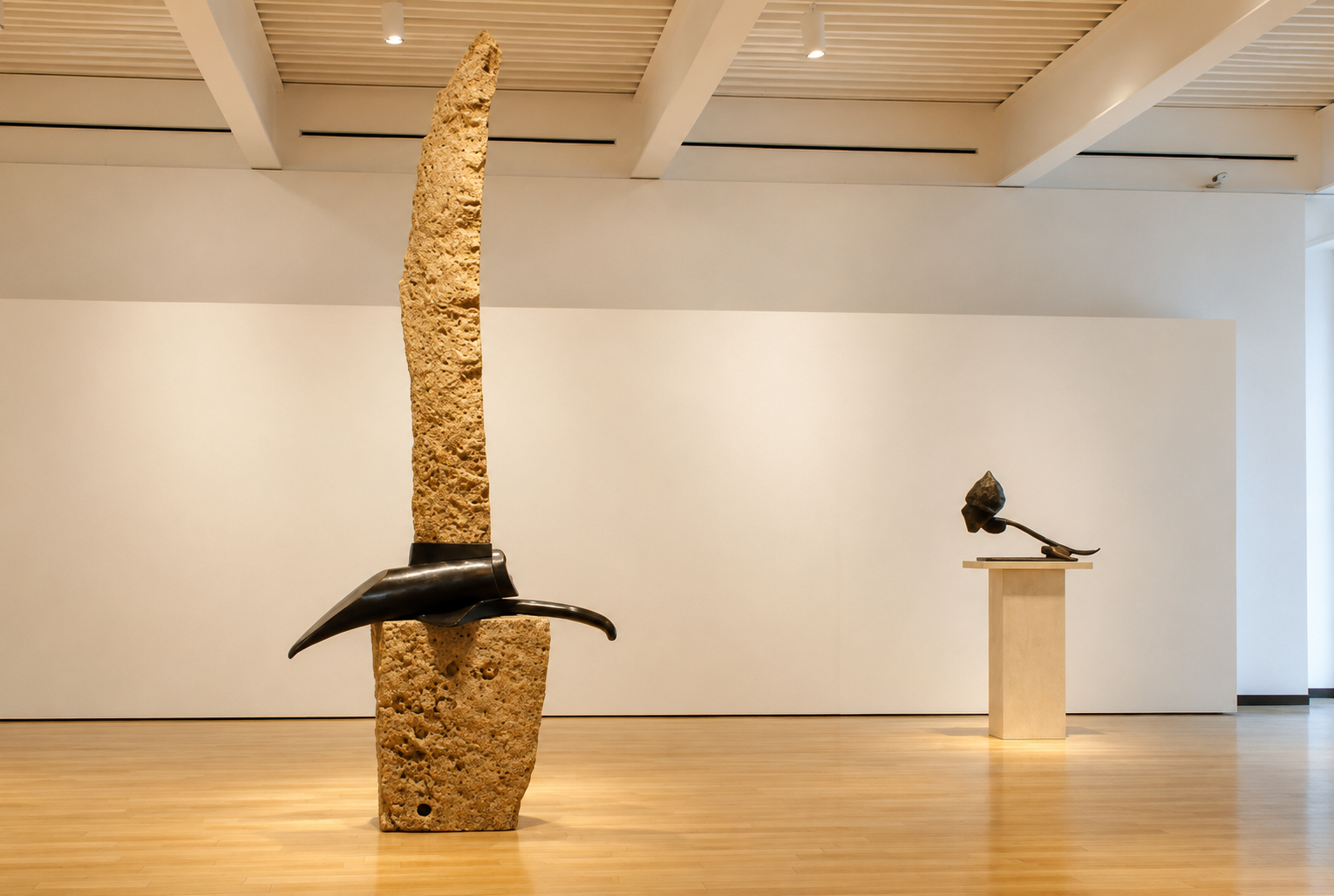
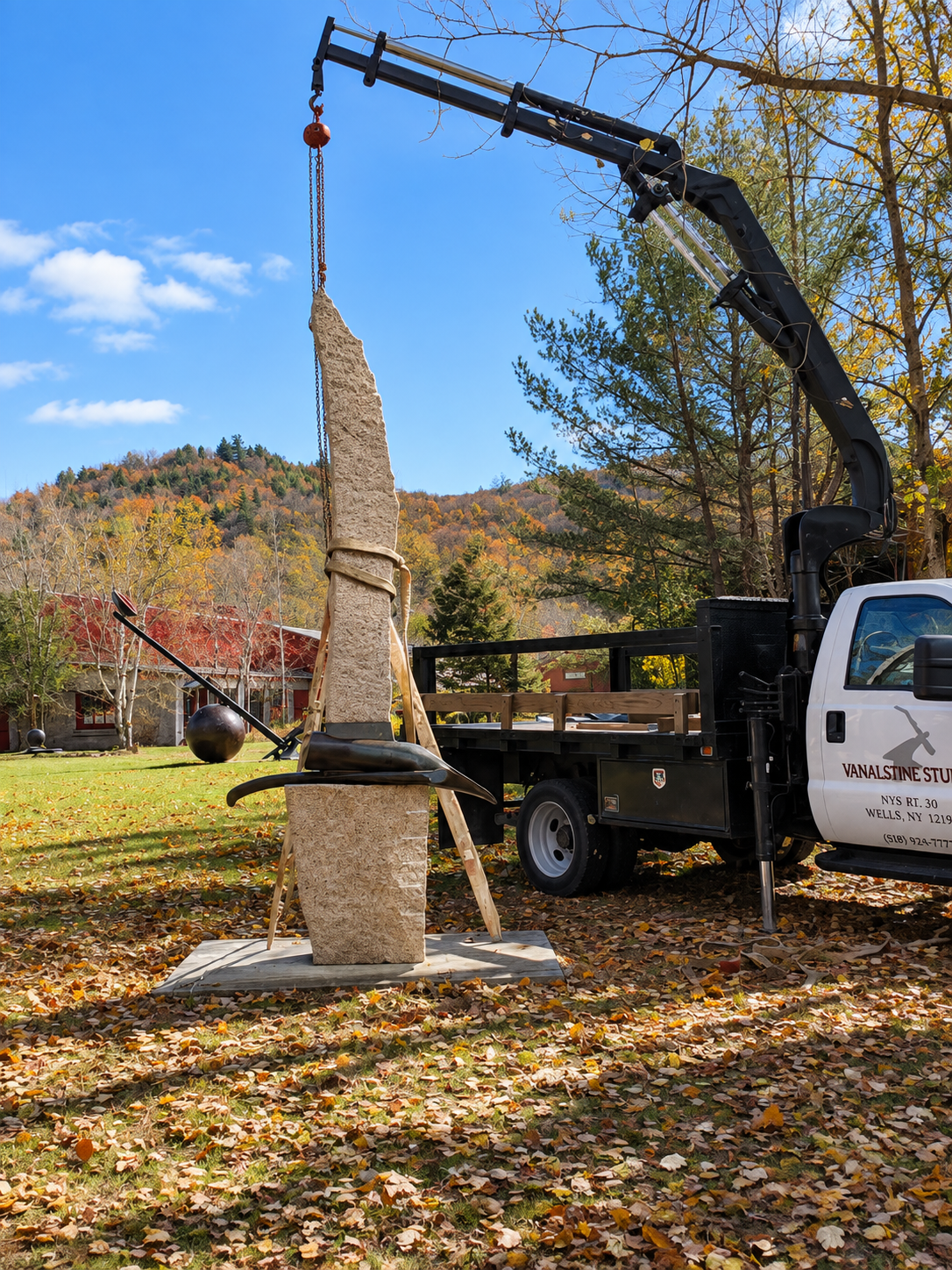
October 1997. Bronze, pink granite. Dimensions: 12 × 5 × 2 in (30 × 13 × 5 cm). Private collection - Germany
Midriff, 1997
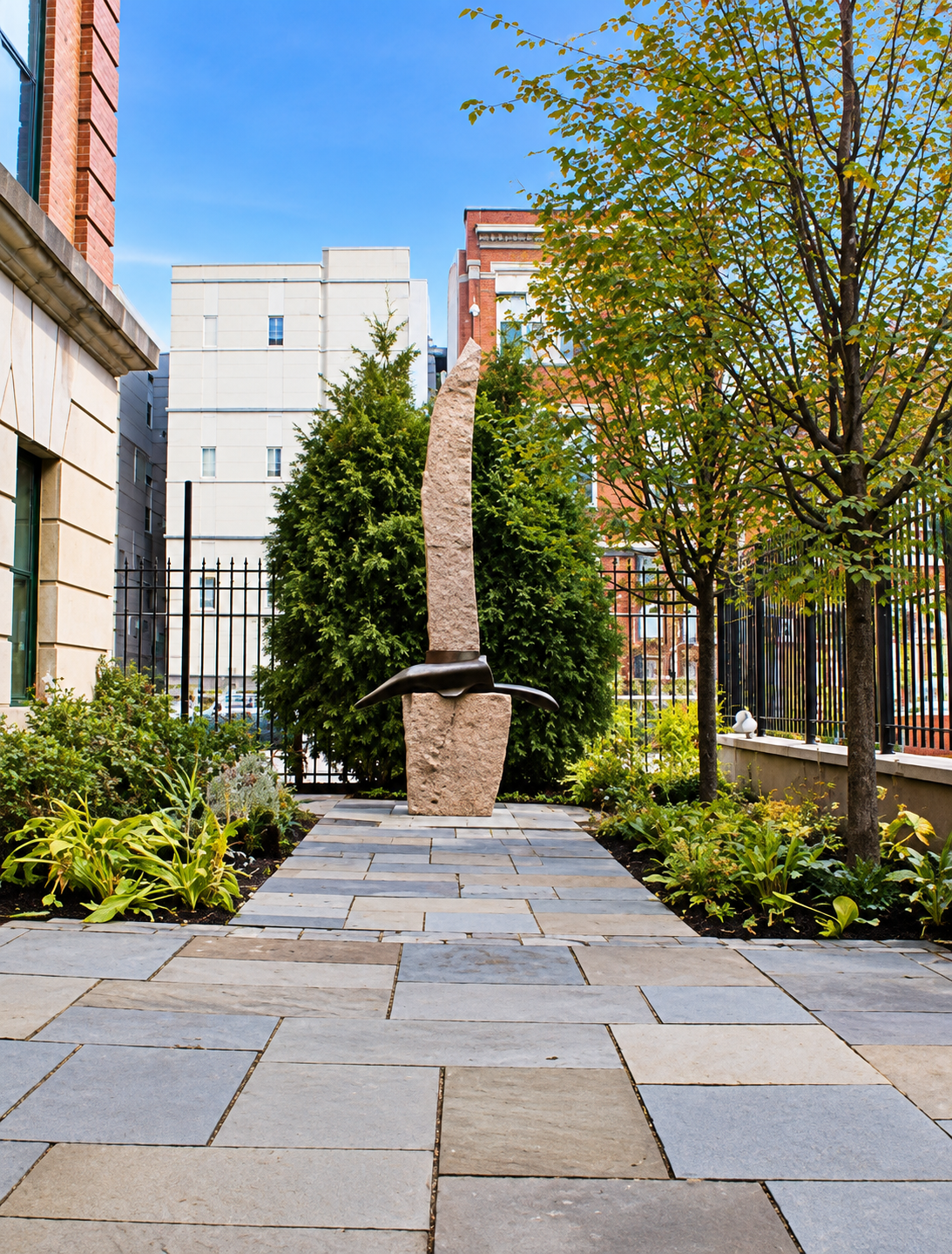
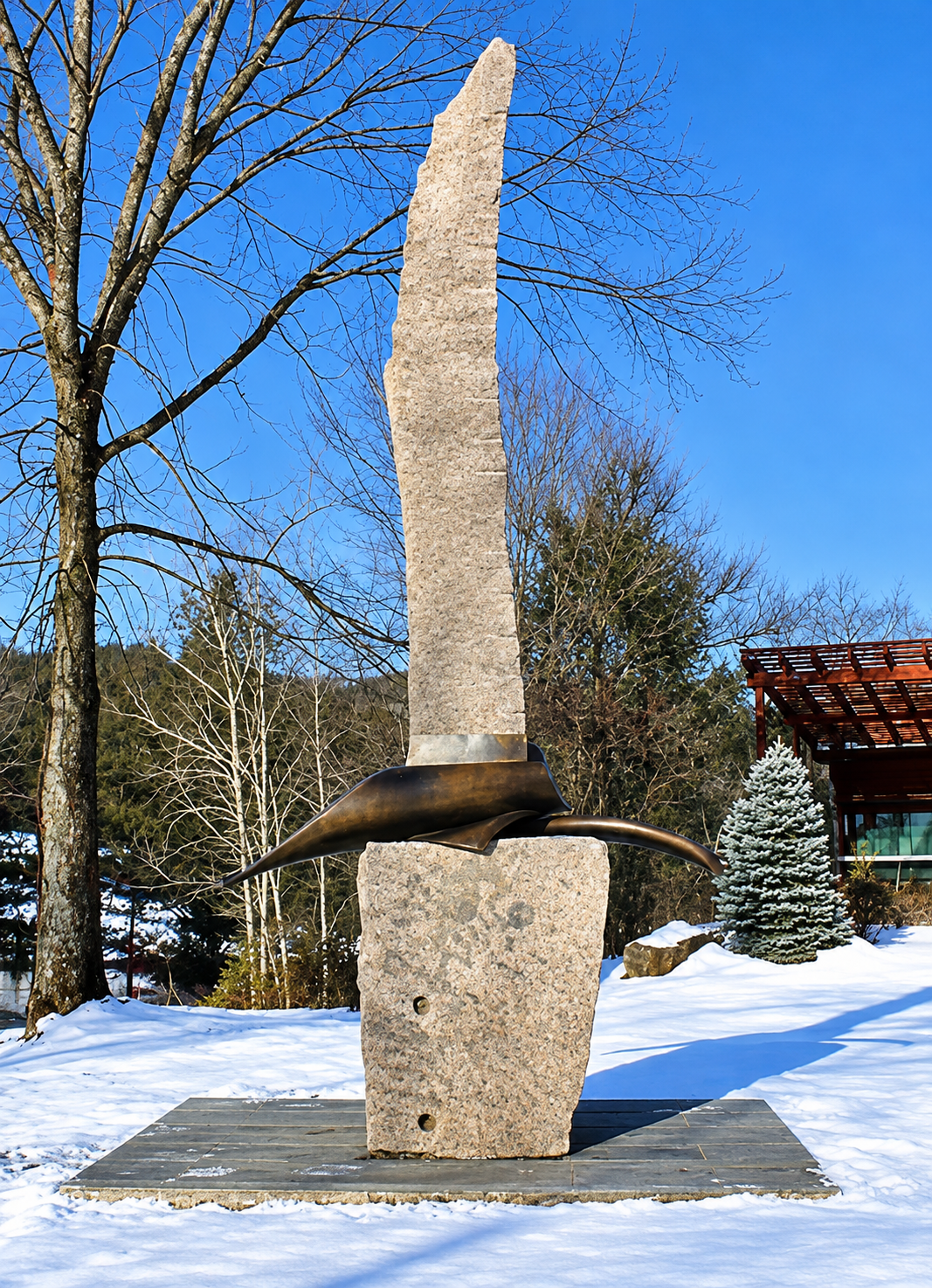
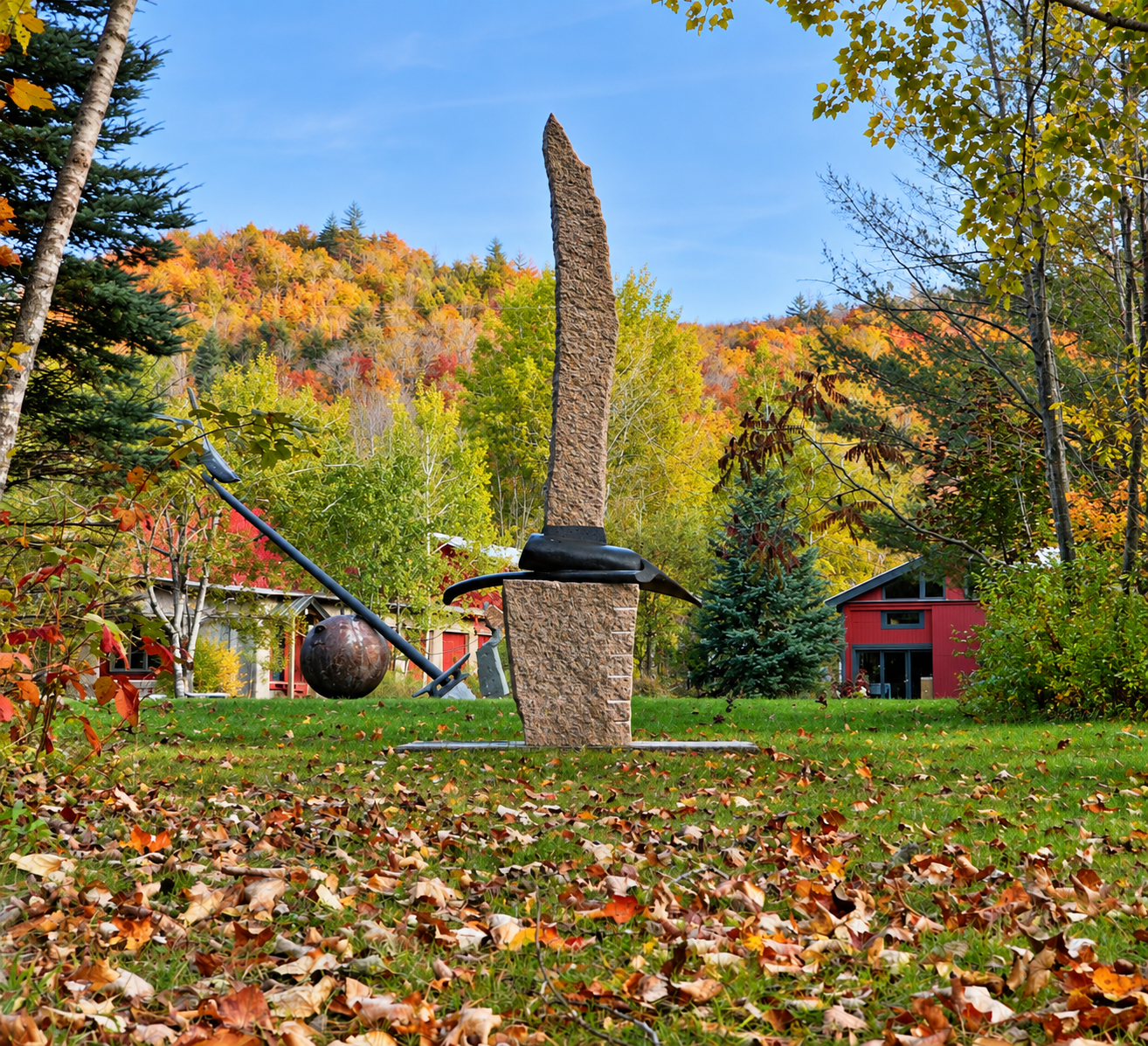
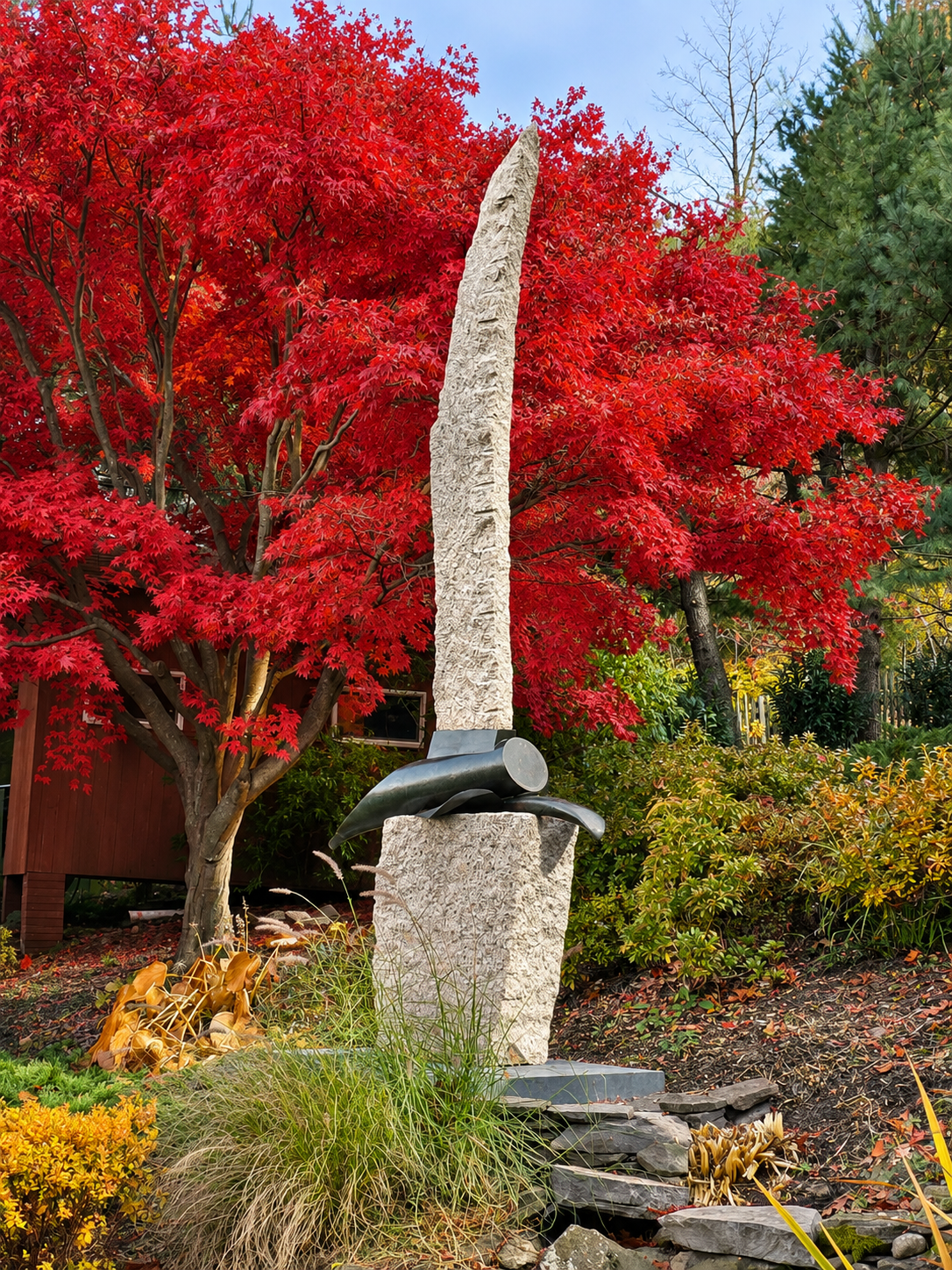
Midriff uses its strong verticality to create a towering, almost figurative presence. The elongated granite forms suggest a body, while the bronze elements concentrated at the sculpture’s center become a kind of abstract abdominal section. The title calls attention specifically to this “midriff,” reinforcing the suggestion of the human figure without depicting it literally—an approach consistent with my broader interest in using balance, gesture, and movement to evoke the body.
At the same time, Midriff can be read geologically. The bronze forms appear to shift or drift between the two masses of granite, suggesting the movement of tectonic plates and the immense forces operating beneath the earth’s surface. This association connects the sculpture’s implied bodily movement with the natural processes that formed the stone itself, bringing together human and geological references through the contrasting materials of granite and bronze.
October 1997. Bronze, pink granite. Dimensions: 12 × 5 × 2 in (30 × 13 × 5 cm). Private collection - Germany
Midriff, 1997
Midriff uses its strong verticality to create a towering, almost figurative presence. The elongated granite forms suggest a body, while the bronze elements concentrated at the sculpture’s center become a kind of abstract abdominal section. The title calls attention specifically to this “midriff,” reinforcing the suggestion of the human figure without depicting it literally—an approach consistent with my broader interest in using balance, gesture, and movement to evoke the body.
At the same time, Midriff can be read geologically. The bronze forms appear to shift or drift between the two masses of granite, suggesting the movement of tectonic plates and the immense forces operating beneath the earth’s surface. This association connects the sculpture’s implied bodily movement with the natural processes that formed the stone itself, bringing together human and geological references through the contrasting materials of granite and bronze.
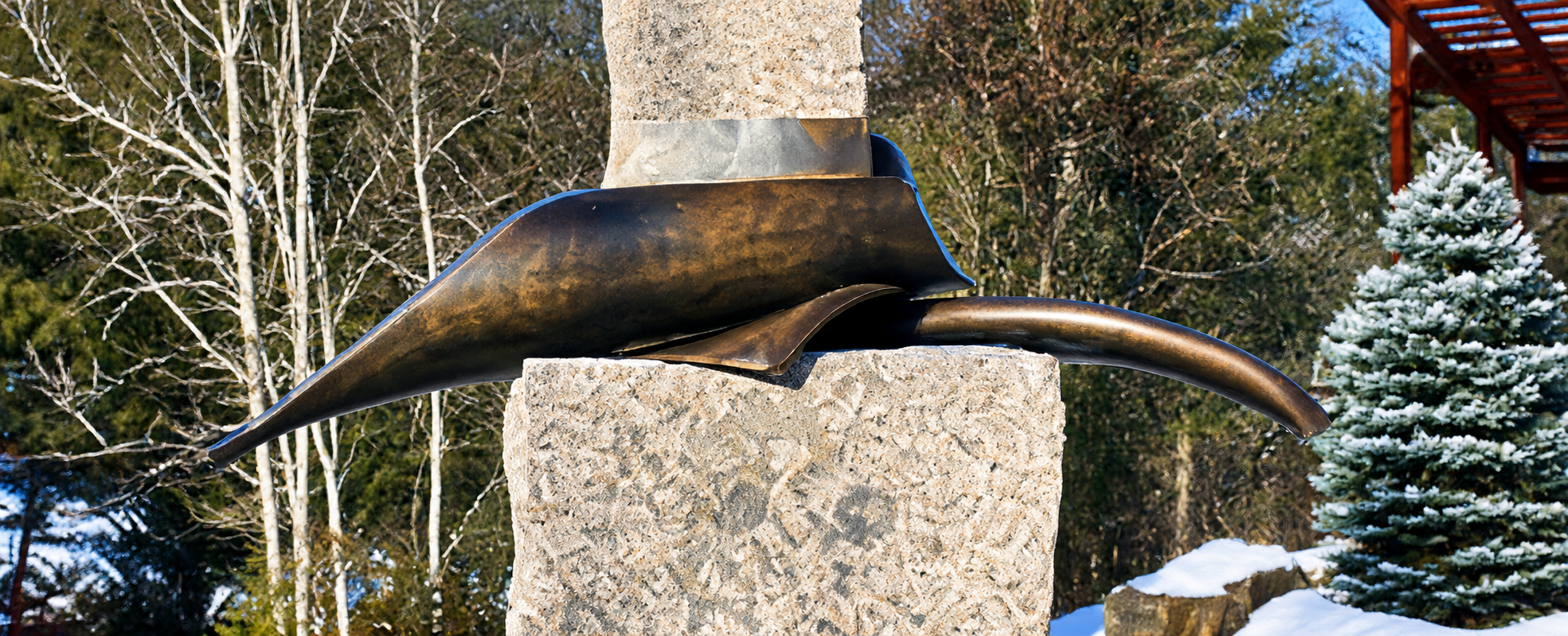 Image 1 of 2
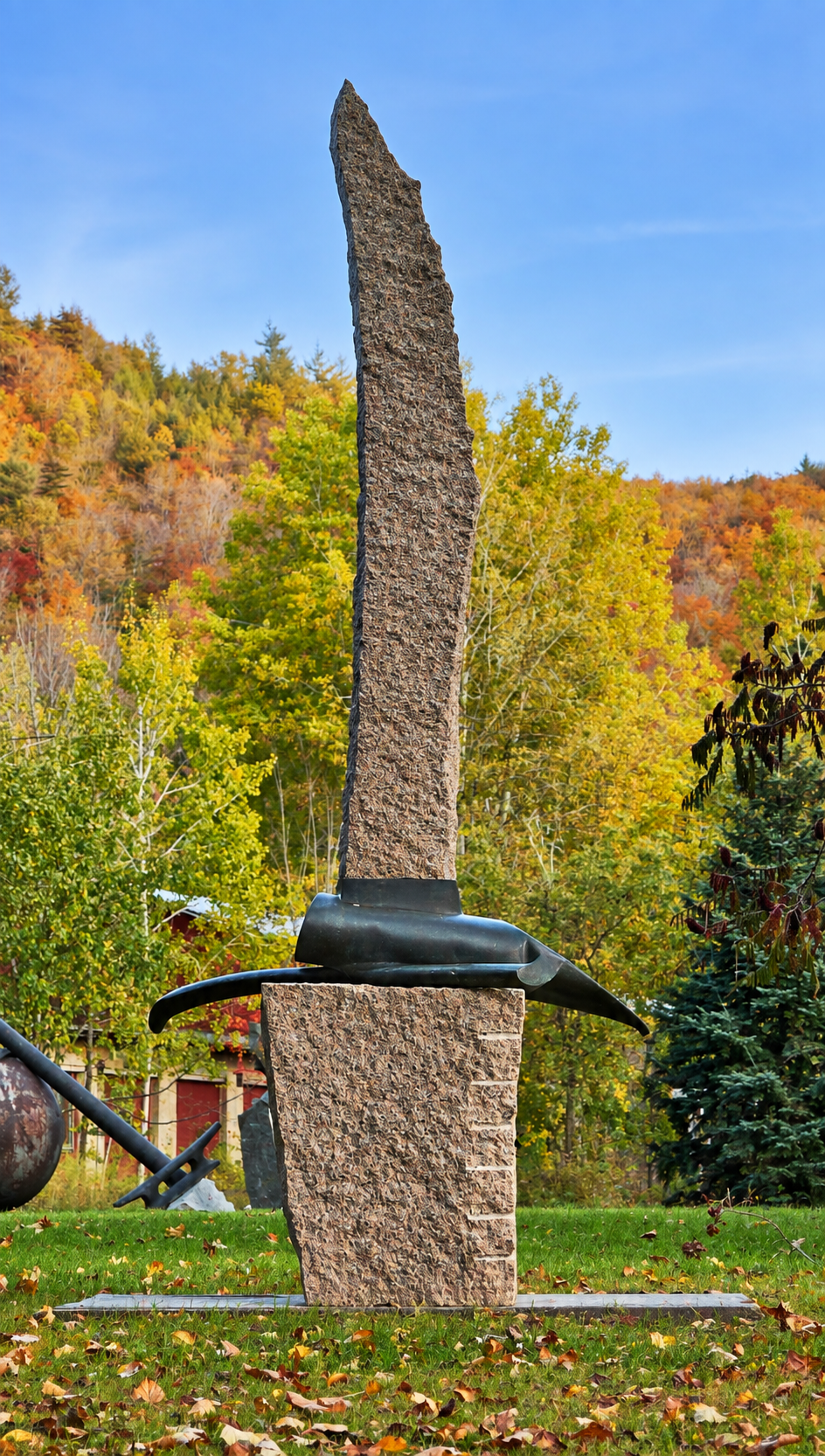 Image 2 of 2