1982. Granite, steel. Dimensions: 11 × 7 × 5 ft.
Collection - SMITHSONION AMERICAN ART MUSEUM, Smithsonian Institution, Washington, DC
NMAA Wedge, 1982
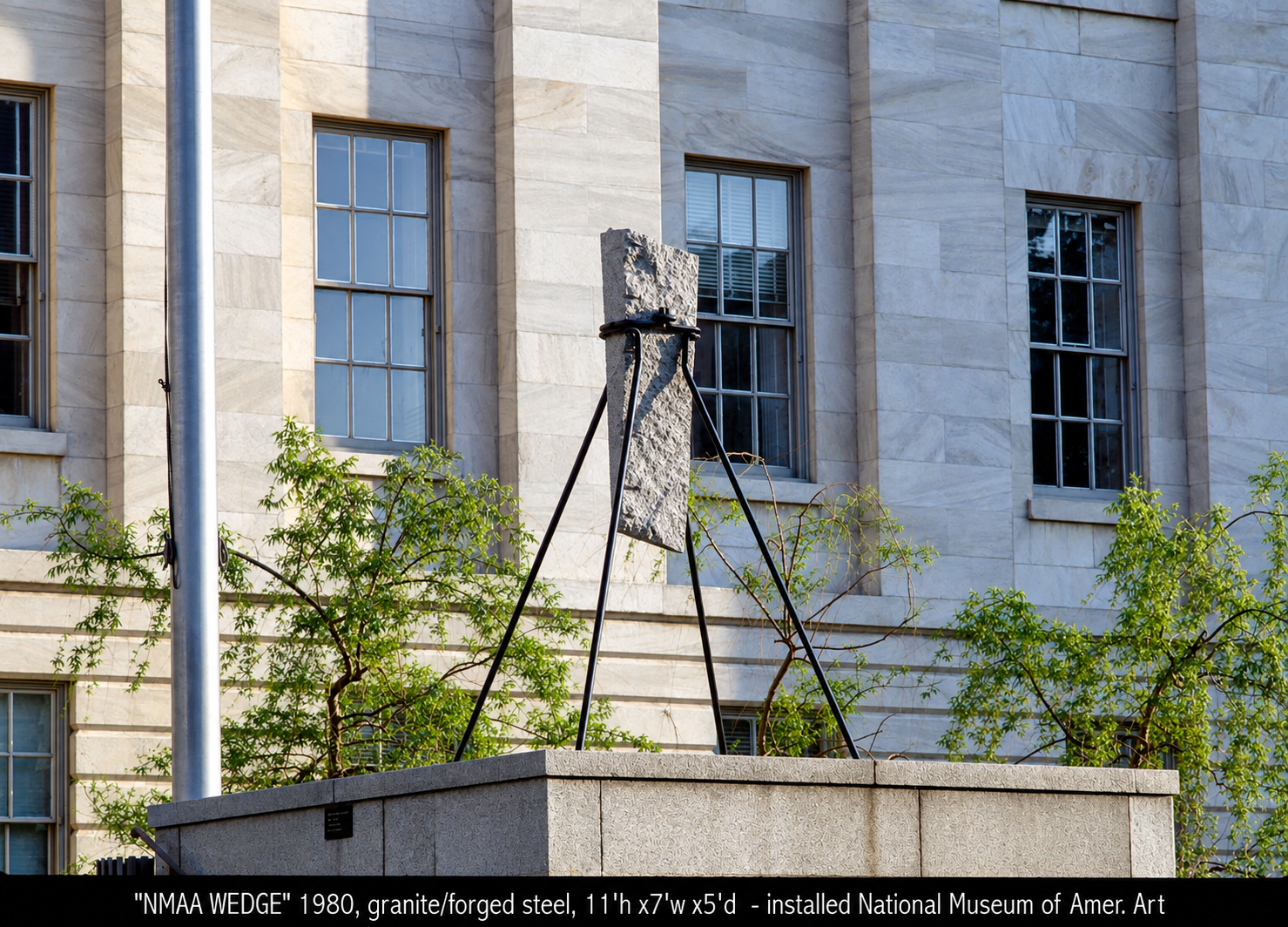
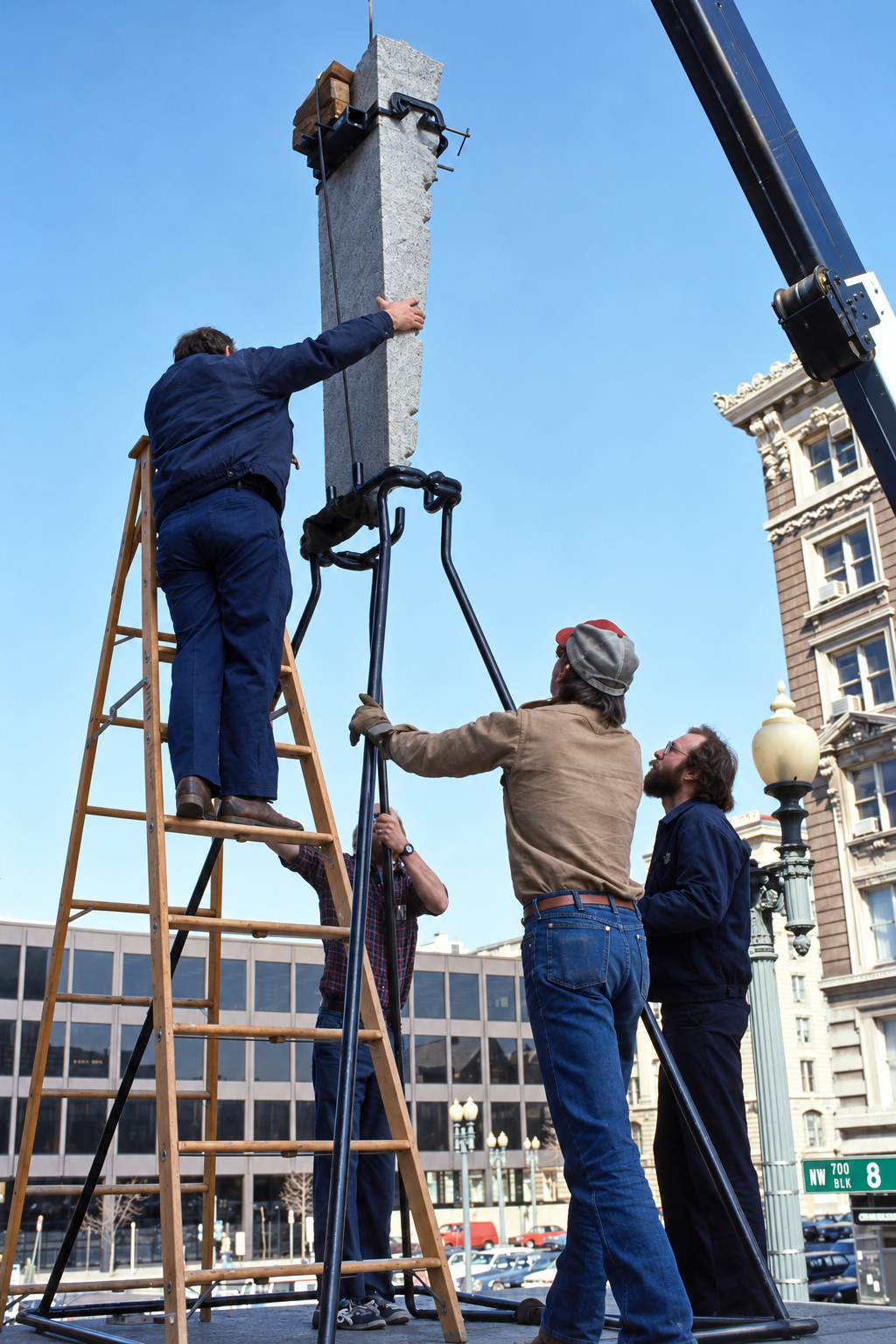
NMAA Wedge grew from an invitation by curator Harry Rand at the National Museum of American Art, whom I had met when my Gallery Ladder was exhibited there as part of the touring 1st Western States Biennial. When a prominent site at the museum entrance became available, Rand suggested that one of my sculptures might work well there. I had nothing of the appropriate scale, so I created NMAA Wedge specifically for the site. The eleven-foot-high sculpture was installed at the museum later that year and subsequently entered the collection as a gift of collector Scott Lange. The National Museum of American Art was later renamed the Smithsonian American Art Museum.
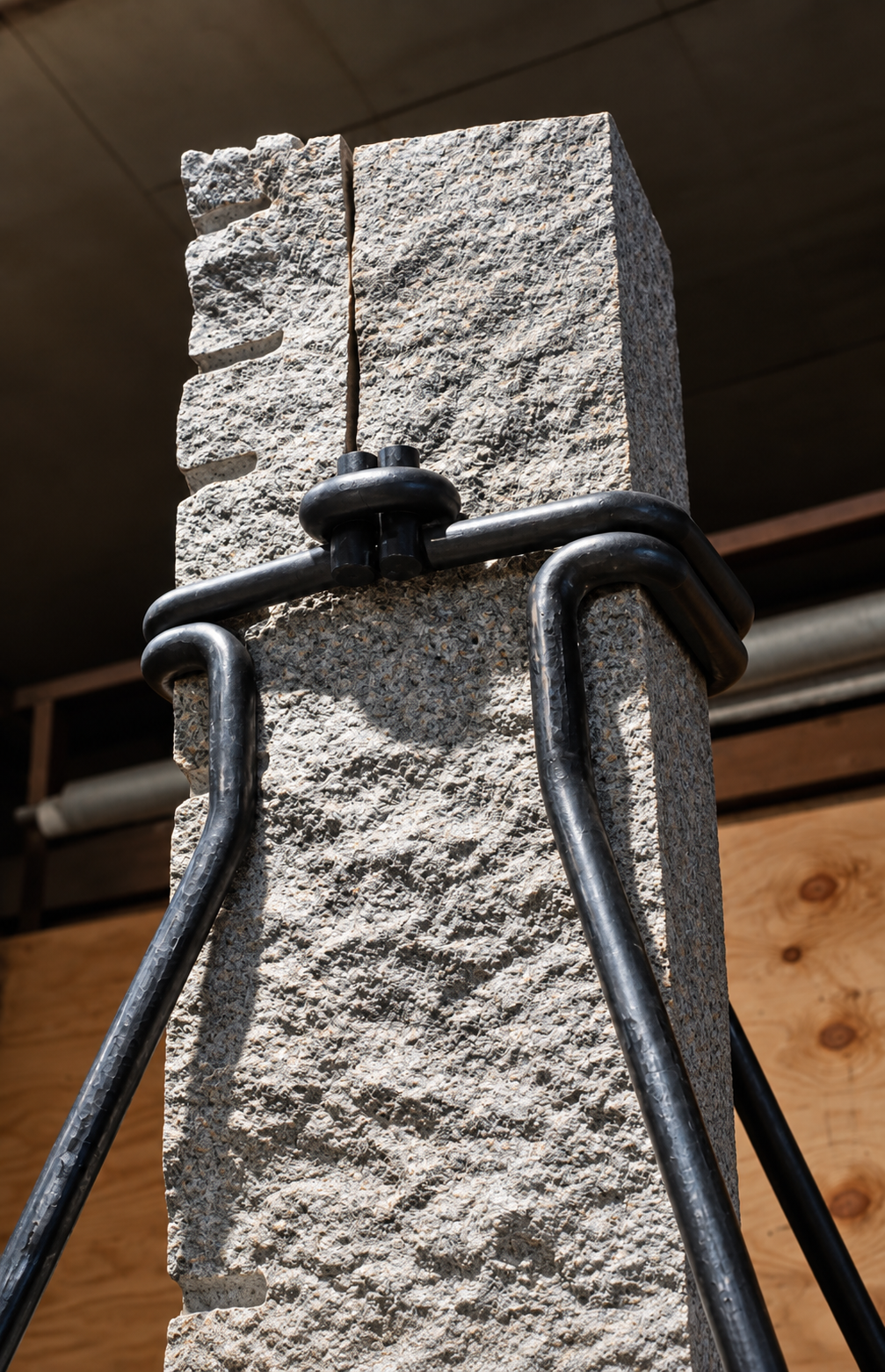
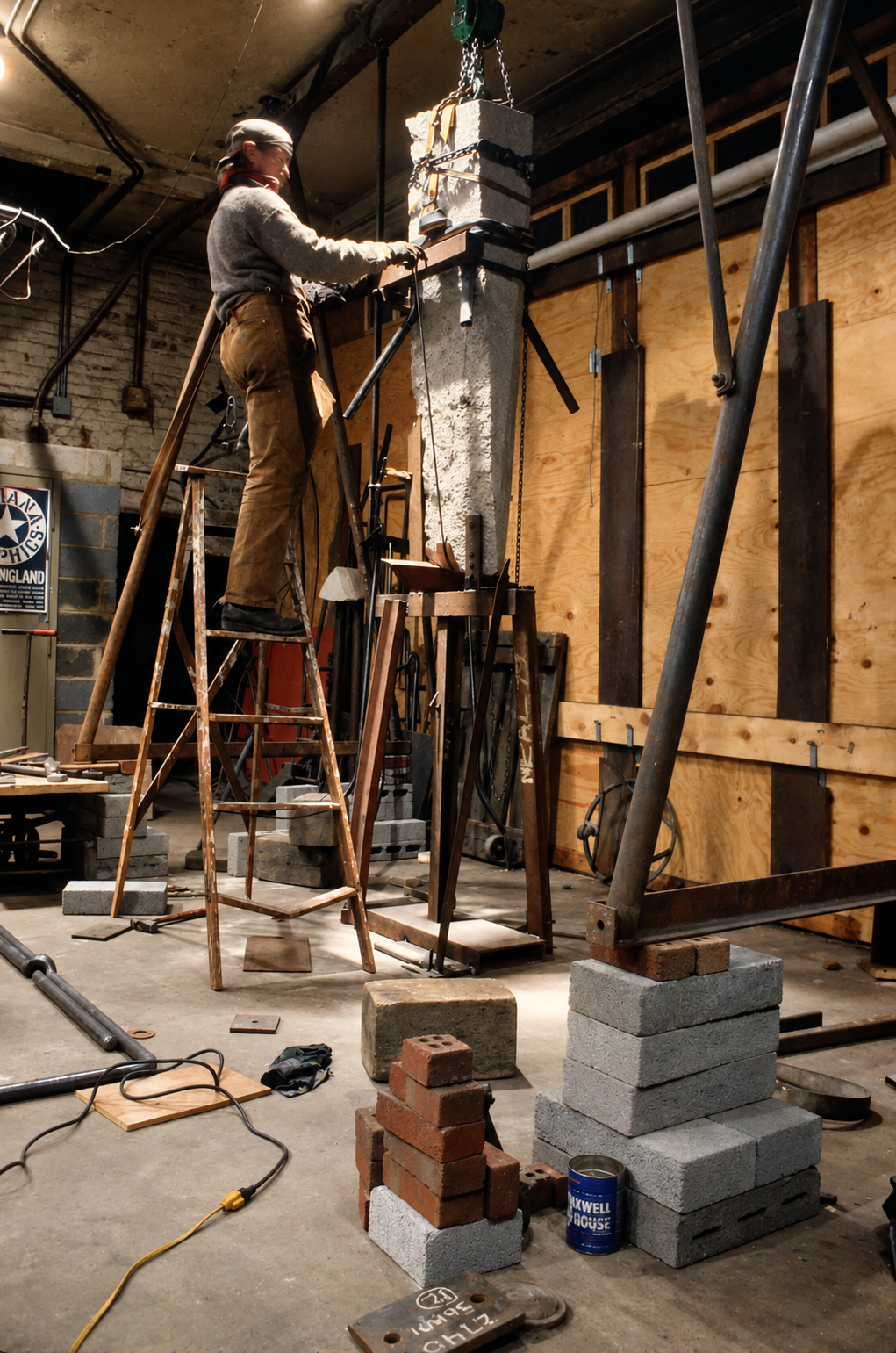
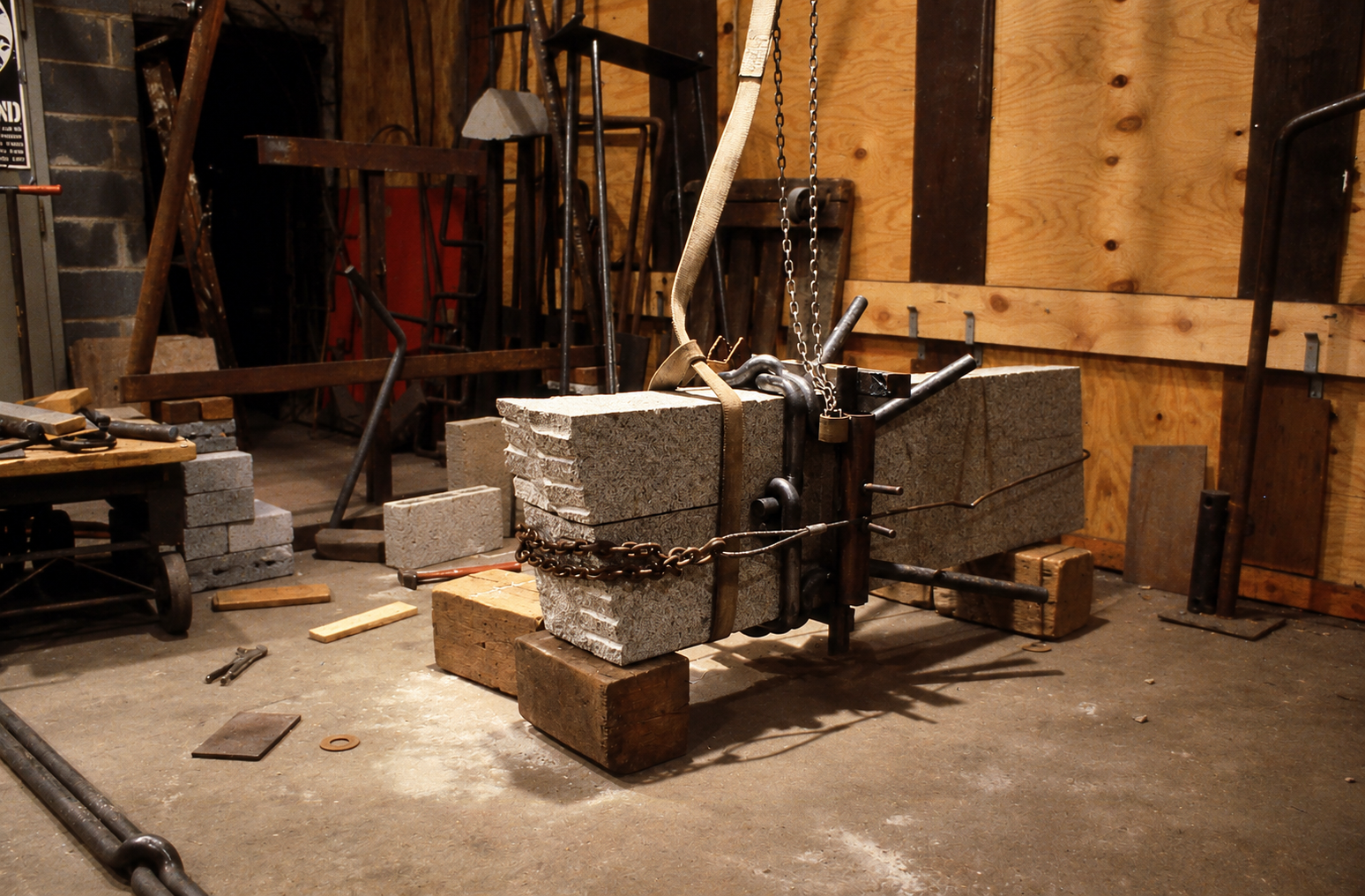
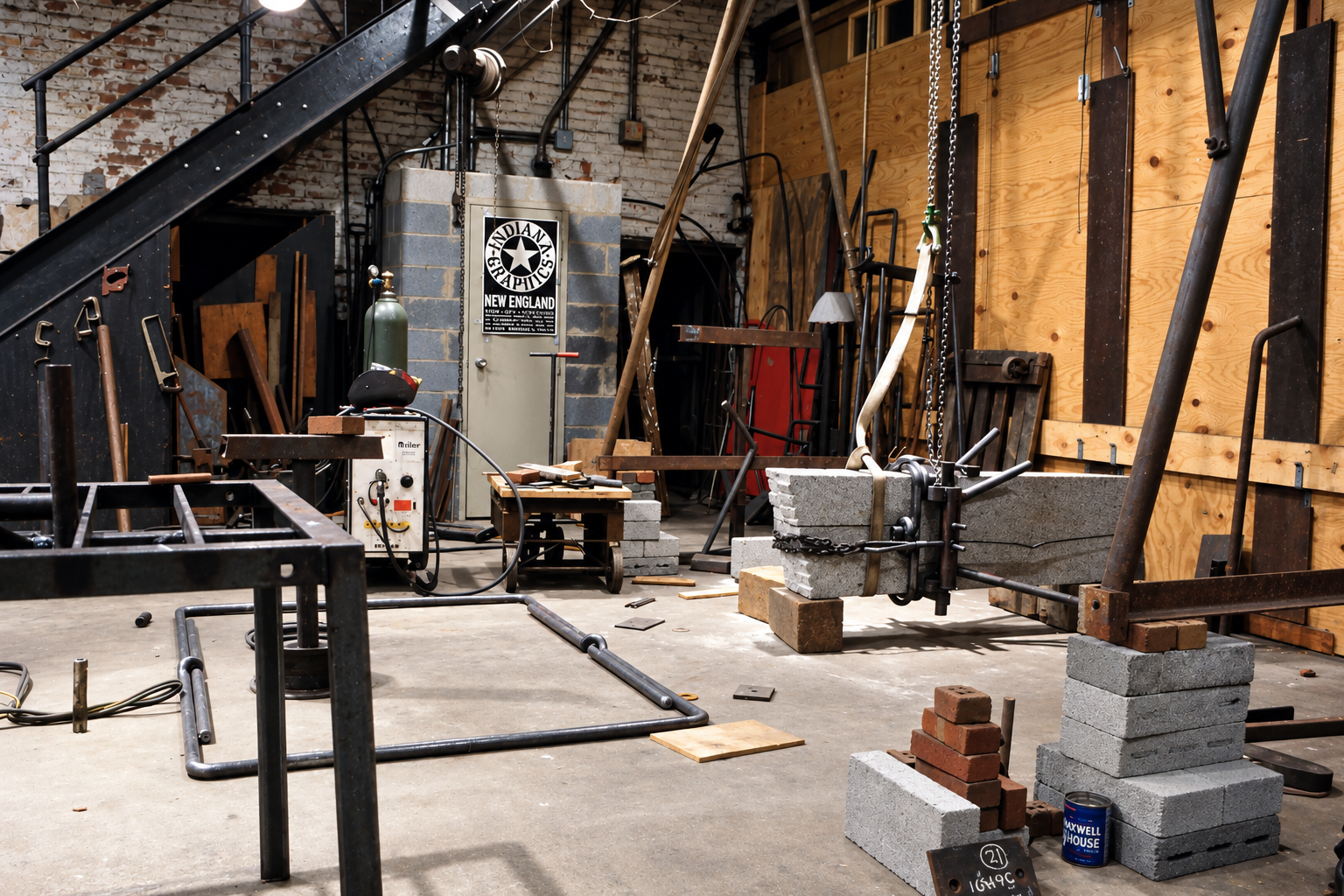
The work extends my Wedge Series, combining an elevated, stilt-like structure with the principles of my tensegrity, or Brute Series. A massive wedge-shaped piece of granite is suspended within long forged-steel rods that wrap and interlock around the stone. Gravity and the weight of the granite provide the energy—or “glue”—that locks the structure together, making the stone an active structural element. As with Crimp and Torque, the title Wedge is deliberately both noun and verb: it identifies the form while describing the physical action taking place. At this larger, architectural scale, the work transforms my continuing exploration of weight, balance, tension, and visible assembly into a public presence.
1982. Granite, steel. Dimensions: 11 × 7 × 5 ft.
Collection - SMITHSONION AMERICAN ART MUSEUM, Smithsonian Institution, Washington, DC
NMAA Wedge, 1982
NMAA Wedge grew from an invitation by curator Harry Rand at the National Museum of American Art, whom I had met when my Gallery Ladder was exhibited there as part of the touring 1st Western States Biennial. When a prominent site at the museum entrance became available, Rand suggested that one of my sculptures might work well there. I had nothing of the appropriate scale, so I created NMAA Wedge specifically for the site. The eleven-foot-high sculpture was installed at the museum later that year and subsequently entered the collection as a gift of collector Scott Lange. The National Museum of American Art was later renamed the Smithsonian American Art Museum.
The work extends my Wedge Series, combining an elevated, stilt-like structure with the principles of my tensegrity, or Brute Series. A massive wedge-shaped piece of granite is suspended within long forged-steel rods that wrap and interlock around the stone. Gravity and the weight of the granite provide the energy—or “glue”—that locks the structure together, making the stone an active structural element. As with Crimp and Torque, the title Wedge is deliberately both noun and verb: it identifies the form while describing the physical action taking place. At this larger, architectural scale, the work transforms my continuing exploration of weight, balance, tension, and visible assembly into a public presence.
 Image 1 of 1