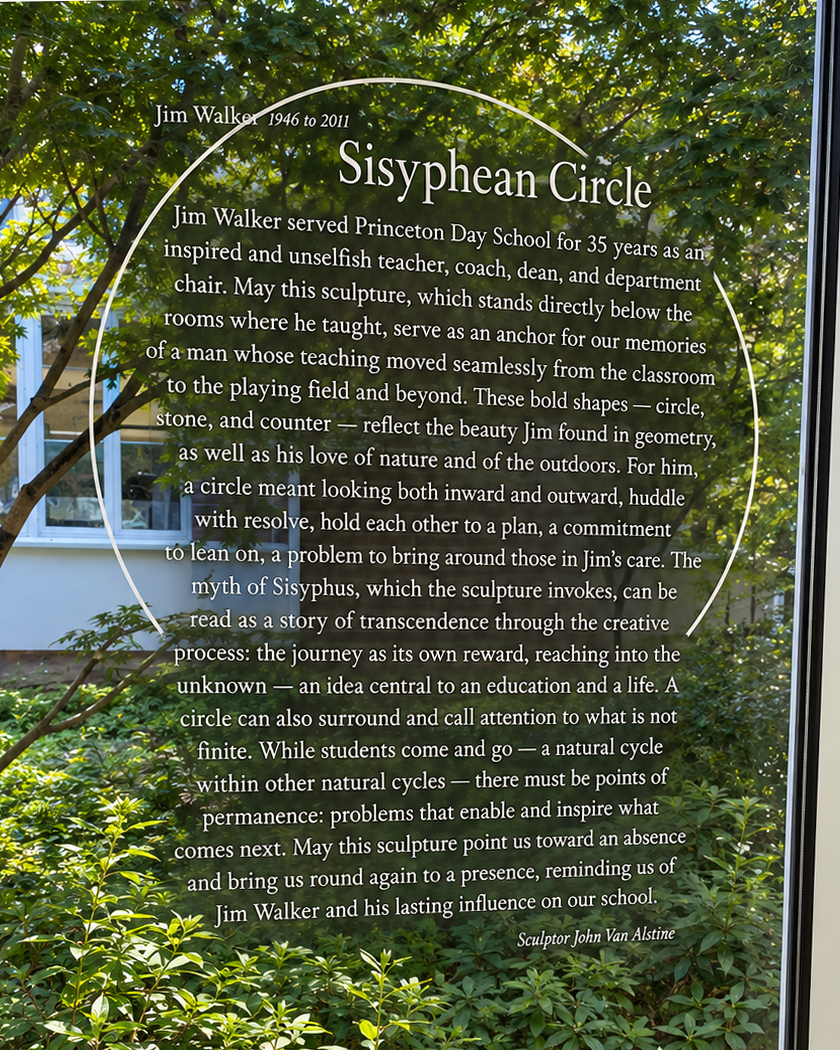
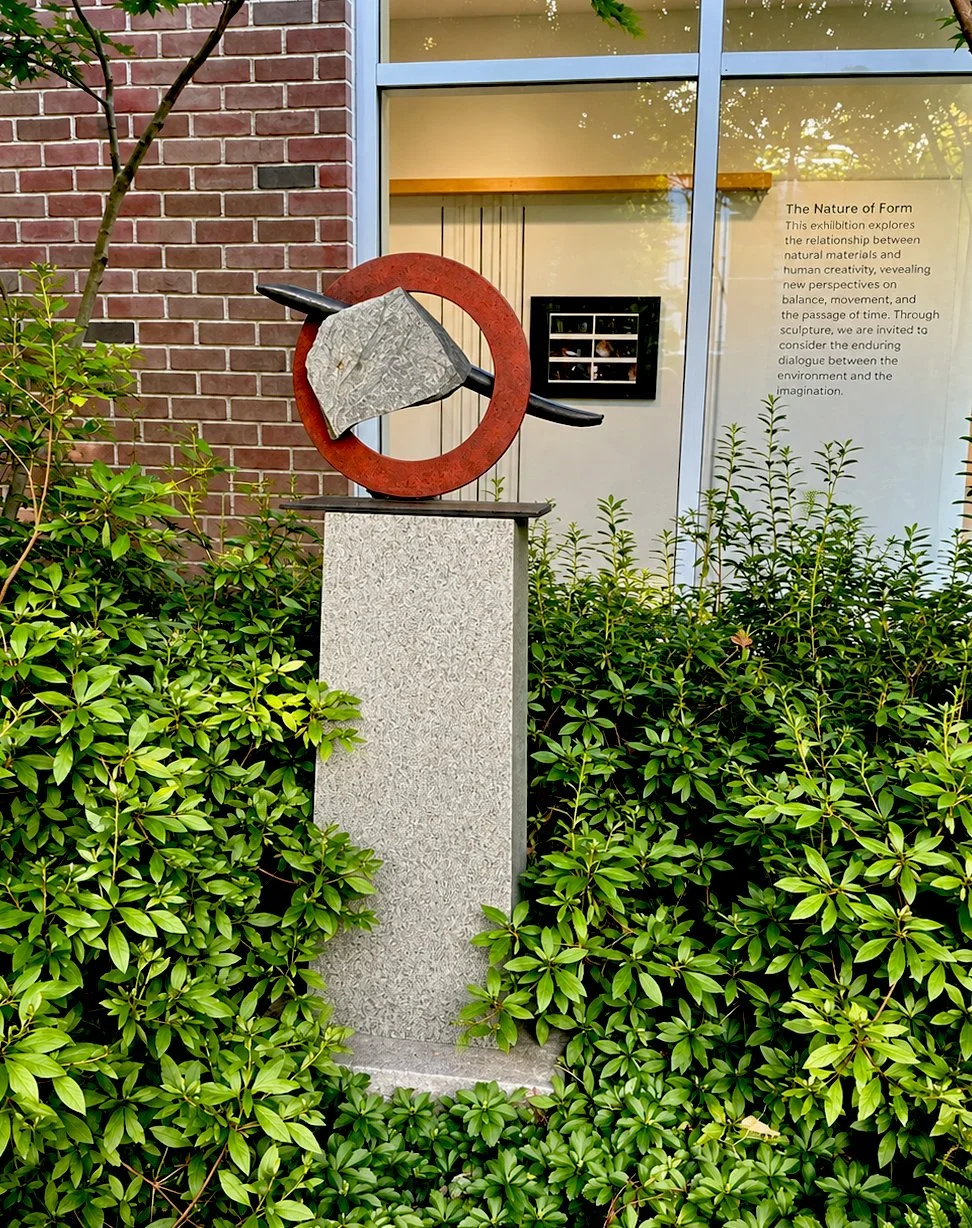
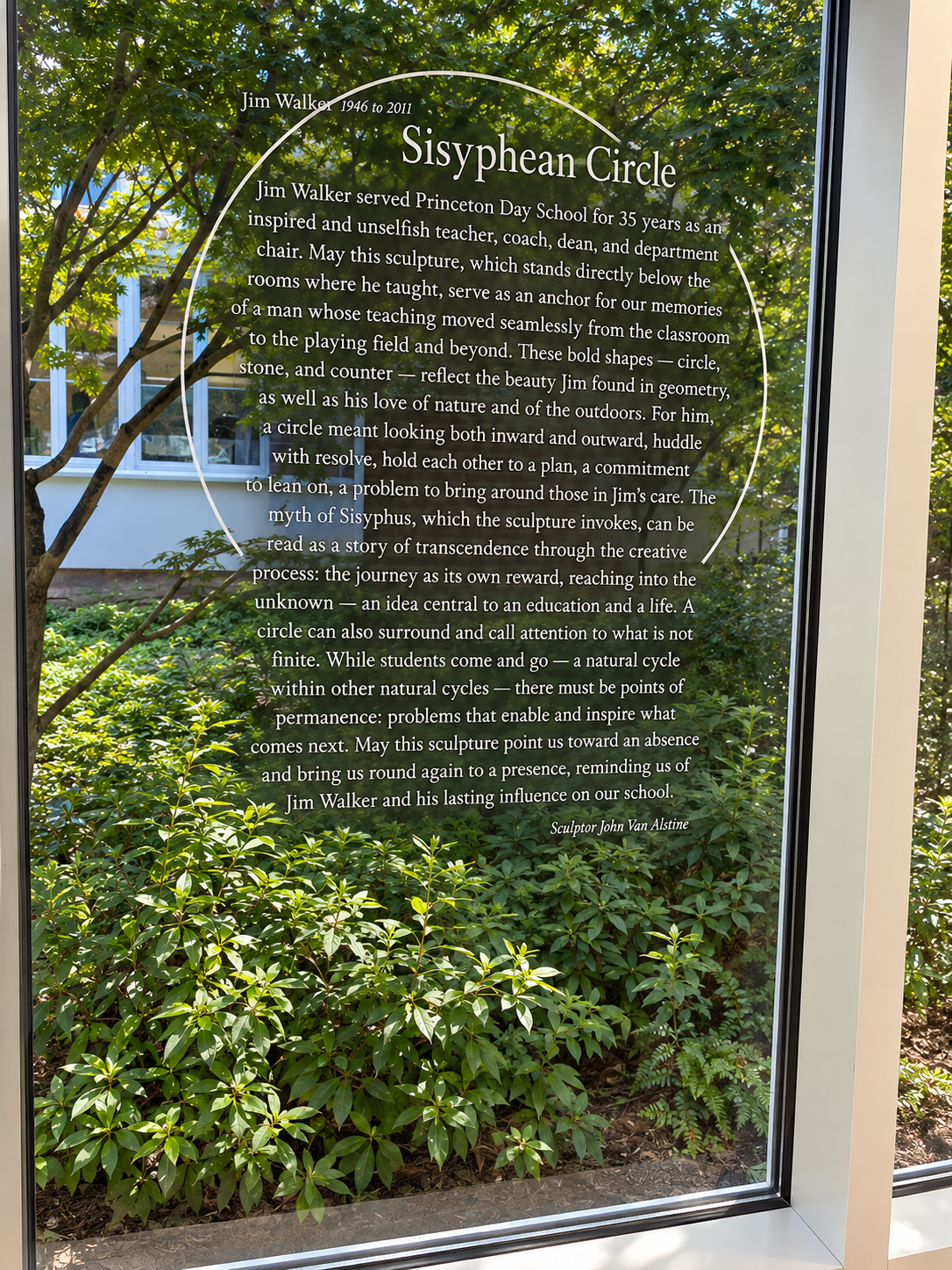
July 2011. Slate, bronze. Dimensions: 18 × 27 × 9 in (46 × 69 × 23 cm).
Collection: Princeton Day School, Princeton, NJ. Gift of Barbara Avery Walker in memory of James Walker.
The sculpture is a tribute to the memory of James Walker and his much-appreciated contributions to the school and its students as an outstanding and much-loved teacher, coach, mentor, and colleague.
The Sisyphean Series
The Greek myth of Sisyphus, condemned to endlessly push a boulder uphill, has inspired more than 250 of my sculptures. Rather than viewing the myth as a symbol of futility, I share philosopher Albert Camus’s more positive interpretation—that meaning and fulfillment can be found in the struggle itself. In many ways, I see Sisyphus as autobiographical, reflecting my lifelong pursuit as an artist: confronting challenges, taking risks, and finding purpose in the act of creation.
My Sisyphean works bring stone and metal together in precarious yet stable arrangements, often incorporating circular forms suggesting perpetual motion. For me, they are metaphors for the creative process—an ongoing cycle of experimentation, discovery, setbacks, and renewal. Each completed sculpture is both an achievement and a starting point, celebrating the journey rather than simply the destination.
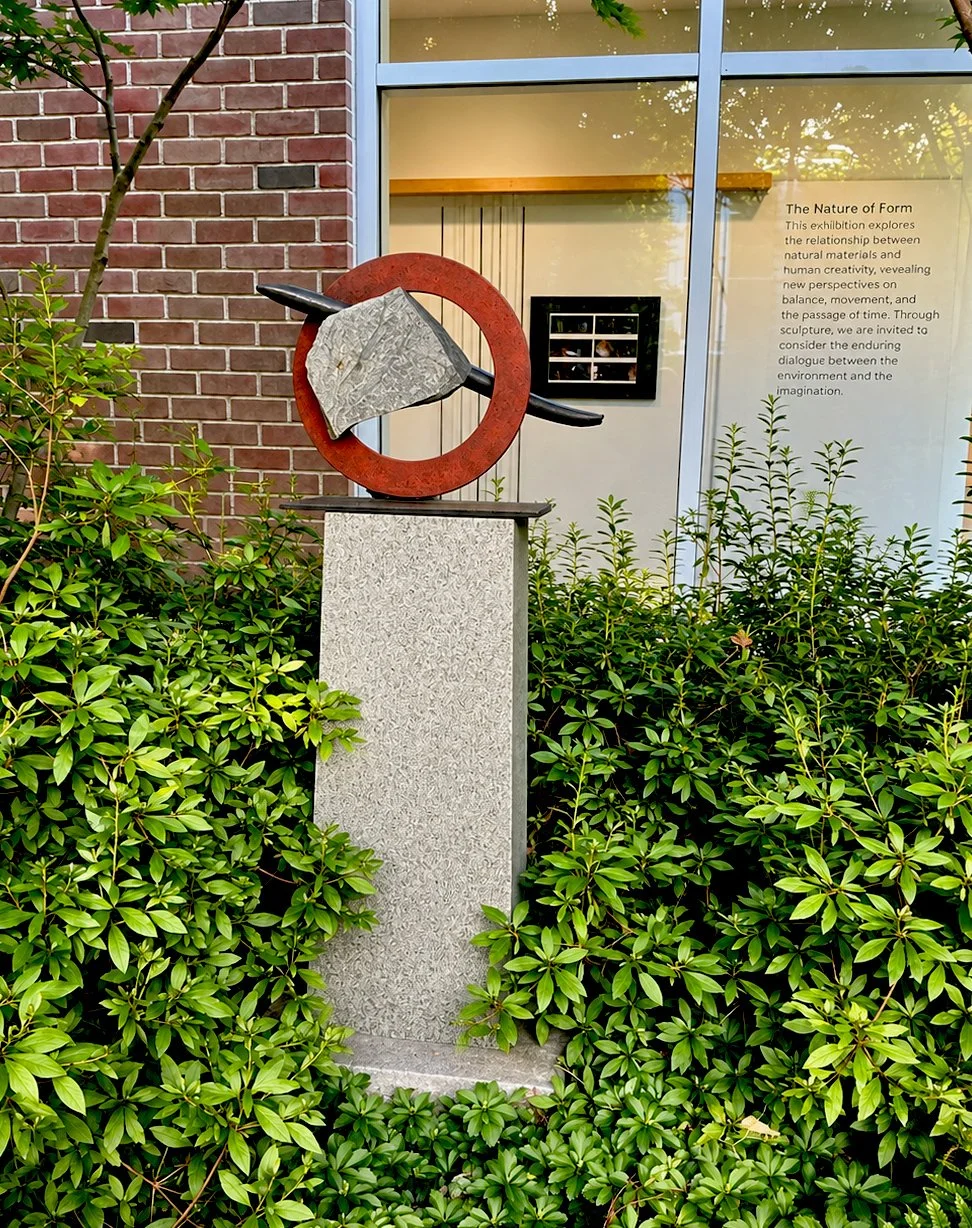 Image 1 of 7
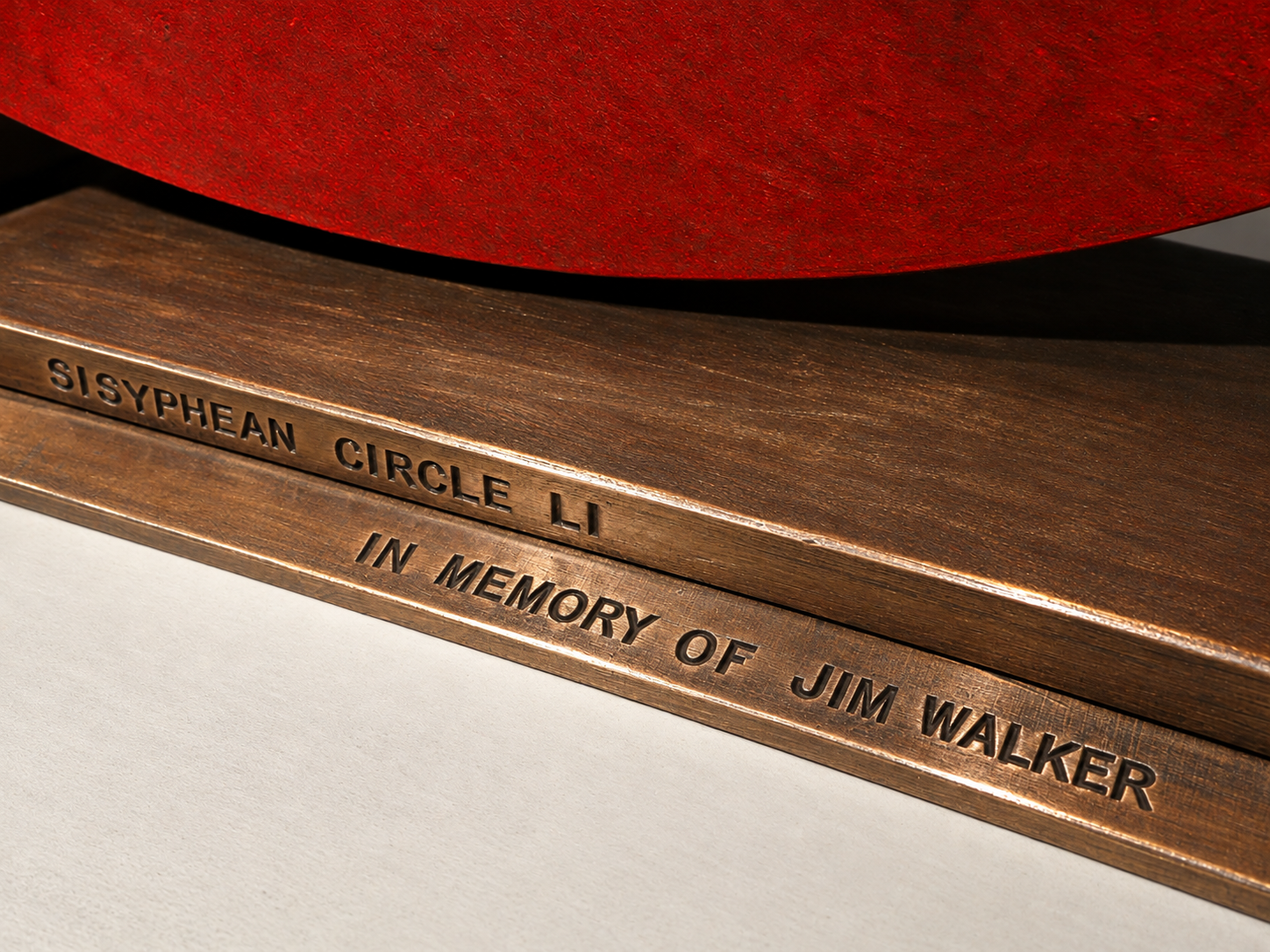 Image 2 of 7
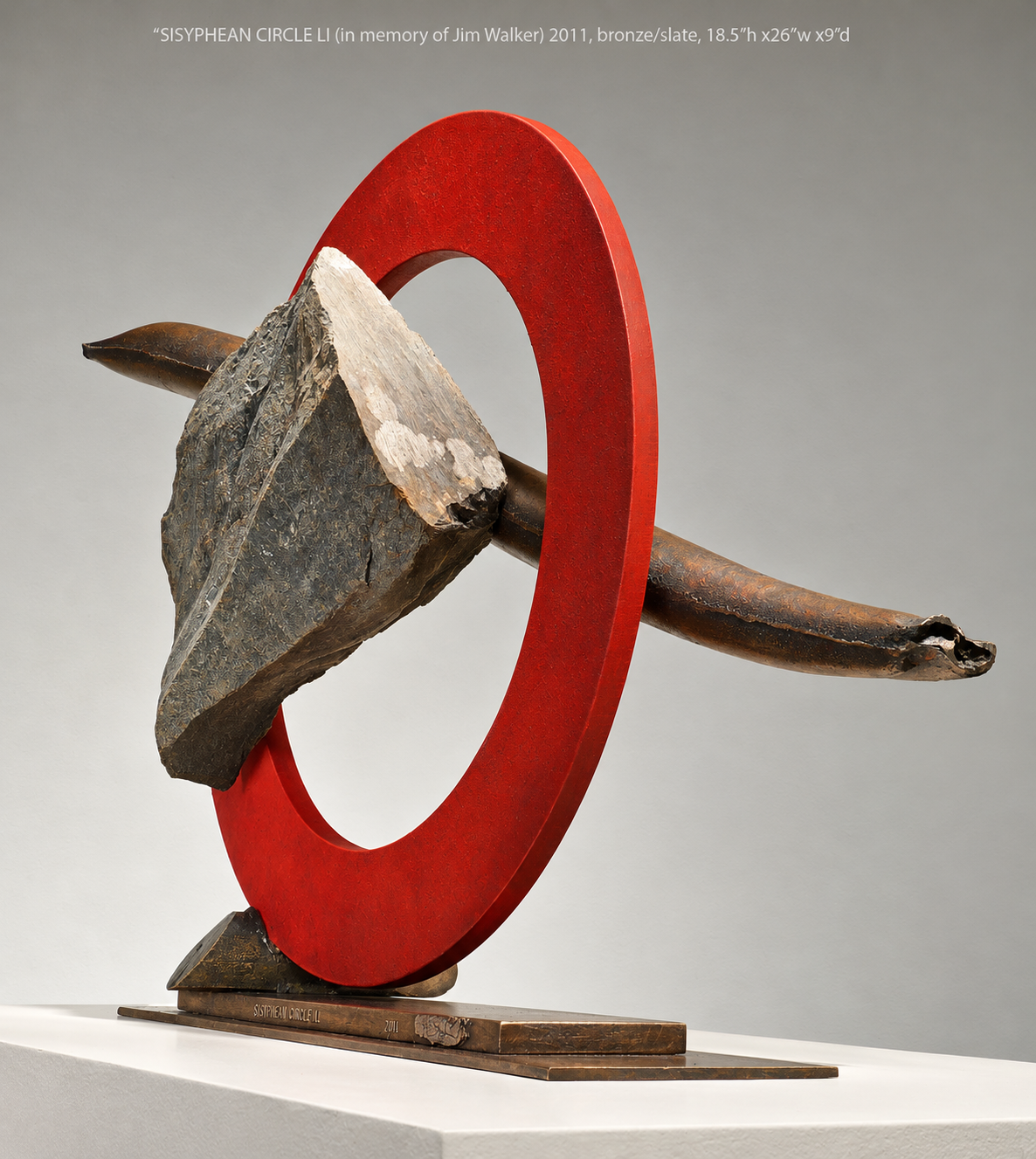 Image 3 of 7
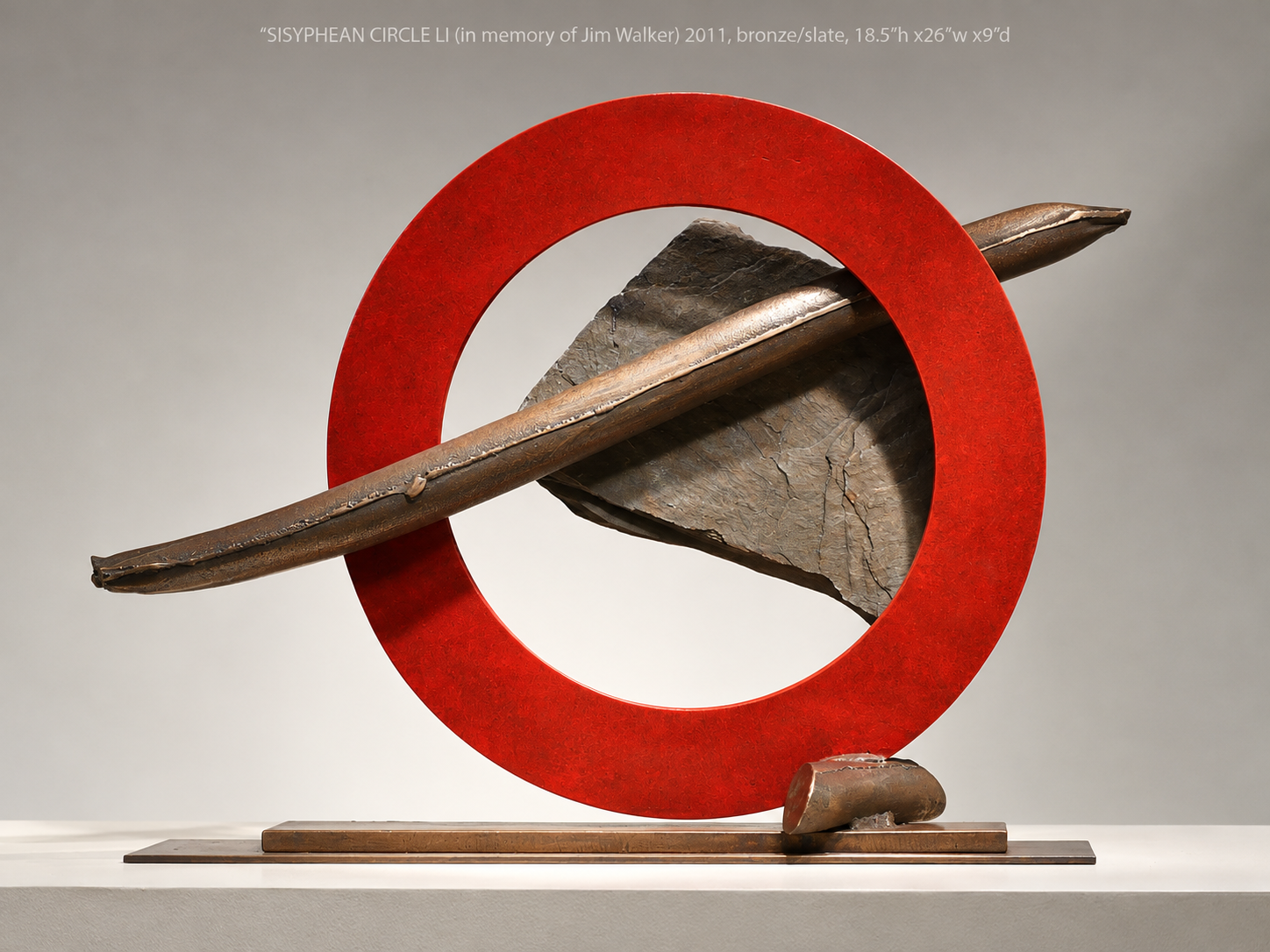 Image 4 of 7
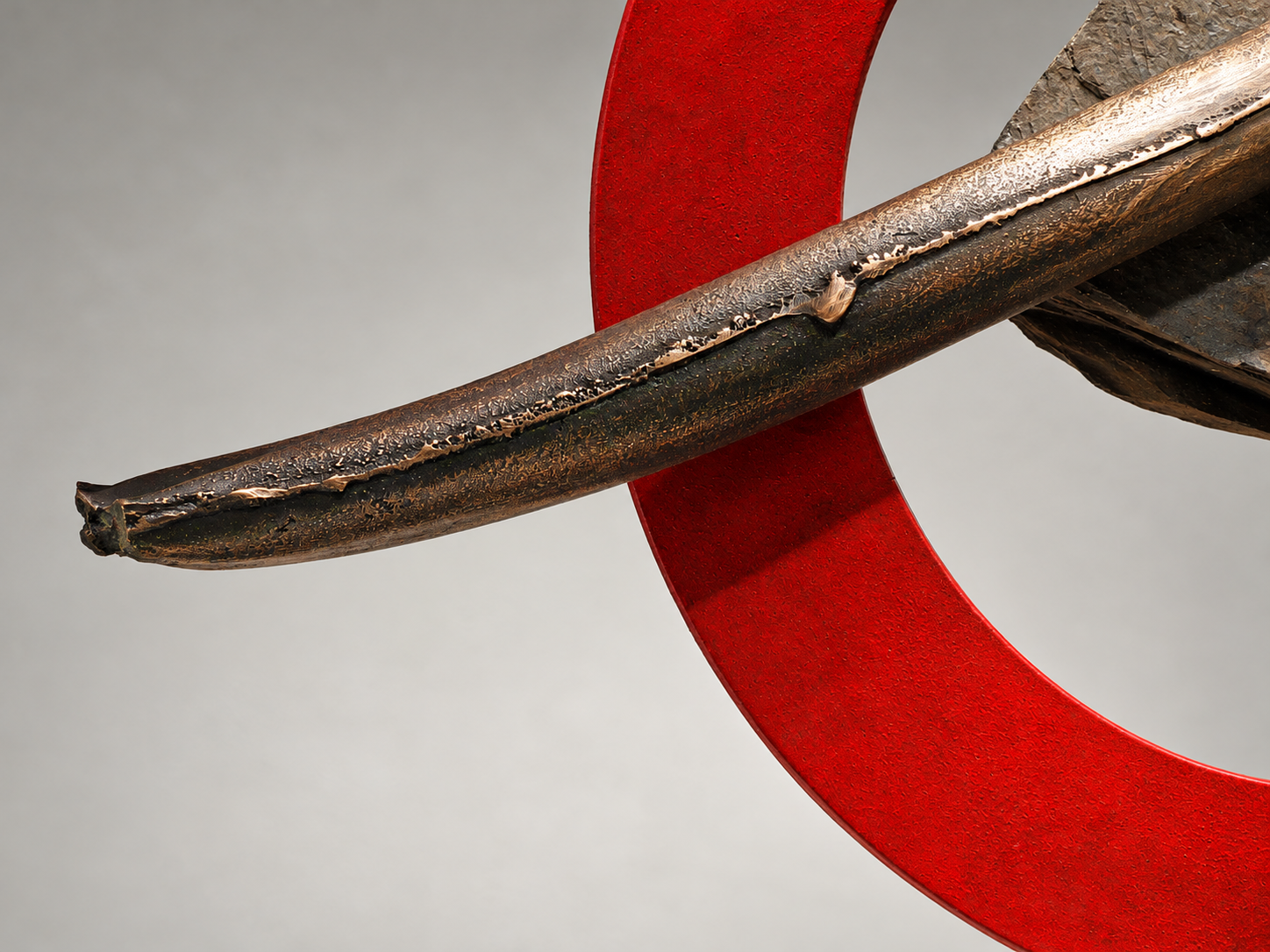 Image 5 of 7
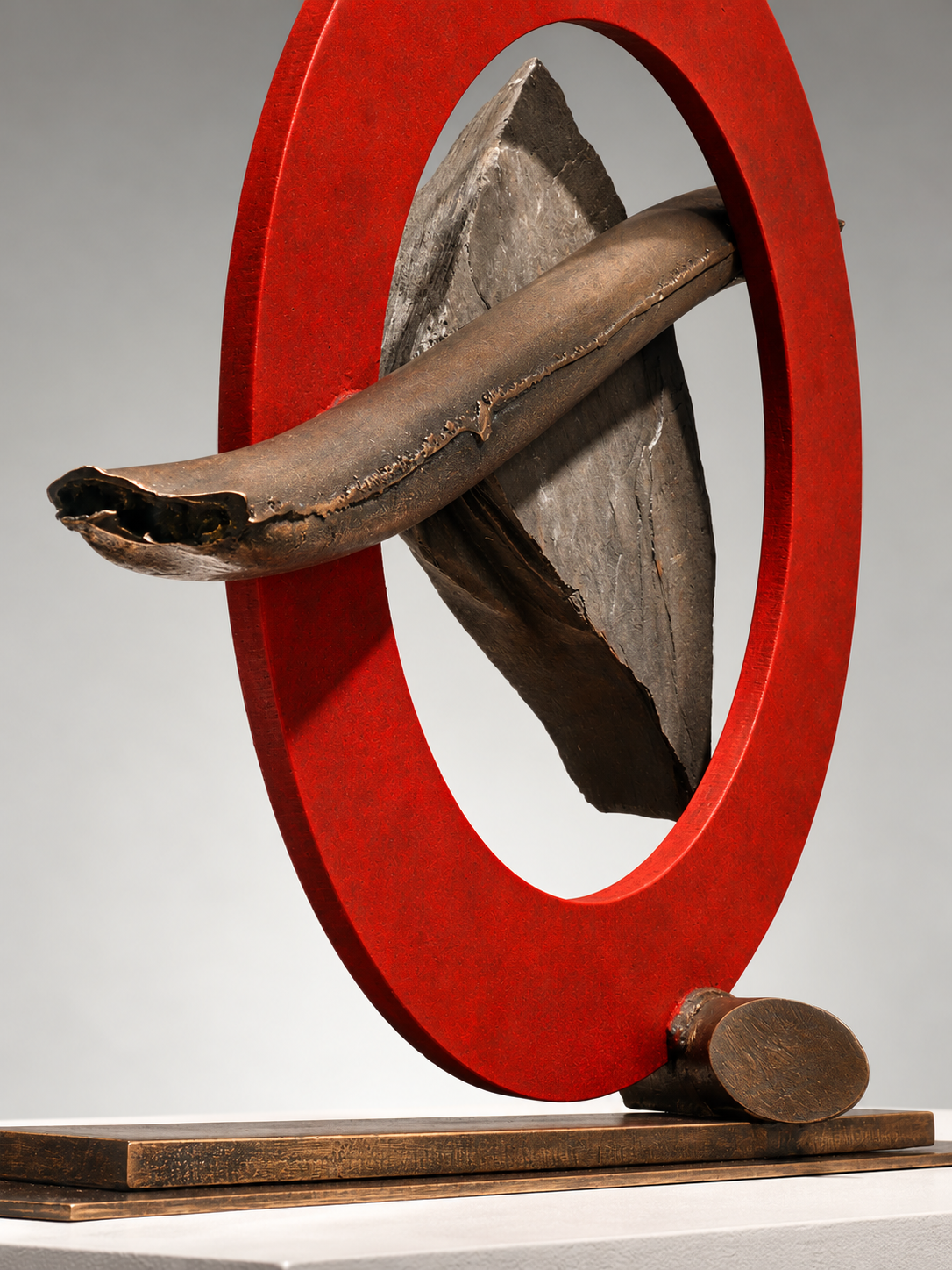 Image 6 of 7
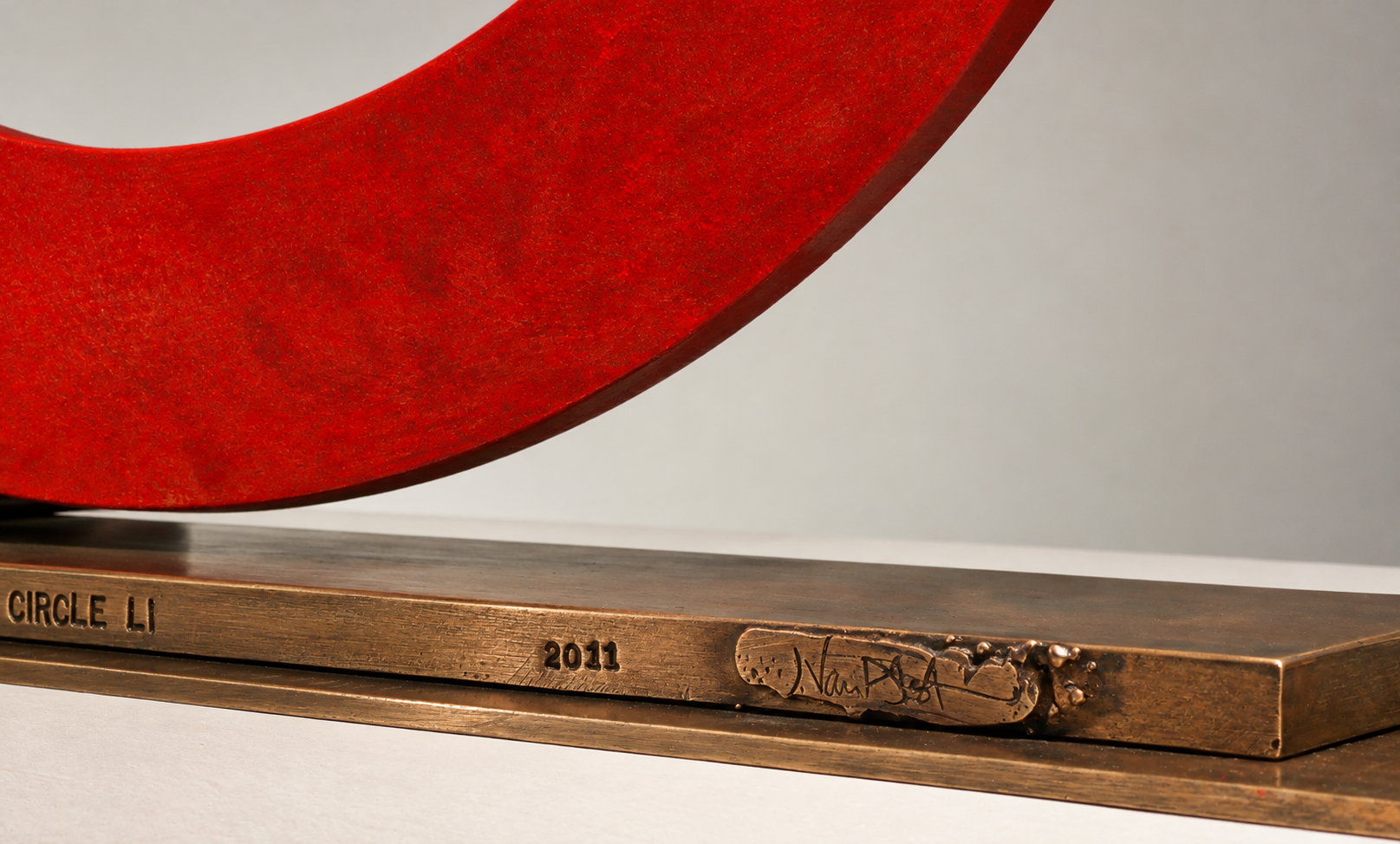 Image 7 of 7