Image 1 of 1
November 1975. Granite, wood, steel. Dimensions: 4 × 12 × 4 in (10 × 30 × 10 cm).
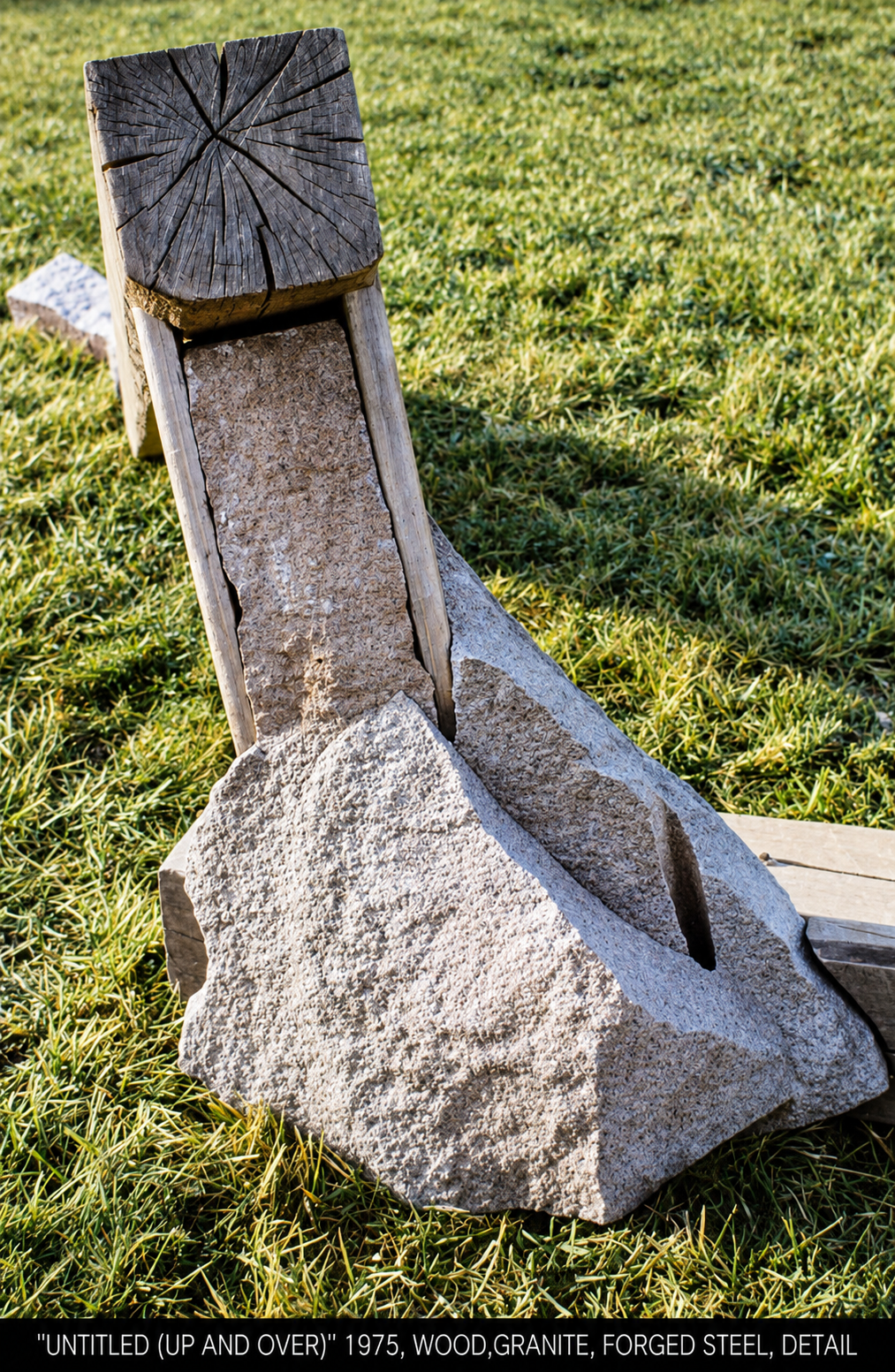
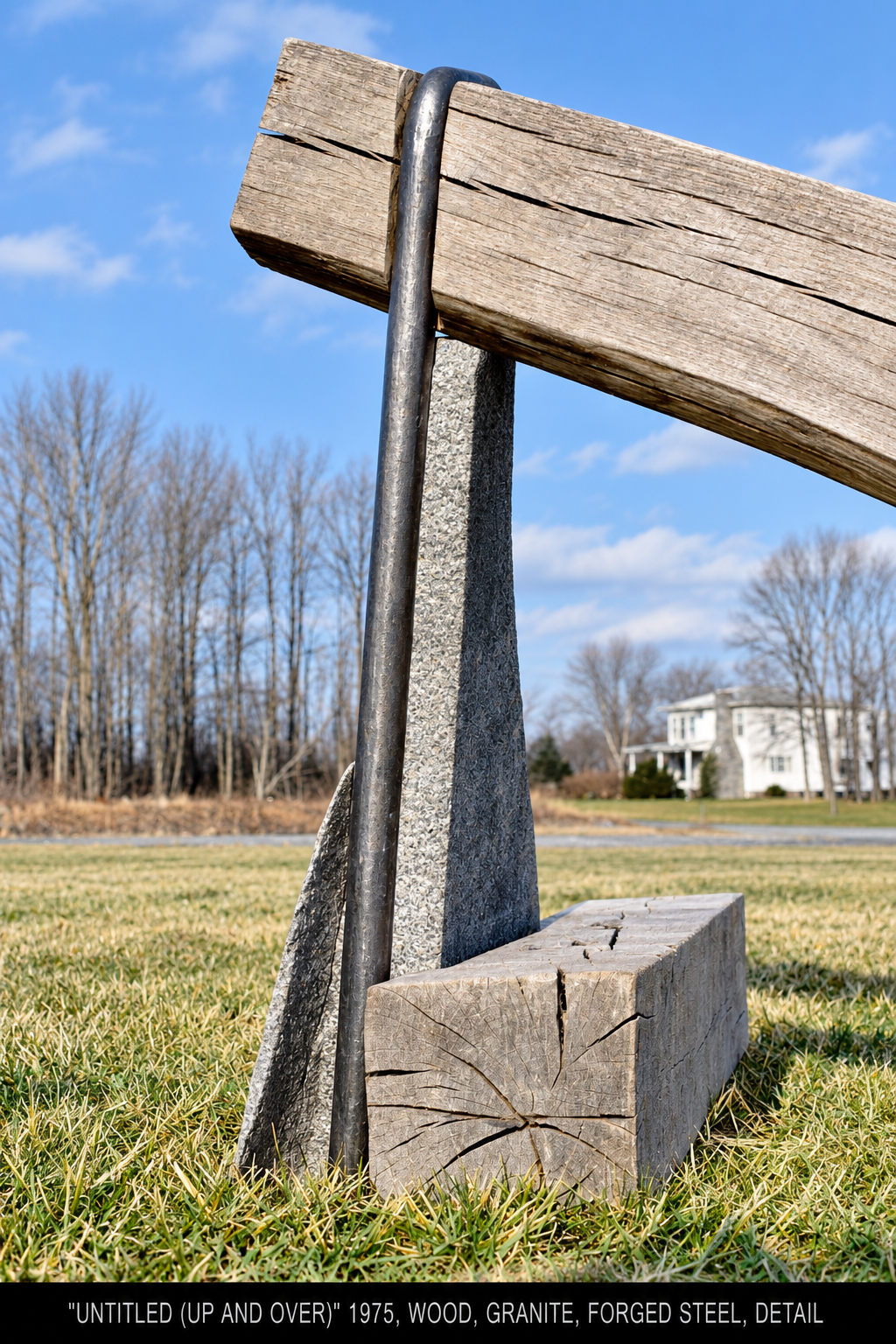
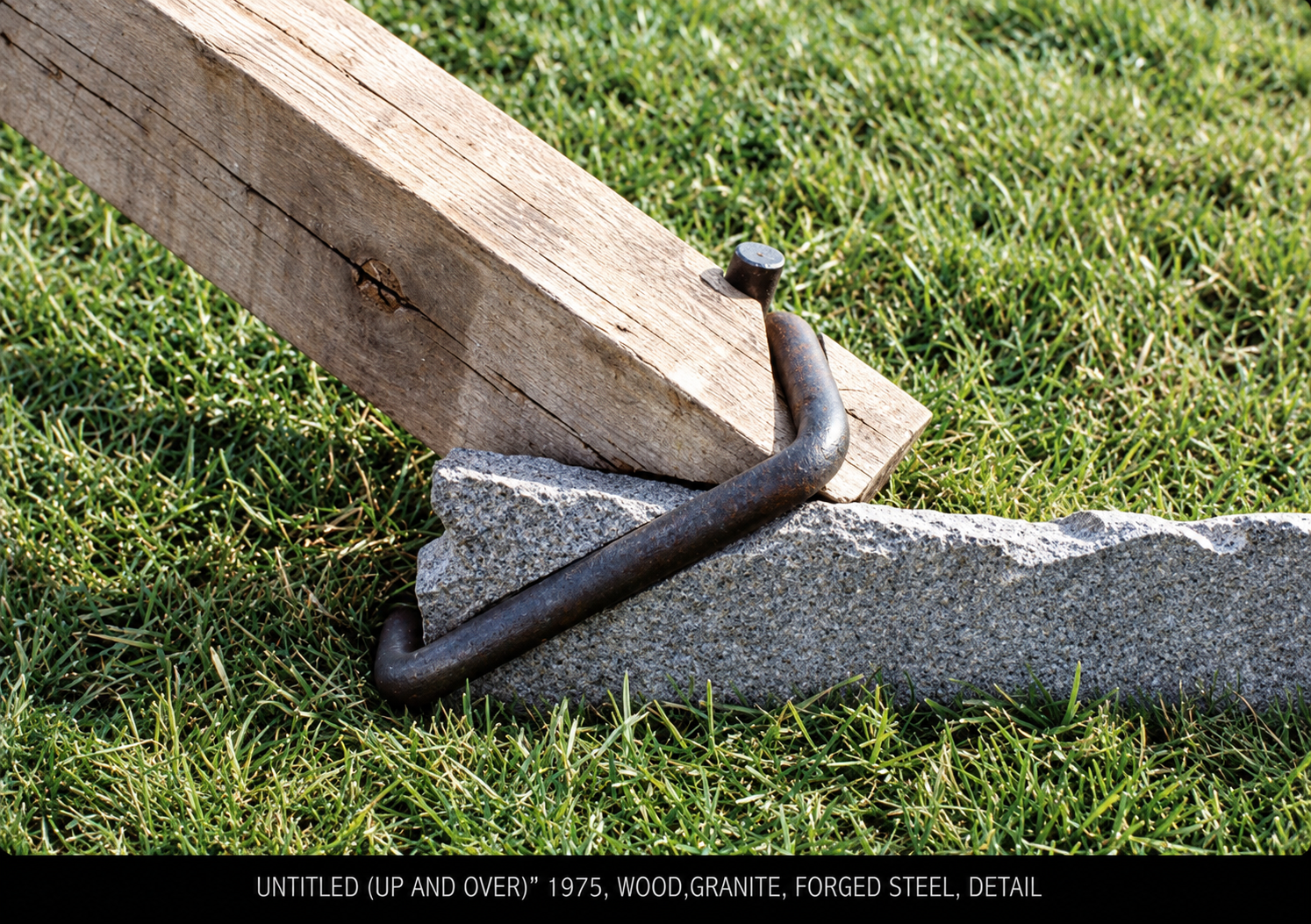
Untitled (Up and Over) was the last sculpture from this transitional period in which I used wood beams, and it brought my investigation of assemblage, exposed joinery, and the intrinsic character of materials to a critical point. Found granite, heavy timber, and forged steel are brought together in an extended, low architectural configuration. The long diagonal beam moves literally “up and over” the stone, while the forged-steel elements wrap around and connect the materials, openly revealing how the sculpture is assembled. Unlike the concealed connections of the earlier Stone Assemblages, the fastening system has become a prominent visual and structural element, creating a sense of movement while emphasizing the physical interaction of stone, wood, and steel.
In making this work, however, I realized that I was still not fully exploiting the structural capabilities of the materials—particularly steel. If the sculpture was fundamentally about assemblage and the nature of its materials, each element needed to do more than simply serve as a connector or support; its inherent physical properties needed to become essential to the structure itself. I therefore eliminated wood in the work that followed and began using interlocking forged-steel bars to harness and redirect the actual weight and gravitational energy of the stone. This realization led directly to Boundary (1976) and the tensegrity or Brute Series, where gravity, weight, tension, and compression became not how the sculpture stood, but central subjects of the work itself.
November 1975. Granite, wood, steel. Dimensions: 4 × 12 × 4 in (10 × 30 × 10 cm).
Untitled (Up and Over) was the last sculpture from this transitional period in which I used wood beams, and it brought my investigation of assemblage, exposed joinery, and the intrinsic character of materials to a critical point. Found granite, heavy timber, and forged steel are brought together in an extended, low architectural configuration. The long diagonal beam moves literally “up and over” the stone, while the forged-steel elements wrap around and connect the materials, openly revealing how the sculpture is assembled. Unlike the concealed connections of the earlier Stone Assemblages, the fastening system has become a prominent visual and structural element, creating a sense of movement while emphasizing the physical interaction of stone, wood, and steel.
In making this work, however, I realized that I was still not fully exploiting the structural capabilities of the materials—particularly steel. If the sculpture was fundamentally about assemblage and the nature of its materials, each element needed to do more than simply serve as a connector or support; its inherent physical properties needed to become essential to the structure itself. I therefore eliminated wood in the work that followed and began using interlocking forged-steel bars to harness and redirect the actual weight and gravitational energy of the stone. This realization led directly to Boundary (1976) and the tensegrity or Brute Series, where gravity, weight, tension, and compression became not how the sculpture stood, but central subjects of the work itself.