VIA SOLARIS 2006
Commissioned by the State University of Indiana, Terre Haute
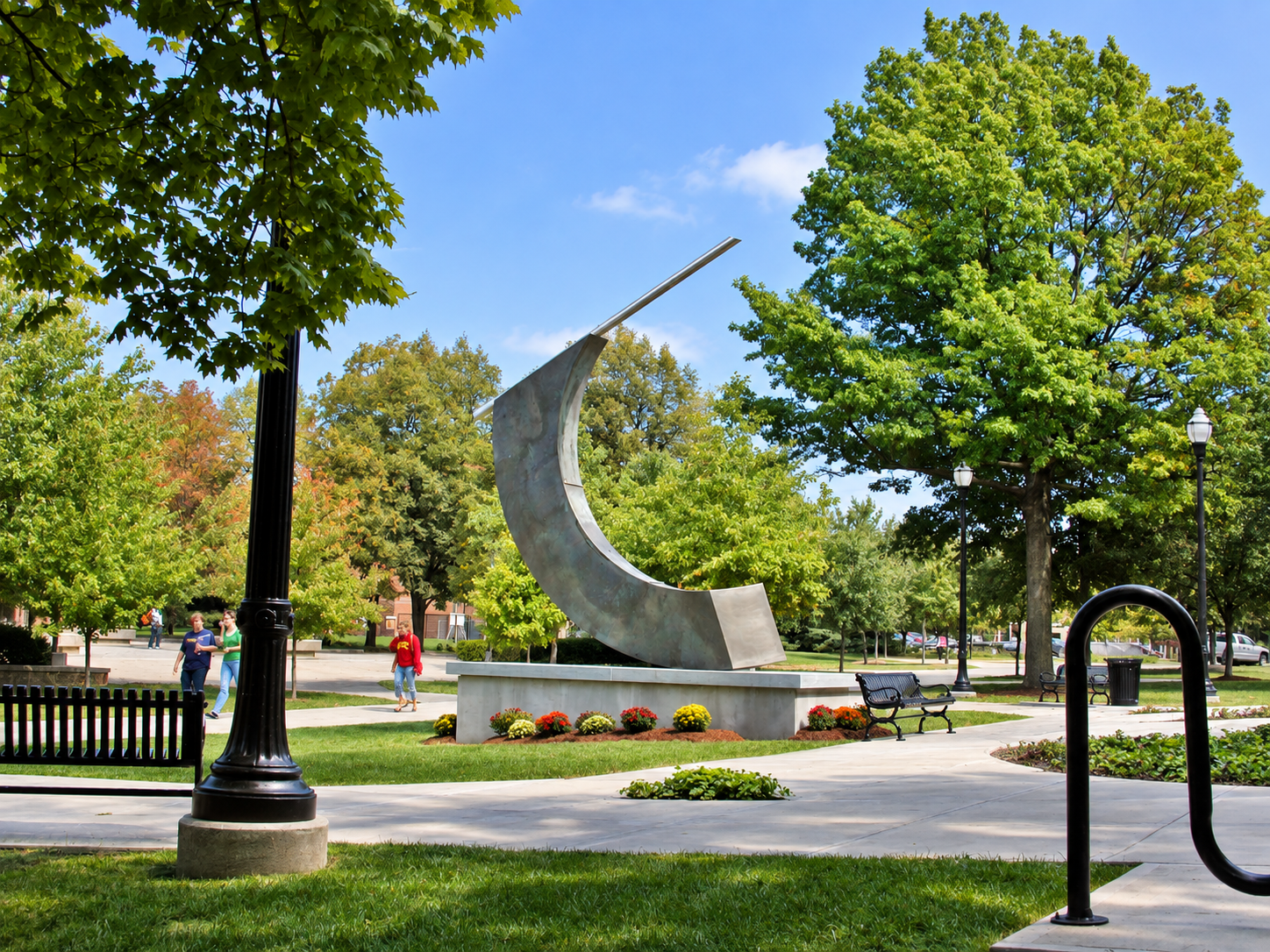
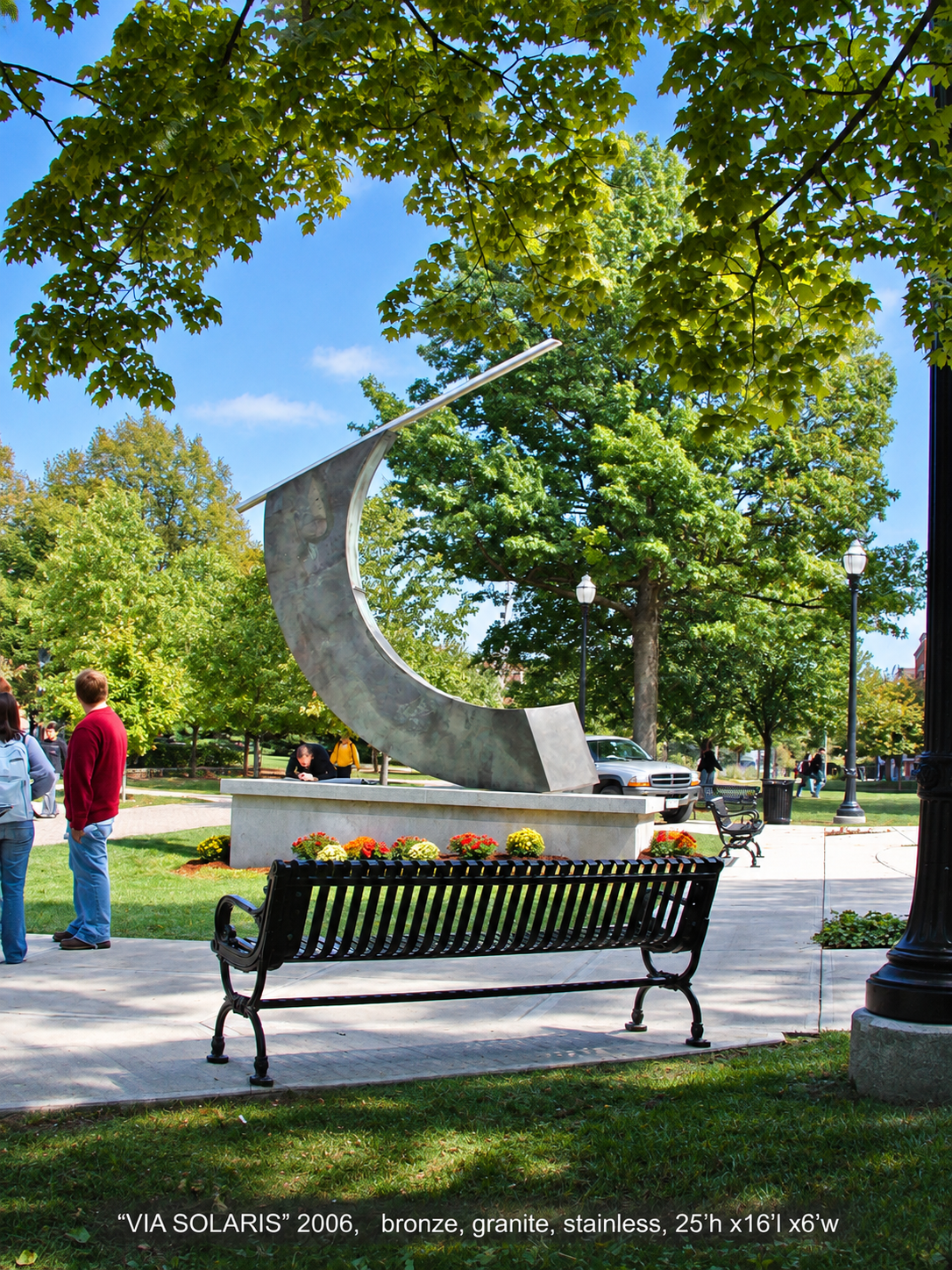
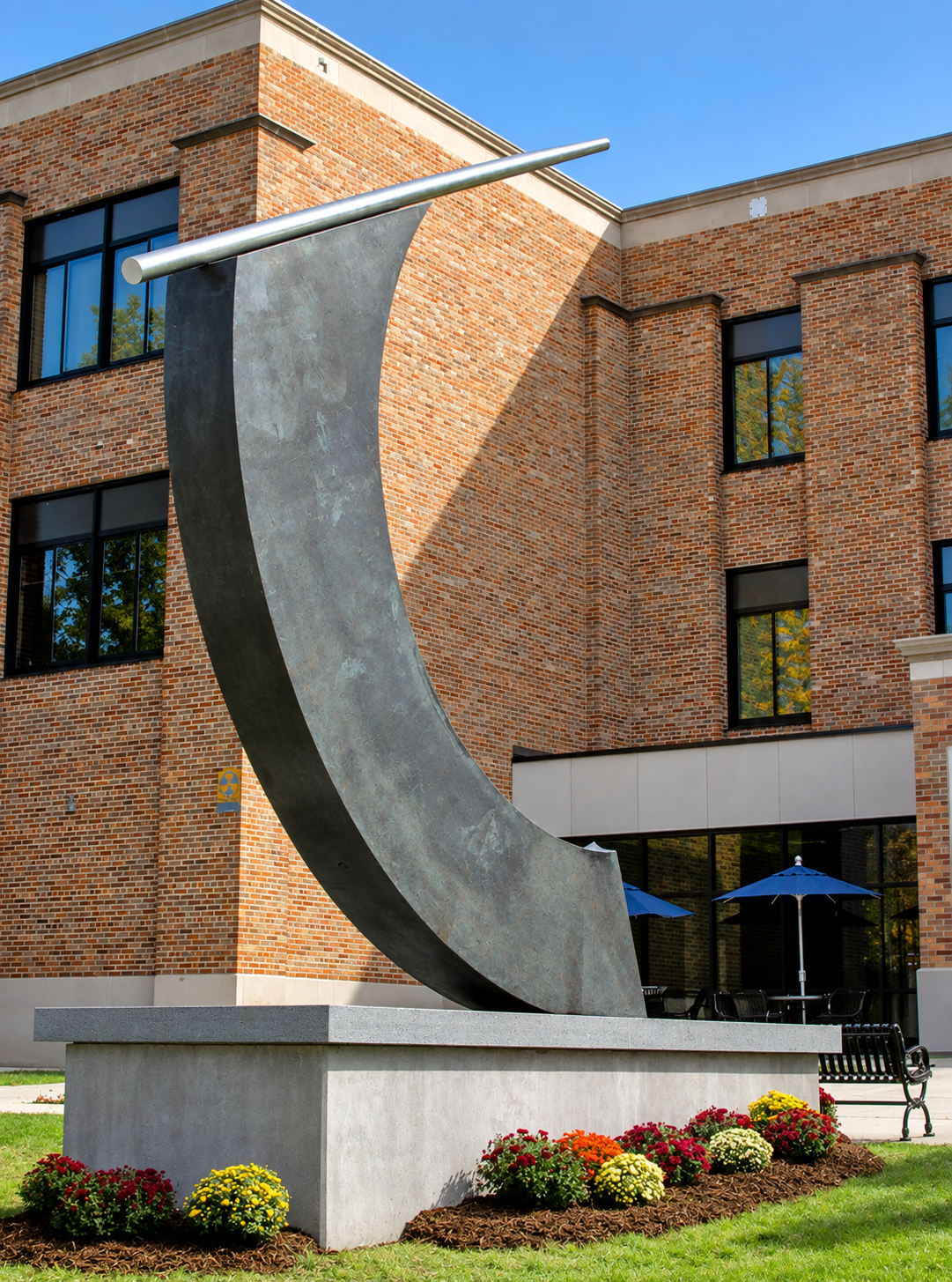
Via Solaris successfully welds the character of large scale contemporary sculpture with the tradition and function of humankind's oldest scientific instrument, the calendar - has special relevance in a university setting passionately interested in the relationship between the arts and sciences.
Via Solaris
2006
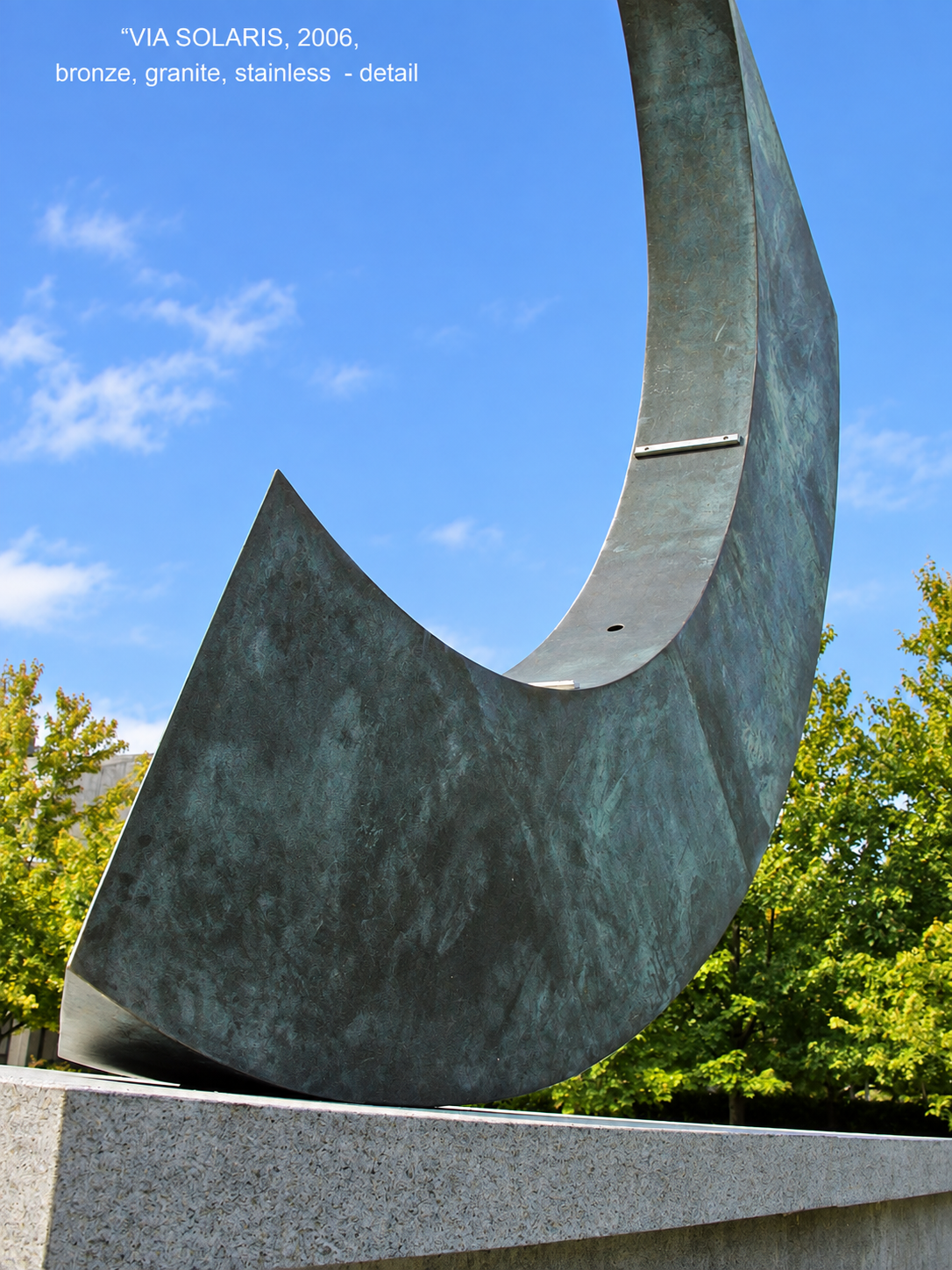
Granite, stainless steel, bronze, and sunlight
Commissioned by Indiana State University, Terre Haute, Indiana.
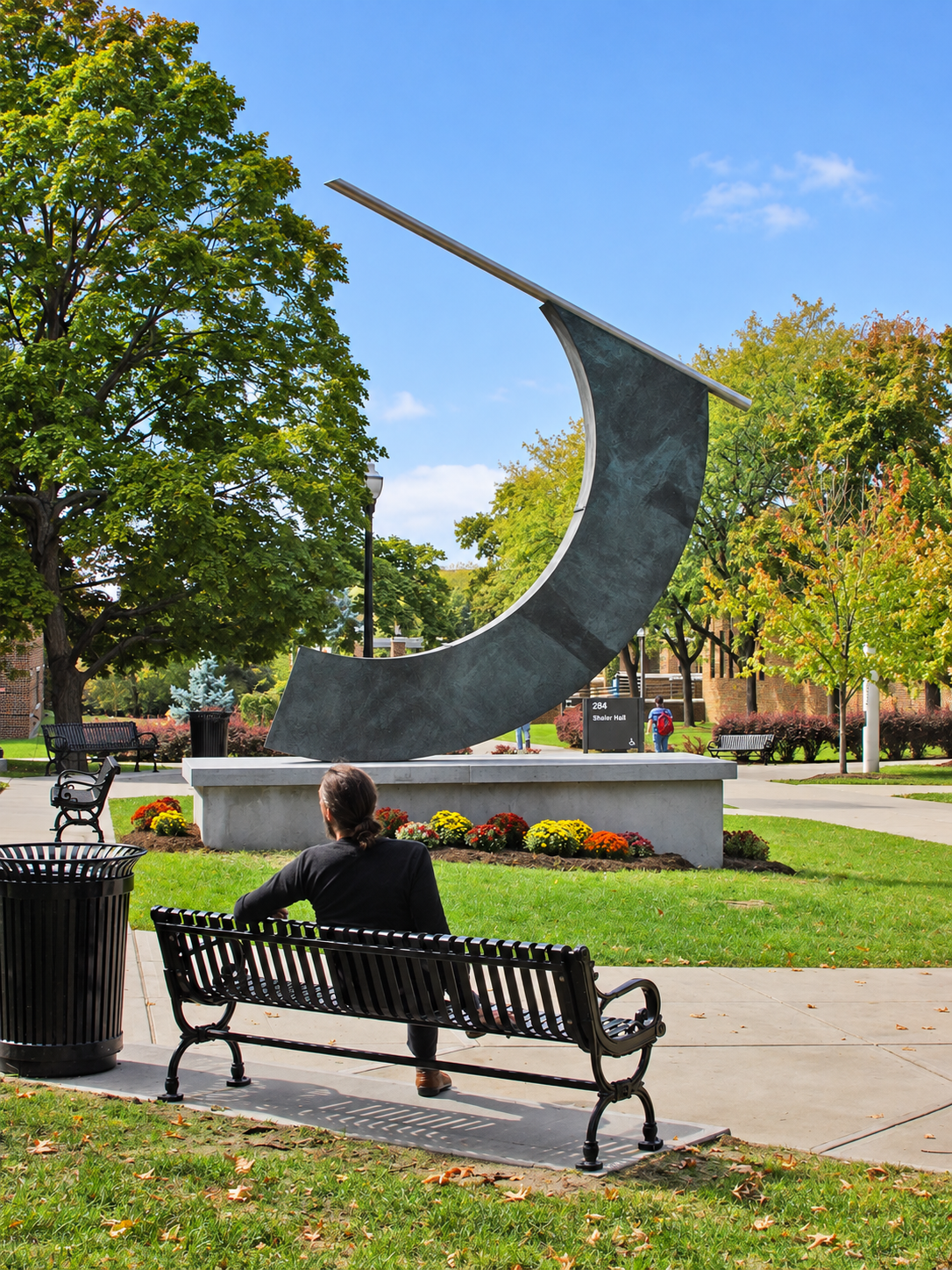
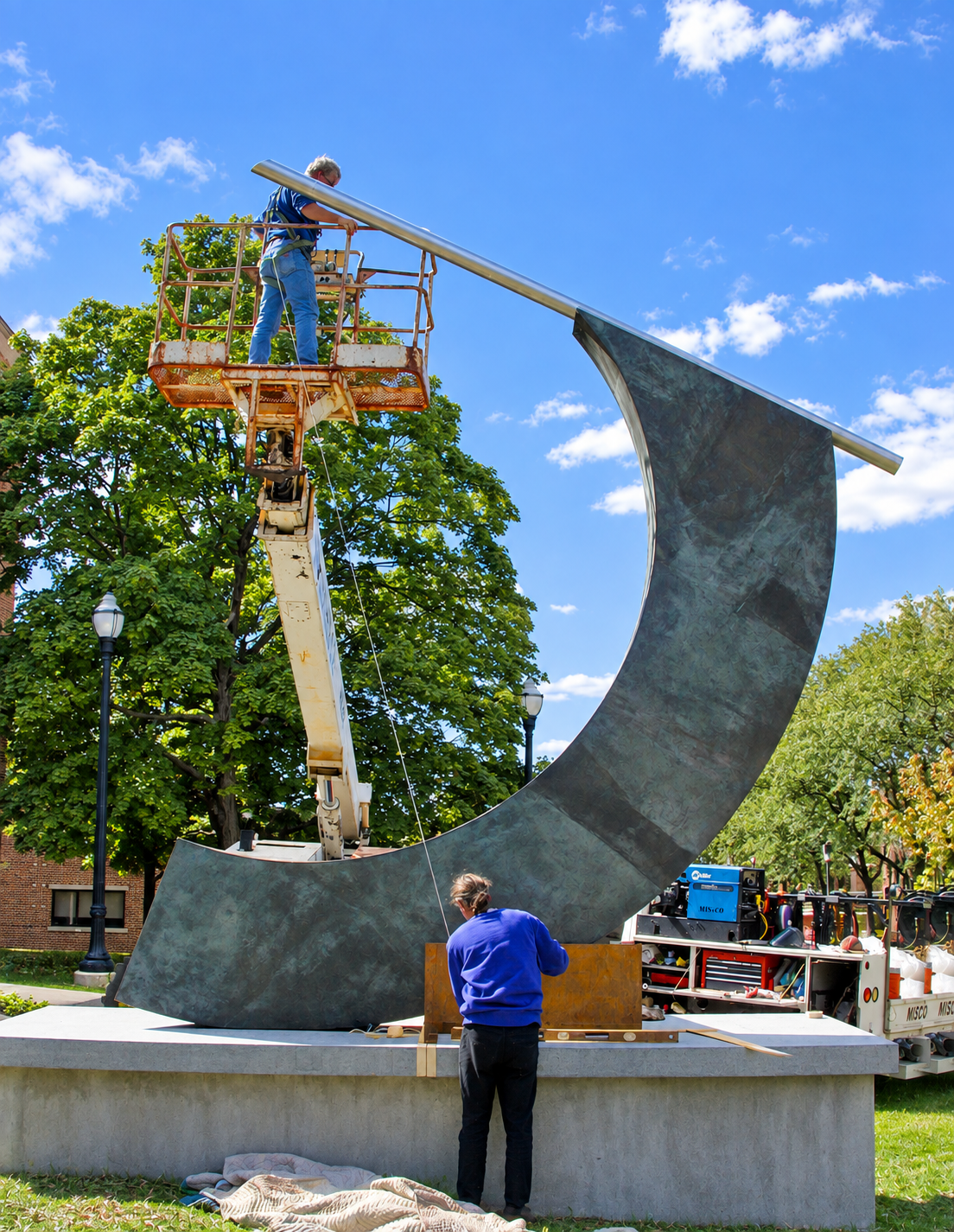
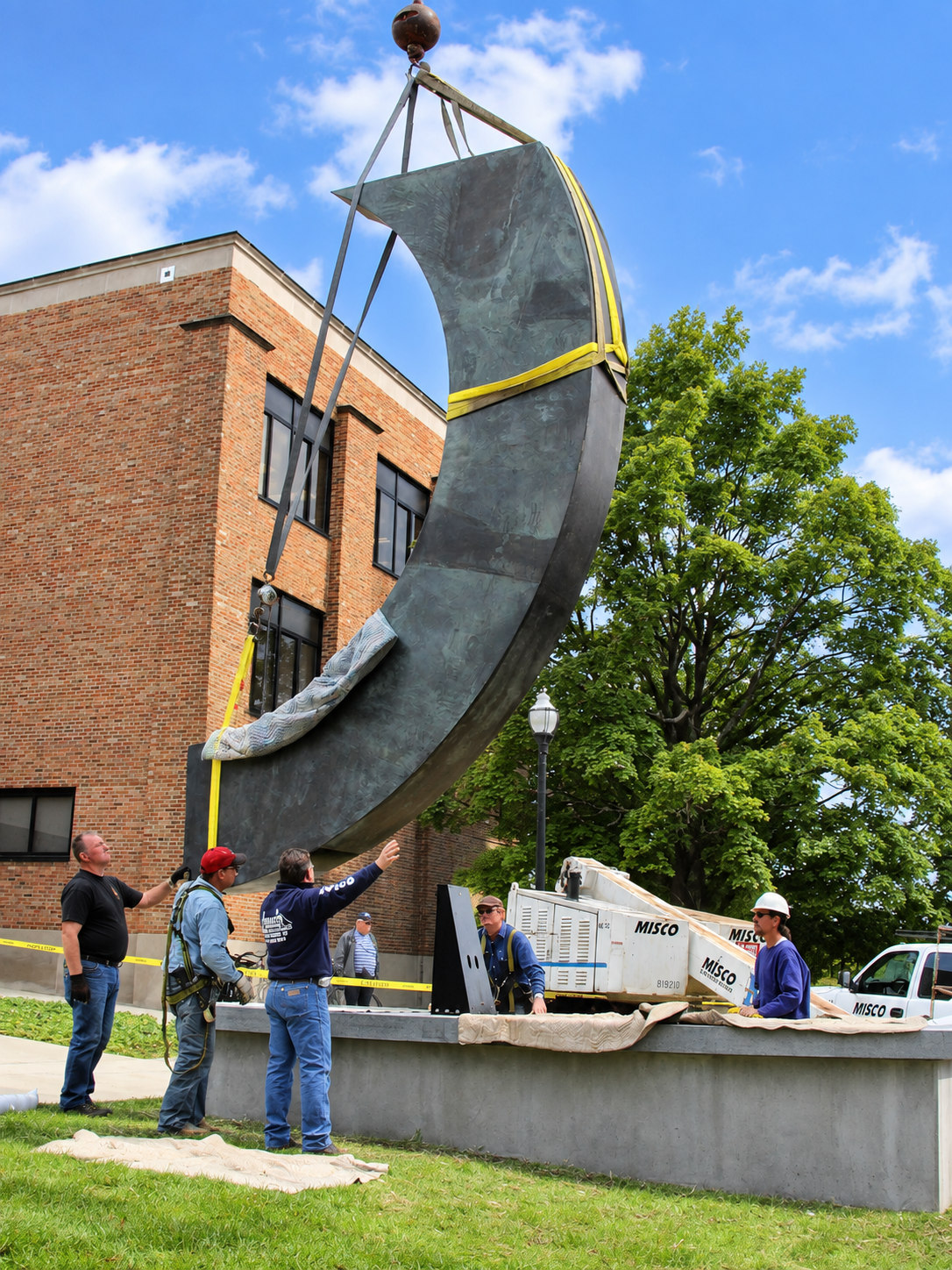
Via Solaris (2006) is the culmination of John Van Alstine's Celestial Works series, integrating monumental sculpture with the movement of the sun. Rising nearly twenty-five feet, the work functions as both a landmark and a solar calendar. At solar noon, sunlight and shadow mark the changing seasons, transforming the sculpture into a living instrument that records the Earth's annual journey around the sun.
Inspired by ancient astronomical monuments yet expressed through a contemporary vocabulary of granite, stainless steel, and bronze, Via Solaris reflects Van Alstine's enduring fascination with the relationship between art, science, and the cosmos. Sited at the heart of Indiana State University's campus, the sculpture celebrates the pursuit of knowledge while inviting viewers to contemplate humanity's timeless connection to the natural world.
MORE INFO: Via Solaris chapter in AMERICAN MONUMENTS
GALLERIES
VIA SOLARIS  2006
Commissioned by the State University of Indiana,Terre Haute
Bronze, stainless and sunlight
PRESS AND DOCUMENTATION
Finished photos
Drawings
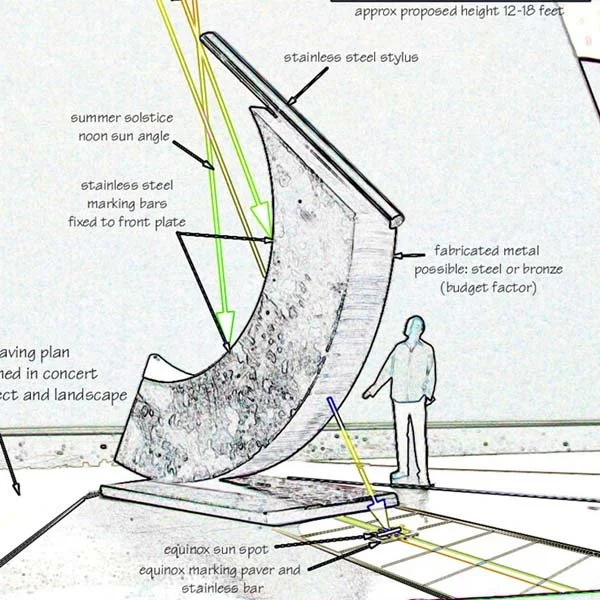
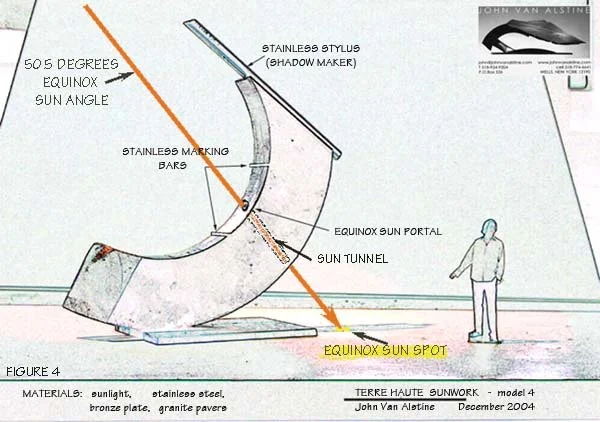
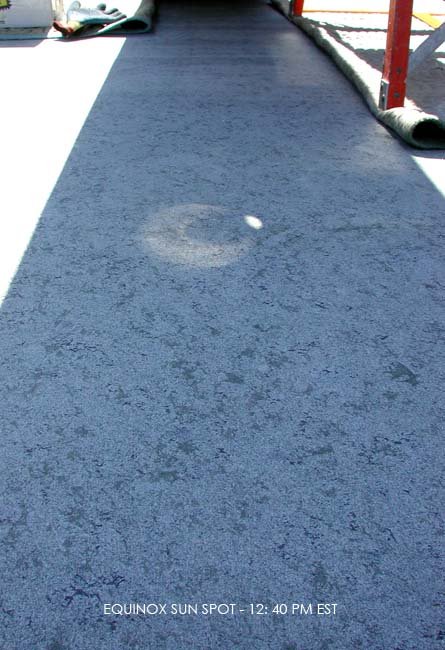
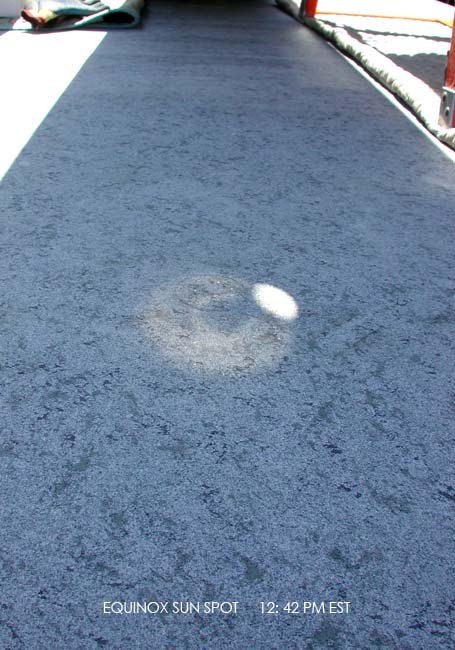
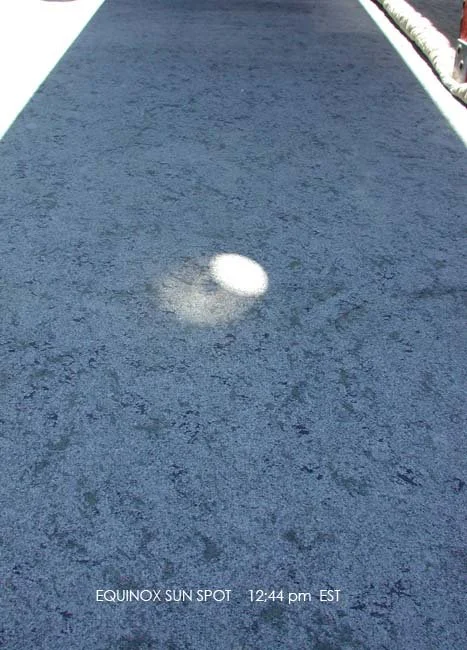
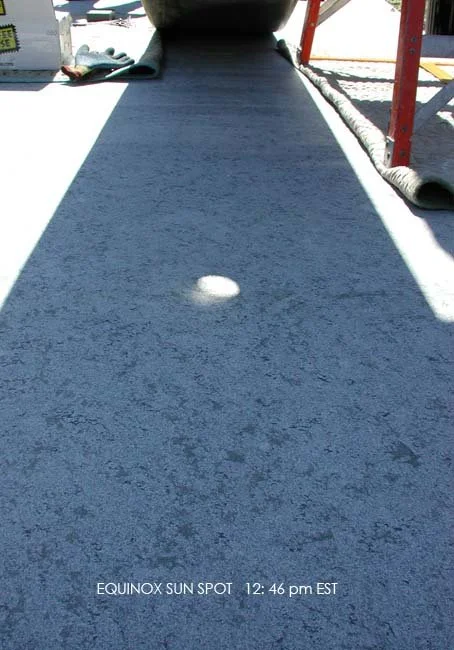
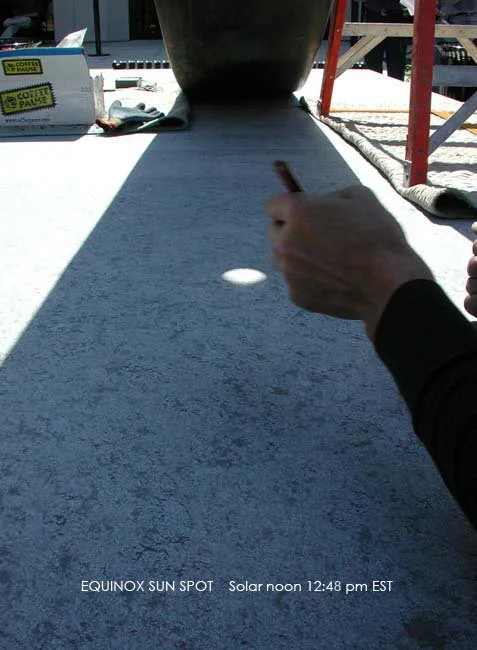
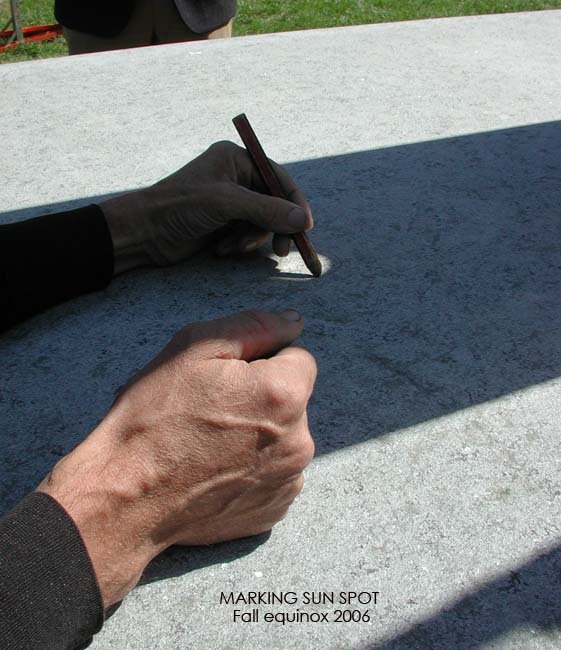
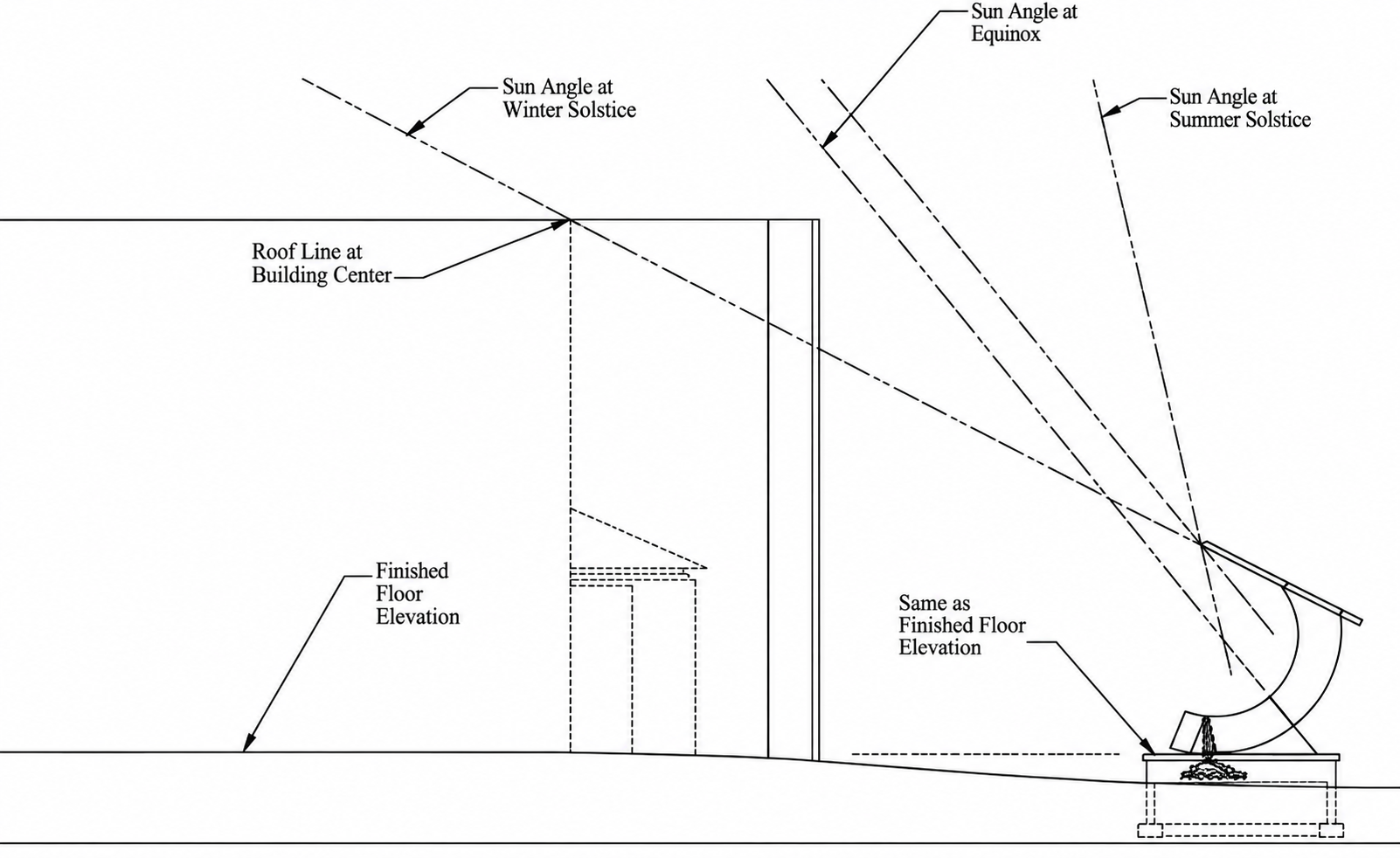
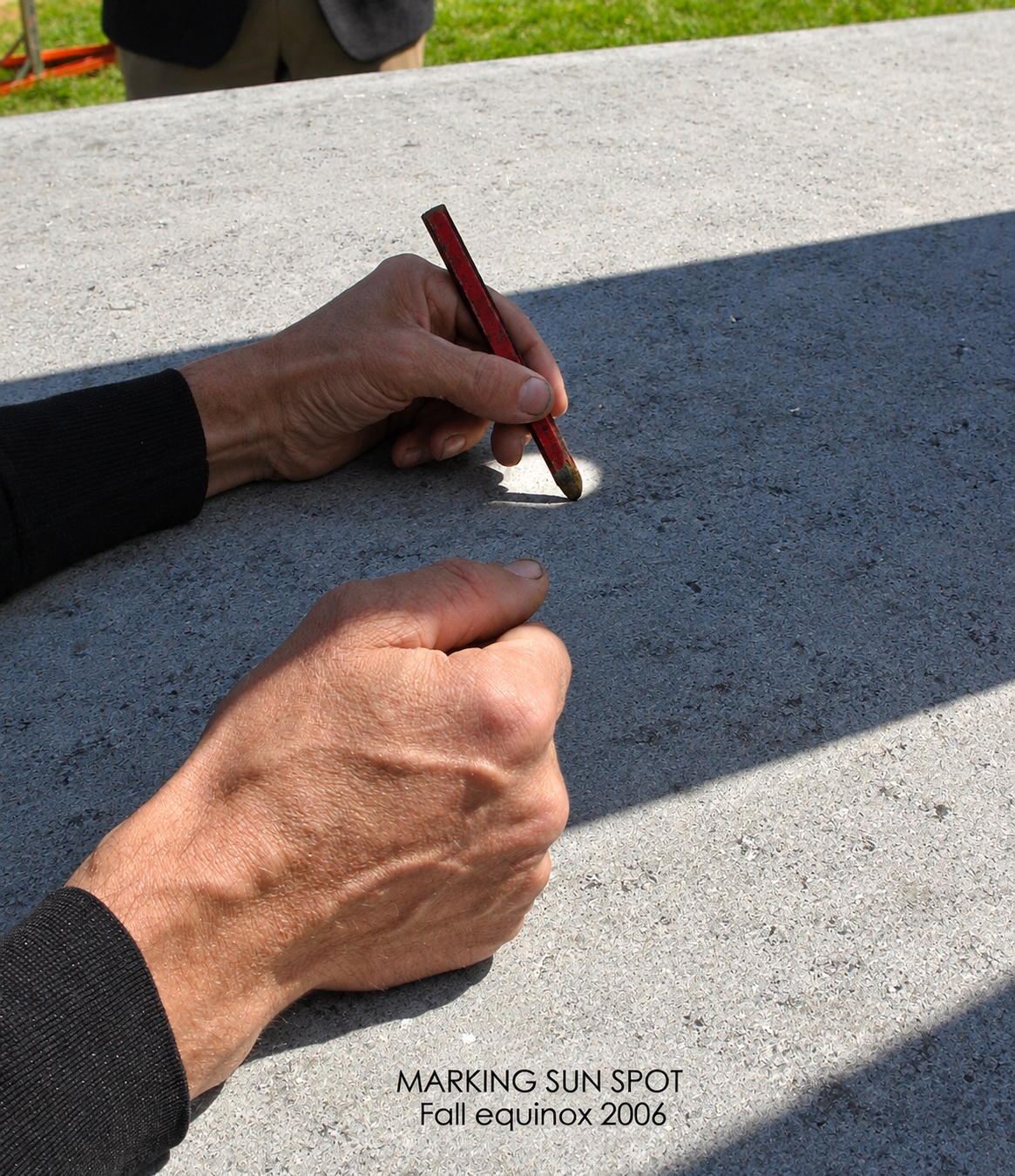
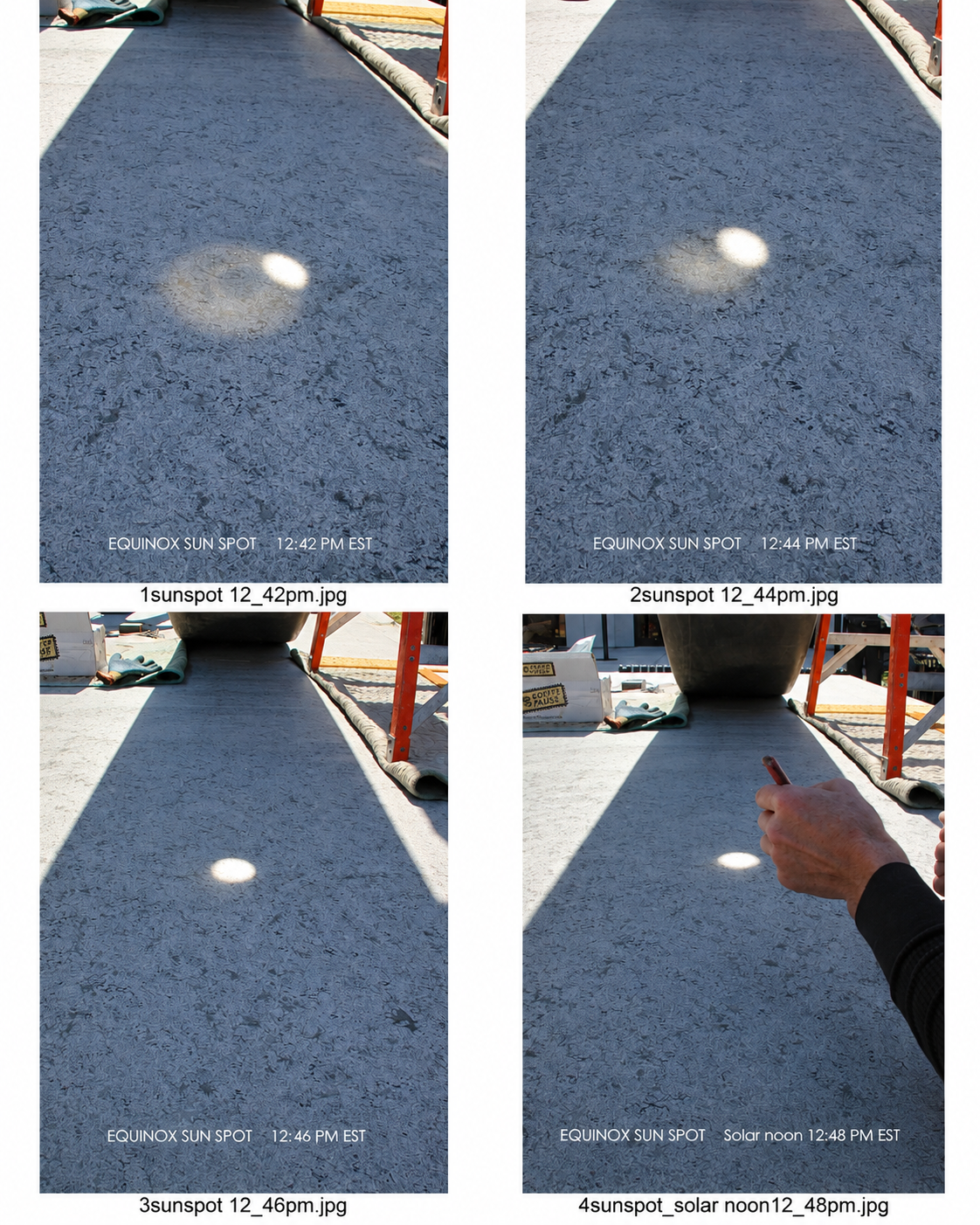
EQUINOX SUN SPOT: special feature In addition to the functions described above the Sunwork also has an EQUINOX SUN SPOT feature. When the sun's noon angle reaches 50.5 degrees it aligns with the parallel angle of the sun tunnel . Sunlight passes through the tunnel illuminating a marker located on the paving below, signaling the moment in the yearly cycle when the length of day and night are of equal duration.
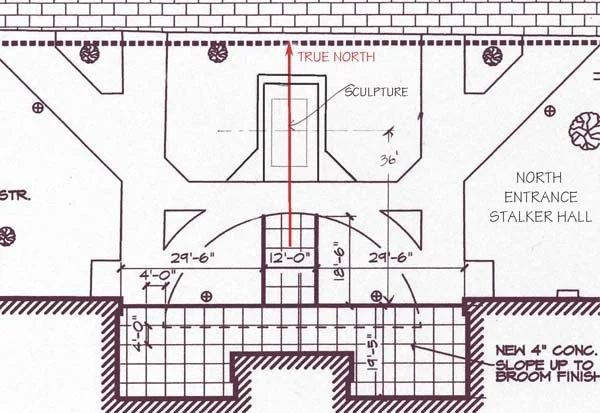
GATHERING PLACE: a contemplative site The Sunwork will be sited in the plaza area directly off the north entrance of Stalker Hall. Working closely with the architect and landscape design team we will integrate the sculpture into the pedestrian and campus activities. Benches, landscaping and lighting will be added creating a welcoming, "park-like" atmosphere designed to encourage reflection relative to the function and implications of the Sunwork .
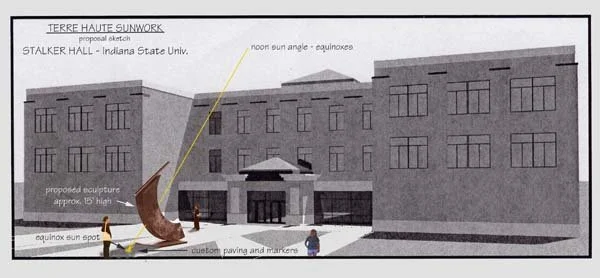
CONCLUSION: regaining the rhythm In our contemporary society we often lose sight of the natural occurrences that once impacted our ancestors and played an important role in shaping our collective conscience. The cyclical nature of the days, seasons, tides, and life in general, with their patterns of light/darkness, plant/harvest, high/low, birth/death, have historically given meaning, structure and richness to our lives. Sunwork, in a dramatic and sculptural way, offers the opportunity to regain awareness of these fundamental rhythms that continue to subconsciously shape our lives and hopefully help us reconnect with them.
Equinox Sun Spot
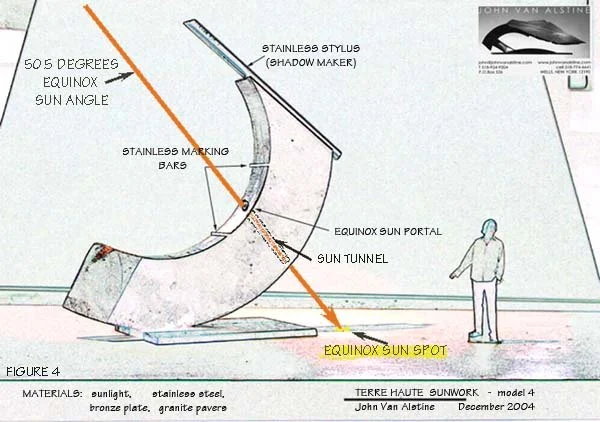
EQUINOX SUN SPOT: On the Vernal and Autumnal (spring and fall)) equinoxes, usually September 22 and March 20, the sun's noon angle in Terre Haute reaches 50.5 degrees and aligns with the angle of the sun tunnel . This angle allows sunlight to pass directly through the tunnel, illuminating a marker located on the granite base, signaling the moment in the yearly cycle when the length of day and night are of equal duration.